My Aunt Let My Eye Rot to Save Money. Then a Billionaire Broke Down Our Door.
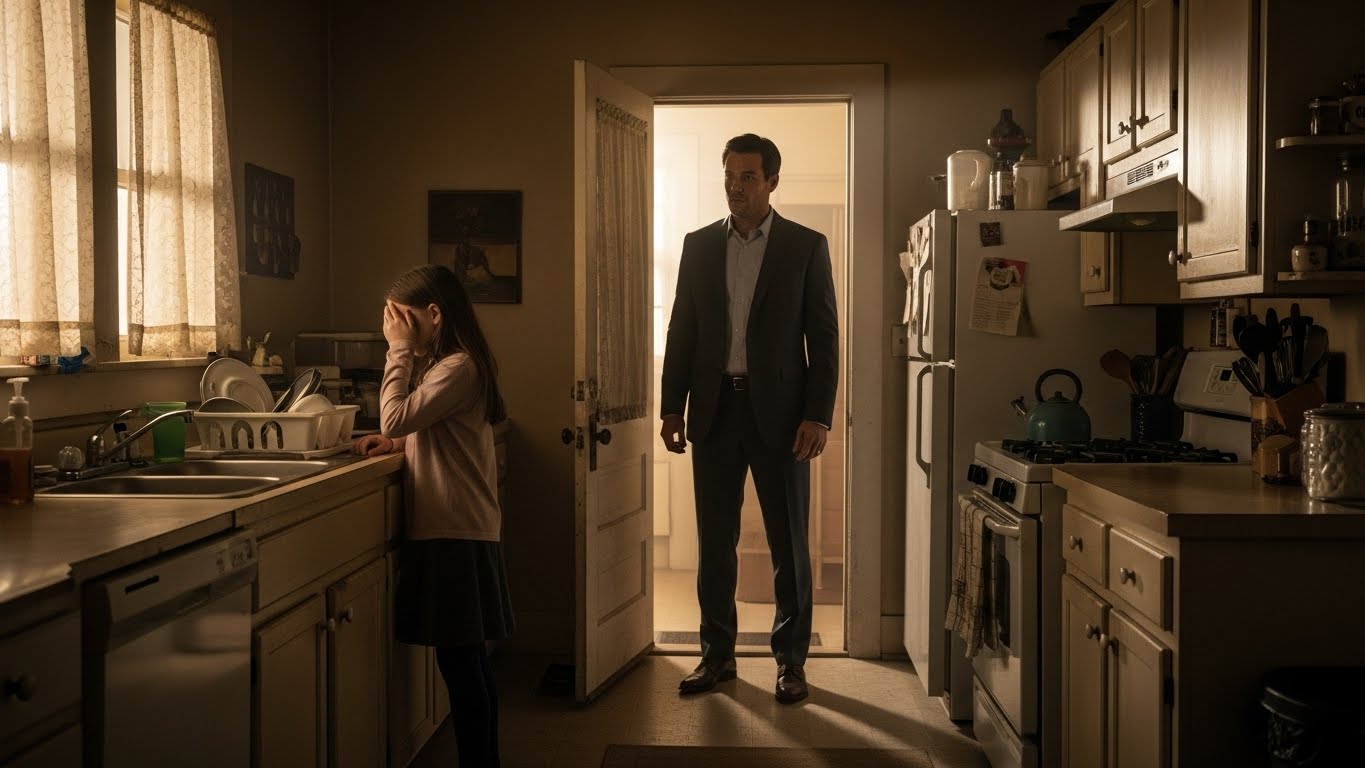
Chapter 1: The Darkness in the Kitchen
The pain was a living thing. It started as a scratch, just a tiny nick from a rusted wire on the chicken coop fence, but in three days, it had become a monster. It lived in the left side of my face, gnawing at the bone behind my eyebrow, pulsing with every beat of my heart.
“I can’t see,” I whispered.
The words felt like broken glass in my throat. My left eye was swollen shut, the skin hot and tight. I was standing in the center of the kitchen, clutching the edge of the dented laminate table to keep the room from spinning.
Aunt Clara didn’t look up from her tea. She was sitting at the head of the table, the morning sun highlighting the expensive ruby ring she’d bought last week—with money that was supposed to be for our winter coats.
“Stop whining, Emily,” she snapped. Her voice was sharp, cutting through the humid, stale air of the house. “You’re just looking for attention. Always the victim. Get back to the sink. Those dishes aren’t going to scrub themselves.”
I gripped the table harder. “But Aunt Clara… it burns. It really burns. I think… I think there’s pus.”
She stood up then. The chair scraped against the cracked linoleum with a screech that made my little brother, Jacob, flinch in the corner. Clara wasn’t a tall woman, but in this house, she was a giant. She ruled with a psychological terror that was heavier than any physical blow. She crossed the room in two strides and grabbed my arm. Her manicured nails dug into my skin.
“Listen to me, you ungrateful little brat,” she hissed, her face inches from mine. Her breath smelled of peppermint tea and malice. “Doctors cost money. Medicine costs money. And thanks to your parents dying and leaving us with nothing but debts, we don’t have any to waste on a scratch. Now, shut up and clean.”
She shoved me back toward the sink. I stumbled, my hip hitting the cabinet hard. I bit my lip to keep from crying out. I couldn’t cry. Crying made her angrier. Crying meant punishment, and punishment usually fell on Jacob if I wasn’t careful.
I turned on the tap. The water was cold. I dipped my raw, red hands in, trying to focus on the sensation of the soap bubbles, trying to ignore the throbbing fire in my face.
Jacob was watching me. He was only six, with big, terrified eyes that looked too much like our mother’s. He was huddled by the pantry, clutching the sock puppet I’d made him from one of my old gym socks.
I have to protect him, I thought, scrubbing a grease-stained pan. I have to survive this for him.
Clara sat back down, picking up her phone. She began typing, a smirk playing on her lips. I knew what she was doing. She was posting on the neighborhood Facebook group.
“Poor little Emily has taken ill,” she muttered to herself as she typed, mocking me. “Prayers needed for our family. It’s so hard raising two troubled children alone…”
She was using my pain for sympathy. Maybe Mrs. Gable down the street would bring over a casserole, or the church would take up another collection that Clara would pocket.
The darkness in my left eye was growing. It wasn’t just swelling anymore; it was a gray fog eating the edges of my vision. I felt a wave of nausea. If I went blind, how would I take care of Jacob? How would I make sure he ate the extra half of the egg I snuck him?
The fear was colder than the water in the sink.
Chapter 2: The Silver Shadow
It was nearly noon when the atmosphere in the house shifted.
We heard it first—a low, powerful rumble. It wasn’t the rattling cough of the mailman’s truck or the high-pitched whine of the neighbor’s sedan. This was a deep, guttural growl of an engine that had more horsepower than the entire block combined.
Gravel crunched outside. The sound of heavy tires rolling slowly, deliberately, to a halt.
Clara froze, her tea cup halfway to her mouth. Her eyes darted to the window. “Who on earth…?”
She moved the lace curtain just an inch. Her breath hitched.
“A limousine,” she whispered. The anger in her voice was instantly replaced by a greedy, desperate curiosity. “A black limousine. Here? In front of my house?”
She spun around. The transformation was instant and terrifyingly practiced. She smoothed her frizzy hair, adjusted her cashmere sweater, and forced her face into that sickly sweet smile she used for the church pastor and the social workers.
“Emily, Jacob,” she commanded, her voice suddenly dripping with fake honey. “Stand up straight. Look presentable. And Emily—for God’s sake, cover that ugly eye with your hair. If you embarrass me, you won’t eat for a week.”
I quickly pulled a lock of my unwashed, matted hair over my left eye. My heart was hammering against my ribs. Rich people didn’t come here. Not unless they wanted to buy land or serve papers.
A car door slammed. Heavy. Solid. An expensive sound.
Footsteps crunched on the walkway. Slow. Heavy. Authoritative.
Then, a knock. Three distinct raps on the peeling wood of our front door.
Clara rushed to open it. “Coming!” she trilled.
She swung the door open. Standing there was a man who looked like he had stepped out of a different world—or a different timeline.
He was tall, broad-shouldered, wearing a charcoal suit that fit him so perfectly it looked like a second skin. His hair was silver, thick and swept back, and his face was lined with a kind of weary strength. He looked like a man who had built empires and watched them fall, only to build them again.
But it was his eyes that stopped me cold. They were gray, like a storm cloud before a tornado touches down. They swept over Clara without stopping, dismissing her instantly, and landed directly on me.
He didn’t smile. He didn’t introduce himself. He just stared at me, then at the hair I was using to hide my face.
“The girl,” he said. His voice was deep, resonant, like thunder rolling in the distance. “Step forward.”
Clara laughed nervously, a high-pitched titter. “Oh, sir, you must be lost. We were just—”
“I said,” the man interrupted. He didn’t raise his voice, but the temperature in the room seemed to drop ten degrees. “Step forward.”
I took a shaky step. My knees felt like water. Jacob whimpered behind me, and I reached back instinctively to squeeze his hand.
The man walked past Clara as if she were a piece of furniture. He walked right onto the dirty linoleum in his polished Italian leather shoes. He stopped in front of me.
He smelled of rain, expensive tobacco, and old leather. He knelt on one knee.
He didn’t grab me. He didn’t force me. He just held his hand up, palm open, waiting.
“Move your hair, child,” he said softly.
I trembled. I looked at Clara. Her eyes were wide, bulging with rage. She was making a slicing motion across her throat—a silent promise of pain later. Don’t you dare, her look screamed. Keep our secrets.
But the man was waiting. And for the first time in two years, since the police officer told us Mom and Dad weren’t coming home, I felt something radiating from an adult that wasn’t anger. It was… focus. Absolute, unwavering focus.
I reached up with a shaking hand. My fingers brushed my hot, swollen temple. I pushed the hair away.
The man inhaled sharply. His jaw tightened so hard I saw the muscle jump in his cheek. The gray eyes turned to steel.
“I can’t see,” I whispered again, the tears finally spilling over, burning tracks down my face. “Please… I can’t see.”
He didn’t look away. He didn’t cringe at the ugliness of the infection. He just nodded, once.
“I know,” he said. “And that ends today.”
He stood up, towering over the kitchen, and turned to face my aunt.
“My name is Alexander Harrington,” he said, his voice cold and flat. “And I suggest you start praying.”
Clara’s face went pale. She knew the name. Everyone knew the name. Harrington owned half the state. He owned the bank that held the mortgage she hadn’t paid. He owned the construction company her husband, Raymond, had been fired from.
“Mr. Harrington,” Clara stammered, backing up until she hit the wall. “I… I was just about to take her. Truly! I was just getting my keys!”
“Lies,” Harrington said. He pulled a phone from his pocket. “I’ve been watching this house for an hour. You were drinking tea.”
He tapped the screen. “I have a medical team en route. They will be here in four minutes.”
“You can’t do that!” Clara shrieked, her fear turning into defensive aggression. “She’s my ward! You can’t just walk in here and take over! I’ll call the police!”
Harrington smiled. It wasn’t a nice smile. It was the smile of a wolf looking at a rabbit that thought it could run.
“Please do,” he said. “Call the police. Call the sheriff. Call the Governor for all I care. Because when they get here, I will show them the condition of this child. I will show them the empty pantry I saw through the window. And I will show them the audit my team just finished on your bank accounts.”
Clara stopped breathing.
“The accounts,” Harrington continued, stepping closer to her, “where the life insurance money for these children has been steadily disappearing into online casinos and jewelry stores.”
I gasped. Jacob looked up at me, confused. Money? We had money? We were always told we were broke. We were told we were burdens.
“I didn’t…” Clara whispered.
“Pack a bag,” Harrington said to me, turning his back on Clara. “Just the essentials. You’re leaving.”
“I… I can’t,” I stammered. “Jacob…”
“Both of you,” Harrington said. “I don’t leave soldiers behind.”
For a moment, I stood frozen. The concept of leaving was too big. This house was my prison, but it was the only world I knew.
“Go,” he urged gently.
I grabbed Jacob’s hand and we ran to the small room we shared. We didn’t have much. I grabbed my mom’s old locket, the one empty of a picture. I grabbed Jacob’s spare shirt.
When we came back out, two paramedics were already in the kitchen. One was shining a light in my eye, speaking in low, urgent tones about “IV antibiotics” and “sepsis risk.”
Clara was sitting in the chair, sobbing loudly, fake tears streaming down her face. “They’re kidnapping my babies! Help! Someone help!”
Uncle Raymond stumbled in from the back porch then. He was a heavy man, smelling of sour mash and sweat. He saw the paramedics, saw Harrington, and saw Clara crying.
“What the hell is this?” Raymond roared, puffing out his chest. He wasn’t smart, but he was big. He took a step toward Harrington. “Get out of my house before I throw you out.”
Harrington didn’t even blink. He adjusted his cufflink.
“Touch me,” Harrington said calmly, “and you’ll spend the next ten years in a cell so small you won’t be able to turn around.”
Raymond hesitated. The power radiating off Harrington was visible. It was the power of a man who didn’t need to shout to be heard.
Harrington turned to me. The paramedic had put a cool, wet bandage over my eye.
“Come,” Harrington said.
He held the door open. The bright light of the midday sun spilled in. It hurt my eyes, but it felt like freedom.
I stepped out onto the porch. The black limousine was waiting, its engine purring.
I looked back at the house. At Clara, weeping her crocodile tears. At Raymond, impotent and furious. At the dark, damp walls that had held us for two years.
“Are we coming back?” Jacob whispered, clutching his sock puppet.
Harrington answered for me.
“No,” he said. “Never.”
But as I slid onto the soft leather seat of the limousine, feeling the cool air conditioning hit my face, a thought chilled me.
Clara and Raymond wouldn’t give up that easily. They needed the money. They needed us as hostages for the inheritance. And they had friends—corrupt, nasty friends like Mr. Whitmore, the lawyer who had rigged the will in the first place.
I looked out the tinted window as we drove away. I saw a black sedan pull up to the house we just left. Mr. Whitmore stepped out, briefcase in hand, looking at our retreating limousine with narrow, calculating eyes.
Harrington saw him too. He pressed a button on the armrest, locking the doors with a solid thud.
“The war has just begun,” he muttered to himself.
He looked at me, his expression softening just a fraction.
“Rest now, Emily. You’ll need your strength. They’re going to come for you. But they have to get through me first.”
Chapter 3: The Golden Cage
The private clinic didn’t smell like a hospital. It smelled like lavender and expensive floor polish. There were no crying babies in the waiting room, no flickering fluorescent lights, just soft jazz playing from hidden speakers and plush leather chairs that swallowed my small frame.
A nurse with kind eyes and hands as gentle as butterfly wings had cleaned my eye. The doctor, a man named Dr. Evans who spoke in a soft murmur, had used words like “severe orbital cellulitis” and “risk of intracranial extension.”
I lay on a crisp white bed, an IV line taped to my hand, watching the clear liquid drip into my vein. The pain was receding, replaced by a dull, throbbing ache that was manageable. For the first time in weeks, the fire in my head was just embers.
Jacob was asleep on the sofa across the room, curled up under a heated blanket Harrington had ordered for him. He looked peaceful, his thumb resting near his mouth.
Harrington stood by the window, his back to me. He was on the phone, his voice low and tight.
“I don’t care about the statutes, Carter,” he was saying. “She was septic. Another two days and the infection would have hit her brain. I did what was necessary.”
He paused, listening. His shoulders stiffened. The fabric of his suit pulled tight across his back.
“Kidnapping?” He let out a harsh, incredulous laugh. “I saved her life. If that’s kidnapping, then arrest me.”
My heart hammered against my ribs. Arrest him?
Harrington hung up the phone and turned around. He saw me awake, and his expression shifted instantly from fury to a gentle neutrality. He walked over and sat in the chair beside my bed.
“How is the pain?” he asked.
“Better,” I whispered. “Mr. Harrington… are you going to jail?”
He sighed, rubbing a hand over his face. He looked tired. “No, Emily. I’m not going to jail. But we have a problem.”
He leaned forward, resting his elbows on his knees. He looked me in the eye, treating me like an adult, not a child. I appreciated that more than the warm blanket.
“My lawyer, Ms. Carter, says that technically, Aunt Clara still has legal guardianship. The police are at your house right now because she called them. She’s claiming I abducted you.”
“But she didn’t want to help me!” I cried, trying to sit up. “She wouldn’t take me to the doctor!”
“I know,” Harrington said soothingly. “And we have the medical records now to prove neglect. But the law is… slow. And it is blind in ways it shouldn’t be. If I keep you here tonight without a court order, Mr. Whitmore—that lawyer you saw—will use it against us. He will paint me as a crazy billionaire stealing children. He will get a judge to bar me from ever seeing you again.”
The room felt suddenly cold. “So… we have to go back?”
The silence that followed was heavy. Harrington took my hand. His grip was warm and solid.
“I have to take you back,” he said, his voice thick with regret. “But only for a short time. And not defenseless.”
He reached into his jacket pocket and pulled out a small, rectangular device. It looked like a black USB drive, but slightly thicker.
“This is a voice activated recorder,” he explained, placing it in my palm. “It has a battery life of forty-eight hours. It records even when it’s hidden in a pocket or under a floorboard.”
I closed my fingers around the cold plastic.
“We need proof, Emily,” Harrington said intensely. “We have the medical neglect, but we need more. We need to prove the fraud. We need to prove they are stealing your inheritance. I have a private investigator named Collins working on the outside, but I need a soldier on the inside.”
He looked at me with that storm-gray gaze. “Can you be my soldier?”
I looked at Jacob, sleeping peacefully. I thought of Clara’s sharp nails and Raymond’s drunken rage. I was terrified. My stomach twisted in knots.
But then I looked at Harrington. He hadn’t left us. He was fighting a war for us.
“Yes,” I whispered. “I can do it.”
“Good.” He stood up, buttoning his jacket. “We leave in an hour. We’re going to walk right into the lion’s den, Emily. But remember—the lion doesn’t know the hunter is already inside.”
Chapter 4: The Return
The drive back to the house felt like a funeral procession. The sun had set, and the sky was a bruised purple, heavy with rain clouds.
When the limousine pulled up onto the gravel, the scene was chaotic. Two police cruisers were parked with their lights flashing, painting the peeling paint of the house in alternating strokes of red and blue.
Clara was on the porch, wrapped in a shawl, wailing dramatically to a deputy. Mr. Whitmore stood beside her, looking smug and reptilian in his expensive suit.
Harrington stepped out first. He held his hands up, palms open, showing he was unarmed.
“Officer,” Harrington boomed. “I am returning the children. They have received emergency medical treatment that their guardian refused to provide.”
The deputy, a young man who looked overwhelmed, stepped forward. “Mr. Harrington? We have a report of abduction.”
“A rescue,” Harrington corrected calmly. He opened the back door and helped me out. I had a fresh bandage over my eye and a bag of antibiotics in my hand. Jacob followed, clinging to my waist.
Clara shrieked. “My babies! Oh, thank God!”
She rushed forward, but Harrington stepped between us. He was a wall of charcoal wool.
“Step back,” he warned.
“They are my children!” Clara spat, dropping the act for a split second.
“They are your wards,” Harrington corrected coldly. “And here are the discharge papers from the clinic stating that Emily was hours away from permanent vision loss due to untreated infection.”
He shoved the papers into the deputy’s chest. The deputy looked at them, then at my bandaged eye, then at Clara. His expression hardened.
“Is this true, ma’am?” the deputy asked Clara. “Did you refuse medical care?”
Mr. Whitmore stepped in smoothly. “My client was using home remedies, officer. She was unaware of the severity. Mr. Harrington here overreacted and violated custody statutes.”
Whitmore looked at Harrington with a slimy smile. “You’re lucky we don’t press charges, Alexander. Now, give us the children and get off the property.”
Harrington didn’t move. He looked down at me.
“Remember,” he whispered. “You are not alone. I am watching.”
I nodded, clutching the recorder hidden deep in my pocket.
“Go on, Emily,” he said loud enough for everyone to hear. “Take your medicine. I will see you in court.”
Walking back into that house was the hardest thing I had ever done. The smell hit me instantly—damp wood and stale cigarettes. It felt like walking into the mouth of a beast that had already chewed me up once.
As soon as the police left and Harrington’s taillights faded into the dark, the atmosphere in the house shifted from dramatic to dangerous.
Clara slammed the front door. The lock clicked with a sound like a gunshot.
She turned to me. The tearful, worried aunt was gone. In her place was a monster with bared teeth.
“You little traitor,” she hissed. She backhanded me across the face.
I cried out, stumbling back. My fresh bandage pulled at my skin.
“Don’t touch her!” Jacob screamed, trying to push her away.
Raymond grabbed Jacob by the collar and lifted him off the ground. “Shut up, you little runt.”
“Put him down!” I yelled, finding a courage I didn’t know I had. “If you leave a mark on him, Harrington will see it. He’s coming back.”
The name made Clara pause. She looked at Whitmore, who was pouring himself a drink from Raymond’s stash.
“She’s right,” Whitmore said, taking a sip of the cheap whiskey. “Don’t hit them where it shows. Harrington is building a case. We need to be smart.”
Clara sneered, shoving me toward the hallway. “Get to your room. Both of you. No dinner. And if I hear a single sound, I’ll lock you in the cellar.”
We scrambled to our room. I locked the flimsy door, though I knew it wouldn’t stop Raymond if he really wanted in.
I pulled Jacob onto the mattress. We didn’t have sheets, just scratchy wool blankets.
“I’m scared, Emmy,” Jacob whispered, trembling.
“I know,” I said, stroking his hair. “But we have a secret weapon now.”
I patted my pocket. The recorder was there, warm against my hip.
Late that night, I couldn’t sleep. The house was quiet, but it was a tense, holding-its-breath kind of quiet.
I heard footsteps in the kitchen. Heavy, pacing footsteps. Then the clinking of glasses.
I slipped out of bed.
“Emmy?” Jacob murmured sleepily.
“Shh,” I whispered. “Stay here. Count to a thousand. If I’m not back, hide under the bed.”
I crept into the hallway. The floorboards groaned, and I froze, my heart beating so loud I thought it would wake the dead. But the voices in the kitchen were loud enough to cover my noise.
It was Whitmore and Clara.
I got down on my hands and knees and crawled toward the sliver of light coming from under the kitchen door. I pulled the recorder from my pocket and pressed the tiny ‘on’ button. A microscopic red light blinked once, then vanished.
I slid the device just under the gap of the door, pushing it into the room where they were plotting our destruction.
Chapter 5: Whispers in the Dark
While I lay on the cold hallway floor, trying to make myself as flat as a shadow, Harrington was waging a different kind of war across town.
He was in a small, 24-hour diner, sitting opposite a man named Collins. Collins was a private investigator who looked like he was made of granite and five o’clock shadow.
“What do we have?” Harrington asked, drumming his fingers on the Formica table.
Collins slid a manila folder across the table. “I found the bank clerk. Kid named Stevens. He was terrified, but he cracked after I mentioned federal fraud charges. He confirmed that Clara has been forging signatures on the trust withdrawals.”
“Can we get him on the stand?”
“He’s shaky,” Collins admitted. “He’s scared of Whitmore. Whitmore has blackmail on half the town. But if we can show that the ship is sinking, Stevens will jump to our side.”
“What else?”
“The neighbor, Mrs. Dylan,” Collins said. “She’s seen the abuse. Heard the screaming. She’s an old widow, afraid of retaliation. But she has a soft spot for the girl. She said she saw Clara throw Emily off the porch last winter.”
Harrington’s hand clenched into a fist so tight his knuckles turned white. “I want her deposition by tomorrow morning. Offer her protection. Relocate her if we have to. Whatever it costs.”
“Done,” Collins said. He took a sip of black coffee. “But Alexander… the will. Whitmore did a good job. He buried the real one deep. We need proof that the current guardianship papers are falsified. Without that, it’s just your word against a court-appointed lawyer.”
“We’ll get it,” Harrington said. He looked out the window at the rain lashing against the glass. “Emily is getting it right now.”
Back in the hallway, my cheek was pressed against the dusty wood. The voices in the kitchen were clear.
“We need to accelerate the timeline,” Whitmore was saying. His voice was smooth, arrogant. “Harrington is digging. If he finds the offshore accounts, we’re finished.”
“So what do we do?” Clara’s voice was shrill, edged with panic. “He’s watching the house!”
“We liquidate,” Whitmore said. “I’ve found a buyer for the property. A developer. He wants the land, not the house. He’ll bulldoze it next week.”
“And the brats?” Clara asked. My breath hitched.
“Foster care in the next county,” Whitmore said casually, as if discussing old furniture. “Or… accidents happen. Accidents are cleaner.”
I clamped my hand over my mouth to stop the scream rising in my throat. Accidents.
“No,” Clara said quickly. “Too much heat with Harrington watching. We send them to that state facility in Ohio. The one for ‘troubled’ youth. Once they’re in the system there, they’ll disappear. No one checks on kids in those places.”
“Fine,” Whitmore agreed. “We sign the sale papers on Friday. We move the money on Saturday. By Sunday, you and Raymond are on a plane to Costa Rica, and the kids are gone.”
“Friday,” Clara breathed. “That’s in three days.”
“Three days,” Whitmore confirmed. “Keep them locked up. Keep them quiet. If that girl talks to anyone else, strip her room bare. Break her spirit, Clara. It’s what you’re good at.”
I heard the scrape of a chair. They were moving.
I snatched the recorder from under the door, my fingers trembling so hard I almost dropped it. I scrambled backward, crab-walking down the hall as silently as I could.
The kitchen door opened.
“Did you hear something?” Clara snapped.
I froze in the shadows, ten feet away. If she turned on the hall light, I was dead.
“Probably rats,” Whitmore said. “This house is rotting.”
“I’ll check,” Clara muttered.
She stepped into the hall. A beam of light from the kitchen sliced through the darkness, landing inches from my foot. I held my breath, my lungs burning.
She took a step forward.
Then, a sound from the bedroom. A thud.
Jacob.
“What are they doing in there?” Clara growled, turning away from me and marching toward our bedroom door.
I used the noise as cover to dive behind a pile of old laundry hampers in the alcove.
Clara threw the bedroom door open. “What is going on?”
“I fell out of bed,” Jacob’s small voice piped up. He sounded terrified, but he was covering for me.
“Stupid boy,” Clara spat. She slammed the door shut again.
She walked back to the kitchen. “Just the boy being clumsy. Let’s finish the brandy.”
I slumped against the wall, clutching the recorder to my chest. I had it. I had everything. The liquidation, the plan to dump us in Ohio, the fraud.
But now I had a new problem. They were selling the house in three days.
I had to get this recording to Harrington. But I was locked in, stripped of my phone, and watched by hawks.
I crept back into the bedroom. Jacob was sitting up, eyes wide in the dark.
“Did you get it?” he whispered.
“Yes,” I whispered back, crawling into bed beside him. “I got it.”
“Are we safe now?”
“Not yet,” I said, staring at the ceiling where the rain drummed a relentless rhythm. “Tomorrow, we have to find a way to signal Harrington. We have to break out.”
The next morning, the house was a prison. Clara sat in the living room with a clear view of the front door. Raymond sat on the back porch with his shotgun, cleaning it slowly, menacingly.
I tried to go out to the yard to pump water, hoping to wave at the trees where I knew Harrington’s car might be hidden.
“Stay inside!” Raymond barked, racking the slide of the shotgun. “Water comes from the tap today, princess.”
I retreated to the kitchen. I felt trapped in a shrinking box.
Then, I saw it. The mailman.
He was walking up the drive, a bundle of letters in his hand. He was an older man, Mr. Henderson, who had known my parents. He usually just dropped the mail in the box by the road, but today he had a package that required a signature.
Clara groaned and got up to answer the door.
This was my only chance.
I grabbed a piece of paper—a napkin from the table—and a crayon Jacob had left on the counter.
I wrote one word: FRIDAY.
I wrapped the napkin around the recorder.
Clara opened the door. “What is it?” she snapped at Mr. Henderson.
“Package for Mr. Raymond,” the mailman said cheerfully. “Just need a signature.”
Clara blocked the view into the house with her body. She grabbed the clipboard.
I was behind her, in the shadows of the hallway. I couldn’t get past her.
But the window. The small, high window in the front hallway that we used for ventilation in the summer. It was open just a crack.
I grabbed a stool and climbed up silently. I could see the mailman’s bag sitting open on the porch railing while he waited.
Clara was scratching her signature, complaining about the pen.
I took a breath, aimed, and dropped the recorder.
It tumbled through the air.
Please don’t hit the wood, I prayed. Please land in the bag.
It fell with a soft thump.
Mr. Henderson didn’t notice. He took his clipboard back. “Have a good day, ma’am.”
He picked up his bag. The recorder was buried under a stack of catalogs.
He turned and walked back to his truck.
I climbed down, my legs shaking.
Clara slammed the door and turned around. She narrowed her eyes at me.
“Why are you smiling?” she asked suspiciously.
“I’m not,” I said, keeping my face blank. “I’m just… cleaning.”
But inside, my heart was singing. The evidence was out. It was moving away from the house at twenty miles per hour.
Now, we just had to hope Harrington intercepted the mail before it was too late.
Chapter 6: The Intercept
The hours after the mailman left were an agonizing blur of terror and hope. I sat by the window in our locked room, watching the road, praying to a God I wasn’t sure was listening anymore.
Had the recorder landed in the bag? Had Mr. Henderson found it? Or was it sitting at the bottom of his satchel, buried under bills and flyers, destined to be discovered too late?
Meanwhile, two miles away, Alexander Harrington was pacing the floor of his temporary command center—a suite at the local hotel that he had transformed into a war room. Maps covered the walls. Timelines were drawn on whiteboards.
“Anything?” Harrington barked as Collins walked in, shaking rain from his trench coat.
“The mailman finished his route,” Collins said, his breath visible in the chilled air of the room. “I intercepted him at the post office dock. Flashed my badge. told him we were investigating a suspicious package.”
Harrington stopped pacing. “And?”
Collins reached into his coat. He pulled out a slightly crumpled napkin with the word FRIDAY scrawled in wax crayon. Inside was the black rectangle.
“The kid has aim,” Collins grinned tiredly. “It was right on top.”
Harrington snatched the recorder. He didn’t smile. His face was a mask of intense concentration. He plugged it into the laptop on the desk.
“Play it.”
The audio crackled to life. The sound of static, then the rustle of fabric as I slid it under the door. Then, Clara’s voice, sharp and clear.
“We liquidate… Foster care in the next county… Or… accidents happen. Accidents are cleaner.”
The color drained from Harrington’s face. The air in the room seemed to vanish, replaced by a vacuum of pure, cold rage.
“Accidents,” Harrington whispered. The word sounded like a curse.
Then came Whitmore’s voice. “We sign the sale papers on Friday… By Sunday… the kids are gone.”
Harrington slammed his fist onto the mahogany desk so hard the wood cracked. “They aren’t just stealing the money. They’re planning to dispose of them.”
He turned to Ms. Carter, his attorney, who was typing furiously in the corner.
” distinct conspiracy to commit murder,” Harrington said. “Is that enough for an emergency ex parte order?”
“It’s enough for a SWAT team,” Carter replied, her eyes wide. “We have the intent. We have the timeline. Friday. That’s tomorrow.”
“We don’t wait for the sale,” Harrington said, grabbing his coat. “We hit them the moment that developer steps onto the property. I want them caught in the act of signing those papers. I want Whitmore disbarred and in shackles. And I want Clara to realize exactly who she messed with.”
Back at the house, the atmosphere had turned manic. Thursday bled into Friday morning with a feverish intensity. Clara was tearing the house apart, packing boxes with anything of value—silverware, paintings, even the antique clock from the mantel.
She threw open our bedroom door at dawn.
“Get up!” she screamed. “Put on your church clothes. And wash your faces. If you look dirty, I’ll scrub you with steel wool.”
“Why?” Jacob asked, rubbing his eyes. “Where are we going?”
“We have guests,” Clara hissed. “Rich guests. And after they leave, you’re going on a long trip.”
I looked at her. She was wearing her best dress, but her eyes were wild. She looked like a cornered animal biting at the bars of a cage.
“Are you selling the house?” I asked quietly.
Clara froze. She walked over and grabbed my chin, squeezing hard enough to bruise.
“You’re too smart for your own good, Emily. That’s why no one will miss you when you’re gone.”
She shoved me toward the closet. “Get dressed. The developer is coming at 10:00 AM. If you say one word—one word—to him about your eye, or the food, or anything… I promise you, Jacob will pay the price.”
I dressed Jacob in his Sunday suit. It was too small; his wrists stuck out of the sleeves. I put on my faded blue dress. I felt like a doll being dressed for a funeral.
10:00 AM approached.
A silver Mercedes pulled into the driveway. A man in a tan suit stepped out—the developer. Whitmore was right behind him in his own car, carrying a thick leather portfolio.
They gathered in the living room. Clara served coffee with shaking hands.
“The property lines extend back to the creek,” Whitmore was saying, spreading a map on the coffee table. “And the house… well, it’s a tear-down, obviously. But the land is prime.”
“And the occupants?” the developer asked, glancing at me and Jacob standing stiffly by the wall.
“Moving out Sunday,” Clara said quickly. “Arrangements have been made.”
“Excellent,” the developer said. He pulled a gold pen from his pocket. “Shall we sign?”
My heart stopped. Where was Harrington? Had the recorder failed? Had he given up?
Whitmore laid the deed on the table. “Sign here, Clara. And here.”
Clara picked up the pen. The tip hovered over the paper. The ink that would sign our lives away was seconds from drying.
I looked at the window. The driveway was empty.
Please, I begged silently. Please.
Clara’s pen touched the paper. She wrote the letter ‘C’.
And then, the front door exploded.
Chapter 7: The Judgment
It wasn’t a knock. It was a battering ram.
The heavy oak door splintered inward with a deafening CRACK. Wood flew across the hallway.
Clara screamed and dropped the pen. The developer scrambled backward, knocking over his coffee. Whitmore stood up, his face draining of color.
“POLICE! FEDERAL AGENTS! NOBODY MOVE!”
Men in tactical gear poured into the living room, rifles raised. “HANDS IN THE AIR! NOW!”
Clara shrieked, putting her hands on her head. “I didn’t do anything! I didn’t do anything!”
Whitmore tried to slide the papers into his briefcase, but an officer grabbed him and slammed him against the wall. “Don’t even think about it.”
Through the chaos, a figure walked in. He wasn’t wearing tactical gear. He was wearing a suit that cost more than the developer’s car.
Alexander Harrington stepped over the ruins of the front door. He looked like the Angel of Death.
He walked straight to the coffee table and picked up the deed. He looked at Clara’s half-finished signature.
“You almost made it,” Harrington said, his voice terrifyingly calm. “Almost.”
He looked at me. He saw the terror in my eyes, and his expression softened instantly. He pointed to a female officer. “Get the children out. Now.”
“Wait!” Clara yelled as the officer moved toward us. “You can’t take them! I have rights! I’m their aunt!”
Harrington turned slowly. He pulled a small remote from his pocket and pressed a button.
From the speaker of the officer’s radio, a voice filled the room. Clara’s voice.
“Accidents happen. Accidents are cleaner.”
Clara’s mouth fell open. She looked at the recorder in Harrington’s hand, then at me. The realization hit her like a physical blow.
“You,” she whispered, staring at me. “You little snake.”
“That’s enough,” Harrington said. “Officer, arrest her for conspiracy to commit murder, fraud, and child endangerment.”
“No!” Clara screamed as the handcuffs clicked onto her wrists. She began to thrash. “It was Whitmore! It was his idea! He told me to do it!”
“Shut up, you fool!” Whitmore shouted from against the wall.
“Arrest him too,” Harrington commanded. “And Raymond. He’s out back with a shotgun.”
“Already secured, sir,” another officer reported from the kitchen. “He was passed out drunk on the porch.”
The room was a whirlwind of justice. The developer was stammering to the police that he knew nothing, that he was just a buyer.
The female officer knelt in front of me. “Hi, sweetie. I’m Officer Martinez. We’re going to go for a ride, okay?”
I looked past her, searching for the silver hair.
Harrington was watching the police drag a weeping Clara out the door. He turned and saw me looking. He ignored the chaos, the shouting, the guns, and walked over to us.
He knelt down, just like he had that first day in the kitchen.
“Emily,” he said.
“You came,” I whispered. A sob broke loose from my chest. “I thought… I thought the note didn’t work.”
“I told you,” Harrington said, his voice thick with emotion. “I don’t leave soldiers behind.”
He reached out and wiped a tear from my cheek. “It’s over. The house is seized. The money is frozen. They are going to prison for a very, very long time.”
“What happens to us?” Jacob asked, his voice trembling. “Do we go to Ohio?”
Harrington looked at Jacob, then at me. He looked at the officer.
“Officer Martinez is going to take you to the station for a few formalities,” Harrington said. “But after that… Ms. Carter has filed a petition.”
“A petition?” I asked.
“For adoption,” Harrington said. He looked nervous for the first time. “If… if that is what you would want.”
The world seemed to stop spinning. The noise of the police radios faded away.
“You want… us?” I asked. “But we’re trouble. Clara said we’re expensive. She said—”
“Clara was a liar,” Harrington interrupted firmly. “You are not trouble. You are brave. You are survivors. And I have a very big house that is very quiet. It needs noise. It needs life.”
He looked at me with those storm-gray eyes, now shining with something that looked like hope.
“I lost my family a long time ago, Emily. I thought I would never have one again. But then I met a little girl who faced down a monster to save her brother.”
He held out his hand.
“What do you say?”
I looked at Jacob. He was grinning, clutching his sock puppet.
I looked at Harrington.
“Yes,” I said. “Yes, please.”
Chapter 8: The Light
Six months later.
The courtroom was bright and smelled of lemon polish. Judge Holloway sat behind the bench, reading the final report.
“The defendants, Clara and Raymond Miller, along with Mr. Arthur Whitmore, have been sentenced to twenty-five years in federal prison,” the judge read. “The evidence provided by the minor, Emily, was instrumental in uncovering a fraud ring that spanned three counties.”
The judge set the paper down and looked at us.
We sat at the plaintiff’s table. I wasn’t wearing a faded dress anymore. I was wearing a yellow sundress that fit perfectly. My hair was clean, shiny, and brushed.
And my eye… my eye was healed. A faint scar remained near the eyebrow, a reminder of the battle, but my vision was perfect.
Jacob sat next to me, drawing on a notepad. He looked healthy, his cheeks round and pink.
And beside us sat Alexander Harrington. He wasn’t the cold, imposing figure from the limousine anymore. He was smiling.
“Mr. Harrington,” the judge said warmly. “The social services report is glowing. The children are thriving in your care. Their grades are up, their health is excellent.”
“They are remarkable children, Your Honor,” Harrington said, placing a hand on my shoulder.
“Then I see no reason to delay,” the judge said. She picked up her gavel. “The petition for adoption is granted. You are officially a family.”
Bang.
The sound was sharp, but it didn’t make me flinch. It sounded like a starting pistol for the rest of our lives.
We walked out of the courthouse into the bright summer sunlight. The paparazzi were gone. The scandal had faded. Now, it was just us.
We walked to the car—not a limousine this time, but a regular SUV. Harrington said he wanted to learn how to drive us to soccer practice himself.
“Dad?” Jacob asked as we climbed in.
The word hung in the air. It was the first time Jacob had used it.
Harrington paused with his hand on the door. He looked at Jacob, and I saw his eyes glisten.
“Yes, son?” he choked out.
“Can we get ice cream? You promised.”
Harrington laughed—a deep, booming sound that made passersby smile. “I did promise. And a Harrington always keeps his promises.”
As we drove toward the ice cream parlor, listening to Jacob chatter about his new video game, I looked out the window.
I thought about the dark kitchen. I thought about the hunger. I thought about the fear that had been my constant companion.
It felt like a bad dream now. A story that happened to someone else.
I looked at Harrington—my dad—in the driver’s seat. He caught my eye in the rearview mirror and winked.
I touched the small scar above my eye. It was proof that I had survived. Proof that even when the world is dark, there are people who will bring the light.
Clara had tried to break us. She had tried to erase us. But all she had done was push us into the path of the one person who needed us as much as we needed him.
I rolled down the window and let the wind catch my hair. For the first time in my life, I didn’t look back. I just looked forward, and the view was beautiful.
I could see everything.
[End of Story]
Moral of the Story: True family isn’t defined by blood, but by who is willing to bleed for you. In a world full of people who turn a blind eye to suffering, be the one who stops the car. Be the one who knocks on the door. Because sometimes, a small act of noticing is the difference between life and death.