I Watched The Neighbor’s Kid Carry An Empty Milk Carton Into The Woods Every Night. When I Followed Him And Saw What Was Living In The Drain, I Loaded The Shotgun.
Part 1
Chapter 1: The Boy and the Box
My name is Martha. I am seventy-two years old, and I am invisible.
That’s the superpower of being an old woman in the suburbs. You become part of the scenery, like the mailboxes or the fire hydrants. People stop seeing you. They stop lowering their voices when you walk by. They assume your hearing is gone, your eyesight is failing, and your mind is wandering.
They are wrong.
I live at 402 Maple Drive. It’s a cul-de-sac in a town where the HOA measures the height of your grass with a ruler. It’s the kind of place where people smile with their mouths but never with their eyes.
The Millers moved into 404 about three months ago. Richard and Linda. He was a dentist; she was… well, I’m not sure what she was, other than terrifyingly poised. They had a son, Sammy.
Sammy was seven years old, but he had the eyes of a man who had seen war. He was thin—too thin. His collarbones poked against his t-shirts like coat hangers.
I spend my nights in the kitchen. Sleep is a stranger to me now. I drink Earl Grey tea and watch the street through the slats of my blinds.
That’s how I saw the ritual.
It started in October. The nights were getting cold, the frost settling on the windshields.
At 2:15 AM, like clockwork, the back door of the Miller house would open. It was a sliding glass door, and I knew it needed oiling, but Sammy opened it so slowly it didn’t make a sound.
He would step out onto the patio. He was always barefoot.
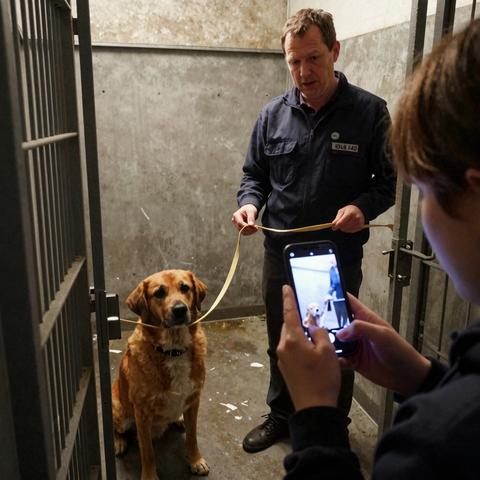
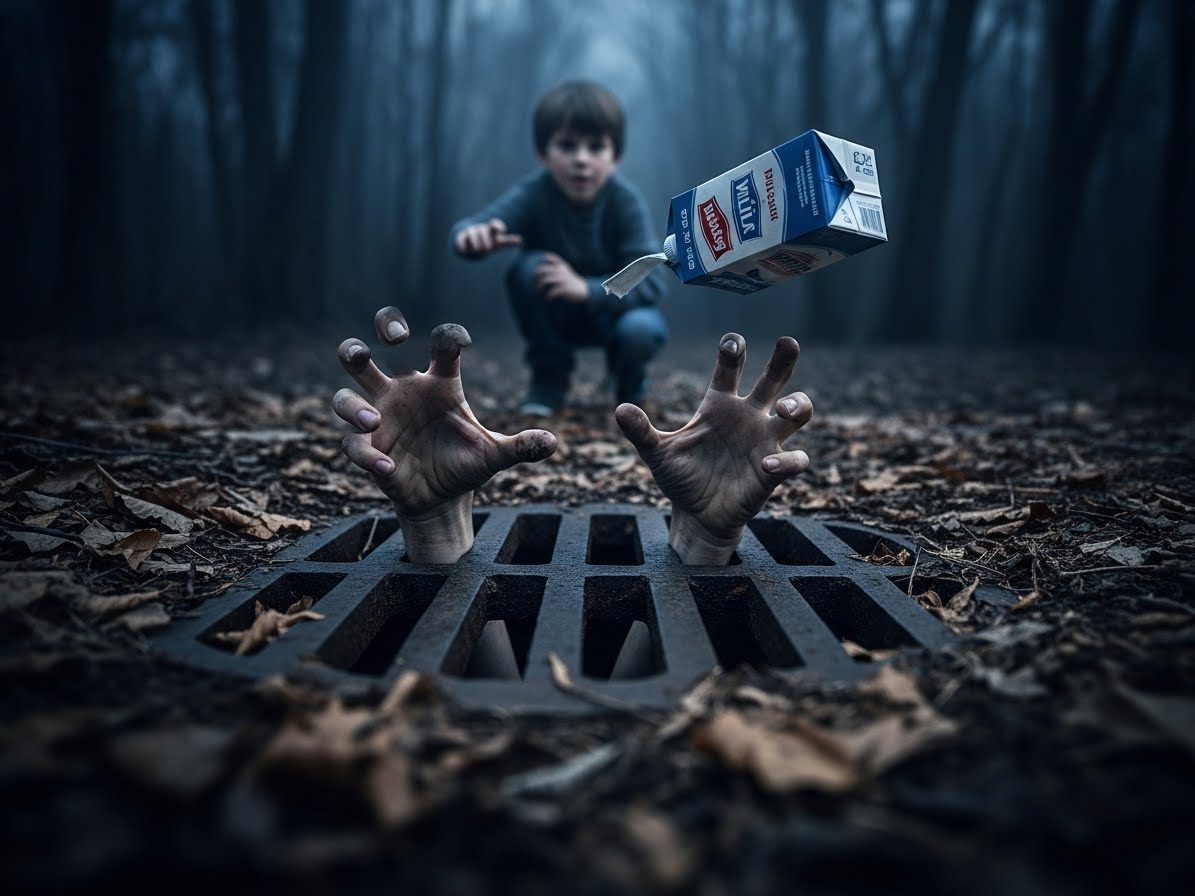
In his right hand, he carried a milk carton. A standard, half-gallon cardboard box. The kind with the red cow on the side.
From my vantage point, fifty yards away, I could tell it was empty. He didn’t strain with it. He swung it loosely. It looked like trash.
My first thought was that he was sleepwalking. Or maybe he was hiding evidence of something—bedwetting sheets, perhaps?
He would walk to the edge of the property, where the manicured lawn gave way to a dense, tangled strip of woods that separated our neighborhood from the old industrial park. He would vanish into the trees.
Ten minutes later, he would return. The box would still be in his hand.
He would slip back inside. The light in the kitchen would never turn on.
I watched this for a week.
On the eighth night, it rained. A cold, miserable sleet.
Sammy came out. He was shivering so hard I could see his frame vibrating from across the fence. But he didn’t turn back. He walked to the middle of the yard.
He stopped near the garden hose spigot. He looked back at the house, terrified. Then, he crouched down.
He put the “empty” milk carton under the spigot. He turned the handle.
He didn’t fill it all the way—probably too heavy, or maybe the noise of the water would wake his parents. He put maybe an inch of water in the bottom. Then he turned the spigot off.
He took a sip. Just one desperate, gulping sip.
Then he stood up, cradling the carton against his chest to shield it from the rain, and marched into the woods.
He wasn’t throwing the box away. He was using it as a vessel.
He was bringing water to something.
Chapter 2: The Thing in the Drain
The next morning, I saw Linda Miller at the mailbox. She was wearing a white tennis outfit, though I had never seen her hold a racket.
“Good morning, Martha!” she chirped. Her lipstick was a shade of red that looked like a fresh wound.
“Morning, Linda,” I said, clutching my robe. “How is Sammy? I thought I saw him up late last night.”
Linda’s smile didn’t waver, but her eyes went flat. Like a shark’s eyes.
“Sammy sleepwalks,” she said. Her voice was light, airy. “He has an active imagination. We have to lock the pantry sometimes. He steals sweets.”
“He looks thin,” I said. I couldn’t help myself.
“He has a fast metabolism,” Linda snapped. The chirpy tone was gone. “Have a lovely day, Martha.”
She walked away.
That night, I decided I wasn’t going to just watch.
2:15 AM.
Sammy came out. He had the carton. He went to the spigot. He filled it. He drank a sip, then headed for the trees.
I was ready. I had my heavy rubber boots on and my husband’s old hunting flashlight in my pocket. I slipped out my back door.
The air smelled of wet leaves and decay. I waited until Sammy disappeared into the brush, then I followed.
I kept my distance. I’m old, but I know how to walk quietly. You step toe-to-heel. You avoid the dry sticks.
Sammy walked deep into the woods, past the property line, down a ravine that led to the old storm drainage system. It was a relic from the 1950s, mostly rusted shut and bypassed by the new city pipes.
He stopped at a clearing. There was a concrete slab there, and in the center of it, a heavy iron grate.
Sammy fell to his knees. He didn’t look like a child playing a game. He looked like a worshipper at an altar.
He placed the milk carton on the concrete.
“I’m here,” he whispered.
The sound of his voice in the dead silence of the woods made me jump.
He leaned over the grate. “I got water. It’s cold.”
I held my breath. Was he talking to an imaginary friend?
Then, I heard it.
A sound rising from the black depths of the grate.
Scrape. Scrape.
And then a voice. It was weak, raspy, and sounded like it was coming through a mouthful of gravel.
“Did you… did you bring the crusts?”
Sammy reached into his pajama pocket. He pulled out a crumpled napkin. Inside was the heel of a loaf of bread—the part most people throw away.
“I saved it from dinner,” Sammy whispered. “I had to hide it in my sock. Mom checked my pockets.”
He began to shred the bread into tiny pieces. He dropped them through the bars of the grate, one by one.
“Here. Eat slow, Caleb. Eat slow or you’ll throw up again.”
Caleb.
My mind raced. I knew the Millers’ history. I had looked them up on Facebook when they moved in. They had one son. Samuel.
There was no Caleb.
I crept closer. I had to see. I moved from behind the oak tree, stepping onto the mossy concrete.
Sammy was so focused on feeding the thing below that he didn’t hear me until I was ten feet away.
“Sammy?” I whispered.
The boy spun around. His face went white. He scrambled backward, knocking over the milk carton. The water spilled onto the concrete, wasted.
“No! No! Don’t tell!” he screamed, but it was a whispered scream. “He’ll kill him! He said he’d kill him if anyone knew!”
“Sammy, who is down there?” I asked, my voice shaking.
“Nobody!” Sammy cried, putting his body over the grate as if to shield it. “Just a raccoon! Go away, Mrs. Higgins! Please!”
But I couldn’t go away. Because the voice from the grate spoke again.
“Sammy? Who is that? Is it Dad?”
It wasn’t a raccoon.
I stepped forward, ignoring Sammy’s sobbing pleas. I clicked on my flashlight.
I aimed the beam straight down through the rusted iron bars.
The light cut through the darkness of the shaft. It went down about ten feet. At the bottom, there was a bed of filthy straw and old blankets.
And looking up at me, shielding his eyes from the sudden brightness, was a boy.
He looked exactly like Sammy. The same nose. The same jaw.
But he was skeletal. His skin was gray. He was covered in filth. And around his ankle, bolted to the concrete wall of the drain, was a heavy steel chain.
“Oh, dear God,” I whispered.
The boy in the pit squinted at me. “Are you… are you the angel Sammy told me about?”
I looked at Sammy. He was curled in a ball, pulling his hair. “They didn’t want two,” he sobbed. “Dad said they only had money for one. He said Caleb was the bad one.”
I switched off the flashlight. The darkness rushed back in, but the image was burned into my retinas.
Twins. They had twins. And they had kept one. And the other…
They had buried him alive.
“Sammy,” I said. My voice was suddenly very calm. It was the calm of a woman who realizes that the rules of civilization no longer apply. “Stay here. Do not move. I am going to get you out.”
“You can’t,” Sammy wept. “Dad has the key to the grate. He keeps it on his belt. He checks it every morning.”
“I don’t need a key,” I said.
I turned around and began to walk back to my house. I didn’t run. I walked with purpose.
I walked past the sleeping houses. Past the manicured lawns. Past the lies.
I went into my house. I locked the door. I went down to the basement where my late husband, Arthur, kept his gun safe.
Arthur was a paranoid man. He believed the government was coming for us. I used to hate his guns. I used to beg him to sell them.
Tonight, as I spun the dial—right to 24, left to 10, right to 5—I thanked God for Arthur’s paranoia.
I took out the Remington 870 shotgun. I took a box of shells from the shelf.
Click-clack.
I wasn’t calling the police. Richard Miller played poker with the Chief of Police. If I called 911, a squad car might come in twenty minutes. In twenty minutes, Richard could wake up. He could go to the woods. He could hurt those boys.
No.
I walked out my front door, the shotgun resting on my shoulder. I crossed the lawn to 404 Maple Drive.
I didn’t knock.
Part 2
Chapter 3: The Front Door
The front door of the Miller house was solid oak with a decorative glass oval in the center.
I didn’t bother checking if it was unlocked. I raised the stock of the Remington and smashed the glass.
CRASH.
The sound was like a thunderclap in the silent neighborhood. Dogs started barking three streets over.
I reached in, unlocked the deadbolt, and opened the door.
“Richard! Linda!” I screamed. My voice wasn’t an old woman’s voice anymore. It was the voice of judgment. “Get downstairs! Now!”
I heard movement upstairs. Heavy footsteps.
“Who’s there? I have a gun!” Richard’s voice boomed from the top of the stairs.
I stood at the bottom of the foyer, the shotgun leveled at the landing.
“So do I, Richard,” I yelled back. “And mine is bigger.”
Richard appeared at the top of the stairs. He was wearing silk pajamas. He held a small pistol, but when he saw me—crazy old Martha from next door, wearing a floral robe and holding a riot shotgun—he froze. His dentist smile was gone.
“Martha?” he stammered. “What the hell are you doing? Have you lost your mind?”
“Drop the gun, Richard,” I said. I pumped the shotgun again, ejecting an unspent shell just for the terrifying sound it made. Clack-clack.
He dropped the pistol. It clattered down the stairs.
“Linda!” I yelled. “You too!”
Linda appeared behind him, looking like a ghost. She saw the broken glass. She saw the gun.
“Where is the key?” I asked.
“What key?” Richard played dumb. He was good at it.
“The key to the storm drain,” I said. “The key to your son.”
Linda let out a strangled sound and collapsed against the banister. Richard’s face went from confused to murderous in a split second.
“You snooping old witch,” he hissed. “You have no idea what you’ve walked into.”
“I walked into a crime scene,” I said. “Give me the key, or I will repaint your foyer.”
Richard started to walk down the stairs. He was a big man. He thought he could intimidate me. He thought I was bluffing.
“You won’t shoot,” he said, taking a step. “You’re a nice old lady. You bake cookies.”
I aimed at the expensive vase on the table next to him.
BOOM.
The vase disintegrated. The drywall behind it exploded. The sound was deafening in the enclosed space. My shoulder screamed in pain from the recoil, but I didn’t flinch.
Richard threw himself flat on the stairs. Linda screamed.
“The next one goes in your knee, Richard,” I said, my ears ringing. “Throw me the key.”
Trembling, Richard reached into the pocket of his robe. He pulled out a ring of keys. He threw them down. They landed at my feet.
“You’re dead,” he whispered, his face pressed into the carpet. “You think you can save it? It’s a monster. That’s why we put it there. It’s not human.”
“We’ll see,” I said.
I picked up the keys with my left hand, keeping the shotgun trained on them with my right.
“Don’t move,” I commanded. “If you move, I will come back. And I won’t miss.”
I backed out of the door. As soon as I was on the porch, I ran.
Chapter 4: The Rescue
I ran back to the woods. The shotgun was heavy, and my lungs were burning, but adrenaline is a powerful drug.
I found Sammy exactly where I left him. He was huddled over the grate, sobbing.
“Mrs. Higgins!” he cried when he saw me. “Did you kill them?”
“No,” I said, breathless. “But I scared the hell out of them.”
I knelt down. My hands were shaking so bad I could barely find the keyhole on the padlock.
“Which one is it?” I muttered, fumbling with the keys.
“The small silver one,” Caleb’s voice said from below. He sounded weaker. “That’s the one Dad uses.”
I found the small silver key. I slid it into the rusted padlock. It turned with a stiff click.
I pulled the lock off. I grabbed the heavy iron grate.
“Help me, Sammy,” I said.
Together, the old woman and the starving boy pulled. The grate groaned and slid aside, scraping against the concrete.
The smell hit me first. Urine. Rot. Mold.
I shined the light down. There was an iron ladder set into the wall.
“I’m coming down,” I said.
I left the shotgun on the grass. I climbed down the ladder. It was slick with slime.
When my feet hit the straw, I wanted to vomit. The space was tiny. A six-by-six concrete box.
Caleb was chained to the wall by his ankle. He was sitting on a pile of rags.
Up close, the resemblance was undeniable. He was Sammy’s mirror image, but broken. His skin was translucent. His eyes were huge and dark.
“Hi,” he whispered. He reached out a hand. His fingers were like twigs.
“Hi, Caleb,” I said, tears streaming down my face. “I’m Martha.”
I tried the keys on the ankle cuff. The third key worked. The shackles fell open.
Caleb tried to stand, but his legs collapsed. Atrophy. He hadn’t walked in months, maybe years.
“I’ve got you,” I said.
I scooped him up. He weighed nothing. He felt like a bird that had fallen out of a nest.
“Sammy!” I yelled up. “Stay back!”
I climbed the ladder one-handed, holding Caleb tight against my shoulder. It was the hardest physical thing I have ever done. My muscles screamed. My heart fluttered. But I didn’t stop.
I hauled us over the lip of the drain. We collapsed onto the wet grass and mud.
The brothers looked at each other. Sammy reached out and touched Caleb’s face.
“You’re out,” Sammy whispered.
“Yeah,” Caleb wheezed. “The sky is… it’s really dark.”
“It’s night time,” I said, catching my breath. “The sun comes later.”
Sirens.
I heard them in the distance. Someone had called the cops. Probably the other neighbors who heard the gunshot.
“Come on,” I said. “We can’t stay here.”
Part 3
Chapter 5: The Blue and the Black
The sirens cut through the night, wailing like banshees.
I stood in the mud, my chest heaving. Caleb was clinging to my leg, too weak to stand on his own. Sammy was holding Caleb’s hand, staring at the flashing lights approaching through the trees.
“They’re coming for us,” Sammy whispered. “Dad knows the police. He says the Chief owes him a favor.”
“Not this favor,” I said grimly. “Nobody calls in a favor for this.”
I looked at the shotgun lying in the wet grass a few feet away. I kicked it further into the darkness. I didn’t want to give a nervous rookie cop a reason to open fire on an old woman and two children.
“Hands up! Police!”
Beams of tactical flashlights sliced through the woods, blinding us. Shadows danced wildly against the trees.
“Don’t shoot!” I screamed, shielding the boys with my body. “There are children here! Unarmed children!”
Two officers burst through the brush, guns drawn. Behind them, limping and red-faced, was Richard Miller. He was still in his silk pajamas, pointing a finger at me.
“That’s her!” Richard yelled. “She’s crazy! She broke into my house! She tried to kill us! Arrest her!”
The lead officer, a young man named Deputy Higgins (no relation), kept his gun trained on me.
“Ma’am, step away from the boy,” Higgins commanded.
“Which boy?” I snapped. “The one they kept, or the one they buried?”
Higgins frowned, lowering his light slightly. “What?”
Richard lunged forward. “Don’t listen to her! She’s senile! She kidnapped my son Sammy and dragged him out here!”
“Look at them, Officer!” I roared. “Look at what is behind me!”
I stepped aside, revealing the twins.
The silence that fell over the woods was heavier than the shotgun blast had been.
Officer Higgins froze. He looked at Sammy, trembling in his pajamas. Then he moved his light to Caleb.
Caleb looked like a creature from a nightmare. He was covered in muck. His ribs were visible through his papery skin. The sores from the shackles around his ankles were raw and bleeding. And he looked exactly like Sammy.
“Jesus Christ,” the second officer whispered.
“That’s… that’s a trick!” Richard stammered, his voice pitching up. “That thing… it’s dangerous! It’s sick! We had to quarantine it! For the safety of the family!”
“Quarantine?” I spat. “You chained him in a storm drain and fed him table scraps through a grate!”
I pointed to the open manhole, the dark mouth of the pit gaping open like an accusation.
“Check the drain,” I told the officers. “Go look at the bucket he used for a toilet. Go look at the straw.”
Higgins walked over to the drain. He shined his light down. He saw the chains bolted to the wall. He smelled the stench rising from the hole.
He turned back to Richard Miller. His face was pale, but his jaw was set like stone.
“Turn around, Mr. Miller,” Higgins said. His voice was dangerously quiet.
“Now, wait a minute, I know Chief Harrison…” Richard started.
“I said turn around!” Higgins shouted, grabbing Richard by the shoulder and spinning him. “Put your hands behind your back!”
“You can’t do this! I’m a doctor! I’m a pillar of this community!”
Click.
The handcuffs snapped shut.
“You have the right to remain silent,” Higgins said, shoving Richard toward the second officer. “And I highly suggest you use it, because if you say one more word, I might forget my badge is on.”
Chapter 6: The Invisible Woman Becomes Visible
The next hour was a blur of chaos.
Paramedics arrived. When they loaded Caleb onto the stretcher, he started screaming. He wasn’t used to being touched. He wasn’t used to the lights.
“It’s okay, Caleb,” Sammy cried, holding his hand as they lifted the gurney. “It’s the spaceship. We’re going to the spaceship.”
I watched them go. I saw Linda Miller being led out of the house in handcuffs, her perfect makeup ruined by tears. She wasn’t screaming. she was staring at the ground, finally broken under the weight of her own complicity.
I sat on the bumper of a police cruiser, wrapped in a blanket. Detective Ramirez stood in front of me, holding a notepad.
“Mrs. Higgins,” he said gently. “We need to talk about the shotgun.”
“It’s a Remington 870,” I said, sipping the lukewarm coffee a nice female officer had given me. “Registered to my late husband, Arthur.”
“You fired a round inside a residential dwelling,” Ramirez said. “You broke and entered. You held a couple at gunpoint.”
“I missed on purpose,” I said. “And I’d do it again.”
Ramirez sighed. He rubbed his temples. “Technically, Martha, you committed three felonies tonight.”
I looked him in the eye. “Technically, Detective, I stopped a murder. That boy wouldn’t have lasted another winter down there. You saw him.”
Ramirez looked over at the ambulance where the twins were being treated. He looked back at me. He closed his notebook.
“The way I see it,” Ramirez said slowly, “You heard a disturbance. You went to investigate. You found the door open. You grabbed a gun for self-defense because you saw a ‘wild animal’—Mr. Miller—threatening a child. The gun went off accidentally during the struggle.”
He raised an eyebrow at me.
“Is that what happened, Mrs. Higgins?”
I smiled. It was a tired, grim smile. “If you say so, Detective.”
“Go home, Martha,” Ramirez said. “We’ll need a formal statement tomorrow. Get some sleep.”
I didn’t sleep. I sat on my porch and watched the sunrise. I watched the crime scene tape fluttering in the breeze.
The neighborhood woke up. People came out of their houses, whispering, pointing. They looked at the Miller house with horror. They looked at me with confusion.
I wasn’t the invisible old lady anymore. I was the woman who blew the door off the horrors of suburbia.
Chapter 7: Milk and Honey
It’s been a year.
Richard and Linda Miller are gone. They pleaded guilty to avoid the death penalty—though in my opinion, they got off easy. They are serving consecutive life sentences. The “perfect couple” will die in concrete boxes, just like the one they built for their son.
The story made national news. ” The Boy in the Drain.” People sent money, toys, clothes.
But the boys didn’t need things. They needed a home.
They live with Linda’s sister now, a woman named Sarah who lives on a farm in Wisconsin. She didn’t know. She had been told Caleb died in childbirth. When she found out the truth, she drove through the night to get to the hospital. She hasn’t let them go since.
I get letters. Every week.
Yesterday, a package arrived.
I opened it at my kitchen table, sipping my tea.
Inside was a framed photograph.
It showed two eight-year-old boys standing in a field of tall grass. They were both wearing muddy jeans and flannel shirts. They were smiling—real, toothy smiles.
Caleb had gained weight. His cheeks were round. He looked just like Sammy. You couldn’t tell who had been the boy in the house and who had been the boy in the drain. They were just brothers.
And there was something else in the package.
A small, wooden birdhouse. painted clumsily in bright blue and red.
There was a note attached, written in shaky, crayon handwriting.
Dear Martha,
We made this for your porch. Sarah says birds like safe places. Thank you for the shotgun.
Love, Sammy and Caleb.
I laughed. A loud, barking laugh that startled the silence of my empty kitchen.
I walked out to the porch. I hung the birdhouse right next to the front door.
Then I sat down in my rocking chair. I watched the street. I watched the neighbors.
I’m still watching.
Because you never know what people are hiding. And sometimes, it takes an invisible old woman to see the monsters in the dark.
And if I ever see another one… well, Arthur left me plenty of ammo.
[STORY COMPLETE]