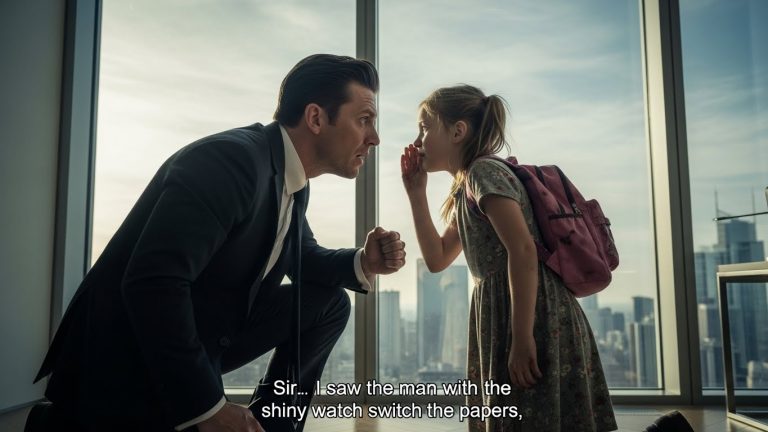
I played my violin while they loaded their guns. They told me the neighborhood was hopeless, that we were born to fight and die on these concrete corners. But the night I stood on the fire escape and played for the gang leaders, I realized that even monsters have hearts—if you know the right song to break them.
PART 1
CHAPTER 1: THE GRAVEYARD OF DREAMS
The first thing you learn growing up in the Ironworks District is that silence is dangerous. Silence means someone is holding their breath. Silence means the cops are turning the corner, or a rival crew is about to kick down a door. We lived on the fourth floor of a brick tenement that smelled permanently of boiled cabbage and stale cigarette smoke. My room looked out over the alley—a narrow strip of darkness where light went to die. I was twelve years old, invisible, and starving. Not for food, though the pantry was often light, but for something else. Something I couldn’t name until I found it rotting in the trash.
It was a Tuesday. Tuesday was trash day, the day the city pretended to clean up the mess we lived in. I was walking home from school, taking the long way to avoid the corner of 5th and Main, where the “Kings of Iron” hung out. They were the apex predators of our ecosystem. Young men with hollow eyes and heavy pockets. I cut through the alley behind “Sal’s Pawn & Loan.” Sal was a mean old man who cheated everyone, but he threw away interesting things. That’s when I saw it. Sticking out of a black trash bag, covered in coffee grounds. A neck. Not a human neck, but elegant, curved wood.
I froze. I looked left. I looked right. The alley was empty. I pulled it out. It was a violin. Or, it used to be. The bridge was missing. Two strings were snapped, curling like dead vines. There was a crack running down the body like a jagged scar. It was trash. Broken. Useless. Just like us. That’s what the news anchors called our neighborhood: “Broken.” “Hopeless.” But as I ran my thumb over the varnished wood, feeling the grain, I felt a jolt of electricity. It wasn’t the wood. It was the potential.
I shoved it into my oversized backpack, the neck sticking out the top. I zipped it up as best I could and ran. I ran past the boarded-up windows. I ran past the memorials on the sidewalk—teddy bears and candles melting into the pavement. I burst into our apartment, locking the three deadbolts behind me. “Mia?” My mom called from the bedroom. She was sleeping before her night shift at the hospital. “It’s me, Mom,” I whispered. I ran to my room—which was really just a closet large enough for a twin mattress—and pulled out the treasure.
I cleaned it with an old sock. I used wood glue I found in the junk drawer to seal the crack. It wasn’t professional, but it held. The strings were the problem. I had no money. For two weeks, I didn’t eat lunch. I saved my dollar fifty every day. When I finally had enough, I walked three miles to the music store in the gentrified part of town. The clerk looked at me like I was going to steal something. I slammed my crumpled dollar bills on the counter. “Violin strings,” I said. “The cheapest you got.”
I ran all the way home. That night, I strung the instrument. I didn’t have a bow, so I used a chopstick I found, rubbing it with tree resin I scraped from the park. It sounded terrible. Like a dying cat. But it was sound. My sound. I couldn’t play loud. The walls were paper thin. If the neighbors complained, the landlord, Mr. Russo, would throw us out. He had a zero-tolerance policy for “noise.” So I learned to play the sound of silence. I plucked the strings softly. Pizzicato. I learned the fingerings by watching videos on the cracked screen of my mom’s old phone, stealing the neighbor’s Wi-Fi.
I was learning a secret language. But secrets in the Ironworks don’t stay secret for long. One night, around 2:00 AM, I was practicing. I was trying to play a melody I heard in a movie. A sad, haunting tune. Thump. Thump. Thump. Someone was banging on the floor above me. I froze. My heart hammered against my ribs. I had been caught. But then, the banging changed rhythm. Thump-thump-thump. One-two-three. A waltz beat. They weren’t telling me to stop. They were keeping time. I plucked the string again. Thump. I smiled in the dark. I didn’t know who was upstairs. But for the first time in my life, I wasn’t alone.
CHAPTER 2: THE FIRE ESCAPE
August in the city is a physical assault. The humidity wraps around your throat and squeezes. The asphalt absorbs the sun all day and radiates it back all night, turning the tenements into brick ovens. It was the third night of the heatwave. Tempers were short. The air outside was thick with the sound of arguing. Couples fighting. Dogs barking. Sirens wailing in the distance, getting closer. Inside our apartment, it was ninety degrees. The fan was just pushing hot air around. “I can’t breathe,” Mom whispered, lying on the couch with a wet rag on her forehead. “I’ll open the window,” I said.
I climbed out onto the fire escape. It was a rusted metal cage clinging to the side of the building, four stories up. Below me, the street was a chaotic theater. The Kings were out in force. They were gathered around a sleek black car parked in front of the bodega. Dante, the leader, was sitting on the hood. He was only nineteen, but he had eyes that looked a thousand years old. They were arguing with a rival crew. Voices were raised. Chests were puffed out. Hands were hovering near waistbands. The tension was so thick you could strike a match on it. One wrong word, one sudden movement, and the street would erupt.
I sat on the metal grate, my legs dangling. I had my violin. By now, I had found a real bow—a cheap, plastic thing I found at a flea market—but it worked. I looked down at the violence brewing below. I remembered what my favorite online teacher said: “Music isn’t about notes. It’s about emotion. It’s about speaking when words fail.” My hands were shaking. If I played, they would hear me. If I played, I would draw attention to myself. In this neighborhood, attention got you killed. But the air was so heavy with hate. It needed to break.
I lifted the violin to my chin. The wood felt cool against my sweaty skin. I closed my eyes. I didn’t play a classical piece. I played something raw. I played the sound of the heat. I played the sound of the siren. I played a slow, mournful improvisation in D minor. The first note scratched, then soared. It cut through the humid air like a knife. It was a long, high note that wavered and wept. Down below, the yelling stopped. I kept playing. I added a rhythm, a digging, aggressive bowing that mimicked the heartbeat of the city.
I opened my eyes. Dante had looked up. He was staring straight at me. The streetlights reflected in his eyes. He looked confused. Usually, when trouble started, people slammed their windows shut. They turned up the TV. They hid. But I was up here, a skinny girl in a tank top, serenading a turf war. One of the rival gang members, a guy in a red hoodie, laughed. “What is this? A concert?” “Shut up,” Dante snapped. He didn’t look away from me. I felt a surge of fear, but I didn’t stop. I transitioned into a melody I had written myself. It was a song about the alley. About the trash. About the broken things.
The silence on the street spread. The people on the stoops stopped talking. The old lady sweeping her porch stopped moving. For three minutes, the Ironworks held its breath. There were no gunshots. No sirens. Just the cry of four cheap strings vibrating against hollow wood. I finished on a low, resonating note that faded into the hum of the distant traffic. My arm dropped to my side. I waited for the mockery. I waited for the bottle to be thrown. Instead, Dante slowly took his hand off his waistband. He nodded at me. A single, barely perceptible nod.
Then he turned to the rival crew. “Get out of here. Tonight’s over.” The rival leader looked up at me, then at Dante. He spat on the ground. “Whatever, man. It’s too hot anyway.” They walked away. The tension broke. The air seemed to get a little lighter. From the window above me—the fifth floor—I heard a sound. Clap. Clap. Clap. Slow, rhythmic applause. Then, from the building across the street, a whistle. “Play another one, kid!” someone yelled from the darkness.
I looked at my mom through the window. She was sitting up, watching me with wide, terrified eyes. “Mia, get inside,” she hissed. “Now.” I scrambled back through the window, locking it behind me. My heart was racing a mile a minute. I had just stopped a gang fight with a violin. But I knew this wasn’t the end. You don’t change the Ironworks with one song. I had just put a target on my back. Or maybe… just maybe… I had started a revolution.
PART 2
CHAPTER 3: THE DEVIL AT THE CORNER
The next morning, the adrenaline had faded, replaced by the cold, hard reality of the Ironworks. I had to walk to school.
I tried to be invisible. I wore my hood up. I walked fast, hugging my backpack to my chest.
But you can’t be invisible when the King of Iron is looking for you.
I was two blocks from the subway station when a black sedan rolled up alongside me. The window rolled down.
It was Dante.
My stomach dropped. I looked for an exit, but the sidewalk was fenced in by construction barriers. I was trapped.
“Get in,” Dante said. It wasn’t a question.
“I… I have school,” I stammered, gripping my backpack straps until my knuckles turned white.
“School can wait,” he said. He unlocked the passenger door. Click.
I got in. I didn’t have a choice. People who said ‘no’ to Dante usually ended up in the ER.
The car smelled of expensive leather and cheap pine air freshener. Dante didn’t look at me. He was staring straight ahead, drumming his fingers on the steering wheel.
“You got guts, kid,” he said. “Or you’re crazy. I haven’t decided which.”
“I just wanted the noise to stop,” I whispered.
“The noise never stops,” Dante said. He turned to look at me. His eyes were tired. “But last night… for a minute, it did.”
He reached into his pocket. I flinched, expecting a weapon.
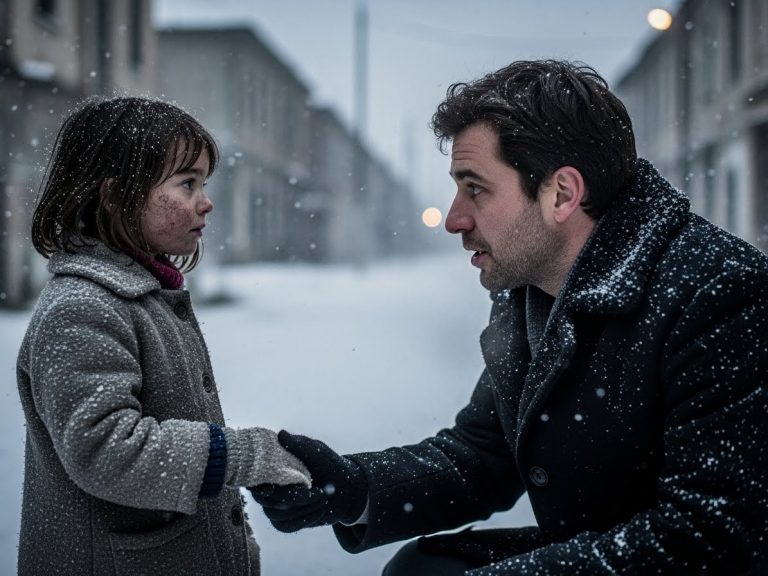
He pulled out a crumpled flyer. It was a picture of a young boy, maybe sixteen. In Loving Memory of Marcus ‘Trey’ Williams.
“My brother,” Dante said. “Today’s the anniversary. We’re doing a thing at the park. A vigil.”
He looked at the flyer, then at me.
“He liked music. He played the trumpet before… well, before.” Dante cleared his throat. “I want you to play.”
“Me?”
“Yeah. That song you played last night. The sad one.”
“I… I don’t know if I can. My mom…”
“Your mom is safe,” Dante interrupted. “Nobody touches you. You’re under my protection now. But you play.”
It was a command, but it was also a plea. I looked at the face of the boy on the flyer. He had the same eyes as Dante, but softer.
“Okay,” I said. “I’ll play.”
CHAPTER 4: THE SYMPHONY OF THE STREETS
The park was a patch of dying grass and broken swings in the center of the district. Usually, it was filled with drug deals. Today, it was filled with candles.
Fifty people were there. Gang members in colors, old women in church hats, young mothers with strollers. It was a strange, tense congregation.
Dante nodded at me when I arrived. He pointed to a milk crate set up near the makeshift altar.
“Play,” he said.
I took out my violin. The crowd went silent. They were skeptical. A skinny girl with a taped-up instrument?
I started to play. Amazing Grace. But I played it my way—slow, bluesy, sliding between the notes like a singer’s voice breaking.
As I played, something incredible happened.
From the back of the crowd, a sound joined in. A deep, mournful hum.
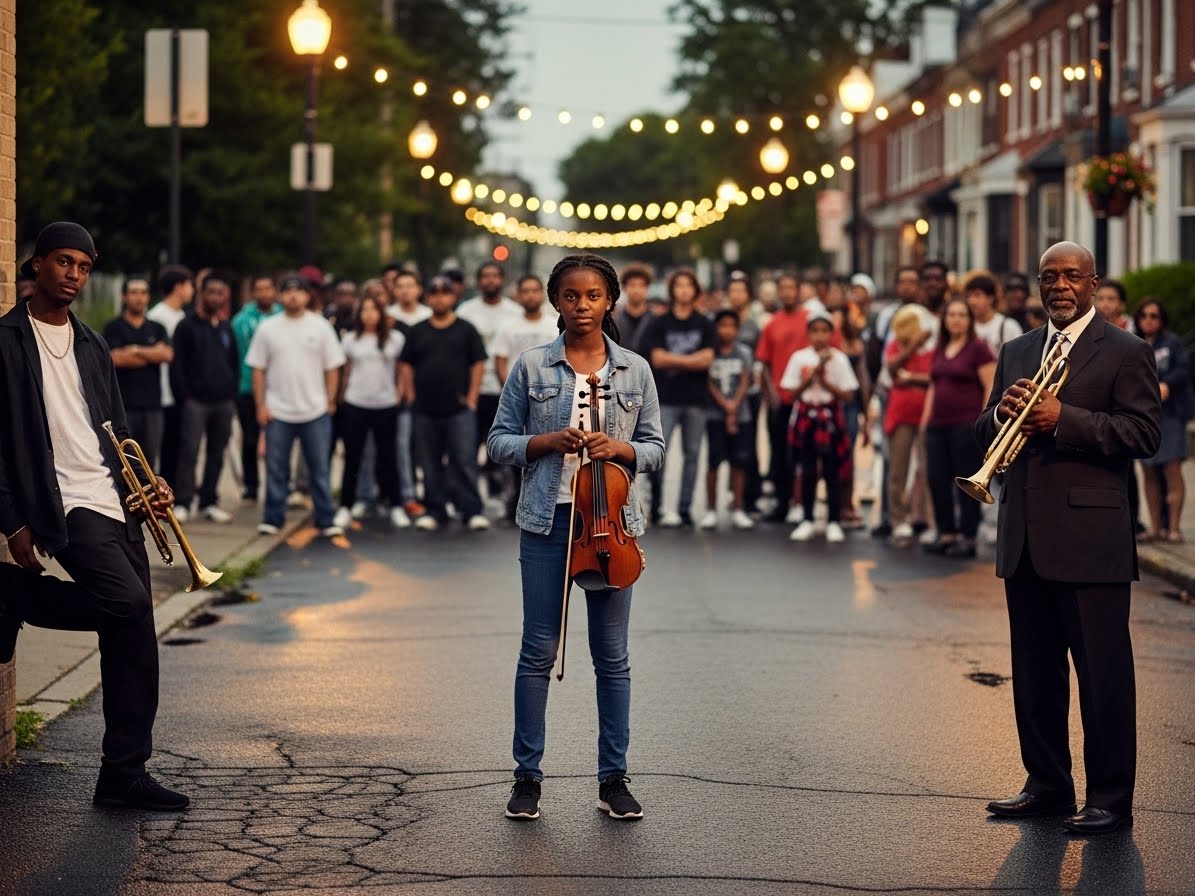
I looked up. An old man in a gray suit—Mr. Silas from the fifth floor of my building—was standing there holding a battered trumpet.
He wasn’t just humming. He started to play.
His trumpet woven around my violin strings. It was jazz. It was soul. It was beautiful.
Then, a kid started tapping on a plastic bucket with drumsticks. Rat-a-tat-tat.
More people joined in. A woman started singing.
The vigil turned into a jam session. For an hour, the park wasn’t a gang territory. It was a concert hall without a roof.
I looked at Dante. He was standing by a tree, his arms crossed. He wasn’t crying—Kings don’t cry—but his head was bowed. He looked peaceful.
When we finished, the applause was deafening. Mr. Silas walked over to me.
“You got a good ear, child,” he rasped. “But your bowing arm is stiff. Come upstairs tomorrow. I’ll teach you how to swing.”
I smiled. For the first time, I felt like I belonged.
CHAPTER 5: THE SOUND OF BREAKING WOOD
The music didn’t stop that day. It grew.
Every evening at sunset, I would go to the fire escape. Mr. Silas would open his window. The bucket drummer, a kid named Leo, would sit on the stoop.
We played. And people listened. The arguments on the street became less frequent. The drug dealers moved two blocks over because the crowd was too big, too attentive.
But change makes enemies.
The rival gang—the Vipers—didn’t like the new atmosphere. They didn’t like that Dante’s block was becoming “soft.” They didn’t like that people were smiling instead of fearing.
It was a Thursday. I was walking home from Mr. Silas’s apartment, carrying my violin case.
I turned into the alley.
Three guys were waiting. They wore red bandanas. Vipers.
“There she is,” the leader sneered. ” The little virtuoso.”
I turned to run, but a fourth guy blocked the exit.
“You think you’re special?” the leader asked, stepping closer. “You think you can change the rules with a fiddle?”
“I’m just playing music,” I said, my voice trembling.
“You’re making noise,” he spat. “And we like it quiet.”
He grabbed my backpack.
“No!” I screamed.
He ripped it off my shoulder. He unzipped it and pulled out the violin.
“Please,” I begged. “It’s all I have.”
He looked at me, his eyes dead and cold.
“Not anymore.”
He raised the violin over his head and smashed it against the brick wall.
CRACK.
The sound was worse than a gunshot. It was the sound of a soul breaking.
Splinters of wood flew everywhere. The strings groaned as they snapped.
He dropped the neck—the only piece left intact—at my feet.
“Next time,” he whispered, leaning close to my ear, “it’s your arm.”
They laughed and walked away, leaving me kneeling in the trash, holding the shattered remains of my voice.
CHAPTER 6: THE SILENCE RETURNS
I didn’t play for a week.
The silence returned to the Ironworks. It was heavier than before. It was a silence born of defeat.
Dante found out. He came to my door, his face a mask of fury.
“Who was it?” he demanded. “Give me a name. I’ll burn their block down.”
“No,” I said, sitting on my bed, staring at the wall.
“They disrespected you. They disrespected us.”
“If you fight them,” I said quietly, “then they win. They want violence. They want the noise of guns. If you shoot them, you’re just playing their song.”
“So what do we do?” Dante yelled, pacing my small room. “Just let them win?”
“I don’t know,” I said. “But I won’t be the reason another mother puts a picture of her son on a flyer.”
Dante stormed out.
I went to the window. The fire escape was empty. Mr. Silas’s window was closed.
I felt like I had failed. I thought music was powerful, but wood is weak against brick.
Then, there was a knock at the door.
It was soft. Tentative.
I opened it.
Mr. Silas stood there. Behind him was Leo. And behind Leo was Mrs. Gable from 3B. And the bodega owner.
“We heard,” Mr. Silas said.
He was holding a black case. It wasn’t battered. It looked new.
“I haven’t played this in twenty years,” Mr. Silas said, looking at the case. “It was my wife’s. She played in the symphony. I was saving it… I don’t know what for.”
He held it out to me.
“I think she’d want you to have it.”
I opened the case. Inside lay a violin that glowed with a deep, rich varnish. It was beautiful. Perfect.
“We ain’t done, Mia,” Leo said, holding up his drumsticks. “The block is quiet. It’s weird. We need the music.”
“The Vipers said they’d break my arm,” I whispered.
“Let ’em try,” the bodega owner grunted, crossing his massive arms. “They want to get to you, they gotta go through us.”
I looked at them. This wasn’t a gang. This was a neighborhood.
I took the violin.
“Okay,” I said. “But we’re not doing a jam session. We’re doing a concert.”
CHAPTER 7: THE LINE IN THE SAND
We planned it for Saturday night. We didn’t hide it. We put up flyers. “The Ironworks Symphony: Live on 4th Street.”
Dante thought we were crazy. “You’re inviting them to attack,” he warned.
“I’m inviting them to listen,” I said.
Saturday came. We dragged a flatbed truck to the end of the block to serve as a stage. Mr. Silas hooked up an old amplifier.
The sun went down. The streetlights flickered on.
The crowd gathered. It was bigger this time. Hundreds of people.
I stood on the truck bed, tuning Mr. Silas’s wife’s violin. It had a sound like melted chocolate—smooth, dark, and rich.
Mr. Silas was to my right. Leo was on the drums. A trio of church singers stood behind us.
Then, the engines roared.
At the end of the block, four cars pulled up. Vipers.
They got out. Twenty of them. They had baseball bats. Chains. They looked like an army of darkness.
The crowd gasped and parted, creating a path for them.
Dante and his crew stepped forward to meet them.
“Stop!” I yelled into the microphone.
My voice echoed off the buildings.
“Dante, stand down,” I ordered.
Dante looked at me, confused. “Mia, they’re here to wreck it.”
“Let them come,” I said.
I looked at the Vipers. The leader—the one who broke my violin—was smirking.
“I told you to keep it quiet,” he shouted.
“And I’m telling you,” I said, raising my bow, “that you don’t own the air. You don’t own the silence.”
I turned to Mr. Silas. “Count us off.”
“One, two, three, four!”
CHAPTER 8: THE CRESCENDO
We didn’t play a sad song. We played Ode to Joy. But we played it fast. Funk style.
The drums kicked in—a heavy, infectious beat. The trumpet blared a fanfare of defiance.
And I played. I played with everything I had. I played for the broken wood. I played for the fear. I played for the hope.
The Vipers stepped forward, swinging their bats.
But something happened.
The crowd didn’t run.
The old ladies stood their ground. The fathers crossed their arms. The little kids started dancing.
The Vipers tried to push through, but there were too many people. A wall of humanity.
“Move!” the Viper leader yelled at an old woman.
She looked him in the eye. “I changed your diapers, Marcus. Sit down and shut up.”
Marcus froze. He looked around. These weren’t enemies. These were his neighbors. His aunts. His former teachers.
The music swelled. The rhythm was undeniable. It grabbed you by the chest and forced your heart to beat in time.
I saw Marcus lower his bat. He looked at Dante. Dante wasn’t holding a weapon. He was nodding his head to the beat.
It was a choice. Violence or rhythm. Hate or community.
Marcus looked at me. I held a high note, staring right at him, daring him to break this moment.
He didn’t.
He dropped the bat. It clattered on the asphalt.
He didn’t dance. He wasn’t ready for that. But he leaned against a car and crossed his arms. He listened.
The tension evaporated, replaced by a wave of pure joy.
We played for three hours. The police came—not to arrest us, but to block off traffic because the crowd had spilled onto the main avenue.
That night, the Ironworks didn’t sound like a war zone. It sounded like a celebration.
EPILOGUE: THE CONDUCTOR
Ten Years Later
The cab driver looked in the rearview mirror. “You sure this is the address, lady? This used to be a rough neighborhood.”
“I’m sure,” I said, smiling.
I stepped out onto 4th Street.
It was different. The tenements were painted. There were flower boxes in the windows. The bodega was now a cafe.
But the biggest change was the sound.
I walked toward the park. I heard violins. Cellos. Trumpets.
The “Dante Williams Community Music Center” stood where the old pawn shop used to be.
I walked inside.
Dante was at the front desk. He was thirty now, wearing a polo shirt, checking in students. He still had the tattoos, but the hardness in his eyes was gone.
“Maestro,” he grinned when he saw me. “You’re late.”
“Traffic,” I laughed.
I walked into the main hall.
Fifty kids were tuning their instruments. They were black, white, hispanic, asian. They were poor, they were rich.
But when they saw me, they went silent.
I walked to the podium. I picked up my baton.
Sitting in the front row was a little girl, maybe ten years old, holding a violin that was taped together.
I winked at her.
“Alright,” I said to the orchestra. “Let’s make some noise.”
I raised the baton.
And the music began.
THE END.