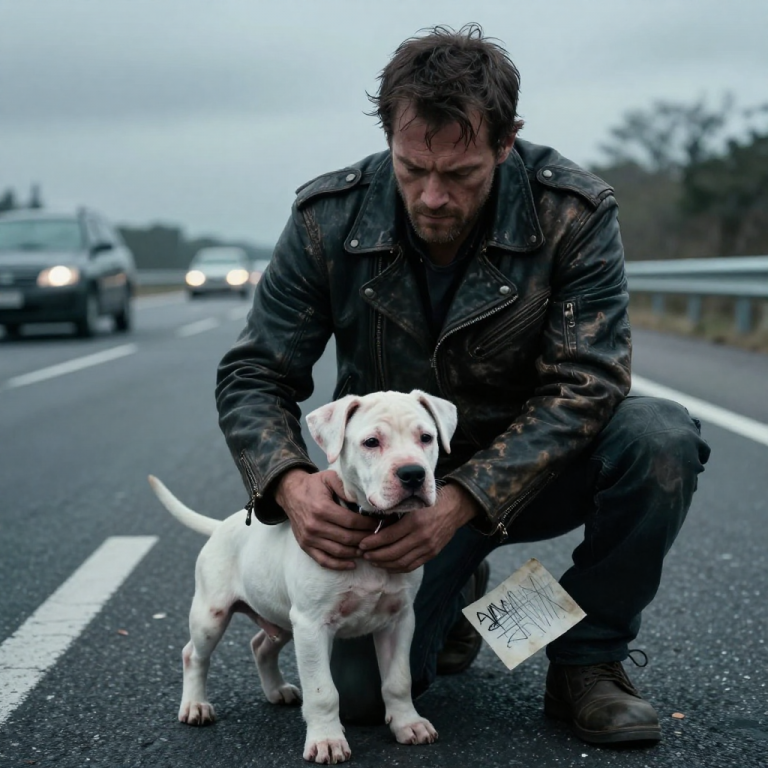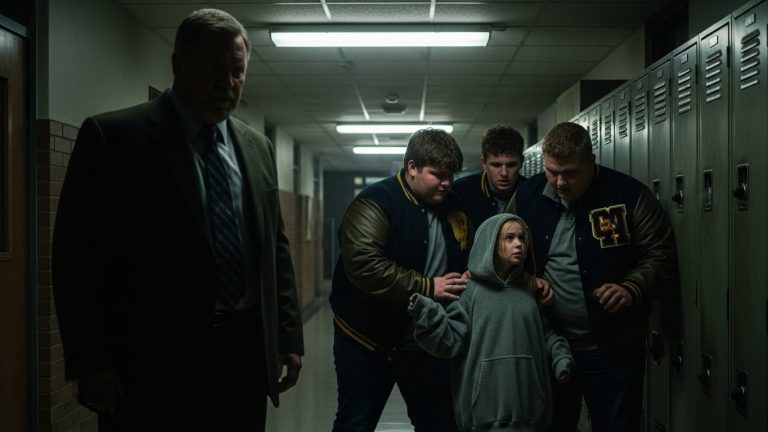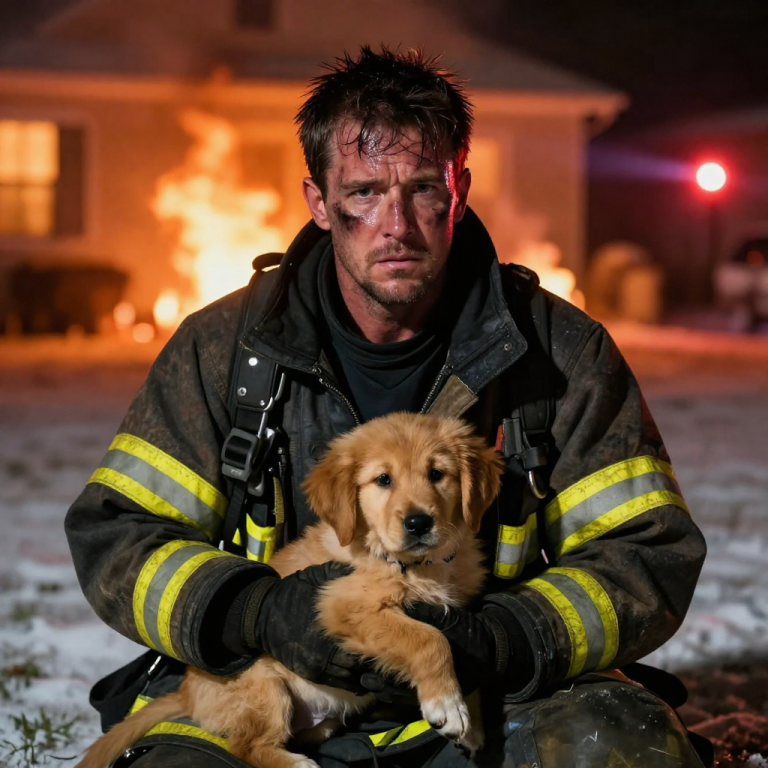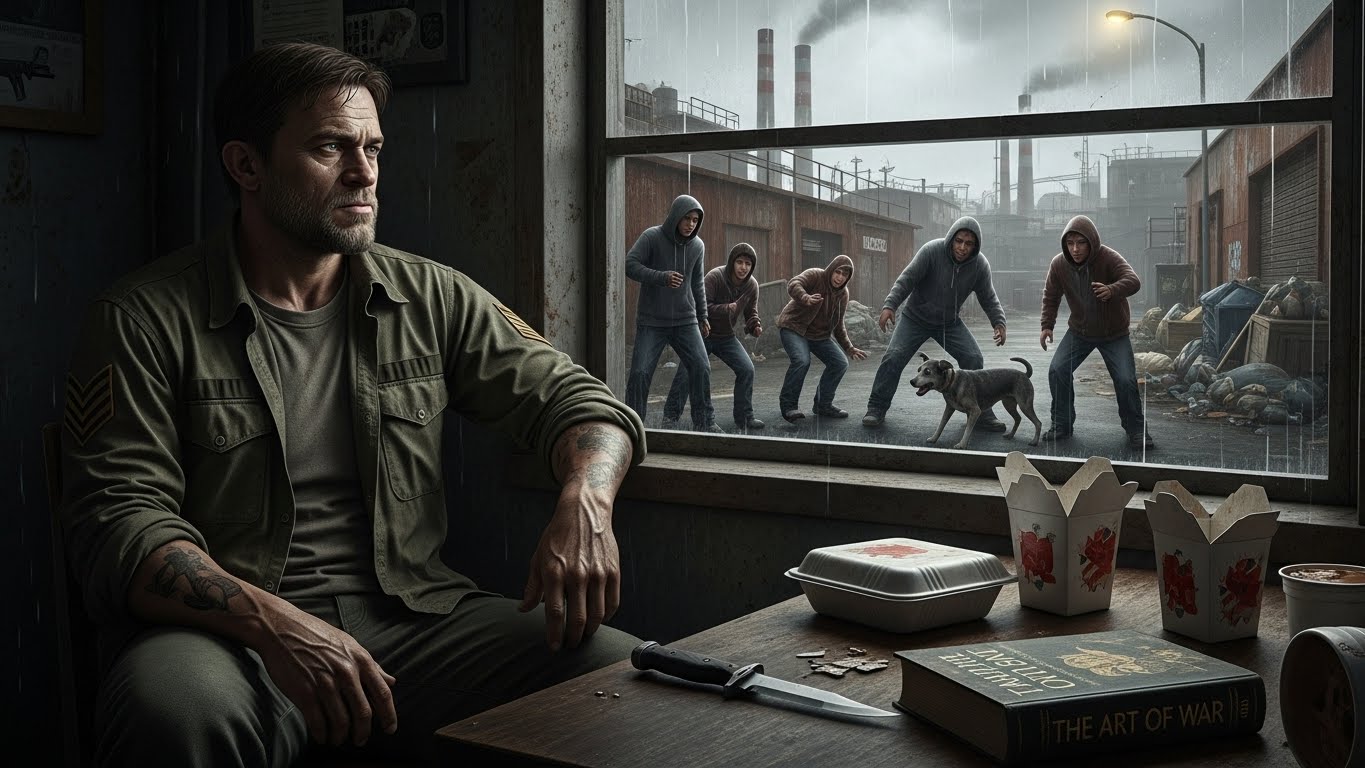
I watched my K9 partner take a bullet for me in Kandahar, and I’ve been a ghost ever since—but when I saw a group of kids cornering a defenseless stray with a lead pipe, the ghost finally came home, and I realized I wasn’t done being a soldier.
CHAPTER 2: GHOSTS IN THE LIGHT
I drove with one hand on the wheel and the other resting on the dog’s flank. He was sprawled across the bench seat of my ’98 F-150, his breathing shallow and ragged. Every time I hit a pothole—and Clear Creek was basically one giant pothole—he’d let out a soft, whistling moan that made my chest tighten.
I didn’t head home. Home was a place where things went to be forgotten, and this dog needed to be remembered. I headed three miles out of town to a small, weathered clinic with a fading sign: Aris Veterinary Services.
Doc Aris was eighty if he was a day. He was a Vietnam vet who walked with a cane and smelled like peppermint and cheap cigars. He didn’t ask questions when I carried the Golden into his exam room at 5:30 PM, just as he was flipping the ‘Closed’ sign. He just looked at the dog, then looked at the blood on my shirt, and pointed to the steel table.
“Set him down easy, Jax,” Aris said, his voice like grinding gravel.
I watched as his gnarled hands, spotted with age, moved with a precision that belied his years. He checked the dog’s vitals, his eyes narrowing as he felt the ribs and the jagged tear in the ear.
“Pipe?” Aris asked, not looking up.
“Yeah,” I said. “Cody Miller and his crew.”
Aris stopped moving for a second. He looked at me over the rims of his glasses, a flicker of something like pity in his eyes. “You always did have a knack for picking the hardest fight in the room, son. You know who Cody’s father is.”
“I know who Silas Miller is,” I said, my voice flat. “I also know what he’s not. He’s not a man who teaches his kid how to be human.”
“Silas owns half this county, Jax. He owns the police, the council, and the bank that holds the deed to your shop. You poke that bear, he won’t just bite. He’ll swallow you whole.”
“The bear should’ve stayed in his cave,” I muttered.
Aris sighed and went back to work. He cleaned the wounds, administered a sedative, and started an IV drip. “The dog is severely malnourished. Dehydrated. He’s got a fractured rib, but it hasn’t punctured the lung. He’s lucky you showed up when you did. Another hour of Cody’s ‘fun’ and this animal would be a carcass.”
I looked at the dog. Under the harsh fluorescent lights, he looked even smaller. “Will he make it?”
“He’s got a heart like a lion,” Aris said, patting the dog’s head. “But he’s tired, Jax. He’s been running for a long time. Just like you.”
Aris turned to a cabinet and pulled out a bottle of bourbon. He poured two fingers into a plastic cup and handed it to me. I hadn’t had a drink in three years. I stared at the amber liquid, the smell of it triggering a memory of a dive bar in Fayetteville, the night before my third deployment.
I handed it back. “I need to stay sharp, Doc.”
Aris nodded, downed the shot himself, and leaned against the counter. “What are you going to call him? Can’t just call him ‘The Dog’ if you’re going to go to war for him.”
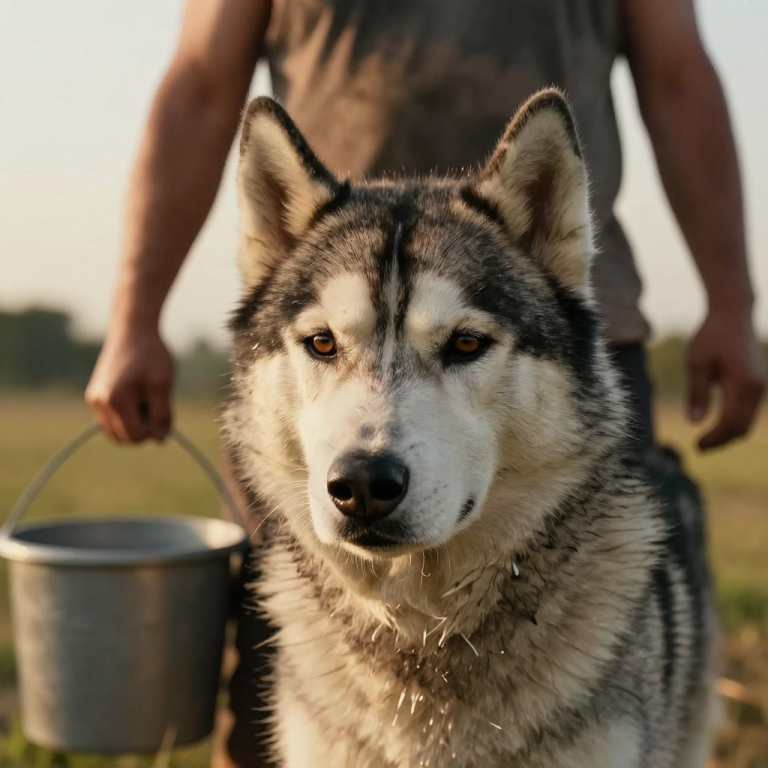
I looked at the Golden. He was pale, almost white in some patches where the mud had been wiped away. He reminded me of the dust-choked streets of Gereshk. He reminded me of the things that haunt you in the dark.
“Ghost,” I said.
“Ghost,” Aris repeated. “Fitting. Two ghosts in one house. Should be real quiet.”
I brought Ghost home two hours later. My “home” was a converted cabin on the edge of the woods, far enough from the neighbors that I didn’t have to hear their TVs, and close enough to the shop that I could walk if the truck died.
The house was a reflection of my mind: sparse, functional, and devoid of anything that suggested a future. There were no photos on the walls. No “Home Sweet Home” pillows. Just a bed, a table, a laptop, and my gear locker in the corner—the one I hadn’t opened since the day I processed out of Fort Bragg.
I laid Ghost down on an old moving blanket in the kitchen. I stayed up with him, sitting on the floor with my back against the refrigerator, a glass of water in my hand.
The silence of the woods usually calmed me, but tonight, it felt heavy. Every crack of a branch outside sounded like a footstep. Every hoot of an owl sounded like a signal.
Around 2:00 AM, Ghost’s eyes fluttered open. He looked around the darkened kitchen, panic rising in his chest. He tried to scramble up, his weak legs sliding on the linoleum.
“Easy, easy,” I whispered, sliding over to him. I put a hand on his shoulder, keeping him grounded. “You’re safe. You’re in my perimeter now. Nothing gets past me.”
Ghost froze. He looked at me, his pupils dilated. Then, slowly, he lowered his head and rested it directly on my thigh. He let out a long, whistling breath and fell back into a deep sleep.
I felt a lump form in my throat that I couldn’t swallow.
I remembered Rex’s head on my lap in the back of the MedEvac chopper. The smell of copper and jet fuel. The way Rex’s tail had thumped once, twice, against the floorboards before his eyes went dull. I had spent five years trying to outrun that thump.
Now, I was holding a new life in my hands, and I realized I was terrified. Not of Silas Miller. Not of the law. I was terrified of caring about something that could die.
The sun was just beginning to bleed through the trees when a set of headlights cut through the morning mist, sweeping across my kitchen window.
A car was coming up the gravel drive. Fast.
I didn’t hesitate. It was muscle memory. I stood up, my knees popping, and moved to the window. It wasn’t a police cruiser. It was a blacked-out Chevy Silverado—the kind of truck that screamed “local muscle.”
I reached into the gear locker. My hand hovered over the heavy steel of my old service pistol, but I hesitated. I wasn’t that man anymore. Instead, I grabbed a heavy maglite and a folding knife.
I stepped out onto the porch just as the truck screeched to a halt, kicking up a cloud of gray dust.
The door flung open, and a man stepped out. He was big—not soldier-big, but “fed-on-steak-and-entitlement” big. He wore a tailored suit that looked out of place in the dirt, and his hair was slicked back with too much gel.
Silas Miller.
He didn’t look like a villain. He looked like a congressman. He had a smile that didn’t reach his eyes—eyes that were as cold and calculating as a loan shark’s.
“Jaxson Miller,” Silas said, his voice a smooth, practiced baritone. “I hear you had a bit of an altercation with my son yesterday.”
“Your son was trying to kill a living creature for sport, Silas,” I said, stepping off the porch. I kept my hands visible, but my weight was on the balls of my feet. “I simply ended the game.”
Silas walked toward me, stopping just outside my personal space. He smelled like expensive cologne and arrogance. “Cody is a boy. Boys do stupid things. But you… you’re a man with a history. A man with a very ‘colorful’ medical record from the VA.”
He leaned in closer, dropping his voice. “I don’t like it when people touch my family, Jax. It sets a bad precedent. I’ve worked hard to make Clear Creek a quiet, orderly place.”
“It’s a graveyard, Silas. You just like being the one who digs the holes.”
Silas’s smile didn’t flicker, but his jaw tightened. “I’m going to make this simple. You’re going to give me the dog. My son feels like he didn’t finish what he started, and frankly, I think it’s important for him to learn about ‘closure.'”
My blood turned to ice. It wasn’t anger—it was something colder. Something more dangerous.
“The dog stays here,” I said.
“Jax, look around you,” Silas said, gesturing to my modest cabin. “You have nothing. No family. No money. No influence. I can have your shop closed by noon. I can have the Sheriff out here by one to arrest you for assault on a minor. Or… you can give me the animal, apologize to my son, and we can all go back to our lives.”
I looked past him at the truck. I saw Cody sitting in the passenger seat, a smug grin on his face, holding his bandaged wrist like a trophy.
I looked back at Silas.
“You’re right, Silas. I have nothing,” I said softly. “And a man with nothing is the most dangerous thing you will ever encounter. Because I have nothing left to lose.”
I took a step forward, entering his space. Silas flinched—just a tiny, almost imperceptible twitch—but it was enough. He saw it then. He saw the Ranger. He saw the man who had walked through fire and didn’t mind the heat.
“Get off my property,” I said. “If I see this truck again, I won’t be talking.”
Silas stared at me for a long beat. The mask of the polite businessman finally slipped, revealing the predator underneath. “You’ve made a very poor choice, Jax. This town isn’t big enough for your conscience and my business.”
He turned on his heel and got back into the truck. As they backed down the drive, Cody rolled down the window and spat toward my porch.
I stood there until the sound of the engine faded into the distance.
The woods were silent again, but the peace was gone. The war had come to Clear Creek.
I went back inside. Ghost was awake, sitting up on his blanket. He wagged his tail once—a weak, hesitant thump against the floor.
Thump.
The sound echoed in my chest.
“I know, buddy,” I said, kneeling down to scratch his ears. “I know. We’re going to need more than a maglite.”
I walked over to the gear locker and turned the dial on the combination lock. It was time to stop being a ghost.
It was time to be a soldier again.
CHAPTER 3: THE PERIMETER
The following week was a study in slow-motion warfare.
In the military, they teach you about “asymmetric threats.” It’s when your enemy doesn’t fight you in a straight line; they bleed you from the edges. They cut your supply lines, poison your wells, and wait for you to wither.
Silas Miller was a master of the edges.
It started on Monday. I showed up at Miller’s Auto Body—my shop, the place I’d poured every cent of my discharge pay into—to find a bright orange sticker plastered over the front door. CLOSED BY ORDER OF THE COUNTY BUILDING INSPECTOR.
The reason? A “structural instability” in a building that had stood since the Truman administration.
I stood there, my hands in my pockets, staring at the orange tag while the morning commuters drove past. I felt the town’s eyes on me. In a place like Clear Creek, everyone knows everything before it even happens. They knew Silas was coming for me, and they were already mourning me like a man who was already dead.
I didn’t argue. I didn’t go to City Hall. I knew the person behind the desk would just look at their shoes and tell me their hands were tied. Instead, I went to the diner.
Sarah was behind the counter, her hair tied back in a messy bun, her face pale. She didn’t ask what I wanted. She just slid a mug of black coffee across the laminate and leaned in close.
“Jax, you need to leave,” she whispered. Her hands were shaking as she wiped a spot on the counter that was already clean. “I heard Silas talking to the Sheriff this morning at the back table. They’re not just trying to close your shop. They’re looking for any excuse to put you in a cell. And Cody… Cody is telling everyone he’s going to ‘finish the job’ with that dog.”
I took a sip of the coffee. It was bitter and hot. “How’s the pie today, Sarah?”
“Jax, are you even listening?” She looked like she wanted to shake me. “These people don’t play by the rules. Silas doesn’t lose. Not ever.”
“I’ve spent most of my life in places where there were no rules, Sarah,” I said, my voice quiet but steady. “Silas thinks he’s a lion because he’s the biggest beast in this small pond. But I’ve seen real lions. I’ve hunted them. He’s just a man who’s never been told ‘no.'”
I left a five-dollar bill on the counter and walked out. As I crossed the street, I saw a black SUV parked at the end of the block. The windows were tinted, but I knew who was inside. I didn’t look back.
Back at the cabin, Ghost was waiting for me.
He was looking better every day. The IV was gone, and the fever had broken. He was still thin—you could still count his vertebrae if you looked close enough—but the light was back in his eyes.
When I walked through the door, he didn’t just wag his tail. He did that “butt-wiggle” thing Golden Retrievers do, his entire body undulating with joy. He grabbed an old sneaker of mine and brought it to me, his tail thumping rhythmically against the floor.
Thump. Thump. Thump.
I sat on the floor and let him lick my face. His breath smelled like the high-end dog food I’d spent forty dollars on, and his fur was starting to feel soft again.
“You’re a good boy, Ghost,” I whispered, scratching that perfect spot behind his ears. “You’re a very good boy.”
For a second, I wasn’t in a condemned shop or a legal battle. I was just a man with his dog.
But then, Ghost’s ears pricked up. He let out a low, rumbling growl in the back of his throat. He looked toward the woods behind the cabin.
I stood up immediately. My training took over. I moved to the side of the window, peeking through the blinds without moving the slats.
Nothing. Just the swaying of the pines and the long shadows of the afternoon sun.
But Ghost didn’t stop growling. He stood his ground, his hackles raised, his eyes fixed on a dense thicket of brush about fifty yards out.
He was “pointing.” Just like Rex used to do when there was a spotter in the hills.
I went to the gear locker. I didn’t pull out the pistol—not yet. I pulled out a set of high-end Steiner binoculars. I focused on the thicket.
There. A flash of light. A lens reflection.
Someone was watching the house.
I felt a surge of cold fury. It’s one thing to come after a man’s livelihood. It’s another thing to come to his home. To watch him while he sleeps. To threaten the one thing he has left to care about.
I spent the rest of the afternoon in “SOP” mode.
I didn’t act like I saw them. I went about my business. I chopped some wood. I fed Ghost. I even sat on the porch for a while, reading an old manual. But my mind was mapping the perimeter.
I knew the terrain. I knew where the shadows pooled and where the gravel crunched. I knew every entrance and every exit.
At 9:00 PM, I turned off all the lights in the cabin.
I didn’t go to bed. I sat in the kitchen, in total darkness, with Ghost at my feet. I had my old night-vision monocular and a heavy-duty tactical flashlight. I had also moved my “collection” from the locker to the kitchen table.
I wasn’t looking for a kill. I was looking for a deterrent.
Around 1:30 AM, Ghost’s head snapped up.
He didn’t growl this time. He just stood up, silent and tense.
I heard it too. The crunch of gravel. Not from the driveway, but from the old logging trail that came in from the north.
Then, the smell hit me. Gasoline.
They weren’t coming to take the dog. They were coming to burn us out.
I felt a ghost-pain in my leg, the old shrapnel wound from the blast that killed Rex. My heart started to hammer against my ribs, but it wasn’t fear. It was the “zone.” That strange, hyper-focused clarity that only comes when the stakes are life and death.
“Stay,” I commanded Ghost. My voice was a ghost-whisper.
He stayed. He sat back on his haunches, his eyes locked on mine. He understood.
I slipped out the back door, moving through the shadows like a part of the darkness itself. I didn’t use a light. I didn’t need one. I knew this dirt.
I saw them through the trees. Three figures. They were wearing hoodies, their faces obscured. One was carrying a red plastic jerry can. Another had a flare.
The third one was smaller. He was standing back, watching. I recognized the posture. Cody.
He wanted to watch it burn. He wanted to see the “psycho vet” lose everything.
They reached the edge of the clearing. The kid with the gas can started to unscrew the cap. He was nervous. His hands were shaking.
“I don’t know, Cody,” the kid whispered. “What if he’s inside?”
“Who cares?” Cody hissed. I could hear the sneer in his voice. “He’s just a broken-down loser. My dad says he’s a drain on the county anyway. Just pour it on the porch.”
The kid stepped toward my house.
I was ten feet behind him.
I didn’t use a weapon. I didn’t need to. I reached out and grabbed the back of his hoodie, jerking him backward so hard he fell onto his ass. The gas can flew out of his hands, splashing fuel across the grass.
The second kid, the one with the flare, spun around, his eyes wide with terror. He tried to strike the flare, but I was already in his face. I caught his wrist, twisted it until the flare dropped, and then kicked it away.
“Night-time’s for sleeping, boys,” I said. My voice was like a cold blade against their necks.
The two lackeys didn’t even think. They scrambled to their feet and bolted into the woods, leaving their gas can and their dignity behind.
But Cody stayed.
He was frozen. He looked at me, then at the gas can, then back at me. He was trying to find his courage, trying to remember who his father was.
“You’re dead, Jax!” he screamed, his voice cracking. “My dad is going to bury you! You’re nothing!”
I didn’t say a word. I just walked toward him. One slow, deliberate step at a time.
Cody backed up, his heels catching on a root. He fell over, landing hard in the dirt. He looked up at me, and for the first time, he saw it. He saw the man who had looked into the eyes of death in a dozen different countries and didn’t blink.
He saw that I wasn’t afraid of him. I wasn’t afraid of his father.
“I’ve spent years trying to forget how to be a monster, Cody,” I said, leaning over him. The smell of gasoline was heavy in the air. “Don’t be the reason I remember.”
Cody’s face crumbled. He wasn’t a king anymore. He was just a scared nineteen-year-old kid who had realized he’d walked into a cage with a wolf.
He scrambled up and ran. He didn’t look back. I heard his truck start up down the trail, the tires spinning in the mud as he fled.
I stood in the clearing for a long time, the silence returning to the woods.
I looked down at my hands. They were shaking. Not from fear, but from the adrenaline, the old poison that I had tried so hard to flush out of my system.
I heard a soft huff behind me.
Ghost was standing on the porch. He hadn’t moved, just like I told him. He was watching me.
I walked back to the house, picking up the gas can and the flare on the way. I put them on the porch and sat down next to Ghost.
He leaned his weight against my shoulder.
“They’re not going to stop, Ghost,” I said, staring into the dark. “Silas won’t let this go. He can’t.”
I looked at the Golden. He was a beautiful, innocent creature who had been caught in the crossfire of a man’s ego and another man’s trauma.
“I have to end it,” I whispered. “I have to take the fight to him.”
I went inside and picked up my phone. I didn’t call the Sheriff. I didn’t call a lawyer.
I called an old number I hadn’t dialed in five years. A number for a man named “Miller”—my old CO, Colonel Miller (no relation to Silas).
“Jax?” the voice on the other end said. It was deep, authoritative, and sounded like it belonged to a man who had seen too much. “Is that you? I thought you went off the grid.”
“I did, sir,” I said. “But I’ve got a situation. A civilian entity is targeting a K9… and me.”
“A K9? I thought Rex was—”
“He’s gone, sir. But this one… this one is mine. And I need a favor. I need everything you have on a man named Silas Miller in Clear Creek, Ohio. I need the bones in his closet. And I need them by morning.”
There was a long pause on the other end of the line.
“You’re activating, aren’t you, Jax?”
I looked at Ghost, who was curled up on his blanket, finally asleep.
“No, sir,” I said, my voice hardening. “I’m just finishing the mission.”
CHAPTER 4: THE GHOST COMES HOME
The file arrived at 4:15 AM. It was an encrypted PDF sent to a burner email I hadn’t touched in half a decade. My old CO didn’t just send “bones”; he sent a whole graveyard.
Silas Miller wasn’t just a corrupt businessman. He was a vulture. The intel showed years of illegal hazardous waste dumping at the old mill sites—the very factories that used to employ this town. He’d been taking kickbacks from construction firms to use sub-standard materials in public projects, including the new middle school wing. He’d been bleeding Clear Creek dry while pretending to be its heartbeat.
I sat at the kitchen table, the blue light of the laptop screen reflecting in my eyes. Ghost sat by my side, his chin resting on my knee. He seemed to know that the air had changed. The time for hiding was over.
“They think I’m a ghost, buddy,” I whispered, closing the laptop. “They forgot that ghosts are the ones who know where the bodies are buried.”
I didn’t reach for my pistol. That was the old way—the way that ended in sand and blood. This was a different kind of war. I dressed in my best pair of jeans and a clean work shirt. I put on my Ranger tab, pinned discreetly inside my collar where only I knew it was.
I loaded Ghost into the truck. He hopped in with a newfound energy, his tail wagging so hard it slapped against the back of the seat. He was ready.
The Clear Creek Town Hall was a red-brick building that smelled of floor wax and stale bureaucracy. That morning, Silas was hosting a “Community Development” meeting—basically a victory lap for a new strip mall project that would line his pockets even further.
The room was packed. Half the town was there, looking tired and hopeful, desperate for any scrap of economic progress. Sarah was there, sitting in the back row, her face tight with anxiety. Sheriff Miller (Silas’s cousin, naturally) was leaning against the wall, looking bored.
Silas stood at the podium, looking every bit the savior. “We are on the verge of a new era for Clear Creek,” he boomed, his voice smooth as silk. “An era of prosperity, of growth—”
The heavy oak doors at the back of the hall swung open.
Every head turned. I walked down the center aisle, my boots echoing like a drumbeat. I didn’t look at the crowd. I looked straight at Silas. Beside me, walking on a leather lead with perfect military discipline, was Ghost.
The dog was unrecognizable from the muddy, broken creature in the alley. He was clean, his coat golden and shining, his head held high. He walked with the poise of a K9 on patrol.
“Jaxson,” Silas said, his voice dropping an octave. He tried to maintain his smile, but his eyes were darting to the Sheriff. “This is a public meeting, but I believe your shop is currently under a safety closure. You shouldn’t be here.”
“I’m not here about the shop, Silas,” I said, stopping ten feet from the podium. Ghost sat instantly at my left heel. The room went silent. You could hear the hum of the overhead lights.
“I’m here to talk about the ‘growth’ you’re bringing to this town,” I continued. I held up a thick manila envelope. “Like the five thousand gallons of industrial solvents you buried under the old south-side playground last year to save on disposal fees. Or the three hundred thousand dollars you laundered through the school’s HVAC project.”
The color drained from Silas’s face. It didn’t just fade; it vanished. “You’re delusional. Sheriff, remove this man.”
The Sheriff straightened up, reaching for his belt.
“Stay where you are, Sheriff,” I said, not even turning around. “Unless you want to be listed as a co-conspirator in the federal indictment that’s currently being typed up at the field office in Columbus. My old CO is a three-star general, Silas. He doesn’t like it when people mess with his men. He likes it even less when they poison American soil.”
I took the files out and started handing them to the people in the front row. “Pass these back,” I said. “Read page four. That’s where he lists your names under ‘liabilities.'”
The room erupted. It wasn’t a loud noise at first—just a frantic rustling of paper, followed by gasps and hushed whispers. Then, the anger started to boil. These were people who had lost their jobs, their health, and their hope, and they were looking at the man who had stolen it all.
“He’s lying!” Silas screamed, his composure finally shattering. He looked down at Ghost, his eyes wild with a strange, frantic hatred. “It’s that damn dog! You’re doing this for a stray? You’re ruining this town for a piece of filth?”
“He’s not a stray,” I said, my voice cutting through Silas’s screeching. “He’s a witness. He saw what your son is. And the files show what you are.”
Suddenly, the side door of the hall burst open. Cody Miller ran in. He didn’t have his friends this time. He had a look of pure, unadulterated panic.
“Dad! The feds are at the house!” he yelled, his voice cracking. “They’re digging up the back lot! They have a warrant!”
The silence that followed was absolute.
Silas looked at his son, then at the angry faces of his neighbors, then at me. He looked like a man who had been stripped naked in a blizzard.
He didn’t fight. He didn’t argue. He just sank into the chair behind the podium, his head in his hands. The Sheriff, realizing the ship was sinking, slowly unclipped his handcuffs—but he didn’t move toward me. He moved toward Silas.
“I think the meeting is adjourned,” I said to the room.
Two hours later, the town square was a sea of blue and red lights. Federal agents were hauling boxes out of Silas’s office. Cody was being led to a cruiser, his head hung low, the bravado finally gone.
I stood on the sidewalk, leaning against my truck. Ghost was sitting in the grass at my feet, watching the chaos with a calm, watchful eye.
Sarah walked up to me. She looked like she’d been crying, but she had a smile on her face—a real one.
“You did it, Jax,” she said. “You actually did it. No one thought he could be touched.”
“He was just a man, Sarah,” I said. “They all are.”
“What are you going to do now?” she asked. “The shop… I’m sure the new council will fast-track your permits once this is over.”
I looked at Ghost. He looked up at me, his tongue lolling out in a happy pant. He looked so much like Rex in that moment that it didn’t hurt anymore. The memory was just a warm light, not a searing flame.
“I think I’m going to take a few days off,” I said. “Maybe go for a long walk in the woods. Ghost hasn’t seen the creek yet.”
“Ghost,” she repeated, kneeling down to pet him. “It’s a good name.”
“It was,” I said. “But I think he’s outgrown it. He’s too real to be a ghost anymore.”
As I drove back toward the cabin, the sun was beginning to set over the Ohio hills. The light wasn’t gray anymore; it was a deep, burning orange.
I looked at the empty passenger seat where I used to keep my trauma and my silence. It wasn’t empty anymore. It was occupied by seventy pounds of Golden Retriever and a future I hadn’t dared to imagine until now.
I reached out and patted the seat. Ghost leaned his head against my shoulder, his fur soft against my arm.
The war was over. The mission was complete.
I wasn’t a soldier of the past anymore. I was a man of the present.
And as we pulled into the driveway of the cabin, I realized for the first time in five years that I wasn’t just going home.
I was already there.
I spent five years trying to bury my heart in the sand of a desert I’d never truly left, but it took a broken dog and a lead pipe to teach me that a Ranger never truly retires—he just waits for the right reason to fight.