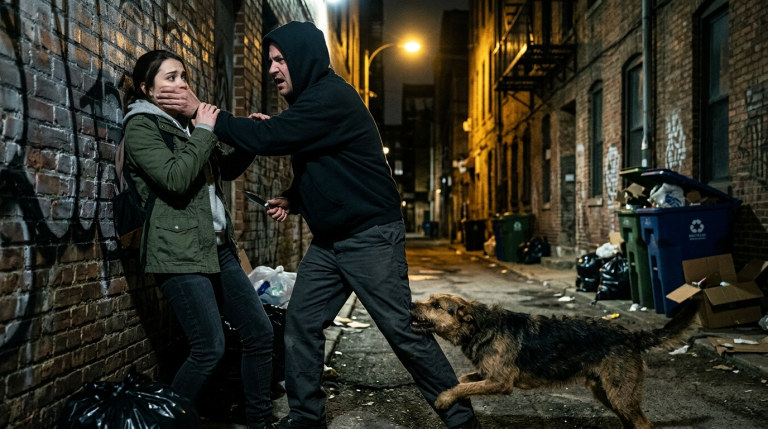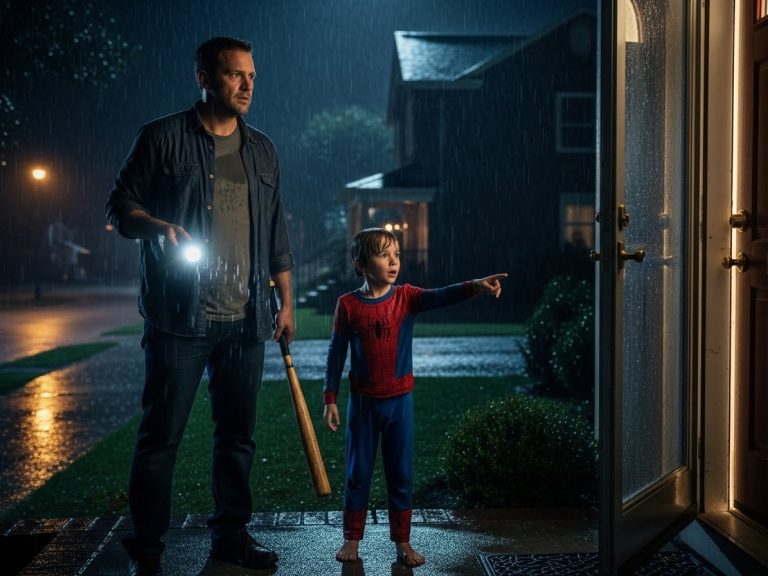
I TOLD MY ADOPTIVE PARENTS “MY REAL MOMMY IS IN THE WELL.” MY DAD LAUGHED, BUT MY MOM FROZE. 20 YEARS LATER, WE DUG IT UP.
PART 1
Chapter 1: The Boy Who Remembered
I was four years old, a time when most children are worried about monsters under the bed or whether they can have dessert before dinner. But my monsters weren’t imaginary, and they didn’t live under the bed. My monster lived in the master bedroom, wore expensive cologne, and called himself my father.
It was a Tuesday afternoon in Blackwood Creek, Oregon. The sky was the color of a bruised plum, heavy with the promise of a storm. I was sitting on the beige shag carpet of our living room, pushing a die-cast Chevy back and forth. Vroom. Vroom. The rhythm was soothing, a way to block out the tension that always seemed to hum in the walls of the Sullivan house.
My adoptive mother, Clara, was on the floral sofa, folding a basket of warm laundry. She was a kind woman, perpetually anxious, with eyes that always seemed to be scanning the room for danger she couldn’t name. My adoptive father, Vincent, sat in his leather armchair, a wall of newsprint shielding his face. He was a contractor—a big man with hands that felt like sandpaper and a voice that could rattle the windows when he raised it.
“Marcus, honey, careful with the car on the rug,” Clara murmured gently.
I stopped the car. I didn’t look at the toy. I looked past the sliding glass door, out into the backyard where the rain was beginning to spit against the glass. The yard was huge, bordered by towering pines that swayed in the wind. In the center, there was a patch of uneven earth near the old gazebo.
A sudden, sharp image flashed in my mind. Not a thought. A memory. Visceral and violent.
Blue silk. Mud. The smell of copper. A scream cut short.
I looked up at Clara. I felt a strange calmness, the kind of dissociation that happens when a child has seen too much.
“My real mother is in the well,” I said.
The room went dead silent. The grandfather clock in the hall seemed to skip a beat.
Clara stopped folding a sheet. Her hands froze in mid-air. “What did you say, sweetie?”
I turned my gaze to Vincent. He hadn’t lowered the paper yet, but his knuckles were white where he gripped the edges.
“My real mom,” I repeated, my voice steady. “She wore a blue dress with white flowers. She fell into the well in the yard. Daddy Vincent was there. He watched her fall.”
Vincent crushed the newspaper. He lowered it slowly, his face a mask of incredulity that barely hid the flash of fury underneath.
“What kind of garbage is this?” Vincent spat, his voice booming. “Clara, have you been letting him watch those horror movies again?”
“No, Vince, never,” Clara stammered, looking at me with wide, fearful eyes. “Marcus, why would you say such a terrible thing?”
“Because she’s cold,” I said simply. “She’s down there, and she’s cold. And Daddy Vincent put the heavy rock on top.”
Vincent stood up so abruptly that his chair screeched against the floor. He marched over to me, towering like a giant. I flinched, expecting a hit, but he just glared down at me.
“Listen to me, boy,” he growled. “We adopted you out of the goodness of our hearts. We saved you from that rat-hole orphanage. There is no well in this yard. There never was. You’re making up lies for attention, and I won’t have it.”
He grabbed my arm—too hard—and hauled me up. “Go to your room. No dinner.”
“Vincent!” Clara cried out, moving to intercept him. “He’s four! He’s just… imagining things.”
“He’s lying!” Vincent roared, turning on her. “Look at his eyes, Clara. That’s not imagination. That’s manipulation. He’s trying to drive a wedge between us.”
I was sent to my room. I sat on my bed, listening to the rain turn into a torrent. I wasn’t crying because I was punished. I was crying because I knew I was right. I closed my eyes and I could see her face—my real mother. She was beautiful, with dark hair like mine. She was laughing, spinning me around. And then the memory would shift. The argument. The shove. The darkness.
Downstairs, I heard them arguing.
“He was so specific, Vince,” Clara’s voice drifted up through the vents. “The blue dress. How would he know about a well? We don’t have a well.”
“Kids hear things, Clara. Maybe the neighbors were talking about the old Henderson property. Stop coddling him.”
“But… the way he looked at you.”
“Drop it, Clara. Or do you want to send him back?”
The threat hung in the air. Send me back. That was Vincent’s favorite weapon.
I crept to my window and looked down into the yard. The lightning flashed, illuminating the wet grass. There, near the gazebo, the ground looked slightly sunken. A perfectly round depression in the earth.
I pressed my hand against the cold glass. “I’m sorry, Mommy,” I whispered to the woman in the ground. “I tried to tell them.”
Chapter 2: The Boy Who Knew Too Much
The weeks that followed were a blur of tension. The air in the house was thick enough to choke on. Vincent became watchful. He stopped reading the paper in the evenings; instead, he would sit on the back porch, smoking cigarettes and staring at that patch of earth near the gazebo.
I didn’t stop, though. I couldn’t. It wasn’t just words anymore; it was a compulsion. I needed them to know.
I started drawing. I found a box of crayons and a stack of printer paper in Clara’s office. I drew the same scene over and over again.
Sheet 1: A lady in blue. Sheet 2: A man with a red tie and a shovel. Sheet 3: A black circle. Sheet 4: The man putting rocks on the circle.
One afternoon, Clara came into my room to put away laundry. She found the drawings scattered on the floor. I watched her from the doorway as she picked one up. It was the drawing of the man. I had used the ‘Brick Red’ crayon to color his tie.
Clara gasped, her hand flying to her mouth. She recognized the tie. Vincent had a tie exactly like that—a silk one he wore for special occasions. He had been wearing it the day… the day he came home late, three years ago, covered in mud, claiming he’d had a flat tire in the rain.
Clara turned to me, her face pale. “Marcus… did you see this? Or did you dream it?”
“I saw it,” I said. “Before I lived here. When I was a baby.”
Clara dropped the paper. She was trembling. She knew that technically, I had been adopted a year ago. But the agency had been vague about my first three years. “Found abandoned,” the file said. “Parents unknown.”
But was it possible? Could I have been here? Before?
That afternoon, she took me to the park, desperate to get out of the house. But the escape only made things worse. I sat in the sandbox, ignoring the other kids. When a little girl asked if I wanted to build a castle, I shook my head.
“We have to dig a hole,” I told her solemnly. “To find the lady.”
The girl ran to her mother, crying. The mother, a woman named Lucy who lived two streets over, marched up to Clara.
“You need to control that boy,” Lucy snapped. “He’s telling my daughter there are dead people in the ground. It’s sick, Clara. People are talking. They say he’s… disturbed.”
Clara grabbed my hand and dragged me to the car. She wasn’t angry; she was terrified. The community was turning against us. I was the “creepy kid.” The outcast.
Desperate for answers, Clara made an appointment with Dr. Beatrice Carter, a renowned child psychologist in Portland. She paid in cash so Vincent wouldn’t see the charge on the credit card statement.
Dr. Carter’s office smelled like vanilla and old books. She sat across from me, her demeanor calm and unthreatening.
“Clara tells me you have bad dreams, Marcus,” Dr. Carter said gently.
“Not dreams,” I corrected her. “Memories.”
“Tell me about the memory.”
I took a deep breath. “My mom’s name is Anna. She worked at the big house. Daddy Vincent—he wasn’t Daddy then, he was Mr. Sullivan—he was mad. She said she was going to tell the lady. The lady who travels.”
Clara, sitting in the corner, let out a small whimper. “The lady who travels” was likely her. Clara was a flight attendant before she married Vincent. She was away constantly in the early years of their marriage.
“Go on, Marcus,” Dr. Carter said, her pen hovering over her notepad.
“Mr. Sullivan pushed Anna. She hit her head on the bricks. She fell in the water. She was screaming. Then he got the shovel.”
Dr. Carter put her pen down. She took off her glasses and looked at Clara.
“Mrs. Sullivan,” she said, her voice grave. “I’ve been practicing for thirty years. Children invent monsters to cope with fear. But they don’t invent specific procedural details of a homicide unless they have been exposed to it.”
“What are you saying?” Clara whispered.
“I’m saying your son is displaying signs of severe post-traumatic stress related to a witnessed event. He mentions ‘Anna.’ Did you ever employ someone named Anna?”
Clara shook her head. “No. I… I was away a lot. Vincent handled the house.”
“You need to investigate this,” Dr. Carter said. “If there is a missing woman… Marcus is the key.”
We drove home in a silence that felt heavier than the storm clouds above. Clara was looking at me differently now. Not with fear of me, but fear for me.
As we pulled into the driveway, the sun was setting, casting long, blood-red shadows across the lawn. Vincent was outside. He wasn’t alone.
A massive cement truck was idling in our driveway, the drum turning slowly with a grinding mechanical roar. Vincent was standing by the backyard gate, wearing his work boots.
Clara parked the car and ran toward him. “Vincent! What are you doing?”
Vincent turned, wiping sweat from his forehead. He smiled, but it didn’t reach his eyes. “Finally fixing up the backyard, honey. I’m pouring a patio. A big one. Right over that ugly patch of dirt where the gazebo was.”
My blood ran cold. He knew. Somehow, he knew we were getting close.
“You can’t!” I screamed, scrambling out of the car. “She’s down there! You can’t cover her!”
Vincent’s smile vanished. He pointed a finger at me. “Get inside, Marcus. Not another word.”
“No!” I ran toward the yard, but Clara caught me.
“Vincent, stop!” Clara pleaded. “Please, just wait!”
“Wait for what?” Vincent snapped. “For the neighbors to call the loony bin on your son? I’m fixing this family, Clara. I’m burying the past so we can have a future.”
He signaled the driver. The chute lowered.
I watched, helpless, as the thick, gray concrete began to flow. It poured over the grass, over the dirt, over the spot where the bricks were hidden. It covered everything. It sealed the earth shut.
Vincent stood there, watching the concrete settle, a look of grim satisfaction on his face. He thought he had won. He thought that by covering the well with six inches of concrete, he could silence the voice of the woman inside.
He was wrong. Concrete hardens, but guilt? Guilt rots you from the inside out.
And I made a vow, right then and there, as a four-year-old boy watching his mother’s grave disappear. I would grow up. I would get strong. And one day, I would bring a jackhammer.
PART 2
Chapter 3: The House Built on Bones
Growing up in the Sullivan house was like living inside a held breath.
After the concrete was poured, the backyard changed. It became Vincent’s pride and joy. He bought expensive patio furniture, a stainless steel grill, and tiki torches. He hosted Fourth of July parties right there on that gray slab. I would watch from my bedroom window, sick to my stomach, as neighbors laughed and ate hamburgers standing six feet above my mother’s skeleton.
Vincent tried to play the role of the perfect father, but the cracks showed. He drank more. His temper became a hair-trigger mechanism. He never hit me again after that day in the living room, but he looked at me with a mixture of loathing and fear. I was the living evidence of his sin.
Clara was different. She withered. She stopped flying, grounded by a nervous condition that the doctors couldn’t diagnose. She spent her days cleaning the house, scrubbing surfaces that were already spotless, as if she could wash away the feeling of dread that permeated the walls. She never spoke of the well again, but I saw it in her eyes. She knew. Deep down, she knew.
I was homeschooled starting in the first grade. “For his own protection,” Vincent told the district. “He has behavioral issues.” The truth was, he couldn’t risk me talking to teachers. He couldn’t risk me drawing pictures in art class.
So, I grew up in silence. But silence is a loud teacher.
I learned to read people. I learned to blend into the background. And most importantly, I learned to research.
By the time I was sixteen, I had access to the internet. While other kids were sneaking out to parties, I was scouring digitized archives of the Blackwood Gazette. I searched for missing persons in Oregon between 2003 and 2005.
It was a needle in a haystack until I found a small, scanned clipping from November 2004. It was in the classifieds, not the headlines.
MISSING: Anna Oliver, 30. Last seen in Blackwood Creek area. Domestic worker. If seen, please contact…
There was no photo. Just a name. Anna Oliver.
My heart hammered against my ribs. I wrote the name down on a piece of paper and hid it inside my hollowed-out geometry textbook.
I started tracking Vincent’s financial records. I found an old filing cabinet in the garage he thought was locked. I learned to pick the lock with a paperclip. Inside, buried under tax returns from the 90s, was a ledger.
In 2004, there were regular cash withdrawals labeled “Housekeeping.” They stopped abruptly in November.
Two weeks later, there was a large payment to a lawyer named “P. Halloway.”
I looked up Halloway. He was disbarred in 2008 for falsifying legal documents and died of a stroke in 2010.
The pieces were coming together. Vincent didn’t just adopt me. He erased my history to hide his crime. He took the son of the woman he murdered and raised him, thinking he could mold me into something that would never betray him.
He was a fool.
Chapter 4: The Ghost in the Bookstore
At twenty-four, I finally moved out. I got a small apartment on the other side of town and a job at “Boundless Pages,” a used bookstore. It was quiet, dusty, and perfect.
I looked like a ghost myself. I was thin, pale, with dark circles under my eyes that no amount of coffee could fix. The nightmares were relentless. In them, the concrete would crack, and a hand would reach out, grabbing my ankle, pulling me down into the dark water.
Helen, my coworker, was the only one who noticed. She was a fiery, no-nonsense girl with purple hair and a heart of gold.
One rainy Tuesday—always Tuesdays—she found me staring blankly at a stack of mystery novels.
“You look like hell, Marcus,” she said, leaning against the counter. “You haven’t slept, have you?”
“Rough night,” I muttered.
“It’s always a rough night with you. What is it? Girl trouble? Debt?”
I looked at her. I had never told anyone. Not since I was four. But looking at Helen, seeing the genuine concern in her eyes, something broke.
“My father killed my mother,” I said. It came out flat, matter-of-fact.
Helen didn’t laugh. She didn’t back away. She straightened up. “Okay. Tell me.”
We sat in the back room, and I told her everything. The well. The blue dress. The concrete. The name Anna Oliver.
“I need to prove it,” I said, my hands shaking. “But I can’t just dig up his yard. He’d shoot me for trespassing before I broke the surface.”
Helen bit her lip. “You need leverage. You need someone with power who hates injustice more than they fear a scandal. Do you have any family besides them?”
“There’s Uncle Gavin,” I said. “Vincent’s brother. He’s on the town council. He and Vincent haven’t spoken in ten years. They had a falling out over their father’s will.”
“That’s it,” Helen slammed her hand on the table. “We go to Gavin.”
We spent the next week compiling a dossier. I printed the missing person ad, the bank statements I had photographed years ago, and a copy of my adoption papers which listed “Unknown” under biological mother—a glaring lie if Anna had been working for him.
We found Gavin at his office. He was a stern man, looking like an older, harder version of Vincent, but his eyes were clearer. He listened without interrupting as I laid out the story.
When I finished, Gavin leaned back in his chair. The room was silent for a long time.
“Vincent always was a violent bastard,” Gavin said quietly. “But murder? That’s a heavy accusation, Marcus.”
“I saw it,” I said. “I was four, but I saw it. And I know you know about the ‘housekeeper’ he had. The one he bragged about to the guys at the club.”
Gavin flinched. He remembered.
“He told everyone she went back to Mexico,” Gavin muttered. “But Anna wasn’t Mexican. She was from Ohio.”
Gavin looked at the file. Then he looked at me. “If we do this, there’s no going back. If you’re wrong, you destroy the family name. If you’re right… my brother goes to death row.”
“I’m right,” I said.
Gavin nodded. “I can’t get a warrant based on a four-year-old’s memory. But I can get a permit for ‘structural inspection’ of the property. There’s an old easement for a drainage pipe running through that backyard. As a councilman, I can order an emergency excavation to check for ‘leaks’.”
It was a loophole. A lie. But it was the only shovel we had.
Chapter 5: The Return
The morning of the excavation, the sky was a brilliant, mocking blue.
We arrived at 8:00 AM. Me, Gavin, Helen, and a crew of three bewildered city workers with a backhoe and jackhammers.
Vincent was home. He came storming out of the front door in his bathrobe, his face purple with rage.
“What the hell is this?” he screamed, running down the driveway. “Get off my property!”
Gavin stepped forward, holding a clipboard. “City business, Vince. Emergency drainage repair. We have reports of a sinkhole forming under your patio.”
“Sinkhole? You’re out of your mind! I just poured that patio twenty years ago!”
“Exactly,” Gavin said calmly. “Improper grading. We have to open it up.”
Vincent lunged at Gavin, but one of the large construction workers stepped in between them. “Sir, step back.”
Clara appeared in the doorway. She looked frail, her hair gray and unkempt. She saw me standing by the truck, holding a sledgehammer I didn’t need but wanted to hold.
Our eyes locked. She didn’t look surprised. She looked… relieved.
“Start the equipment!” Gavin ordered.
The sound of the jackhammer hitting the concrete was the loudest sound I had ever heard. Rat-a-tat-tat-tat. It echoed through the neighborhood.
Vincent was pacing like a caged animal. He was shouting into his cell phone, calling his lawyer, calling the police.
“You’re going to pay for this, Marcus!” he spat at me over the noise. “I fed you! I clothed you! You ungrateful little parasite!”
“You killed her!” I screamed back, my voice cracking. “You thought you could bury her, but you just planted a seed!”
The concrete was thick. Reinforced. It took an hour just to breach the first layer. Neighbors were gathering on the sidewalk. Mrs. Gable, still alive at ninety, was watching from her porch with binoculars.
As the jackhammer pounded, I felt a vibration in my teeth. Every crack in the gray slab felt like a chain breaking off my chest.
Then, the tone of the machine changed. It hit something softer. Dirt.
“Hold it!” the foreman yelled.
The noise died down. The workers grabbed shovels. They cleared away the rubble. Under the modern concrete, there was a layer of plastic sheeting, and under that… earth.
But not just earth.
“Hey,” one of the workers said, his voice trembling. “I found… bricks.”
Vincent went silent. He stopped pacing. He stood frozen, staring at the hole.
“Keep digging,” I whispered.
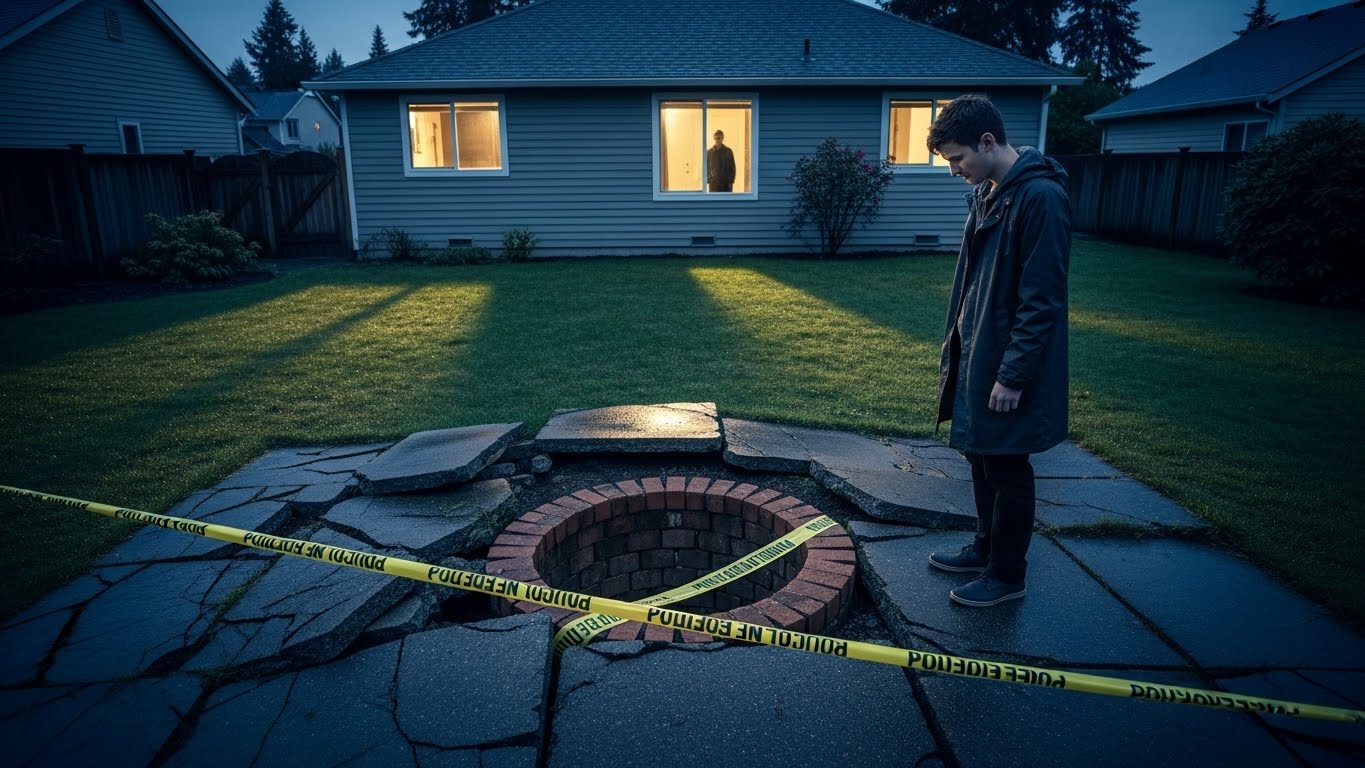
They cleared more dirt. A curved line of red bricks appeared. The rim of the old well. The well Vincent swore never existed.
“Oh god,” Clara whimpered from the porch. She collapsed onto her knees.
“It’s there,” Gavin said, his face pale. “It’s really there.”
“Get away from there!” Vincent suddenly roared. He broke past the line, charging toward the hole, his eyes wild. “It’s my house! Get away!”
He tackled the foreman. It was chaos. Police sirens wailed in the distance—Vincent had called them, but now they were coming for him.
Two workers wrestled Vincent to the ground. He was thrashing, screaming incoherent curses.
“Dig it out!” I yelled, jumping into the pit myself. I grabbed a shovel. “Dig it out!”
Chapter 6: The Blue Dress
The police arrived just as we cleared the cap of the well. Lieutenant Carmen Walker, a tall woman with a sharp gaze, took control of the scene. She saw the fighting, saw Vincent pinned on the grass, and saw the hole in the patio.
“What is going on here?” she demanded.
“Possible homicide investigation,” Gavin said, flashing his badge. “My nephew believes a body was disposed of in this well twenty years ago.”
Walker looked at Vincent, then at the hole. She approached the edge.
“Everyone back,” she ordered. “If this is a crime scene, we do it right.”
They brought in the forensic team. It took another two hours. The sun was high now, hot and oppressive. I stood by the yellow tape, Helen holding my hand. My entire body was vibrating.
What if I’m wrong? The doubt suddenly seized me. What if it was just a nightmare? What if there’s nothing down there but water and mud?
If I was wrong, I was insane. I was the boy who cried wolf.
The forensic tech lowered a camera into the dark shaft of the well. We watched on a monitor set up in the van.
The camera descended. ten feet. Twenty feet. The walls were slime-covered brick.
Then, the light hit something at the bottom. It wasn’t water. The well had been dry for decades.
It was a pile of debris. Stones. Dirt. And… something else.
“Zoom in,” Lieutenant Walker commanded.
The camera focused.
Protruding from the dirt was a shape. Unmistakable. A human femur. And wrapped around it, preserved by the lack of oxygen and the dry conditions at the bottom… were tatters of fabric.
Blue fabric. With a faint pattern of white flowers.
I let out a sound that was half-sob, half-laugh. My knees gave out. Helen caught me.
“She’s there,” I gasped. “Momma.”
Vincent, handcuffed in the back of a squad car, saw the monitor. He didn’t scream. He just slumped forward, his head hitting the window.
They brought her up in baskets, piece by piece. It was a slow, reverent process. The entire neighborhood was silent now. No one whispered. The reality of what had been under their feet for twenty years silenced them all.
When they brought up the skull, I saw it. The fracture on the side. The evidence of the blow.
Clara was brought out of the house by an officer. She walked past me. She looked at the blue fabric in the evidence bag.
“I’m sorry, Marcus,” she whispered. “I was so afraid of him. I was so afraid.”
“I know,” I said. And I did. I didn’t hate her. She was a victim too, in her own way.
Chapter 7: Justice in the Light
The trial was the biggest thing to ever happen in Blackwood Creek.
Vincent Sullivan’s defense was weak. The DNA was a 99.9% match to me. The skull fracture matched a shovel found in his garage—a shovel he had kept, inexplicably, for two decades.
But the damning evidence came from Vincent himself. In a drunken note he had written in his cell, trying to justify his actions:
“I didn’t mean to kill her. She wanted more money. She threatened to take the boy. I just pushed her. I gave the boy a name. I gave him a life. I am the savior here.”
The prosecutor read it aloud. The jury looked at Vincent with pure disgust.
I took the stand on the third day. I was twenty-five now. I sat straight, looked at the man who had raised me, and told the court exactly what I had told Dr. Carter twenty years ago.
“He hit her with the shovel because she was still screaming,” I said, my voice echoing in the silent room. “He didn’t want to save me. He wanted to own me.”
Vincent didn’t look at me. He stared at the table.
The verdict was guilty. First-degree murder. Life without parole.
As they led him away, he finally looked at me. His eyes were dead. There was no anger left, just a vast, empty void.
“You’re still my son,” he mouthed.
“No,” I said, loud enough for him to hear. “I’m Anna’s son.”
Chapter 8: The Garden of Truth
Three years later.
I stood in the backyard of the house. I owned it now. Clara had moved to a condo in Florida, unable to live with the ghosts. She deeded the house to me as an apology.
I didn’t live there. I couldn’t. But I didn’t sell it either.
I had torn down the house. Every beam, every brick. I leveled it.
In its place, I built a community park. The “Anna Oliver Memorial Garden.”
Where the well used to be, there was now a fountain. Clear, clean water flowing over white stones. No darkness. No secrets.
I had opened a café in town, “Anna’s,” just like I promised. It was full of books and light.
Helen and I were married now. She stood beside me, holding our daughter, a one-year-old girl named Hope.
I walked to the fountain. I placed a bouquet of white chrysanthemums on the edge.
“Mom,” I whispered. “I came back. It took a long time, but I came back.”
The wind rustled through the new trees I had planted. It felt like a caress.
I looked at Hope. She was laughing, reaching for the water.
“Does she know?” Helen asked softly.
“She will,” I said. “She’ll know that her grandmother was brave. And she’ll know that the truth is stronger than concrete.”
I took a deep breath. The air smelled of rain and fresh earth. The smell of the past was gone.
The voice from the well was finally silent.
THE END.