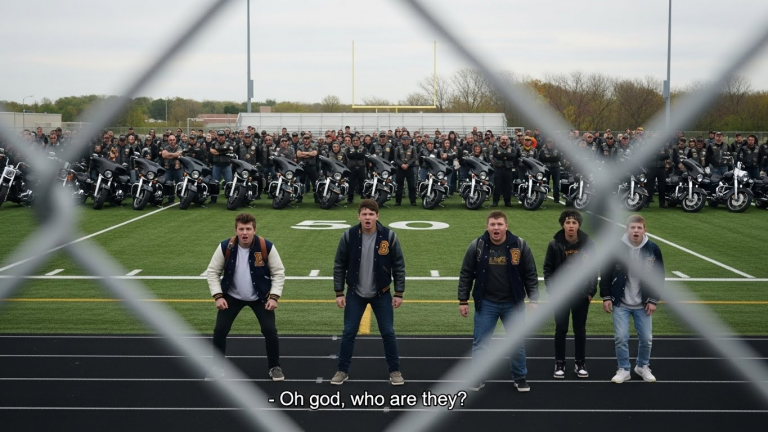
He Broke My Legs in the School’s Only “Blind Spot”—But He Forgot I Was Recording.
Part 1
Chapter 1: The Drop
Gravity is not just a law of physics; in the ecosystem of Oak Creek High School, it was a social decree. The heavy things—the bullies, the athletes, the golden children of wealthy donors—stayed at the top. The lighter things—the quiet scholars, the band geeks, kids like me, Leo Vance—we tended to fall.
I knew the geography of the school better than I knew the periodic table. I knew which bathrooms had working locks, which hallways bottlenecked after third period, and most importantly, I knew the West Wing stairwell.
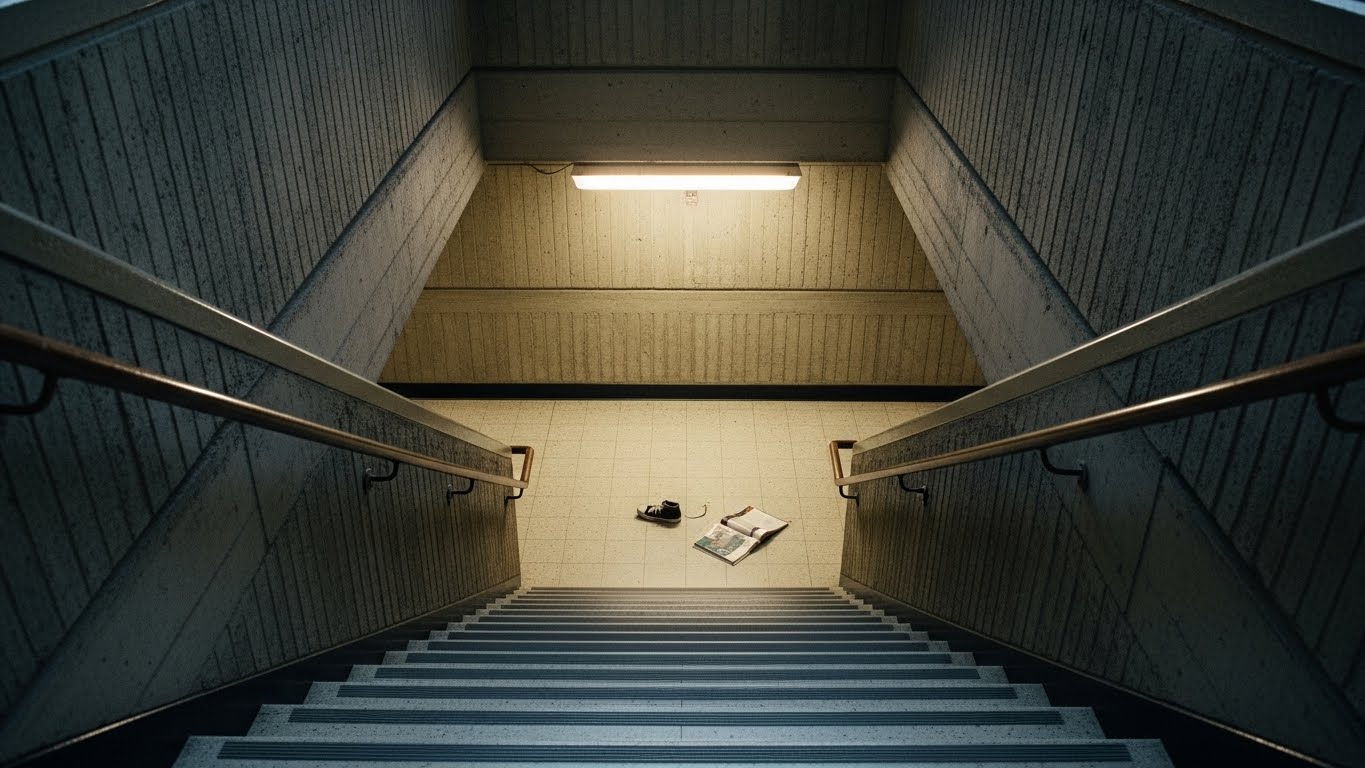
It was an architectural relic from the 1970s, concrete and cold, connecting the science labs to the gymnasium. It was notable for two things: it was incredibly steep, and it was the only major artery in the building without a security camera. The administration called it a “wiring blind spot.” The students called it “The Drop.”
It was a Tuesday, the kind of gray, meaningless Tuesday that blends into the background of memory unless something terrible happens to pin it down. I was carrying my biology textbook, a heavy hardcover that cost more than my grandmother’s weekly grocery budget, tight against my chest. I was late for gym, a class I loathed with a cellular passion.
I heard the heavy thud of Timberland boots behind me before I saw them. The rhythm was unmistakable—arrogant, heavy, claiming the space.
“Move it, Vance.”
The voice belonged to Brad Halloway. Brad was the quarterback, the prom king presumptive, and the son of the town’s leading real estate developer. He was a cliché, but a dangerous one because he had the charm to mask the cruelty.
I shifted to the right, pressing myself against the rough cinder block wall to let the entourage pass. I kept my eyes on my sneakers, the laces slightly frayed.
Invisibility, I thought. Just be invisible.
“I said move,” Brad sneered, stopping just a step above me.
“I’m against the wall, Brad,” I whispered, my voice cracking slightly.
Brad laughed, a sound that echoed sharply in the concrete silo of the stairwell. “Not far enough.”
It wasn’t a fight. A fight implies two willing participants. This was simple displacement. Brad didn’t punch me. He didn’t kick me. He simply placed a large, flat hand on the center of my chest and shoved.
It wasn’t a playful nudge. It was a forceful expulsion of energy.
My center of gravity, already precarious due to the heavy book, vanished. I tipped backward. My arms flailed, instinctively reaching for a railing that was just out of grasp.
The sensation of falling is often described as slow motion, but for me, it was violent and instantaneous. The world flipped. My back struck the edge of a step, knocking the wind out of me, but momentum carried me further. I tumbled, a ragdoll of limbs and terror, down twelve solid concrete steps.
Crack.
The sound was louder than the impact of my body. It was a dry, sickening snap, like a tree branch breaking in a winter storm.
I landed at the bottom landing in a heap, my left leg twisted beneath me at an angle that defied anatomy. For a second, there was no pain—only a vast, white silence. My brain was trying to process the signal interruption.
Then, the pain arrived. It was a hot, screaming agony that started in my shin and exploded into my brain. I opened my mouth to scream, but my lungs were empty from the fall. All that came out was a strangled, wheezing gasp.
From the top of the stairs, silence. Then, a nervous chuckle.
“Oh, crap,” one of Brad’s friends muttered. “Dude, come on.”
“He tripped,” Brad’s voice floated down, devoid of empathy, already constructing the alibi. “I didn’t touch him. He’s such a klutz. Let’s go.”
Footsteps retreated rapidly, the heavy boots thundering away toward the gym. The heavy fire door at the top of the stairs clicked shut, sealing the sound.
I lay alone on the cold linoleum of the landing. The pain was nauseating, coming in waves that made my vision blur. I looked down at my leg. The denim of my jeans was tight, but the unnatural bend halfway down my shin was undeniable. A compound fracture.
I tried to push myself up, but the room spun. Panic, colder than the concrete, washed over me. I looked at my watch.
10:48 AM.
The bell would ring at 10:50 AM.
In two minutes, the doors of the classrooms lining the corridor would fly open. Five hundred teenagers would flood the hallway. They would rush toward the cafeteria and the gym. They would come barreling down these stairs.
“Help,” I rasped, but my voice was a whisper.
I tried to drag myself backward, toward the corner, away from the inevitable stampede. Every inch of movement sent bolts of lightning up my leg. I managed to move six inches.
10:49 AM.
I could hear the hum of the classrooms through the walls, the pent-up energy of students waiting for release. If they came down the stairs running—and they always ran—the first wave wouldn’t even see me lying flat on the floor until they stepped on me.
Tears, hot and humiliated, streamed down my temples into my ears. I thought of my grandmother, Nana Rose. I thought of her sitting at the kitchen table, counting coupons. I’m sorry, Nana. I’m going to get hurt again.
RIIIIIIING.
The bell screamed.
Chapter 2: The Narrative
The sound of doors slamming open upstairs was like a starting gun. The rumble of footsteps began immediately, a herd of elephants approaching the drop.
I curled into a ball, covering my head with my arms, squeezing my eyes shut, waiting for the impact of a hundred sneakers.
The fire door at the top of the stairs banged open.
“HEY!”
The voice boomed, deep and resonant, shaking the dust off the light fixtures. It wasn’t a student.
“BACK UP! ALL OF YOU! BACK THE HELL UP!”
The stampede halted. The confusing sound of sneakers skidding to a stop filled the stairwell.
I cracked one eye open. Standing over me, arms spread wide like a guardian angel in gray coveralls, was Mr. Henderson, the school’s head custodian. He was facing the stairs, blocking the path of three freshman boys who had nearly trampled me.
Mr. Henderson looked down, his weathered face pale. He saw the leg. He saw the tears.
“Don’t move, son,” Henderson said, his voice dropping to a gentle rumble. He pulled his radio from his belt. “This is Henderson. I need the nurse and an ambulance at the West Wing stairwell immediately. Code Red. We have a student down. A bad break.”
I let out a breath I didn’t know I was holding. The darkness at the edges of my vision crept in, and for the first time in my life, I let gravity win. I passed out.
The smell of a hospital is universal. It is a cocktail of antiseptic, floor wax, and stale coffee. For Nana Rose, it was the smell of fear.
When I woke up, the first thing I saw was her. She sat in the plastic chair next to my bed, her knuckles white as she gripped her purse. She was seventy-two years old, a woman made of iron will and brittle bones. She had raised me since I was three, ever since my mother lost her battle with addiction. I was her world.
My leg was encased in a heavy plaster cast, elevated on a sling. The painkillers were doing their heavy lifting, making the world feel soft and fuzzy.
“Mrs. Vance?”
Rose looked up. A man in a sharp suit stood in the doorway. He had the polished, practiced look of a politician. It was Principal Vance (no relation), the administrator of Oak Creek High.
“It’s Ms. Miller,” Rose corrected him sharply. She didn’t stand up.
“Right, of course. Ms. Miller,” the Principal stepped in, closing the door behind him. “I wanted to come personally to express how sorry we are. It was a terrible accident.”
Rose’s eyes narrowed behind her bifocals. “Accident?”
“Yes,” the Principal sighed, clasping his hands in front of him like a grieving undertaker. “We’ve spoken to a few students. It seems Leo was rushing to gym class, carrying a heavy load of books. He lost his footing on the stairs. It’s unfortunate. We’ve been meaning to put non-slip tape on those treads.”
“Leo doesn’t rush,” Rose said calmly. “Leo is the most careful boy I know. He walks like he’s afraid the ground is going to bite him.”
“Well, teenagers can be clumsy,” the Principal gave a tight, patronizing smile. “And with the heavy backpack… The important thing is he’s going to be okay. The school insurance will cover the deductible, of course.”
Rose stood up then. She was five foot two, but she seemed to tower over the man. “You’re telling me my grandson fell down a flight of stairs, broke his tibia and fibula in three places, and nobody saw anything?”
“It happened in the West Wing stairwell,” the Principal said, his eyes shifting slightly to the left. “It’s a blind spot for our cameras. And the students we interviewed—Brad Halloway and his friends—they said they heard him fall behind them. They were quite shaken up.”
“Brad Halloway,” Rose repeated the name. She knew it. I had come home with bruises before. Missing lunch money. “That boy has been tormenting Leo for two years.”
“Now, Ms. Miller, that’s a serious accusation. Brad is a focused young man. He’s our star quarterback. He actually alerted a teacher to call for help.”
“Liar,” I rasped.
Rose spun around. “Leo?” She grabbed my hand.
“He pushed me, Nana,” I whispered, my voice dry as sandpaper. “Brad. He waited for me. He pushed me.”
The Principal stiffened. “Leo, son, you’re on a lot of medication. Trauma affects memory. You were likely dizzy—”
“I didn’t trip,” I said, tears pooling in my eyes again. “He laughed. He stood at the top and laughed while I couldn’t breathe.”
Rose turned back to the Principal, her face set in stone. “You heard him.”
“I heard a groggy young man making a serious allegation against a student with a pristine record,” the Principal said, his voice hardening. “Without proof, Ms. Miller, without video, this is just… he-said, she-said. And Brad has three witnesses who say Leo tripped.”
“Get out,” Rose said.
“Ms. Miller—”
“I said, get out before I call the police right now and report an assault.”
The Principal adjusted his tie, his veneer of sympathy vanishing. “I’ll let you rest. We can discuss the insurance paperwork when emotions aren’t so high.”
He left. Rose sat back down, stroking my hair. She knew the truth. She knew me. But she also knew how the world worked. The Halloways owned half the town. The Principal answered to the school board, and Brad’s father was the Chairman.
They were going to bury this. They were going to make me the clumsy outcast who ruined the stairwell, and Brad would keep throwing touchdowns.
Rose looked at my broken leg. “Rest, baby,” she whispered. “Nana is going to handle it.”
But she didn’t know how. Not yet. She didn’t know that while gravity had pulled me down, something else was about to pull the truth up.
Part 2
Chapter 3: The Silent Witness
Two weeks passed. Time moves differently when you are in pain. It stretches, warps, and loops back on itself.
I was confined to our small, second-floor apartment, navigating the narrow hallways on crutches that dug angrily into my armpits. My world had shrunk to the living room couch, the rhythmic drone of daytime television, and the throbbing ache in my shin.
The school sent a tutor twice a week, a nervous woman who smelled of chalk and pity, but the silence from the administration was deafening. There was no investigation. No follow-up questions. No justice.
Nana Rose was exhausted. I could see it in the way her shoulders slumped when she thought I was asleep. She had spent days on the phone, calling personal injury lawyers she found on the back of the phone book.
The conversations were always the same. I could hear her side of them from the couch. Hopeful at first, then defensive, then quiet.
“But he was pushed… No, there isn’t a camera… No, no other students saw it… Yes, I understand the burden of proof.”
Click.
Without video evidence or a witness willing to go on record, they all said the same thing: It’s a tragedy, Ms. Miller, but you can’t win against the Halloways. Not in this town. It’s their word against his, and they have the football team.
We were drowning. The medical bills were starting to pile up on the kitchen counter, unopened white envelopes that looked like surrender flags.
Then came Thursday evening.
It was raining, a cold, relentless downpour that hammered against our thin windowpanes. The wind howled through the alleyway, rattling the frames. It was the kind of night where you lock the doors and turn up the heat.
At 7:00 PM, there was a knock at the door.
It wasn’t the sharp rap of a delivery driver or the heavy pound of a landlord. It was hesitant. Soft. Almost like the person on the other side was hoping we wouldn’t answer.
Nana Rose looked up from her knitting. She took off her glasses, her eyes narrowing. “Who comes out in this weather?”
She walked to the door, checking the peephole. She paused for a long moment before undoing the deadbolt.
She opened it to find a man standing in the hallway, water dripping from the brim of a dark baseball cap. He was wearing a heavy rain-slicked jacket and holding a plastic Tupperware container wrapped in a towel.
It was Mr. Henderson. The janitor.
He looked uncomfortable, shifting his weight from foot to foot, his eyes darting down the hallway as if checking for spies.
“Mrs… Ms. Miller?” he asked, his voice rough. “I’m Arthur Henderson. I work at the school.”
“I know who you are,” Rose said, her voice softening instantly. She opened the door wider. “Leo told me everything. You stopped those boys from stepping on him. You called the ambulance. You’re the reason my boy isn’t hurt worse than he is. Thank you.”
Mr. Henderson looked down at his boots. He seemed pained by the gratitude.
“I brought some casserole,” he mumbled, thrusting the container at her. “My wife made it. Tuna noodle. She said… well, she said you might not have had time to cook.”
“Come in, Arthur,” Rose said, stepping aside. “Please. Get out of the cold.”
He hesitated, looking at his muddy boots. “I don’t want to track dirt in.”
“Dirt cleans up,” Rose said firmly. “Come in.”
Mr. Henderson walked into our small living room. He refused to take off his coat, as if he needed to be ready to run at a moment’s notice. He looked over at the couch where I lay, my leg propped up on three pillows.
“How’s the leg, son?” he asked.
“It itches,” I said, managing a weak smile. “And it throbs when it rains. But I’m okay. Thanks for helping me, Mr. Henderson.”
Arthur Henderson sighed, a long, ragged sound that seemed to come from the bottom of his lungs. He walked over and sat on the very edge of the armchair opposite me. He clasped his large, calloused hands together.
He looked at me, then at Rose, then back at his hands.
“I need to tell you folks something,” he said quietly. “And I’m… I’m ashamed it took me two weeks to come here. I’ve been wrestling with the Lord about it every night.”
Rose sat down on the coffee table, leaning in close. The air in the room shifted. The sound of the rain faded into the background.
“What is it, Arthur?”
“I was there,” Arthur said.
My heart skipped a beat.
“I was on the landing below,” he continued. “I was changing a fluorescent bulb around the corner. The fire door was cracked open just a sliver to let the air flow. I heard them.”
Rose’s hands gripped her knees. “You saw Brad push him?”
“I didn’t see the push,” Arthur admitted, looking pained. “I was around the bend. But I heard it. I heard Halloway say ‘Move it.’ I heard the impact. And I heard what they said after.”
“You heard them laughing?” I asked, the memory of that sound making my stomach turn.
“Yeah,” Arthur nodded slowly. “I heard them laugh. And I heard Halloway say, ‘I didn’t touch him, he’s a klutz, let’s go.’ I heard the malice in it, son. It wasn’t an accident.”
“Will you testify?” Rose asked, her voice trembling with hope. “If we go to the school board? If we go to a lawyer?”
Arthur flinched. He looked away, staring at the rain-streaked window.
“I’m two years from retirement, Ms. Miller,” he whispered. “My wife has diabetes. We need the health insurance. The Halloways… Mr. Halloway got me this job ten years ago. If I speak up against his boy, without proof… I’m gone. They’ll find a reason. ‘Insubordination.’ ‘Budget cuts.’ I can’t lose my pension.”
Rose’s shoulders fell. The hope vanished as quickly as it had arrived. She understood. In our world, survival always came before justice.
“I understand,” Rose said quietly. “I won’t ask you to ruin your life for us.”
“But,” Arthur interrupted, reaching into the deep pocket of his work coat. “That’s why I’m here. Because I can’t sleep. And because… I found something.”
He pulled out a smartphone.
The screen was cracked in a spiderweb pattern, shards of glass missing from the corner. The case was scuffed.
I gasped. “That’s my phone!”
“I thought it was gone,” I said, reaching out. “I thought I lost it in the fall.”
“It slid under the radiator on the landing,” Arthur said. “I found it when I was cleaning up the… the blood. After the ambulance left.”
He handed it to me. It felt heavy, cold.
“I was going to turn it in to the office,” Arthur explained. “I walked right up to the front desk. But the door to the Principal’s office was open. And I saw who was inside.”
“Who?” Rose asked.
“Brad’s dad,” Arthur said, his jaw tightening. “He was in there with Principal Vance. And they were laughing. I heard the Principal say, ‘Don’t worry, Bill, we’ll write it up as a clumsy kid tripping over his own feet. Brad’s record is safe.'”
Arthur looked at us, his eyes wet. “That’s when I knew. If I gave them this phone, it would disappear. They would smash it or wipe it. So I put it in my pocket and I walked away.”
Chapter 4: The Smoking Gun
I held the phone in my hands. The battery was dead, obviously.
“I charged it,” Arthur said quickly. “Last night. I plugged it in just to see if it still worked. It turned on.”
“Why did you bring it now?” Rose asked.
“Because I have a grandson too,” Arthur said, his voice breaking. “He’s about Leo’s age. And if someone did that to him… and if someone laughed about it…”
He pointed at the phone in my hand. “Check your apps, son.”
I looked at him, confused. “My apps?”
“When I turned it on,” Arthur said, “there was a notification on the screen. It said ‘Voice Memo Recording Interrupted.'”
My blood ran cold.
The biology lecture.
I had a habit—a nerdy, obsessive habit—of recording Mr. Gundy’s biology lectures because he talked too fast for me to take notes. I always started the recording app the moment I left my locker so I wouldn’t forget to hit ‘record’ when I sat down in class.
“I… I record my classes,” I stammered. “I turned it on at my locker.”
“It was recording?” Rose asked, her voice barely a whisper. She stood up, her hand covering her mouth.
“I didn’t listen to it,” Arthur said, holding up his hands. “That felt like an invasion of privacy. But the file is there. It’s six minutes long.”
I pressed the power button. The screen flickered to life, the spiderweb cracks glowing. I entered my passcode.
My fingers were shaking so hard I messed it up twice.
Finally, the home screen opened. I tapped the blue ‘Voice Memos’ icon.
There it was at the top of the list. New Recording 14. Date: Tuesday, Oct 14. Duration: 6:04.
The room was deadly silent. The only sound was the rain and the hum of the refrigerator.
Rose sat next to me on the couch. She put her arm around my shoulders. “Do it, Leo.”
I pressed play.
The audio was crisp. The acoustics of the concrete stairwell acted like a natural amplifier, capturing every frequency.
Rustling fabric. The sound of my breathing—heavy, rushed. Footsteps. My own sneakers squeaking on the linoleum.
Then, the heavy, booming sound of other boots approaching from behind.
“Move it, Vance.”
It was clear as a bell. Brad’s voice.
Rose flinched as if she’d been slapped.
“I’m against the wall, Brad.” My voice sounded so small. So pathetic. “Not far enough.”
Then, the sounds of physics taking over. A loud, dull thud—hand against chest. A sharp intake of breath. The terrifying, chaotic tumbling sound of a body hitting concrete. Thump. Thump. Smash.
And then, the sound that made Mr. Henderson close his eyes and look away. CRACK.
It sounded like a gunshot in the quiet apartment.
Silence followed on the tape. Then, my own voice, a whimpering, high-pitched moan of shock.
“Oh, crap, dude…” A different voice. Brad’s friend. “He tripped. I didn’t touch him. He’s such a klutz. Let’s go.”
The callousness of it was chilling. There was no fear in Brad’s voice. Only annoyance. He sounded like someone who had dropped a sandwich, not a human being.
The recording continued. It captured the door slamming. It captured my raspy pleas for help. It captured the two minutes of me dragging myself across the floor.
And finally, it captured the bell ringing and Mr. Henderson’s voice booming: “BACK THE HELL UP!”
I hit pause.
I couldn’t look up. I was crying, not from sadness, but from a mix of relief and rage.
Rose took the phone from my hands. She held it like it was made of solid gold. She held it like it was a loaded gun.
She stood up. The exhaustion was gone from her posture. She didn’t look like a tired grandmother anymore. She looked like a general preparing for war.
“Thank you, Arthur,” she said. Her voice was steady. Deadly.
“I might lose my job,” Arthur said, wiping his eyes. “If they find out I gave you this…”
“If they fire you for returning a lost phone,” Rose said, her eyes blazing behind her glasses, “I’ll make sure you own that school by the time we’re done.”
She walked over to the kitchen counter where the pile of medical bills sat. She pushed them aside and grabbed her notepad.
“What are you going to do?” I asked.
Rose looked at the phone, then at me.
“The Principal said there were no witnesses,” she said. “He said it was a blind spot. He lied.”
She picked up the phone receiver.
“I’m not calling a lawyer, Leo,” she said, dialing a number she had written down days ago but never had the courage to use. “Lawyers take too long. And they play by the rules.”
“Who are you calling?”
“The news,” she said. “Channel 5. The reporter who did the story on the teacher’s strike last year. He hates the school board.”
She looked at Mr. Henderson. “Arthur, you go home to your wife. You didn’t give us this phone. You don’t know anything about it. Leo found it in his backpack today. Miraculously.”
Arthur nodded, understanding the play. “Yes, ma’am.”
“But,” Rose added, “when the time comes… when everyone is watching… will you stand with us?”
Arthur looked at me. He looked at the cast on my leg. He took a deep breath, straightened his back, and put his cap back on.
“You let me know when, Ms. Miller,” he said. “I’m tired of being quiet.”
He walked out into the rain.
Rose waited for the reporter to pick up. When he did, her voice didn’t crack.
“Hello? I have a story for you. It’s about the Oak Creek School Board, a cover-up, and a blind spot that wasn’t as blind as they thought. You might want to bring your recording equipment. I have something you need to hear.”
Part 3 (Final Part)
Chapter 5: The West Wing Tapes
The reporter’s name was David Ruiz. He was young, hungry, and drove a van that smelled of stale fast food and ambition. He sat at our kitchen table, headphones over his ears, listening to the file on my cracked phone.
He didn’t take notes. He just stared at the tablecloth, his expression shifting from curiosity to horror to a distinct, sharp anger.
When the recording finished, he took the headphones off slowly. He looked at Nana Rose.
“You know what this is?” Ruiz asked.
“Proof,” Rose said.
“No, Ms. Miller. Proof is a receipt. This?” He tapped the phone. “This is a nuclear bomb. This destroys the narrative. It destroys the administration. If we run this, the Halloways will sue the station. They will come for you with everything they have.”
“Let them come,” Rose said. She poured him a cup of coffee, her hand steady. “I have nothing left to lose. My grandson can’t walk. My savings are gone. All I have is the truth. Are you going to run it, or do I call the next station?”
Ruiz smiled, a wolfish grin. “I’m going to run it tonight.”
The segment aired at 6:00 PM. They called it “The West Wing Tapes.”
It didn’t start with the audio. It started with a shot of the stairwell—ominous, gray, concrete. Ruiz did a stand-up report right in front of the school, explaining the “blind spot” policy. He interviewed a silhouette—Mr. Henderson, voice altered—who confirmed the lack of cameras was a known issue.
Then, they played the clip.
They censored the swear words, but they didn’t censor the crunch. They didn’t censor Brad’s laughter. They didn’t censor my whimpering.
The effect was instantaneous.
By 7:00 PM, the clip was on Twitter. By 8:00 PM, the hashtag #JusticeForLeo was trending locally. By the next morning, it had jumped the state lines.
People weren’t just angry about the bullying; they were furious about the cover-up. The audio was so visceral, so undeniable, that the Principal’s statement about a “clumsy fall” looked not just like a lie, but like a conspiracy.
The school district released a statement immediately: “We are aware of the audio circulating on social media. We are launching an internal investigation. We ask the community to reserve judgment.”
“Reserve judgment,” Nana Rose scoffed, reading the statement on her iPad. “They want us to be quiet until they can figure out how to spin it.”
She looked at the calendar. Tuesday.
“The School Board meeting is tonight,” she said.
“You’re not going,” I said. “It’s going to be a circus.”
“Oh, I’m going,” she said, standing up and smoothing her skirt. “And you’re coming with me. Put your good pants on, Leo. We have a show to catch.”
Chapter 6: The Lion’s Den
The gymnasium was packed. Usually, school board meetings were attended by three bored parents and the janitor. Tonight, it was standing room only.
There were news crews in the back. There were parents holding signs. There were students—kids I didn’t even know—wearing ribbons in support.
We sat in the front row. I had my leg propped up on the extra chair. Nana Rose sat next to me, her purse in her lap, looking straight ahead.
On the stage sat the Board. Mr. Halloway was in the center, the Chairman. He looked tired. His face was red, and he kept whispering to the district lawyer seated next to him. Principal Vance sat at the end of the table, looking like a man who wished he could dissolve into the floor.
Brad was there, too. He sat behind his father, slouching low in his chair, wearing a hoodie. He didn’t look like a king anymore. He looked like a scared kid who realized the game was over.
Mr. Halloway banged the gavel. “Order. Order in the meeting.”
The crowd quieted down, but the tension was thick enough to choke on.
“We have a full agenda tonight,” Halloway said, his voice booming but shaky. “We will be addressing the budget for the new football turf and the science curriculum updates. We will not be addressing pending litigation or personnel matters during public comment.”
A boo rose up from the crowd.
“Order!” Halloway shouted. “If there are disruptions, I will clear the room.”
They went through the motions for twenty minutes. It was agonizing. They talked about grass seed and textbooks while everyone in the room knew a crime had been committed.
Finally, the time came.
“Public Comment,” Halloway announced. “You have three minutes. State your name for the record.”
Nana Rose stood up.
She didn’t walk to the microphone. She marched. She helped me up, handing me my crutches, and we walked together. The room went silent. The only sound was the clack-drag-clack of my crutches on the hardwood floor.
We reached the podium. Rose adjusted the mic. She looked small against the backdrop of the large gymnasium, but when she spoke, her voice filled the rafters.
“My name is Rose Miller,” she said. “This is my grandson, Leo Vance.”
“Ms. Miller,” Halloway interrupted immediately. “If you are here to discuss the incident from two weeks ago, I must remind you that student disciplinary records are confidential. We cannot discuss specific students.”
“I’m not here to discuss a student,” Rose said calmly. “I’m here to discuss a lie.”
“Ms. Miller, you are out of order,” Halloway said, looking at the police officer stationed by the door.
“The Principal told me there were no witnesses,” Rose continued, her voice rising. “He told me it was a blind spot. He told me my grandson was clumsy. He tried to gaslight a seventy-two-year-old woman and an injured boy to protect a football record.”
“Cut her mic,” Halloway snapped at the AV technician.
The microphone went dead.
The crowd erupted. “LET HER SPEAK! LET HER SPEAK!”
Rose didn’t need a microphone. She turned to the crowd. She reached into her purse and pulled out a small portable Bluetooth speaker. She held it up high.
“They cut my mic because they don’t want you to hear the truth!” she shouted. “But you’ve all heard the tape on the news. You know what happened.”
She turned back to the Board. She looked directly at Brad’s father.
“You knew,” she said. “Mr. Henderson found the phone. He brought it to the office. And he saw you. He saw you and Principal Vance laughing about it.”
Halloway stood up, furious. “That is slander! That is a lie! Who told you that? Henderson? Where is he?”
“I’m right here,” a voice boomed from the back of the gym.
Chapter 7: The Playback
Mr. Henderson stepped out from the shadows of the bleachers. He was wearing his gray work uniform, his name tag catching the light.
He walked down the center aisle. The crowd parted for him like the Red Sea.
“Arthur,” Principal Vance stammered into his microphone. “Arthur, be careful what you say. You are an employee of this district.”
“Not anymore,” Henderson said, his voice steady. “I quit.”
He walked up to the podium and stood next to us. He put a hand on my shoulder.
“I found the phone,” Henderson addressed the crowd. “I walked into the office. The door was open. I heard Mr. Halloway say, ‘We can’t let this ruin the season. Bury it.’ And I heard Principal Vance say, ‘Done.'”
The room gasped. A collective intake of breath that sucked the air out of the gym.
Mr. Halloway’s face went purple. “You are a liar! You are a disgruntled employee!”
“Am I?” Henderson asked. “Or am I just the guy who cleans up the messes you people make?”
Rose turned to the crowd again. “They call the West Wing stairwell a blind spot. They think that because there is no camera, there is no consequence. They think that some people matter, and some people—people like Leo, people like Mr. Henderson—don’t.”
She looked at me. “Leo.”
I stepped forward, leaning heavily on my crutches. My heart was hammering against my ribs like a trapped bird. I looked at Brad. He was looking at the floor, his face hidden in his hands.
“I didn’t trip,” I said. My voice was shaky, but in the silence of the gym, everyone heard it. “He waited for me. He pushed me. And then he left me there.”
I looked up at Mr. Halloway.
“And you left me there too,” I said. “You knew I was hurt. You knew who did it. And you decided that a trophy was worth more than my legs.”
“Enough!” Halloway shouted. “Officer! Clear the room!”
The police officer didn’t move. He stood by the door, arms crossed, looking at the Board with a mixture of disgust and boredom. He wasn’t going to arrest a grandmother and a kid on crutches.
Then, the chanting started.
It started with one student in the back. Justice for Leo. Then another. Justice for Leo. Then the parents joined in. Justice for Leo.
Within thirty seconds, the entire gymnasium was chanting. It was a wall of sound, a tidal wave of anger and support that crashed over the stage.
Principal Vance stood up, gathered his papers, and walked out the back exit without looking back.
Mr. Halloway sat frozen, the gavel useless in his hand, watching his kingdom crumble.
Nana Rose took my hand. She squeezed it tight.
“Gravity,” she whispered to me. “What goes up, must come down.”
Chapter 8: Gravity Realigned
The fallout was swift, brutal, and public.
The “West Wing Tapes” became the lead story on the national news the next morning. The pressure was too great for the district to ignore.
Principal Vance “retired early” three days later. The investigation revealed a pattern of unreported bullying incidents he had swept under the rug to keep the school’s statistics looking pristine.
Brad Halloway was charged as a juvenile with felony assault and reckless endangerment. Because of the recording—specifically the laughter and the “let’s go”—the judge ruled it wasn’t an accident. It was malice.
He didn’t go to jail, but he was expelled. The university that had offered him a full-ride scholarship rescinded the offer within 24 hours, citing a violation of their code of conduct. Brad Halloway didn’t become a college star. He moved to a different state to live with an aunt, his reputation permanently tethered to six minutes of audio.
Mr. Halloway resigned from the School Board in disgrace. His real estate business took a hit, too; it turns out people don’t like buying houses from men who cover up assaults on children.
But the biggest change happened to us.
A GoFundMe page set up by a stranger raised enough money to cover all my medical bills, plus enough for Nana Rose to fix the heating in our apartment and buy a new car.
And Mr. Henderson? He didn’t stay unemployed. The parents’ association started a petition, and the new interim Principal hired him back—with a raise and a formal apology. When he walked into the cafeteria on his first day back, the students gave him a standing ovation.
Six months later.
My cast was off. I was walking with a slight limp, physical therapy slowly rebuilding the muscle in my calf.
I walked into the West Wing stairwell.
It was quiet. The concrete was still cold. The smell of dust and floor wax was the same.
I stopped at the top of the stairs. I looked down at the twelve steps that had broken me. The fear was still there, a phantom ache in my shin, a memory of the sensation of falling.
But then I looked up.
In the corner of the ceiling, mounted securely to the concrete, was a brand new, high-definition security camera. A small red light blinked steadily. Blink. Blink. Blink.
They had renamed the stairwell in the student handbook. It wasn’t “The Drop” anymore. The kids called it “The Eye.”
I gripped the railing. Not out of fear, but out of ownership.
I took a step. My sneaker squeaked on the linoleum. I took another.
I walked down the stairs, one step at a time. I wasn’t invisible. I wasn’t a blind spot.
I reached the bottom landing. I stood on the spot where I had lain broken and alone. I looked at the radiator where my phone had slid, the accidental witness that saved my life.
I pushed open the heavy double doors at the bottom and stepped out into the hallway. The sun was streaming through the skylights. The bell rang, and the hallway filled with noise, with life, with people.
I merged into the crowd, no longer falling, finally moving forward.