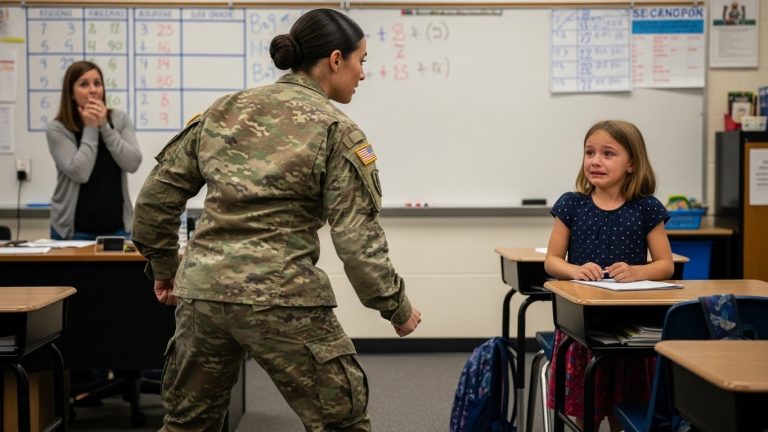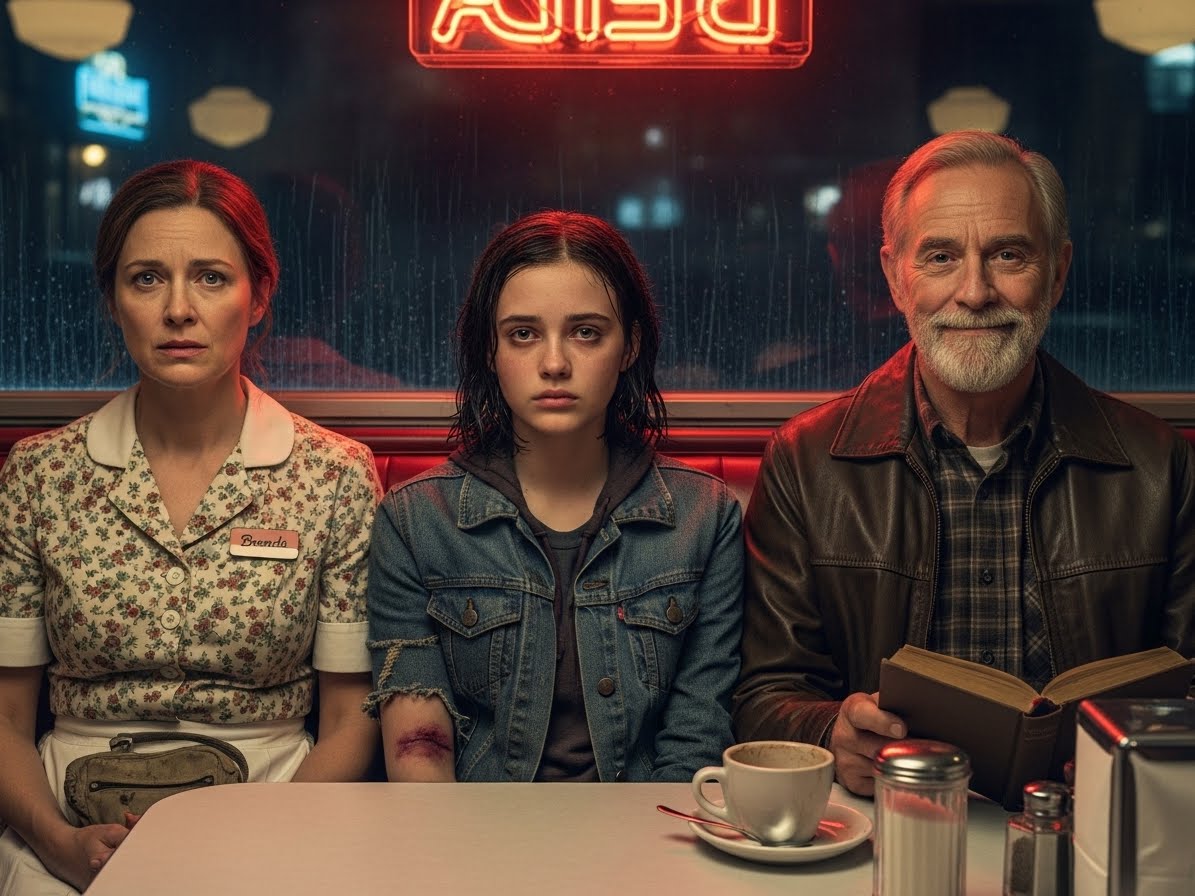
They told me to keep quiet, to hide the bruises, and to pray he’d pass out before he got angry, but the night I saw him reach for the shotgun was the night I realized silence wasn’t saving me—it was killing me slowly, and I had to choose between being a good daughter or being alive.
PART 1
CHAPTER 1: THE SOUND OF GRAVEL
You learn to listen before you learn to speak. That’s the first rule of survival in a house like ours. Most kids grew up afraid of the dark or the monster under the bed. I grew up afraid of a sound. Specifically, the crunch of tires rolling over loose gravel. It was a distinct sound. A heavy, rhythmic grinding that signaled the arrival of a beat-up Ford F-150. We lived in a double-wide trailer at the end of a dirt road in rural Kentucky, tucked away where the cell service was spotty and the neighbors knew better than to ask questions.
Every day at 5:15 PM, the atmosphere in that trailer shifted. It was a physical change, like the air pressure dropping before a tornado touches down. My little brother, Toby, would stop playing with his trucks. He’d freeze, his eyes wide, looking at me for a signal. My mother would instantly move faster in the kitchen. Wiping counters that were already clean. Checking the oven for the third time. Her hands would shake, just a little. And me? I would sit at the laminate dining table, staring at my algebra homework, gripping my pencil so hard my knuckles turned white.
We were waiting to see which version of him was walking through that door. Was it “Payday Dad”? The one who might toss a bag of candy on the table and ruffle my hair? Or was it the other one? The one who had lost money at the track? The one who had been drinking since noon? The engine would cut off. Then came the silence. That silence was the loudest thing in the world. It lasted maybe thirty seconds while he gathered his things in the cab.
In those thirty seconds, I would hold my breath. I could hear the hum of the refrigerator. I could hear the wind rattling the loose siding. I could hear my own heart hammering against my ribs like a trapped bird. The heavy thud of the truck door closing. The slow, dragging footsteps up the wooden porch stairs. The third step always creaked. Then, the doorknob turned. If it turned quickly, we might be okay. If it turned slowly, hesitantly, as if he was struggling to find the coordination to open it… we were in trouble.
On this particular Tuesday in November, the knob didn’t turn at all. Instead, there was a heavy thud against the door. Like a body falling against it. Then a curse word, muffled by the metal, followed by a violent kick. “Open the damn door!” My mother froze, holding a pot of boiling water. She looked at me, terror etched into the lines around her eyes. She was only thirty-four, but she looked fifty. “Go to your room, Sarah,” she whispered. “Take Toby.”
I didn’t move. I couldn’t. “Sarah, go!” she hissed. But I knew the protocol. If I left, she took the brunt of it. If I stayed, maybe I could diffuse it. Maybe I could be the lightning rod. I was sixteen years old. I was tired of running to my room. I stood up. “No,” I said softly.
The door flew open, slamming against the wall with a violence that shook the entire trailer. Pictures rattled on the walls. He stood there, framed by the grey twilight. A giant of a man, smelling of diesel, stale sweat, and cheap whiskey. His eyes were bloodshot, swimming in a haze of rage that hadn’t found a target yet. He scanned the room. He looked at Toby, who was trembling on the floor. He looked at Mom, who was shrinking back against the stove. Then, his eyes locked on me.
“What are you looking at?” he slurred, stepping into the room. He didn’t take his muddy boots off. He never did when he was like this. He tracked mud across the carpet Mom had spent all morning scrubbing. “Nothing, Dad,” I said, keeping my voice even. “Dinner’s almost ready.” “Dinner,” he scoffed. He kicked a chair out of his way. It skittered across the linoleum and hit the wall. “I don’t want your slop.”
He walked toward the fridge. He swayed, catching himself on the counter. He opened the fridge door and stared into the light. “Where’s the beer?” Mom cleared her throat. “Frank, you drank the last of it yesterday. I… I didn’t have money to get more.” The air left the room. He slowly closed the fridge door. He didn’t slam it. He closed it with a gentle, deliberate click. That was worse.
He turned around. The rage was no longer swimming. It was focused. It was a laser beam, and it was pointed directly at my mother. “You didn’t have money?” he repeated, his voice dangerously low. “I needed to buy groceries for the kids, Frank. They need to eat.” He laughed. A dry, humorless sound. “So you think eating is more important than my respect?”
“It’s not about respect—” “Don’t you talk back to me!” he roared, lashing out. He swept his arm across the counter. The pot of boiling water Mom was holding? She managed to set it down just in time, but the bowl of salad next to it went flying. Glass shattered. Lettuce and dressing exploded across the floor. Toby started crying. A high, thin wail. “Shut him up!” Dad yelled, turning toward my brother. “Shut him up or I’ll give him something to cry about!”
I stepped in front of Toby. “Leave him alone,” I said. My voice shook, but I stood my ground. He looked at me. Really looked at me. Like he didn’t recognize me. “You think you’re big now, huh? You think you’re grown?” He took a step toward me. I braced myself. I knew what was coming. The backhand. The shove. But this time, it was different. His eyes drifted past me to the corner of the room. To the gun cabinet.
The glass front of the cabinet reflected the dim light of the kitchen. Inside sat his pride and joy. A 12-gauge Remington. He didn’t hit me. He smiled. A crooked, broken smile that sent a chill down my spine that was colder than any winter wind. “You all think you’re better than me,” he muttered. “In my own house. Disrespecting me.” He started walking toward the cabinet. “Frank, no,” Mom whispered.
“Dad, stop,” I said, my heart hammering so hard I thought I might pass out. He reached into his pocket and pulled out the small brass key. Click. The cabinet door swung open. He reached in and wrapped his large, calloused hand around the cold steel of the barrel. In that moment, the world slowed down. I saw the dust motes dancing in the light. I saw the fear in my mother’s eyes turn into resignation.
I realized then that the rules had changed. The “Walk on Eggshells” game was over. This wasn’t about surviving the night anymore. This was about surviving, period. I looked at the back door. It was ten feet away. I looked at Toby. I looked at the shotgun. I had to make a choice. And I had about three seconds to make it.
CHAPTER 2: THE BREAKING POINT
The sound of a shotgun racking is a universal language. It says the end is coming. Clack-clack. The sound echoed in the cramped kitchen, bouncing off the cheap paneling. It was a mechanical, final sound. My father stood there, the weapon looking impossibly large in the small room. He wasn’t pointing it at us. Not yet. He was just holding it, caressing the wood stock, swaying slightly on his feet.
“Frank, put it down,” Mom begged, her hands raised in a surrender pose she had perfected over fifteen years of marriage. “Please. The neighbors will hear.” “Let ’em hear!” he bellowed. “Let ’em all hear! King of my own castle, and I got a mutiny on my hands.” He swung the barrel wildly. It passed over the stove. Over the window. Over me. When the black hole of that barrel swept past my face, I felt a coldness wash over my skin. It wasn’t my life flashing before my eyes. It was clarity.
For years, I had told myself: It’s not that bad. He loves us deep down. It’s just the stress. It’s just the drink. Lies. All of it. The man standing there didn’t love us. He loved the power he held over us. He loved the fear he could manufacture with a look, a word, a weapon. He took a step toward Mom. “You hid the money, didn’t you?” he accused. “You got a stash? Holding out on me?” “No, Frank, I swear—” “Liar!”
He smashed the butt of the gun into the wall, putting a hole right through the drywall. Plaster dust puffed into the air. Toby screamed again. “I said SHUT UP!” Dad spun around, the barrel lowering toward my six-year-old brother. Time stopped. I didn’t think. I didn’t plan. Instinct, sharp and primal, took over. I grabbed the nearest thing to me. It was the heavy cast-iron skillet sitting on the drying rack.
“Hey!” I screamed. Not a whimper. A roar. Dad turned his head, surprised by the volume coming out of his quiet, straight-A student daughter. “What?” he sneered. “Look at me!” I yelled, stepping away from Toby, drawing his attention. “You want to fight someone? Fight me! He’s a baby!” He laughed. “You? You’re nothing. You’re just a little girl.” “I’m not a victim,” I said. The words tasted like copper in my mouth.
He took a step toward me, the gun lowering slightly, but his finger was still near the trigger guard. “I brought you into this world,” he hissed, spittle flying from his lips. “I can take you out.” He raised the gun again. This was it. My mother was paralyzed. My brother was helpless. I gripped the handle of the cast-iron skillet with both hands. It was heavy, greasy, and cold.
“Run, Toby!” I screamed. “Run to the woods!” Toby scrambled up, his little legs pumping, heading for the back door. “Get back here!” Dad shouted, turning to chase him. He turned his back to me for a fraction of a second. I didn’t hesitate. I swung. I put every ounce of fear, every ounce of resentment, every skipped meal and bruise into that swing.
The skillet connected with the back of his shoulder—I missed his head, thank God, or I might be telling this story from a prison cell. The impact was sickening. A dull thwack of iron on bone. He grunted, stumbling forward, dropping the shotgun. It clattered to the floor, sliding under the table. He hit his knees, clutching his shoulder, roaring in pain. “You little witch!” he screamed, trying to push himself up.
The gun was on the floor. He was between me and the gun. Mom was still frozen. “Mom! The gun!” I yelled. She blinked, snapping out of her trance. She dove for the weapon just as Dad lunged for her ankle. He grabbed her leg. She kicked him, hard, right in the face. It was the first time I had ever seen her fight back. She scrambled back, sliding the gun across the floor toward me.
I dropped the skillet and grabbed the shotgun. It was heavier than I expected. Cold. Real. I scrambled back against the sink, raising the barrel. My hands were shaking so bad the end of the gun was vibrating. Dad shook his head, blood trickling from his lip where Mom had kicked him. He looked at me. He looked at the gun in my hands. His eyes narrowed. The rage was still there, but now, mixed with something else. Shock.
“You gonna shoot your own father?” he whispered. He started to stand up. “You don’t have the guts.” I pulled the hammer back. Click. The sound was deafening in the silence. “Try me,” I said. And for the first time in my life, I wasn’t lying. He froze. He saw it in my eyes. The girl who used to hide in the closet was gone. “Get out,” I said.
He laughed nervously. “This is my house.” “GET OUT!” I screamed, the sound tearing at my throat. “Get out or I swear to God, I will put a hole in you!” He looked at Mom. She was standing next to me now, clutching a steak knife she’d pulled from the drawer. He looked at the door where Toby had fled. He looked back at the 12-gauge pointed at his chest. He spat on the floor. “You’re crazy,” he muttered. “Both of you. Crazy.”
He stood up slowly, keeping his hands where I could see them. He backed toward the front door. “I’ll be back,” he threatened. “And when I come back…” “If you come back,” I said, my voice dropping to a deadly whisper, “I won’t miss.” He stared at me for a long moment. Then, he turned and kicked the screen door open, stumbling out into the rainy night.
I didn’t lower the gun. I listened. I heard his boots on the porch. I heard the truck door slam. I heard the engine turn over, coughing and sputtering before roaring to life. I heard the gravel crunch as he peeled out of the driveway. Only when the sound of the engine faded into the distance did I lower the gun. My knees gave out. I slid down the cabinets to the floor.
Mom dropped the knife and fell beside me, wrapping her arms around me. We both sobbed. Not tears of sadness. Tears of adrenaline. Tears of terror. But we weren’t safe yet. He said he’d be back. And Frank always kept his promises. I looked at the clock. 6:45 PM. “We have to go,” I told Mom, wiping my face. “We have to pack. Now.” “Where?” she asked, trembling. “Anywhere but here.” I stood up, the shotgun still in my hand. I wasn’t a victim anymore. I was the general of a two-person army, and we were evacuating.
PART 2
CHAPTER 3: THE GHOST IN THE RAIN
I ran out the back door, the screen slamming against the frame behind me. The rain had turned into a deluge, a freezing sheet of water that soaked me to the bone in seconds.
“Toby!” I screamed, my voice barely cutting through the sound of the wind whipping through the pines. “Toby, it’s safe! Come out!”
Nothing. Just the swaying of black trees against a charcoal sky.
Panic, cold and sharp, spiked in my chest. The woods behind our trailer stretched for miles, a tangle of briars, ravines, and old hunting trails. If he wandered too far, if he got hurt…
“Toby!” I yelled again, cupping my hands around my mouth.
I ran toward the old rusted tractor that sat at the edge of the tree line. It was his favorite hiding spot during hide-and-seek. I dropped to my knees in the mud, peering under the chassis.
Empty.
“Please, God,” I whispered. “Not tonight. Don’t take him tonight.”
I scrambled up and ran toward the creek bed. It was dry most of the year, but with this rain, it would be filling up fast.
Then I saw it. A flash of red near the big oak tree that had been struck by lightning years ago. His pajama shirt.
He was curled up in the hollow of the trunk, his knees pulled to his chest, shaking so violently his teeth were chattering audibly.
“Toby,” I gasped, sliding down the muddy bank to reach him.
He looked up, his eyes wide and vacant. He was in shock.
“Is… is the bad man gone?” he stammered.
“Yes,” I lied. He wasn’t gone. He was just reloading. “He’s gone. We have to go on a trip, okay? A secret mission.”
I scooped him up. He was heavy for six, dead weight in my arms, but adrenaline makes you strong. I carried him back to the trailer, slipping twice in the mud but never letting him go.
Inside, Mom was moving like a whirlwind. She had three duffel bags open on the living room floor.
“Clothes, Sarah. Warm ones,” she said, her voice tight. She wasn’t looking at me; she was looking at the door every five seconds.
I put Toby on the couch and ran to our room. I didn’t fold anything. I grabbed armfuls of jeans, sweaters, and socks, jamming them into the bags. I grabbed the photo album from my nightstand—the only proof that we had ever been happy, once upon a time.
I ran to the kitchen. Mom was pulling a coffee can down from the top shelf. The “Emergency Fund.”
She popped the lid. I saw her shoulders slump.
“How much?” I asked, breathless.
She poured the crumpled bills onto the counter. Ones, fives, a few tens.
“Forty-two dollars,” she whispered. “He… he must have found it. There was two hundred in here last week.”
Forty-two dollars. That wouldn’t even get us a full tank of gas.
“It’s enough,” I said, forcing confidence I didn’t feel. “It gets us out of the county. Do we have the keys to the Buick?”
Mom froze. “The Buick? Sarah, that car hasn’t run in six months. The battery is dead.”
“We have to try,” I said. “Dad took the truck. It’s our only way out.”
“We can call the police,” Mom said, looking at the landline on the wall.
“And say what?” I snapped. “That he left? They won’t do anything until he comes back and hurts us. You know that. Deputy Miller drinks buddies with him. We have to leave.”
I grabbed the keys from the hook by the door.
“Get Toby in the car,” I ordered.
I ran out to the carport. The 1998 Buick LeSabre sat there like a beached whale, covered in a layer of dust and pollen. It was a relic, a car Mom had before she met Frank.
I jammed the key into the door. It stuck. I jiggled it, cursing, until it turned.
I slid into the driver’s seat. It smelled like mildew and old cigarettes.
“Please,” I whispered, gripping the steering wheel. “Please, just this once.”
I put the key in the ignition and turned it.
Rrr-rrr-rrr… click.
Nothing.
“No, no, no,” I banged my fist on the dashboard.
I tried again.
Rrr-rrr-rrr… The engine sputtered, coughed, and died.
I looked in the rearview mirror. Mom was coming out of the house, carrying Toby and the bags. She looked terrified.
And then, I saw it.
Through the rain-streaked windshield, way down at the end of the long dirt driveway.
Twin beams of light cutting through the darkness.
Headlights.
They were turning onto our road.
“Mom! Hurry!” I screamed, rolling down the window.
She saw the lights too. She practically threw Toby into the back seat and dove into the passenger side.
“Is it him?” she gasped, slamming the door.
“I don’t know,” I said. My hands were shaking so hard I could barely hold the key.
The lights were getting closer. I could hear the rumble of a large engine. It sounded like a truck.
“Try it again, Sarah!” Mom yelled.
I closed my eyes. I took a deep breath. I turned the key and pumped the gas pedal furiously.
Rrr-rrr-rrr-VROOOM.
A cloud of black smoke erupted from the tailpipe, but the engine roared to life. It sounded terrible, a metallic grinding noise, but it was running.
“Go! Go!” Mom screamed.
I threw the car into reverse. The tires spun in the mud for a heart-stopping second before catching traction on the gravel. We shot backward out of the carport.
I slammed the shifter into drive.
The headlights were close now. Maybe a hundred yards away.
I floored it.
We fishtailed down the driveway, mud spraying up onto the windows.
The oncoming vehicle was blocking the exit. It was a pickup truck. A Ford.
My heart stopped.
“Hold on!” I yelled.
I yanked the wheel to the right, driving off the driveway and into the ditch. The Buick bottomed out, scraping violently against the earth, bouncing us around like ragdolls.
We tore through the tall grass, bypassing the truck.
As we passed it, I looked over.
It wasn’t Dad’s truck.
It was a neighbor, old Mr. Henderson, probably coming to see what all the yelling was about.
But I didn’t stop. I couldn’t stop.
We launched out of the ditch and onto the main road, the tires screeching on the wet asphalt.
I didn’t look back. I just drove, the speedometer creeping up to sixty, then seventy, as we vanished into the rainy Kentucky night.
CHAPTER 4: THE LONG ROAD TO NOWHERE
The windshield wipers on the Buick were fighting a losing battle. They slapped back and forth, thwack-squeak, thwack-squeak, smearing the grime rather than clearing it.
We had been driving for two hours.
The adrenaline was fading, replaced by a dull, aching exhaustion. My arms hurt from gripping the wheel. My head throbbed.
We were on I-65 North, heading toward Louisville. It was the only plan I could come up with. Big city. Easier to get lost in.
The car was silent. Toby had passed out in the back seat, clutching his teddy bear. Mom was staring out the passenger window, watching the blur of passing trees.
“We need gas,” I said, breaking the silence. My voice sounded foreign to my own ears. older. “The light came on ten miles ago.”
Mom didn’t answer right away. She was touching her cheek, where a bruise was starting to bloom in the shape of a finger.
“Mom?”
She jumped. “What? Oh. Yes. Gas.”
“We have forty dollars,” I said. “That gets us maybe half a tank and some food.”
“We can’t stop,” she whispered. “He’ll find us.”
“Mom, we have to stop. If we run out of gas on the highway, we’re sitting ducks.”
I saw a sign for a truck stop. Exit 43. 24-Hour Gas & Diner.
I merged into the right lane, the old car shaking as I decelerated.
We pulled into the gas station. The fluorescent lights overhead were blindingly bright, buzzing with electricity. It felt like an interrogation room.
I parked at the pump farthest from the road, hiding the car behind a massive 18-wheeler.
“Stay here,” I told Mom. “Keep the doors locked. If anyone comes near the car, honk the horn. Don’t stop honking.”
She nodded, her eyes wide. She looked so small.
I grabbed a twenty-dollar bill from the stash and stepped out into the cold air.
My legs felt like jelly. I walked toward the convenience store, pulling my hoodie up over my head. I kept my head down, avoiding eye contact with the few people milling around—a trucker smoking a cigarette, a tired-looking woman in scrubs.
Every man I saw looked like him for a split second. The heavy-set guy in the flannel shirt? My heart skipped a beat. No, just a stranger. The guy in the baseball cap? No.
I went inside and paid for twenty dollars on pump six. I bought two bottles of water and a pack of peanut butter crackers with the change.
As I walked back to the car, a police cruiser pulled into the lot.
I froze.
Be cool, I told myself. You didn’t do anything wrong. You’re the victim.
But I knew how this worked. I was sixteen driving a car registered to a woman who looked like she’d been in a fight. If they ran the plates, maybe Dad had already reported the car stolen. He would do that. He was vindictive like that.
I walked calmly to the car, my heart hammering against my ribs.
I pumped the gas, my eyes glued to the police car. The officer went inside to get coffee.
I hung up the nozzle, jumped in the driver’s seat, and locked the door.
“Did you see the cop?” Mom asked, panic rising in her voice.
“Yeah. He didn’t see us,” I said. “Eat this.” I tossed the crackers to her.
We pulled back onto the highway.
“Where are we going, Sarah?” Mom asked after a few minutes. She sounded like the child now, and I was the parent.
“Louisville,” I said. “There’s a shelter there. The Center for Women and Families. I looked it up on the school computer once.”
“A shelter,” she repeated, tasting the word. It tasted like failure. “I have a cousin in Cincinnati. Linda.”
“You haven’t spoken to Linda in ten years, Mom. Dad wouldn’t let you.”
“I know. But maybe… maybe she’d help.”
“We can try,” I said. “But we need to sleep. I can’t keep my eyes open.”
I checked the rearview mirror for the thousandth time. Just darkness and red taillights.
“Why didn’t we leave sooner?” Mom asked softly.
The question hung in the air, heavy and suffocating.
“Because we were scared,” I said.
“No,” Mom said, turning to look at me. tears streaming down her face. “Because I was weak. I let him do this to you. I let him turn our home into a prison. I’m so sorry, baby. I’m so sorry.”
I reached over and took her hand. Her skin was rough, calloused from years of scrubbing floors and washing dishes.
“You’re not weak, Mom,” I said fiercely. “You kicked him in the face tonight. You saved my life.”
She squeezed my hand. “We saved each other.”
But as the mile markers ticked by, a new fear began to settle in. We had escaped the house, but we hadn’t escaped him. Frank wasn’t the kind of man who just let things go. He viewed us as property. And someone had just stolen his property.
He was out there. somewhere in the dark. And he was hunting.
CHAPTER 5: THE DIGITAL LEASH
We didn’t make it to Louisville. By 2:00 AM, the exhaustion was hallucination-grade. The lines on the road were starting to snake and dance.
We pulled off in a small town called Elizabethtown. I found the cheapest motel I could find—The Starlight Inn. It looked like the kind of place where dreams went to die, with peeling paint and a flickering “No Vacancy” sign that actually read “No ancy.”
I parked around the back.
“Do you have a credit card?” I asked Mom.
“I have the joint card,” she said, digging into her purse. “The Visa.”
I stared at the piece of plastic. It was a lifeline, but it was also a tracking device.
“If we use this,” I said, “he’ll see the charge. He gets the alerts on his phone. He’ll know exactly where we are.”
Mom’s hand trembled. “We don’t have enough cash for a room. It’s forty dollars left, but they’ll want a deposit.”
I looked at Toby, sleeping in the back. It was freezing outside. We couldn’t sleep in the car. Not tonight.
“Okay,” I said. “We use it. But we leave before dawn. We get four hours of sleep, and we run.”
I went to the night window. The clerk was a guy with greasy hair and a neck tattoo, watching TV on a small portable set.
“One room. Two beds,” I said.
He looked at me. He looked at the mud on my jeans. He didn’t ask questions. He swiped the card.
Beep.
The sound felt like a gunshot. Somewhere, fifty miles away, Frank’s phone was buzzing. Transaction Approved: Starlight Inn, Elizabethtown.
I took the key—room 104—and we hurried inside.
The room smelled of stale smoke and bleach. The carpet was sticky. But it had a deadbolt.
I locked the door, then dragged the heavy dresser in front of it.
Mom laid Toby on the bed. He didn’t even wake up.
I went to the window and peeked through the gap in the curtains. The parking lot was empty except for our Buick and a rusted pickup truck.
“Sarah,” Mom said. “My phone.”
I turned around. Mom was holding her cell phone. It was lighting up.
Incoming Call: Hubby <3
The name on the screen made me want to vomit.
“Don’t answer it,” I said.
“He’s calling,” she whispered. “He knows.”
The phone stopped ringing. Then it pinged. A text message.
She looked at it, her face draining of color. She dropped the phone on the bed as if it were a venomous snake.
I walked over and looked at the screen.
TEXT: You think you can run? I know where you are. I’m coming. Better have my dinner ready.
A chill went through me that had nothing to do with the cold.
“He’s bluffing,” I said, though my voice wavered. “He can’t get here that fast.”
“He drives like a maniac,” Mom said. “He could be here in an hour.”
“Give me the phone,” I said.
“What?”
“Give it to me.”
I took the phone. I powered it down. Then I pried the back case off. I took the battery out. I took the SIM card out.
I walked into the bathroom and flushed the SIM card down the toilet.
“There,” I said. “He can’t track the phone anymore.”
“But he knows the motel,” Mom cried. “The credit card.”
“We aren’t staying,” I said. “We rest for one hour. Then we leave.”
I sat on the edge of the bed, the shotgun—which I had wrapped in a towel and carried in—resting against my knee.
“Sleep, Mom. I’ll keep watch.”
She lay down next to Toby, curling her body around him like a shield. Within minutes, her breathing evened out.
I sat there in the dark, staring at the door. Every car that drove past on the highway made me flinch. Every footstep outside made me grip the shotgun tighter.
I was sixteen years old. I should be worrying about the geometry test on Friday. I should be texting a boy I liked. I should be dreaming about prom.
Instead, I was sitting in a roach-infested motel with a weapon, waiting for my father to come and kill us.
I looked at my hands. They were still shaking. But underneath the fear, there was something else. A cold, hard anger.
I remembered the look on his face when I racked the shotgun. The fear.
He wasn’t a monster. He was just a man. A bully. And bullies bleed just like everyone else.
I checked my watch. 3:15 AM.
Suddenly, tires screeched in the parking lot.
I stood up, heart slamming against my ribs.
I moved to the window.
A truck. A Ford F-150. Black.
It pulled into the spot right next to our Buick.
The engine cut.
The silence followed.
The door opened.
A boot hit the pavement.
I racked the shotgun.
CHAPTER 6: THE MONSTER AT THE DOOR
I held my breath, the shotgun heavy and slick in my sweaty palms. The footsteps outside were heavy. Crunch. Crunch. Crunch.
They stopped right in front of Room 104.
A shadow fell across the gap under the door.
My heart wasn’t beating; it was vibrating. Mom woke up, sensing the shift in the air. She sat up, her eyes wide, terror instantly flooding her face. I put a finger to my lips.
Knock. Knock. Knock.
It wasn’t a frantic pound. It was a rhythmic, mocking rap.
“I know you’re in there, Mary,” a voice grumbled.
It wasn’t him.
The voice was too high. Too gravelly in the wrong way.
“Open up, I got the money,” the voice said.
I lowered the gun slightly. It was a drug deal. Or a john looking for a prostitute. Wrong room.
“Go away,” I hissed through the door, deepening my voice. “Wrong room.”
Silence. Then, a curse. The footsteps shuffled away to Room 106.
I let out a breath that felt like a scream. Mom slumped against the headboard.
“We have to go,” I whispered. “Now.”
“But the credit card…”
“If that guy next door causes a scene, the cops come. If the cops come, they run the plates. If they don’t, Dad is still tracking the card. We are sitting ducks.”
I moved the dresser back. My arms shook, but adrenaline is a powerful fuel.
We gathered Toby, who was groggy and whining softly. I threw the bags over my shoulder.
We opened the door. The parking lot was misty and cold. The guy from the next room was arguing with a woman in the doorway. They didn’t look at us.
We sprinted to the Buick.
I threw the bags in the back. Mom buckled Toby in. I jumped into the driver’s seat.
I turned the key.
Rrr-rrr…
“Come on,” I begged. “Don’t do this to me.”
Rrr-rrr-VROOOM.
The engine caught. I threw it into reverse.
And then, just as I was shifting into drive, a pair of headlights swung into the motel entrance.
High beams. Blinding.
The vehicle paused at the entrance, scanning the lot.
It was a black Ford F-150.
My stomach dropped through the floor. It was him. He had made good time. He must have been driving 100 miles an hour.
He saw us.
There was no mistaking the Buick.
The Ford revved—a deep, guttural roar. He slammed on the gas, heading straight for us to block the exit.
“Hold on!” I screamed.
I didn’t head for the exit. He would t-bone us.
I cut the wheel hard to the left, jumping the concrete parking curb. The Buick slammed down onto the grass, the suspension groaning.
We tore across the lawn of the motel, mud flying.
“Sarah!” Mom screamed.
“I see him!”
I drove parallel to the road, bouncing over ruts. The truck was mirroring us on the pavement, trying to cut us off.
There was a ditch between the motel lawn and the highway.
“We have to jump it,” I said.
“What?”
“We have to jump the ditch!”
I floored it. The speedometer hit 40.
We hit the edge of the embankment. For a split second, we were airborne. The world was weightless.
Then we slammed down onto the asphalt of the highway. Sparks flew. The tires screeched as I fought for control. The car fishtailed wildly, then straightened out.
I looked in the rearview mirror.
Dad was pulling a U-turn, tires smoking. He was coming.
CHAPTER 7: STEEL AND FIRE
The chase wasn’t like the movies. It was ugly. It was terrifying.
The Buick shook violently as we pushed it past eighty. The check engine light was flashing red. The temperature gauge was climbing into the danger zone.
Behind us, the Ford was getting bigger. It was a newer truck. Faster. Stronger.
He was gaining.
“Call 911!” I yelled to Mom.
“No service!” she cried, holding up her phone. We were in a dead zone between towns, surrounded by dark forests.
Thump.
He tapped our bumper.
The car lurched forward. Toby started screaming in the back seat.
“It’s okay, Toby! It’s okay!” Mom yelled, unbuckling her seatbelt to reach back and grab his hand.
CRASH.
He hit us harder this time. The Buick spun slightly, the tires squealing. I corrected, fighting the wheel. My arms burned.
“He’s trying to run us off the road!” I yelled.
We were approaching a bridge. A narrow, two-lane bridge over a ravine.
He pulled up alongside us in the oncoming lane.
I looked over.
I saw his face. illuminated by the dashboard lights. He wasn’t angry anymore. He looked… focused. determined. Like he was working on a project.
He wrenched his steering wheel to the right, slamming the side of his truck into my door.
SCREEECH.
Metal screamed against metal. The window glass beside me shattered, showering me in cubes of safety glass.
“Dad, stop!” I screamed, though he couldn’t hear me.
The impact sent the Buick skidding toward the guardrail.
“Hang on!”
I slammed on the brakes.
He shot past us, expecting me to speed up.
The Buick skidded, spinning 180 degrees, and came to a halt in the middle of the bridge, facing the way we came. Steam poured from under the hood. The engine sputtered and died.
Silence returned, heavy and suffocating.
“Is everyone okay?” I gasped, spitting glass out of my mouth.
“We’re okay,” Mom whispered. Toby was sobbing.
I looked out the shattered window.
Down the road, brake lights flared red. The truck had stopped.
He was turning around.
“Get out,” I said. “Everyone out. Now.”
“Sarah, we can’t—”
“The car is dead, Mom! Run to the other side of the bridge!”
I grabbed the shotgun from the passenger footwell. I grabbed the box of shells from the glove box.
We scrambled out of the car into the cold night air.
“Run!” I pushed Mom toward the end of the bridge.
The truck roared. He was coming back.
I didn’t run.
I stood behind the open door of the dead Buick. I used the car as a shield.
I loaded a shell into the chamber. Clack-clack.
The truck barreled toward us. He wasn’t slowing down. He was going to ram the stalled car. He was going to crush it.
And if I was behind it, he’d crush me too.
I stepped out from behind the door, into the middle of the lane.
I raised the shotgun.
The headlights were blinding. The roar was deafening.
I aimed for the windshield. Not the tires. The driver.
“STOP!” I screamed, though the wind took the sound away.
He kept coming.
I squeezed the trigger.
BOOM.
The kickback bruised my shoulder. The windshield of the truck shattered into a spiderweb of white.
The truck swerved violently. He couldn’t see.
He slammed on the brakes. The truck went into a spin, sliding sideways across the wet asphalt.
It smashed into the guardrail twenty feet from me. Metal crunched. The back end of the truck hung precariously over the edge of the ravine.
The engine stalled.
I stood there, smoke curling from the barrel of the gun. My ears were ringing.
The driver’s door of the truck groaned open.
Frank fell out onto the pavement. He was bleeding from the forehead where he hit the steering wheel. He looked dazed.
He looked up and saw me.
I walked toward him. I pumped the shotgun. A fresh shell loaded.
“Stay down,” I said. My voice was ice.
He tried to stand up, stumbling. “You… you shot me.”
“I missed,” I said. “On purpose. The next one won’t miss.”
He looked at the gun. He looked at my eyes.
For the first time in my life, I saw him realize something.
He wasn’t the scary one anymore.
I was.
CHAPTER 8: THE NEW DAY
We stood there on that bridge for what felt like an eternity. Me with the gun, him on his knees, bleeding and defeated.
Mom came running back from the end of the bridge. She stopped when she saw us.
She didn’t cower. She walked right past me.
She looked down at the man who had controlled her for fifteen years.
“It’s over, Frank,” she said. Her voice wasn’t loud, but it was steady. “We’re done.”
He looked up at her, a sneer forming on his bloody lips. “You can’t survive without me. You’re nothing.”
Mom reached into her pocket. She pulled out her wedding ring. A thin, gold band that had felt like a shackle for a decade.
She dropped it on the asphalt. It bounced with a tiny ting sound.
“Watch me,” she said.
In the distance, sirens began to wail. Someone must have heard the crash. Or maybe the gunshot.
Blue and red lights painted the wet trees.
When the state troopers arrived, they found a teenage girl holding a shotgun on a man who was crying.
They told me to drop the weapon. I did. I laid it on the ground and put my hands up.
They handcuffed Dad. He screamed and cursed, blaming us, blaming the world. But as they shoved him into the back of the cruiser, he looked small. Just a sad, angry little man.
I sat on the bumper of the ambulance while a paramedic checked the cuts on my face from the glass. Mom was holding Toby, rocking him back and forth.
The female officer, Trooper Gonzalez, walked over to me.
“You got a permit for that weapon, kid?” she asked gently.
“No, ma’am,” I said.
She looked at the Buick. She looked at the skid marks from the truck. She looked at the bruises on my mother’s arms.
She closed her notebook.
“Self-defense,” she said quietly. “He was using his vehicle as a deadly weapon. You did what you had to do.”
She handed me a blanket.
“Where will you go?” she asked.
I looked at Mom. She looked tired, battered, and broke. But she was smiling. A real smile.
“We’re going to Louisville,” I said. “To the shelter. And then… anywhere we want.”
EPILOGUE: TEN YEARS LATER
The gravel crunched under the tires of my car.
I flinched. Old habits die hard. Even after a decade, the sound of gravel still makes my heart skip a beat.
But this wasn’t a double-wide trailer. It was a small house with a white porch in a quiet suburb. And it wasn’t a beat-up Buick. It was my own car, paid for with my own money.
I grabbed my briefcase from the passenger seat.
I walked up the steps. The door opened before I could knock.
Mom stood there. She looked different. Her hair was cut short and dyed a vibrant auburn. She was wearing a nursing uniform—she had graduated at forty.
“Hey, Counselor,” she beamed, hugging me.
“Hey, Mom.”
Toby ran into the room. He was sixteen now. Taller than me. Playing varsity football. He didn’t remember much of that night. We tried to keep it that way.
“Did you win?” Toby asked, grabbing an apple from the bowl.
“I did,” I said.
I was a family law attorney now. I spent my days fighting for women who were too scared to fight for themselves. I spent my days standing between monsters and their victims.
We sat down for dinner. Roast chicken. No yelling. No walking on eggshells. Just laughter and the clinking of silverware.
I looked around the table.
They say you can’t escape your past. They say the cycle of violence is a wheel that keeps turning.
But looking at my mother’s smile and my brother’s peace, I knew the truth.
The wheel only turns if you let it.
I didn’t just survive that night on the bridge. I was reborn.
I was the girl who refused to be a victim. And now, I was the woman who made sure no one else had to be either.
THE END.