I Sold My Memories For My Daughter’s Insulin: A Father’s Last Fight.
Chapter 1: The Price of Sugar and Blood
The knuckles of Frank “The Anvil” Miller’s right hand looked like a bag of marbles smashed with a hammer. They were swollen, purple, and perpetually cold, even in the stifling heat of the Ohio summer.
He sat at his kitchen table, staring at the empty vial of insulin sitting on the checkered oilcloth. It was small, glass, and terrifyingly light.
It represented a countdown.
Frank was fifty-two years old. For thirty of those years, he had worked at the tormented heart of the auto plant in Dayton, turning bolts and welding chassis until his back was a permanent question mark and his ears rang with a phantom industrial hum.
When the plant closed six months ago, they gave him a plaque and a severance package that evaporated in the face of the mortgage and the medical bills.
His daughter, Lily, was twenty-two, but to Frank, she was still the little girl in pigtails who used to wait for him at the front gate. Type 1 Diabetes didn’t care about the economy. It didn’t care about layoffs or the price of gas. It just demanded to be fed, or it took everything.
“Dad?”
Frank snapped his hand over the vial, hiding it. Lily stood in the doorway, leaning against the frame. She looked tired. Her skin had that pale, translucent quality that made Frank’s stomach churn with anxiety.
“Hey, kiddo,” Frank said, forcing a smile that felt tight on his face. “You shouldn’t be up. It’s late.”
“I heard you pacing,” she said softly. “Are you okay? Did the unemployment check come?”
Frank cleared his throat, the sound like gravel grinding together. “Delayed. Just a glitch in the system, they said. Don’t you worry about the money, Lil. I got a lead on a night security gig. Starts tomorrow.”
It was a lie. There was no security gig. There was no unemployment check coming; the bureaucracy had snarled his paperwork in a way that would take weeks to unravel. Weeks she didn’t have.
“Okay,” she said, though her eyes lingered on his trembling hand. “I love you, Dad.”
“Love you too, kiddo.”
When she went back to her room, Frank exhaled a breath he felt he’d been holding for a month. He stood up, grabbed his heavy canvas jacket, and walked out into the humid night.
He drove his rusted Ford F-150 to the bad side of town, where the streetlights had been shot out and the potholes were deep enough to swallow a tire. He parked three blocks away from the old textile warehouse that had been abandoned since the nineties.
There were no neon lights here. No ring girls. No referees in striped shirts. This was the “Pit.”
Frank walked to the side door, knocked twice, then once. The metal slit slid open, revealing a pair of suspicious eyes.
“It’s Miller,” Frank grunted.
The door opened. The smell hit him instantly—a cocktail of stale beer, unwashed bodies, cigarette smoke, and the metallic tang of dried blood. It was the smell of desperation.
Inside, the warehouse was lit by hanging construction lights caged in wire. A circle of men stood around a makeshift ring formed by heavy chains. In the center, two men were tearing each other apart. There were no gloves. No wraps. Just bone against bone.
Frank made his way to a folding table in the corner where a man named Silas sat counting a stack of greasy bills. Silas was a small man with eyes like a shark—flat, black, and dead.
“The Anvil returns,” Silas said, not looking up. “Thought you retired after you busted your orbital socket last week.”
“I need a fight, Silas,” Frank said, leaning on the table. “Tonight.”
Silas looked up then, a smirk playing on his thin lips. “Desperate, Frank? I can smell it on you. Smells like… overdue bills.”
“Just give me a match.”
“I got a new guy,” Silas said, gesturing to a hulking figure in the shadows warming up. “Calls himself ‘The Sledge.’ Younger. Faster. Meaner. He’s looking to make a name. You step in with him, you might not walk out.”
“How much?”
“Winner takes five hundred. Loser gets fifty for the ambulance ride.”
Five hundred dollars. That was two weeks of insulin if he rationed it.
“I’ll take it,” Frank said.
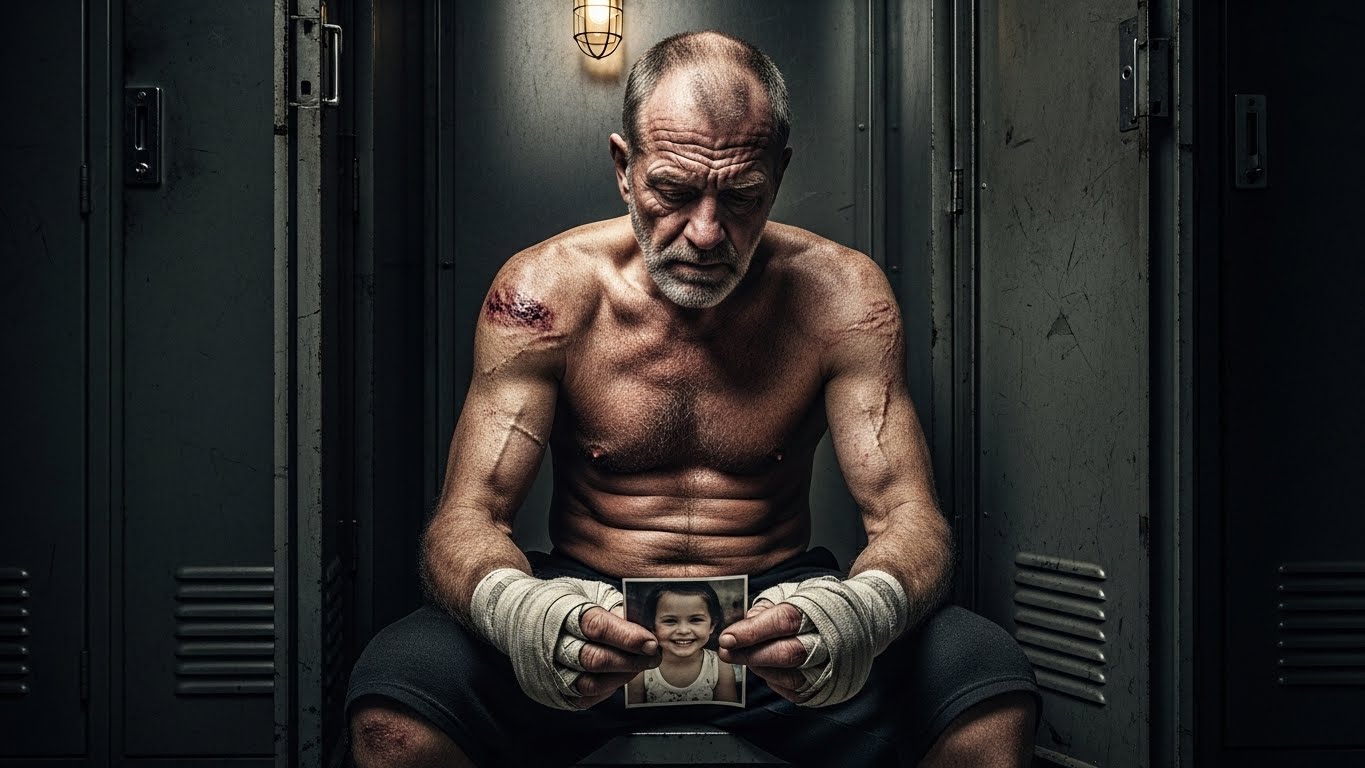
Twenty minutes later, Frank was stripping off his shirt. His torso was a map of his life—scars from machinery, burns from welding, and the fresh, yellow-green bruising from his last fight. He felt the familiar dread settle in his gut. This wasn’t boxing. Boxing was a sport. This was assault with mutual consent.
He stepped over the chain. The crowd, mostly men who had lost their own jobs and families, roared. They wanted to see someone bleed so they could forget their own pain for a few minutes.
The Sledge was a monster. At least six-foot-four, rippling with muscle that hadn’t yet been softened by age or cheap beer. He looked at Frank with pity, which was worse than hatred.
“Ding ding,” Silas shouted from the side, mocking a real match.
The Sledge lunged.
The first hit caught Frank in the ribs. It felt like being kicked by a mule. The air left his lungs in a wheezing gasp. Frank stumbled back, his boots slipping on the concrete floor that was slick with sweat.
Focus, Frank told himself. Lily. Insulin. Five hundred dollars.
He ducked a haymaker that would have taken his head off. He was old, yes, but he had spent thirty years moving heavy steel. He had what the old-timers called “factory strength.” It wasn’t pretty, and it wasn’t fast, but it was dense.
Frank stepped inside the younger man’s guard. He didn’t aim for the face; knuckles broke too easily on skulls. He aimed for the body. He drove a fist into The Sledge’s solar plexus, feeling the soft give of flesh. The Sledge grunted, dropping his guard for a split second.
That was all Frank needed. He brought his elbow up—a dirty move, illegal in any sanctioned sport—and caught the man on the chin.
The Sledge wobbled.
But youth is resilient. The Sledge shook it off and tackled Frank. They hit the concrete hard. Frank’s head cracked against the floor.
For a second, the world went white. A high-pitched ringing filled his ears, drowning out the shouting crowd. He saw flashes of light, like old camera bulbs popping. Brain fog. It was happening again. The disconnect between his mind and his limbs.
He felt heavy fists raining down on him. One, two, three. His left eye swelled shut instantly. He tasted copper.
Stay down, a voice in his head whispered. Just stay down and take the fifty bucks.
Then he saw the image of the empty vial on the kitchen table.
Frank roared, a primal, ugly sound. He bucked his hips, throwing the younger man off. He scrambled to his feet, swaying like a drunkard. The Sledge charged. Frank didn’t dodge this time. He stepped into the punch, taking a glancing blow to the forehead so he could deliver one final, desperate right cross to The Sledge’s throat.
The younger man gagged, clutching his neck, and went down to his knees.
“Finish him!” someone screamed.
Frank stood over him, chest heaving, blood dripping from his eyebrow into his good eye. He didn’t hit him again. The Sledge was done.
Silas walked into the circle and raised Frank’s hand. “Winner! The Anvil!”
Later, in the parking lot, Frank sat in the cab of his truck. He held the five hundred dollars in his shaking, bloody hands. His head was pounding with a rhythm that felt dangerous. He looked in the rearview mirror. His face was a wreck.
He cleaned himself up as best he could with a rag and a bottle of water he kept in the glove box. He drove to the all-night pharmacy on the other side of the county, where they didn’t know me, where they wouldn’t ask why he looked like he’d been in a car wreck.
He bought the insulin.
When he got home, the house was dark. He crept into the kitchen, placed the new vials in the fridge, and collapsed onto the sofa, too in pain to walk to his bedroom. As he closed his eyes, the white flashes returned, brighter this time. He wondered how much of my brain he had left to sell.
Chapter 2: The Fog of War
Three weeks later, the fog wasn’t lifting.
Usually, after a fight, the headaches would fade after two days. The dizziness would stop after three. But now, it was constant. Frank found himself standing in the middle of the living room, holding a coffee cup, unable to remember where he was going or why he was holding it.
He called it “The Static.” It was like an old television set tuned between channels.
“Dad?” Lily asked one morning over breakfast. She was looking at the bruise on his cheek that he’d tried to cover with her makeup foundation. “You dropped your keys in the fridge again.”
Frank blinked, looking at the butter dish where his truck keys sat chilling. “Right. Sorry. Just… tired. That night shift is brutal.”
“You don’t have a uniform,” she said quietly. “Security guards usually have uniforms.”
“Plain clothes,” he lied smoothly, though the lie tasted like ash. “It’s a corporate gig. Protecting assets.”
“You’re walking with a limp.”
“Old war wound acting up. Humidity.”
She didn’t believe him. He could see it in her eyes. But she was too afraid of the alternative—that there was no money—to push him too hard.
The money from the fight with The Sledge was gone. Paid the electric bill, bought groceries, and one more refill. But the mortgage was two months behind, and the bank had sent a letter printed on pink paper.
Pink meant “Final Notice.”
Frank needed a big score.
He went back to the warehouse on a Tuesday. It was raining, a cold, miserable drizzle that soaked into his bones.
“I need more,” Frank told Silas.
Silas was eating a sandwich, wiping mustard off his lip. He looked Frank over. “You look like garbage, Miller. You slur your words now. You know that?”
“I’m fine. I need a main event.”
“I can’t put you in a main event. You’re too slow. The crowd gets bored watching you hug guys for twenty minutes.”
“I won last time.”
“You got lucky. The Sledge got cocky.” Silas paused, tapping his fingers on the table. “I do have… something. But it’s not a regular match.”
“What is it?”
“We call it ‘The Gauntlet.’ Three rounds. Three different opponents. Five minutes each. You survive all fifteen minutes, you get two grand. You get knocked out, you get nothing.”
Two thousand dollars. That could save the house for another month and stock up insulin.
“Who are the opponents?”
“Does it matter?” Silas grinned. “Fresh meat. College kids looking to prove they’re tough, ex-cons, maybe a biker or two.”
“I’ll do it.”
“Frank,” Silas said, his voice surprisingly serious for a moment. “You take too many hits to the head, you ain’t gonna remember your own name. You sure about this?”
Frank thought about the pink slip from the bank. “Book it for Friday.”
Friday came with a sense of doom. Frank spent the day trying to memorize things. He wrote down Lily’s birthday, his social security number, and his mother’s maiden name on a piece of paper and put it in his pocket. Just in case.
The warehouse was packed. The air was thick enough to chew. When Frank stepped into the ring, the noise was deafening.
The first opponent was a kickboxer. Fast, wiry, legs like whips. Frank took a beating for the first three minutes. His thighs were turned into hamburger meat by the leg kicks. But Frank knew how to weather a storm. He clinched, leaned his heavy weight on the smaller man, and sapped his energy. He survived the first five minutes.
He sat on his stool, gasping. His vision was blurring at the edges.
“Round two!” Silas barked.
The second opponent was a brawler. Heavy hands, no technique. He hit Frank with a hook that rattled his teeth. Frank felt a tooth come loose. He swallowed the blood and kept moving. He was operating on muscle memory now. The conscious part of his brain—the part that felt fear—had shut down. He was a machine made of pain and iron.
He survived round two.
“Round three!”
Frank couldn’t stand up at first. His legs wouldn’t obey. He forced himself up by grabbing the chain ropes.
The third opponent stepped in. It was a man Frank recognized from the plant. A guy named Henderson. Younger, bigger, desperate just like Frank.
They looked at each other. There was no hatred, just a shared, tragic understanding. It’s you or me.
Henderson didn’t hold back. He slammed Frank into the concrete floor. He rained blows down on Frank’s ribs. Frank heard a crack—a rib giving way. The pain was blinding white light.
Get up, the voice said. Lily needs you.
Frank couldn’t breathe. His lung felt like it was punctured. He rolled, shielding his head. He just had to last two more minutes.
Henderson grabbed Frank’s hair and slammed his face into the floor.
Crunch.
Frank’s nose shattered. The blood poured out, blinding him. The world spun. He saw Lily’s face, but it was blurry. He tried to say her name, but his mouth wouldn’t work.
One minute left! someone screamed.
Frank grabbed Henderson’s leg and bit down. It was animalistic. Henderson screamed and pulled back. Frank used the moment to scramble to his feet. He couldn’t see. He swung blindly. His fist connected with something hard. Henderson went down.
Frank collapsed on top of him.
“Time!” Silas yelled.
Frank lay on the cold concrete, his chest heaving, his face a mask of crimson. He had survived.
Silas threw a towel on him. “You’re crazy, Miller. Here.” He tossed a thick envelope onto Frank’s chest.
Frank tried to pick it up, but his fingers were numb. He eventually shoved it into his jacket. He didn’t celebrate. He crawled out of the ring.
He drove home with one eye shut, the other barely open. Every bump in the road sent agony through his ribs.
When he got inside, he didn’t go to the fridge. He went to the kitchen table. He put the envelope down. He pulled out the piece of paper from his pocket.
Lily. July 12th. Margaret.
He read the words over and over, trying to make them stick. But they were slipping away. The Static was louder now. It was a roar.
Lily came out of her room. She screamed when she saw him.
“Dad! Oh my god, Dad!”
She ran to him, touching his battered face. “Who did this? What happened?”
Frank looked at her. For a terrifying, heart-stopping second, he didn’t know who she was. He saw a young woman crying, but the name was gone.
“I…” Frank stammered. “I got the money.”
“Dad, look at you! We need to go to the hospital!”
“No hospital,” he mumbled, his speech thick and slurred. “Cost too much. Insulin… money… on the table.”
“I don’t care about the money!” she sobbed.
“I do,” he whispered, and then the darkness took him.
Chapter 3: The Longest Count
Frank woke up to the rhythmic, mechanical beep… beep… beep that sounded like a truck backing up in a dream he couldn’t escape.
He tried to inhale, but his chest felt like it was wrapped in barbed wire. His eyes fluttered open, greeted not by the moldy ceiling of his bedroom, but by the harsh, unforgiving fluorescent glare of a hospital room.
“He’s coming around,” a voice said. It sounded professional, detached.
Frank turned his head, the motion sending a spike of nausea rolling through his gut. A doctor in a white coat stood over him, checking a digital chart. Next to him, curled up in a blue plastic chair that looked impossibly uncomfortable, was Lily.
She was asleep, her head resting on her arms, her dark hair spilling over her face. She was still wearing her waitressing uniform from the diner.
“Mr. Miller,” the doctor said, his voice lowering. “I’m Dr. Evans. Do you know where you are?”
“Hospital,” Frank rasped. His throat felt like he’d swallowed broken glass. “Dayton Memorial?”
“Correct. You’ve been unconscious for nearly thirty hours.”
Thirty hours. Panic flared in Frank’s chest, overriding the pain. Thirty hours meant a missed shift at the security job he didn’t actually have. Thirty hours meant Lily had been sitting here, not working, not studying.
“My daughter…” Frank started to sit up, but Dr. Evans placed a firm hand on his shoulder.
“Lie back, Frank. You have three broken ribs, a hairline fracture in your cheekbone, and a severe concussion. We also had to drain a hematoma from your scalp.” The doctor paused, his expression hardening. “Your daughter told the intake nurse you were mugged.”
Frank didn’t answer. He looked at the ceiling tiles, counting the little dots to avoid the doctor’s gaze.
“Frank, I’ve been an ER doctor in this city for fifteen years,” Dr. Evans said, leaning in. “I know what a mugging looks like. And I know what a bare-knuckle beating looks like. Your knuckles are shattered. Your defensive wounds are consistent with blocking strikes. You weren’t a victim; you were a participant.”
“Does it matter?” Frank whispered.
“It matters because of the scan results,” Evans said, pulling a tablet screen into Frank’s view. It showed a grayscale image of a brain. “You see these white spots? That’s scar tissue. Chronic Traumatic Encephalopathy. CTE. You’ve taken too many hits, Frank. Your brain is swelling. The confusion you’ve been feeling? The memory lapses? The tremors? It’s not just aging. Your brain is dying.”
The words hung in the sterile air like smoke.
“I’m fine,” Frank lied.
“You are not fine. If you take another beating like this—hell, if you take one more solid hit to the temple—you’re looking at permanent cognitive decline. Early-onset dementia. You won’t just forget where your keys are. You’ll forget how to swallow. You’ll forget her.”
He gestured to Lily.
Frank felt a cold dread that had nothing to do with the air conditioning. “I… I can stop.”
“You have to,” Evans said grimly. “Or the next time she comes here, she’ll be identifying a body.”
Lily stirred then, waking with a start. When she saw Frank’s eyes open, the relief that washed over her face broke his heart more than the punches ever could.
“Dad!” She rushed to the bedside, grabbing his hand—the one that wasn’t broken. “Oh my god. I was so scared.”
“I’m okay, Lil,” he croaked. “Just a little… banged up.”
She looked at his battered face, her eyes filling with tears. She didn’t buy the “mugging” story anymore. She wasn’t a child. She saw the bruises on his knuckles, the cash he’d mumbled about in his delirium.
“You promised,” she whispered, her voice trembling with a mixture of anger and grief. “You said the factory pension was handling it. You said everything was okay.”
“I did what I had to do,” Frank said, his defense weak.
“By getting killed in some basement?” She pulled back, wiping her eyes. “Dad, look at the bill.”
She pointed to a folder on the bedside table.
“We don’t have insurance since the layoff,” she said, her voice rising in panic. “The ambulance alone is two thousand dollars. The scans, the overnight stay… Dad, this visit cost more than the house is worth.”
Frank closed his eyes. The two thousand dollars from the Gauntlet—the blood money he had nearly died for—was gone. Vaporized by the American healthcare system before he even touched it.
He was back to zero. No, he was below zero. He was drowning in an ocean of debt, and he had just lost his only life raft.
“We’ll figure it out,” Frank said, though he had no idea how.
“No,” Lily said firmly. ” I will figure it out. I’m dropping my classes next semester. I can pick up double shifts at the diner. I can work nights.”
“You will do no such thing,” Frank growled, trying to summon his fatherly authority, but it cracked under his weakness. “You stay in school. You get that nursing degree. You get out of this town.”
“There is no ‘out’ if you’re dead, Dad!” she shouted, the sound echoing in the small room.
Dr. Evans stepped back in. “Mr. Miller needs rest. And you need to go home and sleep, young lady.”
Lily looked at Frank one last time, her expression a mask of terrified love. “Promise me,” she demanded. “Promise me you’re done. No more ‘night shifts.’ No more fighting.”
Frank looked at the girl he had carried on his shoulders, the girl whose life depended on expensive insulin he could no longer afford. He looked at the brain scan on the doctor’s tablet, the map of his own destruction.
“I promise,” he lied again.
Chapter 4: The Pink Slip
Recovery was a slow, agonizing crawl through quicksand.
They discharged Frank two days later with a prescription for painkillers he couldn’t afford to fill and a stack of billing paperwork thick enough to choke a horse.
He spent the first week on the sofa, staring at the dust motes dancing in the shafts of light coming through the blinds. The silence of the house was deafening. Lily was at school or at the diner, working herself to the bone. Every time she came home, she looked thinner, more exhausted. She was checking her blood sugar less often to save strips. Frank noticed. He noticed everything, even as his own mind started to betray him.
The “Static” was getting worse.
It wasn’t just forgetting where he put his coffee mug anymore. It was losing time. He would be washing dishes, and suddenly he would be standing in the backyard, holding a wet sponge, with no memory of how he walked through the door. He would look at a wrench and forget the word for it. The metal thing. The turner.
But the world didn’t stop for brain damage.
The mail kept coming. The envelopes turned from white to yellow, and then to the dreaded pink.
Final Notice of Foreclosure proceedings.
Frank sat at the kitchen table, the pink slip trembling in his damaged hands. They had thirty days. Thirty days before the sheriff came to put their furniture on the curb. Thirty days before Lily’s insulin supply ran dry.
He couldn’t fight. He had promised. And Dr. Evans was right; his body was broken. He couldn’t even make a fist with his right hand without shooting pains radiating up to his neck.
So, he tried to do it the “right” way.
He put on his only suit—a charcoal gray number from a wedding ten years ago that hung loosely on his now-gaunt frame. He shaved, wincing as the razor went over the healing cuts on his jaw. He printed out resumes at the library.
He went to the temp agency downtown.
“Skills?” the recruiter asked, a young woman who popped gum while she typed.
“Assembly line. Welding. heavy machinery operation. Thirty years at the GM plant,” Frank said proudly.
“We don’t have much manufacturing right now,” she said without looking up. “I have a stocking position at Walmart. Third shift.”
“I’ll take it.”
He went to the interview. The manager was a kid, maybe twenty-five. He looked at Frank’s battered face, the cauliflower ear, the scar running through his eyebrow.
“Rough weekend?” the kid asked.
“Car accident,” Frank said, the rehearsed lie rolling off his tongue.
“Right. Well, the job is physical. Lifting boxes. fast pace. Can you keep up?”
“I worked the line for thirty years, son. I can lift.”
“Okay. Let’s do a quick physical test. Move these pallets to the back.”
Frank stood up. He grabbed the pallet jack. He pulled.
And then the room tilted.
The fluorescent lights of the stockroom flickered and stretched. The high-pitched ringing returned to his ears—eeeeeeeeeeee. The Static.
Frank stumbled. He let go of the jack. He tried to grab a shelf to steady himself, but his depth perception failed him. He crashed into a display of motor oil, sending plastic bottles tumbling everywhere.
He fell to his knees, grasping his head, trying to keep his brain inside his skull.
“Whoa, hey! Are you drunk?” the manager shouted, backing away.
“No,” Frank gasped, trying to stand up, but his legs were jelly. “Vertigo… just… slipped.”
“Look, man, this is a liability issue. You need to leave. Now.”
Frank walked out of the store, the shame burning hotter than his injuries. He sat in his truck in the parking lot and cried. Not sobbing, just silent, hot tears leaking out of his eyes. He was useless. The world had chewed him up, extracted all his labor, broken his body, and now spat him out because he was damaged goods.
He drove home. The gas light on the dashboard flickered on.
When he walked into the kitchen, Lily was there. She was holding the pink slip.
She didn’t scream this time. She didn’t cry. She just looked defeated.
“They’re taking the house, aren’t they?” she asked softly.
“I’m handling it,” Frank said, his voice hollow.
“How, Dad? How are you handling it? We have no money. The bank wants six thousand dollars to stop the foreclosure. We have forty-two dollars in the checking account.”
She sat down, putting her head in her hands. “I can drop out. The refund for tuition might cover a month…”
“No!” Frank slammed his hand on the table. The pain shot up his arm, but he welcomed it. “You are not dropping out. You are going to be a nurse. You are going to have a life.”
“What life?” she snapped, looking up. “We’re going to be homeless in a month! I can’t keep my insulin cold if we live in the truck, Dad!”
The reality of it hit Frank like a sledgehammer. The insulin. The cold storage. The electricity. It wasn’t just a house; it was her life support system.
He walked into his bedroom and closed the door. He sat on the edge of the bed.
He looked at the phone.
He had one contact saved as “DO NOT CALL.”
He dialed.
It rang four times.
“I thought you were dead, Miller,” Silas’s voice came through, greasy and sharp.
“I’m still here,” Frank said.
“barely. I heard you took a job at Walmart. How’d that go?” Silas knew everything. He was a rat with his ear to the sewer grate.
“I need money, Silas. Big money.”
“I told you, Frank. The Gauntlet was your last run. You’re too damaged. No one wants to bet on a horse with three legs.”
“There has to be something.”
Silence on the other end. Then, a low chuckle.
“Well,” Silas said slowly. “There is… The Butcher.”
“The Butcher?”
“He’s a traveler. Underground legend. Just got into town. He’s looking for a… exhibition match. He likes to hurt people, Frank. He doesn’t want a fight; he wants a heavy bag that bleeds. He wants to see how much punishment a man can take before he breaks.”
“How much?”
“Ten thousand. Cash. Win or lose. But you have to last three rounds. Three rounds of five minutes.”
Ten thousand dollars. That would stop the foreclosure. That would pay the property taxes. That would buy six months of insulin.
“Ten grand?”
“Cash. Tonight. But Frank… he’s going to kill you. I’m not saying that to hype the fight. I’m saying that as a friend. He will turn your brain into soup.”
Frank looked at the photo of Lily on his dresser. She was smiling, wearing her graduation cap. She looked safe.
“Book it,” Frank said. “I’ll be there in an hour.”
He hung up.
He didn’t feel fear anymore. He felt a strange, cold clarity. He opened his drawer and took out a notepad. He began to write.
My Dearest Lily,
If you are reading this, it means I wasn’t able to walk home tonight…
Chapter 5: The Butcher’s Arrival
I waited until Lily left for her evening class. I watched her walk down the driveway, her backpack slumped over one shoulder. She looked back once, waving at the window. I waved back, though I knew she couldn’t see me in the dark.
I went to the kitchen table. My hands were shaking, but not from fear. It was the adrenaline of a man walking to the gallows.
I wrote the letter.
I didn’t write much. Just that I loved her. That the house was safe. That she shouldn’t be angry. I put the deed to the house next to it.
Then, I drove to the warehouse.
The atmosphere was different tonight. Usually, the Pit smelled like stale beer and boredom. Tonight, it smelled like a slaughterhouse. It was bloodthirsty. The crowd was bigger, louder, meaner. They knew something bad was going to happen, and they couldn’t wait to watch.
Silas met me at the door. He wasn’t smiling. Even a shark knows when there’s too much blood in the water.
“He’s here,” Silas said quietly.
“Do you have the money?”
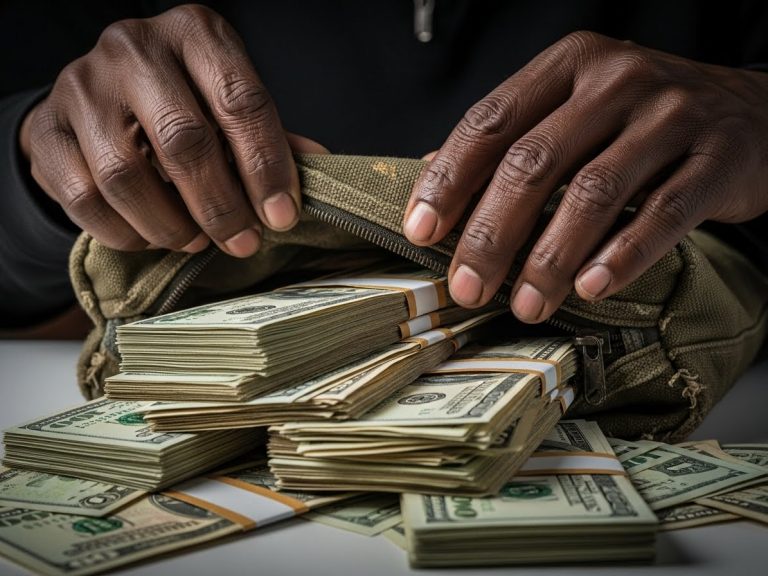
Silas nodded. He handed me a thick, brown envelope. “Ten thousand. Large bills.”
I didn’t count it. I walked to the lockers. I put the envelope in my locker, tucked deep inside my street boots. I took the key—a small, brass thing attached to a safety pin. I pinned it to the inside of my sock.
I sat on the wooden bench and took off my shirt. My reflection in the rusted mirror was a horror show. Bruises on top of bruises. A map of bad decisions.
“Frank,” Silas said, standing in the doorway. “You don’t have to do this. We can call it off. I can loan you a grand…”
“A grand won’t save the house, Silas. And I’m not taking loans I can’t pay back.” I wrapped my hands. I didn’t bother with the heavy tape. It wouldn’t matter. “Just ring the bell.”
I walked out. The crowd parted. They went silent as I stepped over the chain.
Then, The Butcher entered.
He was a nightmare made of flesh. A traveler, Silas had called him. He was bald, his scalp a landscape of old knife scars. He had gold teeth and eyes that looked like they had seen hell and enjoyed the view. He was younger than me, heavier than me, and he wasn’t here to box.
He was here to break things.
He smiled at me, the gold glinting under the construction lights.
“Fresh meat,” he whispered.
I took a deep breath. I thought of the pink slip. I thought of the insulin vials. I thought of Lily’s graduation.
Just stand up, I told myself. Three rounds. Fifteen minutes.
“Ding ding,” Silas shouted.
Chapter 6: The Slaughter
The fight wasn’t a fight. It was an execution.
I didn’t throw a punch. I couldn’t. If I opened up to swing, he would kill me. So I shelled up. I put my forearms over my face, tucked my chin, and prayed.
The Butcher hit me with a body shot that felt like a cannonball.
My knees buckled. The air left my lungs instantly. I gasped, a wet, wheezing sound.
He laughed. He hit me again, in the exact same spot.
I felt the rib snap. It wasn’t a crack this time; it was a wet crunch. The pain was blinding, a white-hot spear driven through my chest.
One minute down, I thought, grinding my teeth so hard I thought they would shatter.
He worked me over like a side of beef. He hit my shoulders, my biceps, my kidneys. He was tenderizing me. He wanted me to drop my guard.
“Fight back, old man!” someone in the crowd screamed.
I didn’t fight back. I stood there. I was a statue of misery. I was the Anvil. And tonight, I would take every strike.
The bell rang for the end of round one.
I stumbled to my corner. Silas was there with a sponge. The water was cold, but it felt like acid on my cuts.
“Frank, you’re pissing blood,” Silas hissed, looking at the floor. “Throw the towel. I’m calling it.”
“No!” I grabbed his wrist. My grip was weak, but my eyes were wild. “You stop this fight, and I get nothing. I need three rounds.”
“He’s going to kill you in the second.”
“Let him try.”
Round two.
The Butcher got bored of the body. He started headhunting.
He threw an uppercut that split my guard. It caught me on the chin.
My head snapped back. The world tilted sideways. The “Static” in my brain roared to life—a deafening television snow noise. Shhhhhhhhk.
I didn’t know where I was. For a second, I thought I was back at the plant. I saw the sparks from the welder. I saw the conveyor belt moving.
Move the chassis, Frank. Move the chassis.
Then another punch landed, bringing me back to the cold concrete and the smell of copper.
My left eye swelled shut. Blood poured from my nose, thick and dark. I was swallowing it, choking on it.
I leaned against the chains, using them to hold me up. The Butcher stepped back, spreading his arms to the crowd. He was showboating.
“Is this the best you got?” he roared at me.
I spat a glob of blood onto his boot.
He snarled and charged. He unleashed a flurry of hooks. I took them all. My head rattled like a pinball. My vision was tunneling. The edges of the world were turning black.
Just… stay… standing.
The bell rang.
I didn’t walk to my corner. I couldn’t. I slid down the chains to the floor.
Silas was in my face, slapping my cheeks. “Frank! Frank! Look at me!”
I looked at him. He had three eyes. No, four.
“What round?” I mumbled. My tongue felt too big for my mouth.
“Last one,” Silas said, his voice shaking. “Last one, Frank. You survive five more minutes, you get the money.”
“Okay,” I whispered. “Okay.”
Chapter 7: The Final Bell
Round three.
I stood up. I don’t know how. It wasn’t muscles; it was pure will. It was the image of Lily sitting in the dark, wondering where I was.
The Butcher didn’t smile anymore. He looked annoyed. He wanted me to stay down.
He walked over and shoved me. I stumbled back. He hit me with a straight right hand that broke my nose again. I didn’t feel it. I was past pain. I was in a place where only the sound existed.
Thud. Thud. Thud.
Every hit took a piece of me.
I forgot my social security number. Thud.
I forgot the name of my first dog. Thud.
I forgot the address of the house I was fighting for. Thud.
The Static was a solid wall now. I couldn’t hear the crowd. I couldn’t hear Silas. I could only hear a high-pitched whine.
One minute left. I saw Silas holding up one finger.
The Butcher saw it too. He wound up. He wanted a highlight-reel knockout.
He threw a hook. It was a haymaker. A punch meant to decapitate.
I saw it coming. In slow motion. I knew I should duck. I knew the move. Dip the shoulder, roll under.
But my brain sent the signal, and the wire was cut. My legs didn’t move.
The fist connected flush with my temple.
There was no pain. Just a sudden, profound silence. Like someone had pulled the plug on the world.
The lights went out.
I fell. I hit the canvas face first. I didn’t put my hands out to break the fall.
I lay there. I could feel the cold concrete against my cheek. It felt nice. It felt like the cool side of the pillow.
Get up, a tiny voice whispered. It sounded like Lily when she was five.
I can’t, baby, I answered in my head. I’m so tired.
I heard a voice counting. “Seven… Eight… Nine…”
I didn’t get up.
“Ten! Out!”
I stayed on the floor. I felt hands on me. Someone rolling me over. A bright light shining in my eye.
“He’s not breathing right! Get the medic!”
I drifted away. I floated out of the warehouse, over the smokestacks, over the potholes. I floated all the way to a quiet place where nothing hurt anymore.
Chapter 8: The Quiet Room
The beep… beep… beep… was rhythmic and annoying.
I opened my eyes. Or I thought I did. It was hard to tell. Everything was white.
“Dad?”
A woman was sitting there. She looked nice. Familiar, somehow.
“Hi,” I whispered. My voice sounded like it was coming from underwater.
“You’re awake,” she said, her voice cracking. She held my hand. Her hand was warm.
“Where… where is the factory?” I asked. “I’m late for shift.”
The woman started to cry. “Dad, the factory closed a long time ago.”
“Oh.” I frowned. That seemed wrong. I tried to sit up, but my body felt like it was made of lead. “Did I get paid? The overtime? I did the night shift.”
“Yes,” the woman said, squeezing my hand. “You got paid. Silas… a man brought an envelope. He said you earned it. The house is safe. The bank is paid.”
“Good. Good.” I smiled. I looked at the woman. She had beautiful eyes.
“You’re a nice lady,” I said. “Do you know my daughter? Her name is… her name is…”
I searched the library of my mind. I ran down the aisles, pulling books off the shelves, but the pages were blank. The fire had taken them.
“Her name is Lily,” the woman said, tears dropping onto my hand.
“Lily,” I repeated, testing the word. It felt sweet on my tongue. “That’s a pretty name. Pretty flower.”
“Yeah, Dad. It is.”
I looked out the window. It was raining. I liked the rain. I felt a deep, abiding sense of peace. The pain was gone. The worry about the pink slips and the glass vials was gone.
I looked back at the woman. “I’m tired now.”
“I know. You rest.”
“Will you stay?”
“I’m not going anywhere,” Lily said. “I’m right here.”
I closed my eyes. I didn’t remember her name, but I knew I loved her. And I knew, deep in the quiet part of my soul that was no longer screaming, that I had won.
I had traded my past to secure her future.
It was a fair trade.
“Goodnight,” I whispered.
“Goodnight, Dad.”
The beep… beep… beep… continued, measuring out the time I had left, time that was now paid for in full. The Static faded into a soft, white silence. And in that silence, I was finally, truly free.