High School Bullies Dragged A Disabled Boy Behind The Bleachers To “Teach Him A Lesson.” They Didn’t Expect 50 Outlaw Bikers To Be Waiting For Them In Silence.
Chapter 1: The Promise
The vibration of a 1978 Shovelhead engine is something you feel in your teeth before you hear it in your ears. It’s a rhythm, a heartbeat that smells like gasoline and burnt oil. For me, Jack “Ironhead” Miller, it’s the only lullaby that ever worked. I was in my garage, deep in the guts of the transmission, trying to ignore the ache in my lower back that comes from forty years of riding hard and living harder. The garage was my sanctuary. It was a temple of chrome and dust where the outside world—the world of taxes, politics, and polite society—didn’t exist.

But the phone ringing on the workbench shattered that peace. It wasn’t a normal ring; it was the specific, jarring tone I had assigned to “Family.” And in my world, family isn’t just blood. Family is the patch on your back.
I wiped my hands on a rag that was already black with grease and swiped the screen. “Sarah?”
Sarah’s voice was broken, a jagged collection of sobs that instantly made the hair on my arms stand up. “Jack… it’s Leo.”
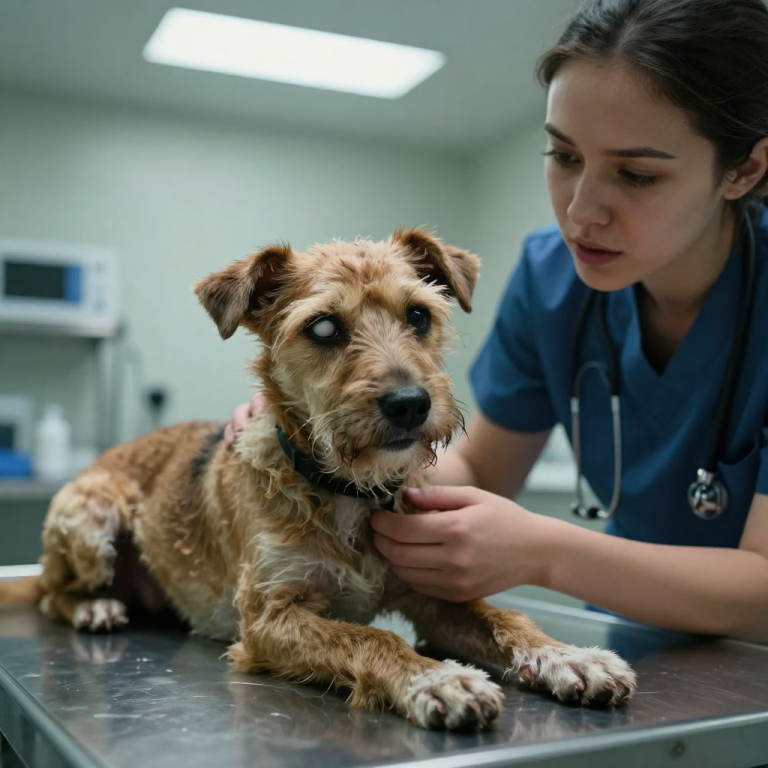
My grip tightened on the phone. Leo. The kid was fourteen years old. He was the son of Mike “Piston” O’Connor, my best friend and the former Road Captain of the Devil’s Iron MC. Piston died three years ago when a drunk driver in a pickup truck jumped the median on I-95. Piston took the brunt of the impact to save his family. Sarah survived with a broken arm. Leo… Leo lost his left leg just below the knee.
“Is he hurt?” I asked, my voice dropping into that low, calm register I use when things are about to go sideways.
“Physically? He’s… he’s okay, I think. But Jack, they’re breaking him,” Sarah cried. “He came home yesterday with his sketchbook torn in half. He loves that book. He didn’t want to tell me what happened. He said he dropped it. But I found a boot print on the pages, Jack. A muddy boot print.”
I closed my eyes. I could see Leo’s face. He was a quiet kid, skinny, with his dad’s stubborn chin and his mom’s gentle eyes. He didn’t play sports. He didn’t talk trash. He drew. He sketched intricate designs of engines and landscapes. And he walked with a limp, the mechanical click of his prosthetic a constant reminder of the worst day of his life.
“Who is it?” I asked.
“It’s the seniors. The football team,” she said, spitting the words out like poison. “They cornered him in the locker room on Monday. They call him ‘Peg-leg.’ They mimic the way he walks. Today… today Leo was shaking before he left the house. He got a text. They told him they were going to ‘finish the lesson’ after fourth period.”
“Where?”
“Behind the equipment shed at the football field. It’s a blind spot. No cameras. No teachers.”
I looked at the dusty clock on the garage wall. 11:15 AM.
“Jack, I’m scared to call the school. If I call the principal, they’ll just deny it, and then they’ll torment him worse for being a snitch. You know how it works.”
I did know how it works. The American high school system is a jungle. The strong eat the weak, and the administration usually looks the other way as long as the football team is winning on Friday nights.
“Don’t call the school,” I said. I grabbed my leather cut from the hook. The leather was heavy, smelling of rain and smoke. I slid my arms into it. As I zipped it up, I wasn’t Jack anymore. I was Ironhead, President of the Oakhaven Chapter. “And don’t worry about the police. This isn’t a police matter. This is a family matter.”
“What are you going to do?” Sarah asked, fear mixing with hope in her voice.
“I’m going to go for a ride,” I said. “And I’m not going alone.”
I hung up and opened the club app. It’s a secure channel. We use it for logistics, charity runs, and emergencies. I typed out a message that would hit the phone of every patched member in a fifty-mile radius.
ALL HANDS. URGENT. MEET AT CLUBHOUSE. 11:30. FULL COLORS. WE RIDE FOR LEO.
I walked out of the garage and into the sunlight. It was a crisp autumn day, the kind of day that looks beautiful right before it gets violent. I straddled my bike and kicked the starter. The engine roared to life, a savage bark that echoed off the suburban houses.
Leo wasn’t just a kid. He was Piston’s legacy. And nobody touches a brother’s legacy while I’m still drawing breath.
Chapter 2: The Silent Cavalry
By 11:35 AM, the clubhouse parking lot looked like a staging ground for a war. They came from everywhere. Tiny, our Sergeant at Arms, pulled up on his massive Road King, looking like a mountain carved out of granite. “Doc,” our medic, arrived on his chopper, still wearing his scrubs under his leather vest—he’d walked out of a shift at the ER for this. Even “Preacher,” our oldest member at seventy-two, was there, his knuckles swollen with arthritis but his grip on the throttle steady as a surgeon’s.
Fifty bikes. Fifty men.
I stood on the back of a flatbed truck we used for hauling broken-down bikes. The chatter died down instantly.
“Listen up,” I growled. “Most of you know Leo. You know Piston. Today, some high school punks think it’s funny to torture a kid who’s already been through hell. They think they’re tough because they can corner a fourteen-year-old with a prosthetic leg.”
A low rumble of anger moved through the crowd. It was a visceral sound, like a growl from a pack of wolves.
“We are not going there to hurt anyone,” I said, holding up a hand. “We are not going there to catch a case. We are going there to make a point. A permanent point.”
I looked at Tiny. “We ride tight. We ride fast. But when we hit the school zone, we cut the noise. We want the element of surprise. We want them to see us before they hear us. We want them to feel the weight of what they’ve done.”
“Understood,” Tiny nodded.
“Let’s roll.”
The ride to Oakhaven High was a blur of asphalt and wind. We took up both lanes of Route 22. It’s a powerful feeling, being part of a column like that. It’s a single organism made of steel and flesh. Cars pulled over. Pedestrians stopped and stared, their phones out, filming the spectacle. A massive formation of outlaw bikers is usually bad news. But today, we were the cavalry.
As we approached the school, the sprawling brick complex came into view. The football field was in the back, bordered by a dense patch of woods and a service road. That service road was our entry point.
I raised my left fist—the signal for Engines Off.
It’s a difficult maneuver, fifty heavy bikes coasting in neutral, relying on momentum. The roar died instantly, replaced by the heavy whoosh of tires on pavement and the clicking of cooling metal.
We rolled down the service road, silent ghosts in the midday sun. We turned the corner behind the gymnasium and drifted onto the gravel track behind the equipment shed.
We parked in a phalanx, a semi-circle of black leather and chrome, blocking the only exit from the rear of the shed.
I checked my watch. 12:04 PM.
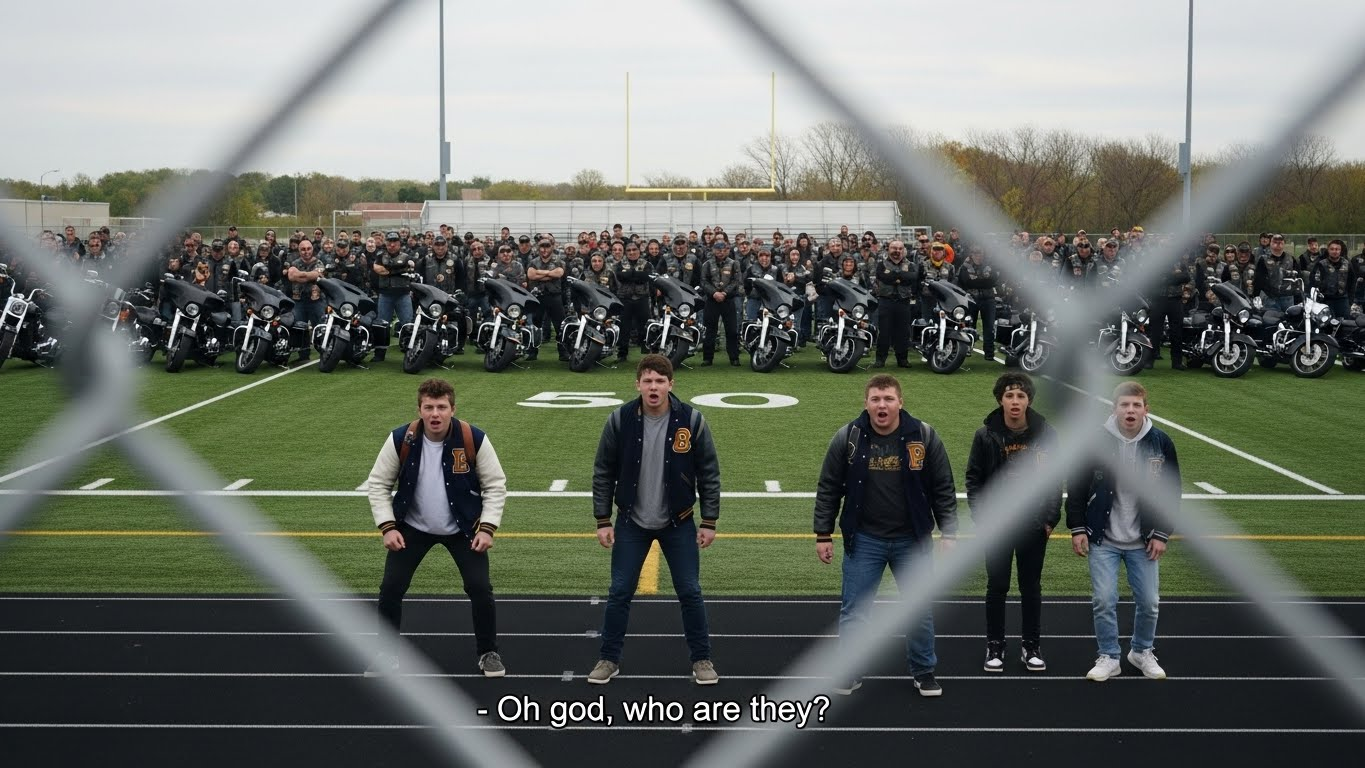
We dismounted. No one spoke. The discipline was absolute. We stood in front of our bikes, arms crossed, faces impassive behind dark sunglasses. We looked like a wall of judgment.
Then, the bell rang inside the school.
A few minutes later, the back door of the gym kicked open. I heard the scuffle before I saw it.
“Move it, Peg-leg!” a voice sneered. It was young, arrogant, dripping with the false confidence of a bully who has never been punched in the mouth.
“Please, just give me my bag,” a softer voice pleaded. Leo.
My jaw clenched so hard I thought a tooth might crack.
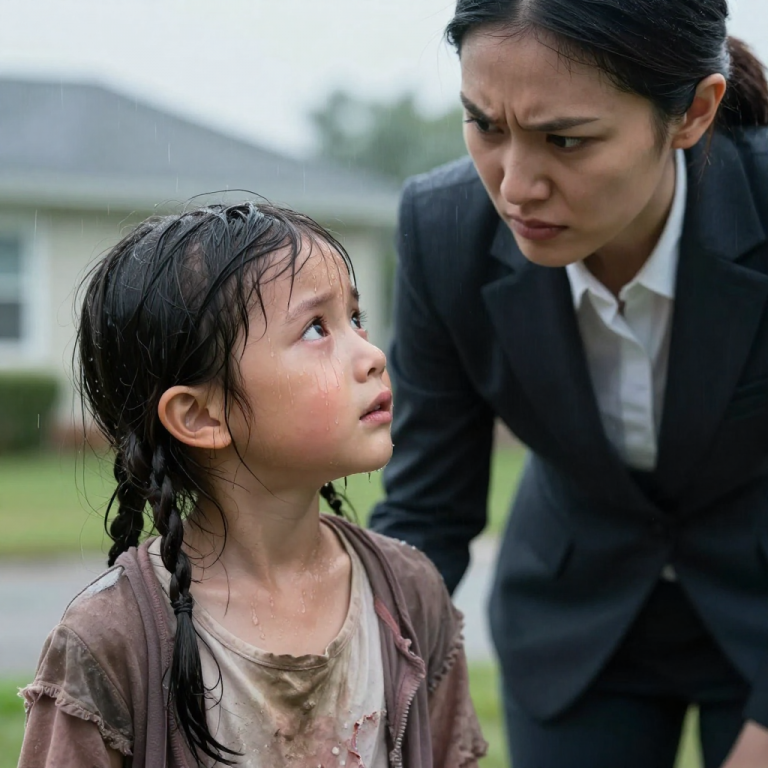
Leo stumbled around the corner of the brick shed. He was covered in dust. His backpack was missing. He was limping heavily, favoring his prosthetic side. He looked exhausted, defeated.
Three boys followed him. They were the archetype of American high school royalty. Varsity jackets with leather sleeves. perfectly styled hair. Expensive sneakers. They were pushing Leo, herding him like cattle.
The leader, a tall blonde kid, shoved Leo hard in the back. “Oops, careful there. Don’t want your leg to fall off.”
Leo hit the gravel. He tried to catch himself, but his prosthetic slipped, and he went down hard on his hands and knees.
The bullies laughed. It was a cruel, ugly sound.
“Look at him,” the leader mocked. “Can’t even stand up. You don’t belong here, freak.”
The leader stepped forward, raising his expensive sneaker to kick dirt into Leo’s face.
I stepped out from the shadow of the shed.
Crunch.
My boot on the gravel was the only sound in the world.
The leader froze. His foot hovered in the air. He slowly turned his head, annoyance flashing in his eyes at the interruption.
“What do you—”
The words died in his throat.
He saw me. Six-foot-two, gray beard, scars, patches.
Then his eyes widened, trying to take in the scope of what was behind me.
He saw Tiny, cracking his knuckles. He saw Doc, staring him down with clinical detachment. He saw fifty men who looked like they chewed gravel for breakfast.
The bully’s foot dropped back to the ground. He took a half-step back. His two friends, who had been snickering a second ago, looked like they were about to wet themselves.
The silence was heavy. It was suffocating.
Leo looked up from the dirt. He saw me. His eyes went wide, and then, for the first time in months, a look of relief washed over his face.
“Uncle Jack?” Leo whispered.
The bully’s head snapped toward Leo, then back to me. The connection was made. The realization hit him like a freight train. The “freak” he was tormenting had an army.
I took off my sunglasses slowly, folding them and hooking them onto my vest. I stared directly at the blonde kid.
“You seem to have a lot to say to my nephew,” I said. My voice was low, calm, and terrifying. “We’re all listening now. Why don’t you speak up?”
Chapter 3: The Weight of Silence
The air behind the gymnasium was so still you could hear the buzzing of the fluorescent lights from inside the building. The blonde kid—the one who had just called Leo a freak—was vibrating. It wasn’t a figure of speech. His knees were actually knocking together, a physiological betrayal of the bravado he wore like a varsity jacket.
“I… we were just…” he stammered, his eyes darting frantically between me, Tiny, and the exit that was blocked by half a ton of American steel.
“You were just what?” I asked, taking a slow step forward. “Helping him with his stretches? Checking the durability of his prosthetic?”
The other two bullies had backed up so far they were pressed against the red brick wall, looking like they wished they could dissolve into the mortar. They were big kids, athletes, used to using their size to dominate the hallways. But against grown men who had spent decades in bar fights, road wars, and prison yards, they looked like toddlers.
Tiny stepped up beside me. He didn’t look at the bullies. He looked at Leo.
Tiny knelt down on one knee. It was a strange sight—a giant of a man, bearded and tattooed, lowering himself into the dirt. He reached out and picked up the sketchbook that had been kicked aside. He dusted it off with a hand the size of a shovel, his movements surprisingly delicate.
“This yours, Little Bit?” Tiny asked, using the nickname Mike used to call Leo when he was a baby.
Leo nodded, wiping a tear from his cheek before it could fall. “Yeah, Uncle Tiny.”
“Good drawing,” Tiny grunted, glancing at the open page. It was a sketch of a piston firing. “Your dad would’ve liked this.”
Tiny stood up and handed the book to Leo. Then he turned his head slowly toward the blonde kid. Tiny didn’t speak. He just stared. It was the kind of stare that peels back layers of your soul and checks for cracks.
“You got a problem with art?” Tiny rumbled.
“No, sir,” the kid squeaked. “No, sir. I love art.”
“Then why were you kicking it?” I interjected, my voice cutting through the fear.
“I didn’t… I mean…” The kid was hyperventilating now. Tears were welling up in his eyes. The predator had become the prey, and the realization was breaking his brain.
Suddenly, the back door of the gym flew open again.
“Hey! What is going on out here?”
It was a teacher. Coach Miller (no relation). I knew him. He was the kind of guy who peaked in high school and spent the next twenty years trying to relive it through his players. He marched out, whistle bouncing on his chest, ready to assert authority.
He stopped dead when he cleared the corner.
He saw the bikes. He saw the cuts. Devil’s Iron MC.
“Jesus,” the coach breathed. He looked at his star quarterback, who was trembling in front of me, and then at Leo, who was standing tall next to Tiny.
“Is there a problem here, gentlemen?” the coach asked, his voice shaking slightly but trying to maintain a tone of command. “You can’t be on school property. This is a private area.”
I turned to face him. “The problem, Coach, is that three of your varsity heroes were assaulting a disabled student. We’re just the neighborhood watch.”
“Assaulting?” The coach scoffed, looking at the blonde kid. “Brad? Is that true?”
Brad, seeing an ally, suddenly found a shred of his courage. “No! We were just messing around! Leo tripped. We were helping him up, and then these… these maniacs showed up and threatened to kill us!”
The lie was smooth. Practiced. It was the lie of a kid who has never faced consequences.
I felt the anger surge in the ranks behind me. Engines didn’t start, but boots shifted. Leather creaked.
“He’s lying,” Leo said quietly.
“Quiet, Leo,” the coach snapped. “I’ll handle this. You bikers need to leave immediately, or I’m calling the police. You are trespassing.”
I smiled. It wasn’t a nice smile.
“Call them,” I said. “Call the Sheriff. Call the State Troopers. Call the National Guard. We aren’t moving until this is settled.”
The coach fumbled for his phone, his fingers clumsy.
“And while you’re dialing,” I added, pointing a gloved finger at Brad, “ask yourself this: why does Leo have bruises on his ribs from Monday? Why is his property destroyed? And why, when we pulled up, was your star quarterback standing over him like he just made a tackle?”
The coach paused. He looked at Brad. He saw the guilt written all over the kid’s face. But Coach Miller needed Brad for Friday night’s game.
“This is a school matter,” the coach insisted, dialing 911. “You people have no business here.”
“We are his family,” I said, putting a hand on Leo’s shoulder. “And since the school seems to be failing at its job, we’re stepping in.”
Leo looked up at me. For the first time, he didn’t look like the victim. He looked like he belonged. He looked like Iron.
Chapter 4: The System Strikes Back
The police arrived ten minutes later. Two cruisers, lights flashing, sirens wailing as they pulled onto the grass.
I knew the deputies. One was a rookie, looking terrified. The other was Deputy Higgins, a veteran who knew the score. We had an understanding with the local law: we don’t start trouble, and they don’t harass us without cause.
Higgins stepped out of his car, adjusting his belt. He looked at the fifty bikers, then at the three shaking teenagers, and finally at me. He sighed, the heavy sigh of a man who just wanted to eat his lunch in peace.
“Jack,” Higgins nodded.
“Deputy,” I replied.
“Want to tell me why you’ve got a battalion parked on the high school lawn?”
“Just picking up my nephew, Higgins. Heard he was having some trouble with the local wildlife.” I gestured to Brad and his goons.
Higgins looked at the boys. He knew them. Everybody in Oakhaven knew the varsity players. They were treated like gods in this town.
“Coach says you threatened to kill these boys,” Higgins said, pulling out his notepad.
“Coach needs to get his hearing checked,” I said calmly. “We didn’t threaten anyone. We just watched. Turns out, these tough guys don’t like an audience.”
Higgins looked at Leo. “You okay, son?”
Leo straightened up. “I’m fine, Officer. They were pushing me. They knocked me down. Jack… my uncle helped me up.”
“He’s lying!” Brad shouted again, desperate. “They’re a gang! They’re criminals!”
Higgins ignored the kid. He walked over to me, lowering his voice. “Jack, look. I get it. I know about Leo. I know what happened to Piston. But you can’t bring fifty patches to a high school. The school board is going to have a stroke. You’re scaring the hell out of the community.”
“Good,” I said, my voice like gravel. “Maybe the community needs a scare. Maybe they need to remember that when you push the weak, sometimes the strong push back.”
“I have to ask you to leave,” Higgins said firmly. “Now. Or I have to start making arrests for trespassing and disturbing the peace.”
I looked at Leo. “You good to go, kid? You want a ride?”
Leo looked at the school, then at the bike. “Can I ride with you?”
“Grab a helmet from Tiny,” I said.
I was about to signal the crew to mount up when a black Mercedes G-Wagon tore across the grass, skidding to a halt next to the police cruisers. The door flew open, and a man in a three-thousand-dollar suit stormed out.
It was Richard Sterling. Brad’s father. And the biggest lawyer in the county.
“What the hell is going on here?” Sterling screamed, his face red. He marched right past the police, right past the coach, and got in my face.
“Get away from my son, you piece of trash,” Sterling spat.
I didn’t blink. I’ve stared down men holding knives. A lawyer in a suit wasn’t going to make me flinch.
“Your son,” I said calmly, “was assaulting a handicapped child. Maybe you should teach him some manners before the world teaches them to him.”
Sterling laughed, a sharp, incredulous bark. “Assaulting? My son is a straight-A student and an athlete. Your… nephew… is probably looking for a payout. That’s what people like you do. You look for a lawsuit.”
He turned to Higgins. “Deputy, I want these men arrested. All of them. Intimidation, trespassing, harassment of a minor. I want them in cuffs, now!”
Higgins looked uncomfortable. “Mr. Sterling, they were just leaving—”
“I don’t care if they were leaving!” Sterling roared. “I want them booked! I want their bikes impounded! Do you know who I am? Do you know how much money I donate to this department?”
The air changed.
Before, it was just a confrontation. Now, it was a war of worlds. The rich versus the grit. The suit versus the leather.
I stepped closer to Sterling. I towered over him. I smelled his expensive cologne, covering the scent of his insecurity.
“You can buy the school, Mr. Sterling,” I whispered, low enough that only he could hear. “You might even be able to buy the Sheriff. But you can’t buy respect. And you can’t buy protection from what comes next if your boy touches Leo again.”
Sterling’s eyes narrowed. “Are you threatening me?”
“I don’t threaten,” I said. “I promise.”
“That’s it!” Sterling yelled, turning to Higgins. “He just threatened my life! Did you hear that? Arrest him!”
Higgins looked at me, pleading with his eyes for me to de-escalate. But I was done de-escalating.
“You want to play the law game, Sterling?” I asked, raising my voice so everyone could hear. “Fine. Let’s play.”
I pulled out my phone.
“Tiny, give me the GoPro footage from your helmet cam.”
Tiny grinned. He tapped his helmet. “It’s been rolling since we pulled up, Boss. 4K resolution. Audio is crystal clear.”
Sterling’s face went pale.
“We got your boy kicking the kid,” I said. “We got him calling him a cripple. We got the Coach lying to the police. And we got you trying to use your money to obstruct justice.”
I held up the phone. “I can upload this to the local news, Facebook, and TikTok in about thirty seconds. ‘Local Hero Quarterback and Rich Daddy Bully Disabled Orphan.’ That’s a viral headline, don’t you think?”
Sterling froze. The power dynamic shifted so fast you could hear the wind break. He knew, better than anyone, that the court of public opinion doesn’t care about your donations. It cares about the video.
“There’s no need for that,” Sterling said, his voice suddenly quiet, tight.
“I think there is,” I said. “Unless…”
“Unless what?”
“Unless Brad apologizes. Right now. To Leo. And unless you take your son and leave.”
Sterling looked at Brad. Brad looked at his dad, waiting for him to fix it. But Sterling was a lawyer; he knew when he was outmaneuvered.
“Brad,” Sterling muttered through gritted teeth. “Apologize.”
“But Dad—”
“DO IT!” Sterling roared.
Brad flinched. He looked at Leo. He looked at the bikers. He looked at the camera on Tiny’s helmet.
“I’m sorry,” Brad mumbled, looking at his shoes.
“Look at him,” I commanded.
Brad looked up, meeting Leo’s eyes. “I’m sorry, Leo.”
“And the sketchbook?” I asked.
Brad swallowed. “I won’t… I won’t touch it again.”
“You won’t touch him again,” I corrected. “None of you will. Because Leo isn’t just a student here anymore. He’s a prospect of the Devil’s Iron. And you don’t haze a prospect unless you want to answer to the President.”
I turned to Leo. “Let’s ride.”
Leo climbed onto the back of my bike. I handed him a spare helmet. He strapped it on, his hands shaking, not from fear, but from adrenaline.
I kicked the Shovelhead to life. Fifty other engines roared in unison, a thunderclap that shook the windows of the school.
We rolled out slowly, leaving the Coach, the Lawyer, and the Bully standing in a cloud of exhaust fumes.
We had won the battle. But as we hit the highway, I knew the war wasn’t over. Men like Richard Sterling don’t take humiliation lightly. I had poked the bear.
And the bear had claws.
Chapter 5: The Paper War
We rode back to the clubhouse in high spirits. The adrenaline was still pumping through the veins of the younger guys. They were high-fiving, revving their engines, acting like we had just conquered a kingdom. And in a way, we had. We had taken back a piece of dignity for a boy who had none left.
But I didn’t celebrate. I sat in my office at the back of the clubhouse, staring at a bottle of Jack Daniels. I didn’t open it. I just looked at the amber liquid, thinking about Richard Sterling’s eyes.
I’ve seen eyes like that before. Shark eyes. Soulless, calculating, and hungry. Men like Sterling don’t get mad; they get even. And they don’t use fists. They use paper. They use laws. They use the systems that were designed to protect people like them and crush people like us.
Leo went back to school the next day. I had Tiny escort him to the front gate. The report was good: Brad and his crew didn’t even look in Leo’s direction. The other kids were whispering, pointing, some even high-fiving Leo. He was the “Biker Kid” now. He had armor.
But the silence from Sterling lasted exactly forty-eight hours.
Thursday night. The clubhouse bar was full. We were planning a charity run for the local children’s hospital. The mood was light.
Then the front door smashed open.
“NOBODY MOVE! POLICE!”
It wasn’t Deputy Higgins this time. It was a SWAT team. Helmets, shields, assault rifles.
“Hands where we can see them! Now!”
The music cut. Fifty bikers froze. We know the drill. You don’t fight a raid unless you want to die. We raised our hands.
Sheriff Granger walked in behind the SWAT team. Granger is a politician with a badge. He’s been in Sterling’s pocket for a decade.
“Jack Miller,” Granger barked, scanning the room.
“I’m here, Sheriff,” I said, standing up slowly from my barstool, keeping my hands visible. “To what do we owe the pleasure? We haven’t even started the raffle yet.”
“Save it, Ironhead,” Granger sneered. He slammed a piece of paper onto the bar. “Search warrant. We got an anonymous tip that you’re distributing narcotics and holding illegal firearms.”
“Anonymous tip,” I laughed, a dry, humorless sound. “Let me guess. The tip came from a law office downtown?”
“Tear this place apart,” Granger ordered his men.
For the next three hours, we stood outside in the parking lot, handcuffed, while they destroyed our home. They ripped open sofa cushions. They smashed drywall. They emptied toolboxes onto the oily floor. They weren’t looking for drugs. They were sending a message.
They found nothing, of course. We run a clean club. We’re outlaws, not idiots.
But when they left, Granger handed me a citation.
“Code violation,” he smirked. “Electrical wiring isn’t up to code. And your liquor license is suspended pending a hearing. I’m shutting you down, Jack. Indefinitely.”
He leaned in close, his breath smelling of mints and corruption. “Mr. Sterling sends his regards.”
They left us in the wreckage of our clubhouse. The bar was closed. Our income was cut off. The boys were furious. They wanted to ride to Sterling’s house and burn it down.
“No,” I roared, stopping them. “That’s what he wants! He wants us to do something stupid so he can lock us all up for twenty years. This isn’t a street fight. This is chess.”
But I didn’t know the next move until the phone rang.
Chapter 6: The Nuclear Option
It was Sarah.
If I thought the raid was bad, Sarah’s voice on the phone was the apocalypse.
“Jack… they’re here,” she was hyperventilating. I could hear Leo crying in the background.
“Who is there, Sarah? Slow down.”
“Child Protective Services. And two police officers. They… they have a court order, Jack. They’re taking Leo.”
My blood didn’t run cold this time. It turned into lava.
“On what grounds?” I shouted, running to my bike.
“Endangerment,” she sobbed. “The order says… it says I’m knowingly exposing a minor to ‘violent criminal gang activity.’ It cites the incident at the school. It says Leo is being used as a pawn in gang warfare. They’re taking him to a foster home, Jack! They’re taking my baby!”
“Do not let them in,” I said, kicking the starter. “I’m coming.”
“I can’t stop them! They’re threatening to arrest me for interference!”
“JACK!” Leo’s voice screamed over the phone. “MOM! NO!”
Then the line went dead.
I rode like a madman. I broke every traffic law in the state of Pennsylvania. I hit 110 on the straightaways. Tiny and Doc were right behind me.
But we were too late.
When we skidded into Sarah’s driveway, the CPS van was gone. Sarah was sitting on the front porch steps, rocking back and forth, clutching Leo’s torn sketchbook.
She looked up at me, her eyes hollow. “They took him.”
I stood there, staring at the empty street. The silence of the suburbs felt heavy, oppressive.
Sterling hadn’t just attacked the club. He had reached into a widow’s home and snatched her disabled son, just to prove he could. He was punishing a fourteen-year-old boy to hurt me.
Tiny walked up beside me. He looked like he was about to cry and kill someone at the same time.
“What do we do, Boss?” Tiny whispered. “We can’t raid a foster home. That’s kidnapping. That’s federal.”
He was right. If we took Leo back by force, we’d never see the light of day again, and Leo would spend the rest of his life in the system. Sterling had checkmated us.
“We don’t raid,” I said, my voice sounding strange to my own ears. It was too calm. “We hunt.”
“Hunt who?”
“We hunt the truth.”
I turned to the crew. “Sterling thinks he’s untouchable because he operates in the dark. He uses shell companies, bribes, and anonymous tips. But everyone leaves a trail.”
I pulled out my phone and dialed a number I hadn’t called in ten years.
“Who are you calling?” Doc asked.
“A ghost,” I said.
The phone rang three times. Then, a distorted voice answered.
“Ironhead. It’s been a long time.”
“I need a favor, Cipher,” I said. Cipher was a hacker. He used to ride with the Nomads before he lost his legs in a shootout. Now he lived in a basement surrounded by servers, fighting wars with keyboards.
“I don’t do favors anymore, Jack. I’m retired.”
“It’s for Piston’s kid,” I said. “Sterling, the lawyer, just had CPS snatch him. He’s framing the mother.”
There was a long silence on the other end.
“Piston was a good man,” Cipher said softly. “What do you need?”
“I need Sterling’s emails. I need his texts. I need his bank accounts. I want to know who he pays, who he sleeps with, and where he buries his skeletons. I want to know everything.”
“Give me an hour,” Cipher said. “If it’s digital, I can steal it.”
I hung up and looked at Sarah. I knelt down and took her hands. They were ice cold.
“Sarah, look at me.”
She lifted her head.
“I promised you Leo would never walk alone,” I said. “I meant it. I’m going to get him back. Tonight.”
“How?” she whispered.
“By doing the one thing Sterling doesn’t think a biker is capable of,” I said, standing up and putting my sunglasses back on. “I’m going to outsmart him.”
I turned to the boys. “Mount up. We’re going to pay Mr. Sterling a visit at his home. But leave the guns. Tonight, we’re armed with something much more dangerous.”
“What’s that?” Tiny asked.
I looked at my phone. a notification popped up. A file from Cipher. Attached was a video file and a PDF labeled Sterling_Offshore_Accounts.pdf.
I smiled. It was the smile of a wolf that just found the jugular.
“Evidence,” I said.
Chapter 7: The Glass House
The Sterling estate was exactly what I expected: a monument to ego. It sat on a hill overlooking Oakhaven, a sprawling Georgian mansion with white pillars, manicured hedges, and a gate that cost more than my first three motorcycles combined.
It was 9:00 PM. The driveway was filled with luxury cars—Mercedes, BMWs, Teslas. Mr. Richard Sterling was hosting a dinner party. He was celebrating his victory. He was toasting to the fact that he had crushed a group of “dirty bikers” and destroyed a family in less than twenty-four hours.
We cut the engines at the bottom of the hill.
“Tiny, stay here with the crew,” I ordered. “If I’m not back in fifteen minutes, or if you hear sirens, you unleash hell. But until then, silence.”
“You going in alone, Boss?” Tiny asked, looking at the long, dark driveway.
“Me and the truth,” I said, patting the burner phone in my pocket that held Cipher’s findings.
I walked up the driveway. My boots felt heavy on the pristine asphalt. I could hear the clinking of crystal glasses and the murmur of polite laughter drifting from the open patio doors.
I didn’t knock. I didn’t ring the bell. I simply walked onto the patio, into the light.
The conversation stopped instantly.
A woman in a silk dress dropped her wine glass. It shattered on the stone, the red liquid spreading like a gunshot wound.
Richard Sterling was at the head of the table, holding a glass of scotch. He looked up, his face shifting from smug satisfaction to pure shock, and then to anger.
“You,” Sterling hissed. He stood up, adjusting his suit jacket. “You have some nerve. I should have known you were too stupid to understand a restraining order.”
He turned to his guests—judges, local politicians, business owners. “Ladies and gentlemen, please excuse me. It seems the trash wasn’t taken out properly.”
He marched up to me, stopping just inches away. “You are trespassing. I will have you arrested and thrown in a cell so dark you’ll forget what the sun looks like. And this time, I’ll make sure Sarah goes to prison too.”
I didn’t yell. I didn’t puff out my chest. I just pulled out the phone and tapped the screen.
“Nice party,” I said calmly. “Does Judge Henderson know you’re bribing him via a shell company in the Caymans, or does he think it’s just ‘consulting fees’?”
Sterling froze. His eyes flicked to the phone in my hand, then back to my face. The color drained from his skin, leaving him looking like a wax figure.
“What are you talking about?” he whispered, his voice trembling.
“And Sheriff Granger,” I continued, scrolling down. “I see here you paid off his gambling debt last month. Five thousand dollars transferred to a bookie in Vegas. The same day he signed the search warrant for my clubhouse.”
“This… this is illegal,” Sterling stammered. “You hacked me.”
“I didn’t do anything,” I said. “But the internet is a funny place, Richard. Things float to the surface.”
I turned the phone around so he could see the screen. It was a text message thread.
FROM: R. Sterling TO: Judge Miller MESSAGE: “I need the O’Connor kid in state care by tonight. Fast track the order. I don’t care about the grounds. Just get it done. Bonus is in the usual account.”
“This is the smoking gun, Richard,” I said softly. “This isn’t just corruption. This is kidnapping. This is conspiracy. This is federal prison time.”
Sterling looked around at his guests. They were watching. They couldn’t hear the words, but they saw the fear in his posture. They saw the shark turning into a minnow.
“What do you want?” Sterling asked, his voice barely audible. “Money? I can pay you.”
“I don’t want your dirty money,” I spat. “I want Leo.”
“I… I can’t just—”
“Pick up the phone,” I commanded. “Call the emergency social services line. Call Judge Miller. Rescind the order. Tell them it was a mistake. Tell them you have new evidence that Sarah is a fit mother. I don’t care what lie you tell, just get that boy back home.”
Sterling hesitated. He looked at his house, his cars, his life. He realized it was all hanging by a thread.
“And if I do?” he asked.
“Then I delete this file,” I lied. I wasn’t going to delete it. I was going to keep it as insurance forever. “And you and your son leave Leo alone. Permanently. If Brad even looks at Leo wrong, this file goes to the FBI, the Bar Association, and the 6 o’clock news.”
Sterling’s hand shook as he reached into his pocket for his phone. He dialed.
“Judge? It’s Richard. We have a problem. The O’Connor case… yes. We need to reverse the emergency order immediately. Yes, tonight. Right now.”
I watched him. I listened to every word. When he hung up, he looked like he had aged ten years in ten minutes.
“It’s done,” he said. “They are releasing him to his mother pending a review tomorrow.”
“Good,” I said. “Now, get your guests to leave. The party’s over.”
I turned and walked away. I didn’t look back. But as I reached the end of the driveway, I heard the sound of fifty engines roaring to life.
We weren’t just bikers anymore. We were the regulators.
Chapter 8: Iron and Heart
The ride to the Department of Social Services facility was the longest ride of my life. Sarah was on the back of my bike. She was shaking, holding onto my waist so tight I could feel her heartbeat through my leather vest.
When we pulled up, it was 11:00 PM. The social worker, a tired-looking woman who clearly didn’t get paid enough for this mess, was waiting at the door with Leo.
Leo looked small. He was holding his sketchbook. He looked terrified, like a dog that had been kicked one too many times.
But when he saw the bikes—when he saw the wall of lights cutting through the darkness—his head snapped up.
“Mom!” he screamed.
Sarah jumped off the bike before I even came to a full stop. She ran to him, falling to her knees on the sidewalk, wrapping her arms around him. They cried together, a mess of tears and relief.
I killed the engine and put the kickstand down. Tiny, Doc, and the rest of the crew dismounted. We formed a circle around them. Facing outward. Protecting them.
Leo looked up at me over his mother’s shoulder.
“You came back,” he said.
“We always come back,” I said. “You’re family, Leo. Family doesn’t get left behind.”
Tiny walked over and placed a heavy hand on Leo’s shoulder. He unpinned something from his vest. It was a patch. A small one. Support Your Local Outlaws.
“Stick this on your backpack, kid,” Tiny grunted. “I don’t think anyone’s gonna kick it again.”
Leo smiled. A real smile.
The next few weeks were different.
Sterling resigned from the school board “for personal reasons.” Brad was transferred to a private school three towns over. The rumors said his dad pulled him out to avoid a scandal.
The clubhouse got fixed up. We passed the hat around, and even some of the locals—people who used to cross the street to avoid us—stopped by to drop off lumber or buy a support sticker. The video of the confrontation at the school had leaked (thanks to a “mysterious” upload by Cipher), and suddenly, the Devil’s Iron MC weren’t the villains of Oakhaven. We were the protectors.
But the real victory wasn’t the clubhouse or the reputation.
It was a Tuesday afternoon, three weeks later.
I was in the garage, working on the Shovelhead. I heard a noise behind me.
It was Leo. He was walking into the garage. He wasn’t hiding his limp anymore. He was wearing a black t-shirt and jeans.
“Hey, Uncle Jack,” he said.
“Hey, kid. How was school?”
“Good,” he said. “Quiet.”
He reached into his backpack and pulled out his sketchbook. He flipped it open to a new page and handed it to me.
It was a drawing.
It was hyper-realistic, done in charcoal. It showed a boy with a prosthetic leg standing in front of a massive, roaring lion. The lion was made of chrome and gears, its mane formed from exhaust pipes and chains. The lion was snarling at the darkness, protecting the boy.
Underneath the drawing, Leo had written one word: IRONHEAD.
I stared at the drawing for a long time. I’m a hard man. I’ve buried brothers. I’ve done time. I don’t cry.
But I had to wipe a smudge of grease from under my eye.
“It’s not bad, kid,” I said, my voice rough. “Not bad at all.”
“I want to learn,” Leo said, looking at the disassembled engine on the lift. “I want to learn how to fix them.”
I handed him a wrench. It was heavy in his hand.
“Start with the spark plugs,” I said. “And don’t strip the threads.”
Leo smiled and got to work.
Out in the world, people see the leather, the tattoos, and the scowls. They see outlaws. They see trouble.
But they don’t see the heart. They don’t see the code.
We are the Devil’s Iron. We are the monsters you tell your kids about.
But if you mess with one of ours, you’ll find out that the monsters are the only thing standing between you and the dark.
And we don’t blink.
THE END.