Wounded and Silent: The SEAL Medic Was Shocked When The “Weak” Recruit Questioned His Training
Part 1 of 2
Chapter 1: The Ghost in the Formation
The bus doors hissed open, letting out a gust of hot coastal air that smelled faintly of salt and diesel fuel. It was a smell that triggered a dozen different memories, none of them good, but I pushed them down. I stepped down onto the pavement with measured steps, my boots striking the asphalt in a rhythm that was calm, deliberate, and entirely out of place.
Around me, the other recruits spilled out like a chaotic flood. They were noisy, nervous energy radiating off them in waves. They adjusted their packs, cracked jokes that were too loud, and tugged at their uniforms as if the fabric itself was trying to strangle them.
I carried nothing but my issued gear. It was neatly arranged, straps tightened, weight distributed across my shoulders as though I had been preparing for this specific moment all my life. For a moment, amidst the noise and the shoving, no one noticed me. I was average height, lean but not intimidating, my uniform fitting properly without a single wrinkle out of place.
Yet, there was something unsettling about my silence.
I didn’t search the crowd for a familiar face. I didn’t join the nervous chatter about home or girls or beer. I walked toward the check-in table with my eyes fixed forward, steady, as if I had already memorized every corner of this base. The Navy training center wasn’t designed for comfort. The gravel crunched loudly under fresh boots. The sun blazed down unforgivingly, bleaching the color out of the world, and the flags snapped in the wind like reminders of the crushing weight of service.
Some recruits squinted against the glare, already sweating through their gear, their faces pale. Instructors stood motionless on the perimeter, watching like sharks circling a capsized boat.
“Name?” barked the petty officer behind the clipboard. He didn’t look up. He didn’t care. To him, we were just meat for the grinder.
I answered clearly. No hesitation. No stammer. No unnecessary words. Just the truth of who I was.
The officer glanced up, his pen pausing mid-stroke. His eyebrows raised slightly beneath the brim of his cover. He scanned my face, looking for the tell-tale signs of panic he fed on. He found none. He scribbled something down, a frown creasing his forehead, and waved me forward.
The others who stood in line before and after me didn’t notice the exchange. They were too busy worrying about the heat, the crushing weight of their packs, or the horror stories they had heard about how brutal SEAL selection could be. They were already in their own heads, fighting battles they hadn’t even started yet.
But one man noticed.
The SEAL Medic stood at a distance, leaning against a Humvee, arms folded tight across his chest. He was watching the arrivals with the detached cynicism of a man who had seen it all. Years of deployments had sharpened his instincts to a razor’s edge. He had treated men broken by war, seen arrogance stripped away in a heartbeat by an IED, and carried the weight of both victories and losses in the lines of his face.
When his eyes fell on me, he expected hesitation. He expected the rookie tremble. Instead, he saw composure.
Something about the way I moved—no wasted effort, no fidgeting, no nervous energy—caught his attention like a flare in the night.
I joined the formation quietly. The recruits around me shifted their weight, muttering under their breath, the atmosphere thick with the smell of nervous sweat and fear. I stood perfectly still. My breathing was steady. My eyes were fixed on the horizon. A few recruits glanced my way, then quickly looked elsewhere. Something about my stillness made them uncomfortable, as if I knew a secret that was about to get them all killed.
When the lead instructor began speaking, his voice boomed like thunder, shaking the fillings in our teeth. He talked of grueling days ahead, of pain, of exhaustion, and the mental battles that would separate the weak from the strong. His words rolled over the group like waves crashing against a cliff, meant to drown the spirit before the body even gave out.
Some recruits nodded eagerly, trying to buy into the hype. Others clenched their jaws, bracing for the impact.
I simply listened. My expression was unreadable. It wasn’t that I was arrogant; it was that I had heard this speech before, in different languages, in different places, usually right before the shooting started.
As we marched toward the barracks, the chatter resumed, low and venomous.
“Think she’ll last a week?” one whispered, barely moving his lips.
“She doesn’t even talk,” another muttered. “Freak.”
“Bet she’s scared or hiding something,” a third added with a smirk. “Probably a drop-out from somewhere else.”
I heard every word. But my stride never faltered. Their comments slid off me like rain against stone. I wasn’t here to prove myself with words. I wasn’t here to impress a bunch of kids who thought war was a video game. Every step I took was a reminder to myself that I had walked harder roads than this—roads paved with things they couldn’t even imagine.
Chapter 2: The First Test of Silence
Inside the barracks, the air was stagnant and hot. Bunks clattered as recruits scrambled to claim spaces, acting like animals fighting over territory. Boots stuttered on the concrete floor, bags dropped with heavy thuds, voices clashed in a cacophony of stress.
I placed my gear neatly on a lower bunk near the door. I began unpacking with quiet precision. Not hurried. Not slow. Just exact. My hands moved like clockwork—folding, arranging, securing. Everything had a place, and everything was in it within minutes.
When others finally noticed my silence, they stopped mid-movement, watching briefly before shaking it off. They didn’t have time to worry about the quiet girl. They were too busy panicking.
That night, as the lights dimmed, the barracks filled with restless whispers. It sounded like a hive of agitated bees. Some recruits joked nervously, trying to laugh away the fear. Others planned strategies for morning drills, their voices trembling. A few tried to fall asleep despite the storm of anticipation raging in their minds.
I lay on my bunk, staring at the underside of the mattress above me. Perfectly still. Sleep did not come easily, but it didn’t matter. I had learned long ago to function without rest. I closed my eyes and focused on the rhythm of my own heart, slowing it down, conserving every ounce of energy.
The next morning arrived not with the sun, but with shouts and the piercing blare of whistles.
“GET UP! GET ON THE GRINDER! NOW! MOVE, MOVE, MOVE!”
Boots hit the floor like hail. Laces were pulled tight with trembling fingers. Bodies rushed outside into the biting dawn air, stumbling over each other in the dark.
I was already awake. I was already laced. I was already standing at the ready when the call came.
The instructors wasted no time. Push-ups. Sprints. Gear hauls. Everything was designed to strip away pretense and break the spirit. Grunts and groans echoed across the training field as recruits began to falter. Sweat poured, turning the dust into mud on our faces. Arms shook. Lungs burned.
I moved with a controlled rhythm. Up. Down. Breathe. Up. Down. Breathe.
I didn’t compete with those beside me. I competed only with myself.
The Medic, observing from the sidelines with a mug of coffee in his hand, noticed the pattern again. He watched as others pushed hard, exploding with energy, only to crash and burn ten minutes later. He watched me hold steady. I never overexerted. I never faltered. My endurance wasn’t born of brute strength or gym muscles. It was calculated. Methodical.
It was the kind of discipline that came only from necessity—from knowing that if you burn out in the first hour of a twelve-hour firefight, you die.
He narrowed his eyes, his curiosity sharpening into deep suspicion.
By midday, the sun was punishing everyone. Canteens ran dry. Tempers flared like dry tinder. Bodies staggered under the weight of drills. Yet I remained composed.
When a recruit beside me collapsed, vomiting from the heat, I slowed just enough to make sure he was conscious. I didn’t call attention to myself. I didn’t yell for help. I assessed him—pupils, skin color, breathing—in a split second, realized the instructors were already on their way, and I kept moving.
That night, during chow, I sat alone at the end of a long metal table. The room hummed with frantic energy—boasting, complaints, laughter that bordered on hysteria. I ate quietly, each bite deliberate. I drank my water without gulping.
Recruits threw glances my way, whispering. Some were irritated by my silence; it made them feel judged. Others were curious. But none of them could ignore my presence anymore. I was a ghost haunting their formation.
The SEAL Medic finally approached. He held a tray in his hand, but he wasn’t eating. He set it down across from me, the metal clattering against the table, and sat down. He studied my face, looking for cracks.
I didn’t look up immediately. I finished my bite, wiped my mouth, and acknowledged him with a calm nod.
“You didn’t struggle today,” he said evenly. It wasn’t a compliment. It was an accusation.
“I managed,” I replied. My voice was quiet but steady. No arrogance. No false modesty. Just fact.
He leaned back, folding his arms, his biceps straining against his shirt. “Most people break on day one. They puke, they quit, or they cry. You didn’t even flinch. Why?”
I held his gaze for a moment. His eyes were hard, intelligent. He wasn’t a man you could lie to easily. I lowered my eyes to my plate, pushing a pea around with my fork.
“Because I’ve already been broken,” I said softly.
The words landed heavier than any boast. They hung in the air between us, sucking the oxygen out of the space. For a brief second, the Medic saw something in my eyes—something sharp, haunted, and unspoken. He saw a reflection of the things he kept hidden in his own head.
He didn’t press further. He knew better than to pull on a thread that might unravel the whole sweater. Instead, he nodded, filed the answer away in his mental dossier, and stood up.
“Keep your head down,” he said, and walked away.
That night, as the barracks darkened again, I lay awake. The others dreamed of survival, of victory, of wearing the Trident and proving themselves to their fathers.
I dreamed of memories I could never speak aloud. Faces I couldn’t save. Screams I could never forget. The smell of burning rubber and copper blood.
I had come here not to escape those memories, but to endure them. To ensure they would never happen again under my watch. And so, wounded and silent, I prepared for the battles ahead, carrying scars invisible to those around me.
But the SEAL Medic, watching from a distance, knew only one thing for sure.
I was not what I seemed. And he was going to find out why.
Part 2 of 2 (Section A)
Chapter 3: The Long Walk
The morning sun rose without mercy, a bleeding orange orb that promised nothing but pain. It blazed across the training field where the recruits lined up, weighted packs slung over shoulders that were already tender from yesterday’s abuse.
Sweat was already tracing lines through the dust on our faces before the first order was even given. The air was thick, humid, and smelled of wet pavement and fear.
The instructors barked commands, their voices like whips slicing through the heavy coastal air. Today was no warm-up. Today was the ruck march. It was designed to separate the pretenders from the determined, to grind the cartilage in your knees until you begged to quit.
The packs were brutal. Steel plates, sandbags, and gear stacked until the straps dug into trapezius muscles like dull knives. When the order came to hoist them, the line rippled. Recruits staggered. Some grunted, the wind knocked out of them. Others cursed under their breath, shifting their feet, trying to find a center of gravity that didn’t exist.
I didn’t curse. I lifted mine smoothly, swinging it up and locking the waist strap in one fluid motion. I cinched it tight—tight enough to bruise, because loose gear rubs skin raw, and raw skin gets infected. I stood ready.
“MOVE OUT!”
The line surged forward. Boots pounded dirt. Gravel crunched. Lungs expanded and contracted under the crushing demand for oxygen.
Immediately, the rabbits took off. Some recruits tried to sprint ahead, eager to prove their dominance, to show the instructors they were alpha dogs. Their egos ran faster than their bodies could carry.
I watched them go. I knew what would happen. You don’t sprint a twelve-mile ruck with fifty pounds on your back unless you want to be carried home.
I didn’t rush. My stride was measured. Rhythmic. Step, breathe, step, breathe.
Every placement of my boot was calculated. I conserved my strength, letting my body work like a machine built for endurance, not spectacle. I kept my eyes on the ground six feet in front of me, scanning for uneven terrain.
The recruits beside me glanced over, confusion written on their sweating faces. How was she so calm? How did she not stumble like the rest?
As the miles stretched on, the heat radiating off the ground turned the air into a shimmering mirage. The packs began to claim victims.
One recruit tripped, his knee slamming into a jagged rock. He went down hard, the weight of his pack pinning him for a second like a turtle on its back. Another stopped, hands on his thighs, gasping for air that felt like hot soup.
Instructors pounced immediately. They were screaming inches from faces, spitting dip juice and insults, demanding they push harder or ring the bell and quit.
I passed them without a glance. My pace didn’t waver.
The SEAL Medic watched from a distance, driving slowly alongside the column in a dusty Humvee. His arm hung out the window, clipboard in hand, but he wasn’t looking at the timestamps. He was looking at me.
He had seen recruits crumble before. He had patched up shoulders torn raw, feet blistered into bloody pulp, and minds broken under the weight of failure. But what he saw now was different.
I wasn’t just enduring. I was anticipating.
When the terrain shifted uphill, I adjusted my lean forward, shifting the center of mass to save my lower back. When gravel turned to soft sand, I shortened my stride to keep traction. My movements were efficient, almost clinical. It wasn’t bravado. It wasn’t adrenaline.
It was strategy.
He frowned behind his sunglasses. That kind of calculation didn’t come from a CrossFit gym or a high school football field. It came from experience—the kind no ordinary recruit carried.
By the halfway point, bodies were breaking down. The sun scorched our backs. The straps had cut through t-shirts and were now eating into flesh. The sound of ragged breathing echoed across the line like a dying engine.
Some recruits were sobbing quietly. Others muttered prayers to a God they hadn’t spoken to in years.
I remained silent. Sweat glistened across my brow, stinging my eyes, but my focus never broke.
Suddenly, the recruit to my left stumbled hard. His ankle twisted in a divot hidden by the dust. He hissed in pain, his leg buckling. He was going down, and with the weight of that pack, he was going to tear something permanently.
Without hesitation, I reached out.
I didn’t stop moving. I just shot a hand out, grabbing his shoulder strap. My grip was iron. I steadied him, using my own momentum to pull him upright. It was a transfer of energy—strong, controlled—just enough to prevent the fall, but not enough to slow me down.
“Find your footing,” I whispered. It was a command, not a suggestion.
He regained his balance, eyes wide with shock. I released him the moment he was steady and continued my stride without acknowledgment.
The man shot me a look—half gratitude, half bewilderment. He expected me to say something, to claim the credit. I didn’t return the look. Helping him hadn’t been kindness. It had been instinct. A dropped man slows the unit. A slowed unit dies.
The Medic’s pen tapped against his clipboard. His suspicion deepened.
By the time we reached the final stretch, exhaustion had stripped away the bravado. Shirts clung to sweat-soaked backs like second skins. Boots felt like concrete anchors. Every step became a battle of willpower against biology.
When the finish line came into sight—a simple line of chalk in the dirt—a few recruits sprinted desperately, burning the last of their energy for a show of strength. They crossed the line and immediately collapsed, chests heaving violently, vomiting water and bile.
I did not sprint.
I crossed at the same steady pace I had begun with. Shoulders squared. Breathing controlled.
“Halt!”
I stopped. I unclipped my pack and dropped it at the instructor’s command, then stood straight. My chest rose and fell in a calm rhythm. I wasn’t gasping. I wasn’t clutching my knees.
The difference was stark. Around me, it looked like a battlefield casualty collection point. Men were groaning, rolling on the ground, cramping up.
I looked as though I had just completed a casual morning jog.
Whispers spread quickly through the group of recruits recovering on the grass.
“She’s not even tired,” one wheezed.
“How is that possible?”
“She’s on something. She has to be.”
The instructors gave no acknowledgment. They kept their stone faces, but I saw them exchanging glances. They knew. Strength could be explained. Even luck could be explained. But endurance like this? It unsettled them.
Later, back at the barracks, the aftermath of the test lingered. The air smelled of Tiger Balm, foot powder, and frustration. Recruits were lancing blisters and icing swollen knees.
I sat on my bunk, methodically cleaning the dust off my boots. My hands moved with the same steady rhythm as my steps that morning—efficient, precise, detached.
I didn’t join the groans of pain or the jokes masking disappointment. I simply worked.
The recruit I had saved during the march finally approached. He was limping slightly, his ankle wrapped in an ace bandage. He stopped at my bunk, uncertain.
“Thanks,” he muttered awkwardly, rubbing the back of his neck. “Back there. I would have eaten dirt if you hadn’t grabbed me.”
I looked up briefly. I offered a small nod. Then I returned to my task.
No words. No smile. No “you’re welcome, brother.” Just silence.
The man frowned, unsettled, then walked away. That silence became a subject of gossip immediately.
“She doesn’t talk to anyone. Maybe she thinks she’s better than us.”
“Or maybe she’s broken.”
The SEAL Medic heard every whisper as he walked through the barracks doing his rounds. He didn’t dismiss them. He knew silence could mean many things. Sometimes it meant arrogance. Sometimes trauma.
But sometimes… sometimes it was the mark of someone who had already faced more than the others could imagine.
Chapter 4: The Mechanic of Death
The next morning, the air carried the metallic tang of gun oil and the faint echo of distant drills. Today’s challenge was the shooting range.
This was the great equalizer. It was a test meant to strip away illusions of skill and expose nerves under fire. For some recruits—the ones who grew up hunting or playing shooter games—it was the day they thought they’d prove their worth. For others, it was the day their shaking hands would betray them.
We lined up in rows, rifles clutched tightly. The sun glared down on the polished steel of the barrels. The instructors barked safety commands, their voices sharp, unforgiving.
“KEEP YOUR FINGER OFF THE TRIGGER UNTIL YOU ARE READY TO DESTROY THE TARGET!”
Targets stood waiting at varying distances—black silhouettes shaped like men, daring each trainee to reveal who they truly were when precision mattered.
I stood in the line like everyone else. Rifle at the low ready. Expression unreadable.
Sweat rolled down my temple, tickling my skin, but I didn’t wipe it away. That was discipline. The other recruits shifted, cracking knuckles, bouncing on their toes, trying to shake off the caffeine jitters.
I did none of that. I stood like a statue. My stillness unnerved them more than if I had been screaming.
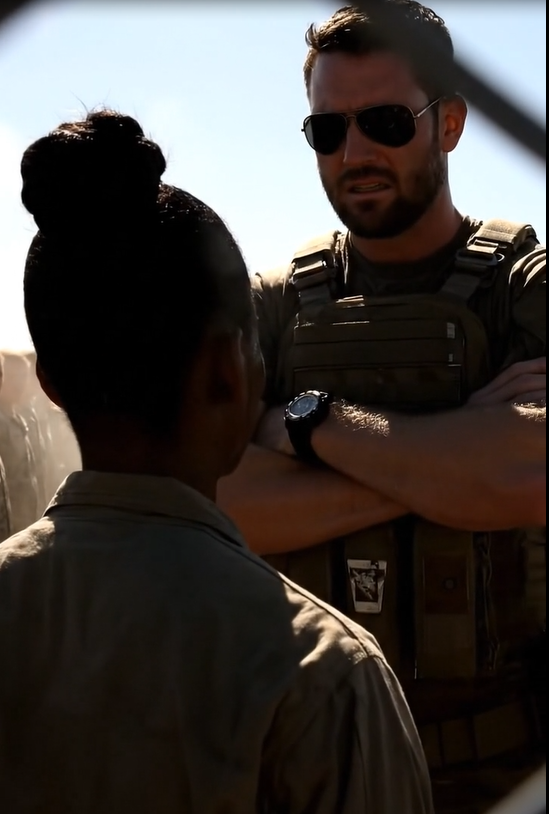
The SEAL Medic stood behind the formation, arms crossed, wearing dark aviators that hid his eyes. He wasn’t here to score our targets. That task fell to the range masters. But he observed nonetheless.
He wanted to see not just who could shoot, but how they shot.
Fear showed in the smallest details. The way fingers tightened too early on the trigger guard. The way shoulders hunched in anticipation of the recoil. The way breaths came ragged under pressure.
“LOAD AND MAKE READY!”
The order rang out.
Bolts slid back. Magazines clicked into place. Metal clattered against metal.
I moved with practiced efficiency. There was no wasted motion. I didn’t look at the weapon; I felt it. My thumb found the safety, my cheek found the stock weld. The rifle became an extension of my body, something familiar rather than foreign. It felt like shaking hands with an old friend.
“FIRE!”
The crack of rifles erupted in unison, a deafening, sharp staccato.
Some recruits jerked their weapons, flinching at the recoil. Others rushed their shots, spraying lead and praying for a hit. Dust kicked up behind the targets.
My first shot rang out. Clean. Precise.
The round punched directly into the center of the silhouette’s chest. “T-box,” they called it. The kill zone.
I exhaled, shoulders steady, and fired again. Another perfect hit.
I didn’t blink. I didn’t pause to admire the shot. I fell into the rhythm. Sight picture. Exhale. Squeeze. Reset.
By the time my magazine was empty, a cluster of holes marked the center of my target. They were so tight they nearly overlapped, tearing a single ragged hole through the heart of the paper man.
The recruit beside me cursed under his breath. His shots were scattered across the edges of the paper, aiming for the shoulder, the stomach, the air. He glanced at my target, his eyes widening in disbelief.
When the “CEASE FIRE” whistle blew, silence fell heavier than the echoes of gunfire.
Instructors moved down the line, inspecting the damage. Some targets were riddled with holes off-center. Others were embarrassingly bare.
But when they reached mine, they paused.
The lead instructor stopped. He looked at the target. Then he looked at me. Then back at the target. He exchanged a look with the Medic.
“Recruit,” the instructor growled. “You group like a machine.”
I said nothing. I cleared my rifle, locked the bolt back, and stood at attention as though the praise belonged to another world.
The whispers started again.
“She didn’t miss.”
“That’s impossible. No one shoots like that cold.”
“Did you see her stance? That wasn’t range training. That was… something else.”
The SEAL Medic narrowed his eyes behind his glasses. He wasn’t impressed easily. He had seen recruits get lucky before. But luck didn’t repeat itself shot after shot. Luck didn’t have trigger discipline like that.
“Next phase!” the instructor yelled, breaking the spell. “Stress shoot!”
This was harder. Moving targets. Timed shots. Physical stress designed to simulate combat.
“SPRINT TO THE BERM! DROP! FIRE! MOVE!”
Recruits sprinted, dropped prone, fired on command. Heart rates soared. Lungs screamed. Accuracy plummeted under the physical load. Even the best shooters struggled to keep their hands steady when their chests were heaving.
But I adapted seamlessly.
I ran. I dropped. But the moment my elbows hit the dirt, I was stone. I controlled my breathing—firing between heartbeats.
My finger squeezed. It never jerked. Every bullet landed where it needed to. My body moved like a mechanism designed for this specific rhythm: violence and control.
By the third round, the whispers had turned to an uneasy silence. No one wanted to admit it aloud, but the truth hung heavy in the gunpowder-scented air.
I was outperforming them all. And I wasn’t even trying to show off.
When the drill ended, the recruits collapsed onto the wooden benches, gulping water, wiping sweat and carbon from their faces. Some laughed nervously, high on adrenaline. Others cursed their poor aim.
I sat quietly, disassembling my bolt carrier group to wipe it down. My face was unreadable.
The Medic approached. He didn’t stand in front of me; he stood just behind my shoulder, invading my space.
“You’ve handled a rifle before,” he said. His tone was flat, but edged with suspicion.
I didn’t look up. I kept scrubbing the carbon off the firing pin. “Yes.”
“Where?”
My hands paused briefly. Just for a heartbeat. Then they resumed their steady rhythm.
“Different places.”
“That’s not an answer, recruit.”
Finally, I glanced at him. My eyes were steady, devoid of the deference a recruit should show an officer.
“It’s the only one I’m giving.”
He held my gaze for a long moment. The tension was thick enough to choke on. He’d heard evasion before, but this wasn’t the nervous dodge of a liar who padded their resume.
This was the practiced deflection of someone used to protecting their past.
He stepped back. “We’ll see about that.”
Later that evening, as the recruits cleaned their gear in the dim light of the barracks, the gossip evolved into conspiracy theories.
“She’s a plant,” one guy whispered, polishing his boots. “She has to be. Nobody shoots like that.”
“Maybe she’s foreign military? Israel? Britain?”
“She’s hiding something big.”
I ignored them all. My silence was both a shield and a weapon. The more they speculated, the more my mystery grew, distancing me from them.
The Medic, however, wasn’t content with speculation. He began watching me more closely.
He watched the way I scanned the room whenever I entered, checking exits and corners. He watched the way I rationed my water, sipping slowly instead of gulping. He watched the way my eyes hardened whenever someone screamed in frustration—as if the sound pulled me somewhere else entirely.
He had treated men who carried ghosts. I had that same look. The “thousand-yard stare” in a room only ten feet wide.
The next morning, another test awaited. Blindfolded weapon assembly.
It was meant to simulate low-visibility combat, forcing recruits to rely on touch and memory. The instructor dumped disassembled rifles onto tables—a chaotic pile of springs, pins, and metal.
“BLINDFOLDS ON!”
The recruits groaned, fumbling with the cloth. I tied mine tight. Darkness.
“BEGIN!”
Sunlight was replaced by the tactile map in my mind. The recruits around me swore loudly. Pieces clattered to the ground. Someone dropped a bolt carrier and cursed.
I worked silently. My fingers traced the metal with surgical precision. Receiver. Buffer spring. Charging handle. Bolt.
Click. Snap. Slide.
It wasn’t a puzzle to me. It was a language I spoke fluently.
Within minutes, the rifle clicked together, assembled flawlessly. I set it down and waited, hands folded neatly on the table.
“DONE!” I called out calmly.
The instructor walked over, ripped the blindfold off my face, and stared at the completed weapon in disbelief. He checked the function. Click-clack. Perfect.
He looked at the timer. I was minutes ahead of the nearest recruit. He said nothing, only moving to the next table, shaking his head.
That night, the Medic finally approached again. This time, he was more direct. He caught me near the water station.
“You don’t just know how to shoot,” he said, stepping into my path. “You know how to fight. That doesn’t come from training manuals. That comes from… contact.”
He leaned in closer. “So tell me. What are you doing here?”
I didn’t answer immediately. I screwed the cap onto my canteen, taking my time. Finally, I looked up.
“I’m here for the same reason everyone else is,” I said quietly. “To make sure when it matters, I don’t fail.”
“You didn’t fail today,” he countered.
“Today was paper targets,” I replied. “Paper targets don’t shoot back.”
I walked away, leaving him staring after me.
In the silence of the barracks, I lay awake while others drifted to sleep. My mind replayed images I could never share. Dark alleys. Distant gunfire. Hands slick with blood that wasn’t mine.
I had learned long ago that skill wasn’t about glory. It was about survival. And on this base, surrounded by doubt and suspicion, survival meant keeping my silence as sharp as a knife.
Chapter 5: The Ambush
The recruits were exhausted. Days of unrelenting tests had left everyone raw. We had blisters on our blisters. But none of us knew what waited when the instructors called us out that morning.
The sky was overcast, heavy with gray clouds that pressed low against the training grounds. A cold wind carried the tang of smoke from the field beyond. The atmosphere was charged, electric with bad intent.
The instructors didn’t waste time with speeches. They handed out blank ammunition and grenades filled with harmless chalk powder. They shouted orders that echoed across the field.
“Today you learn how chaos feels! Today you learn if you can think when fear takes over!”
The recruits exchanged uneasy looks. They had heard rumors about the Ambush Drills. Explosions. Simulated injuries. Screaming. It was designed to mimic the madness of real combat. Few passed without mistakes. Many broke.
I adjusted my helmet straps. I checked my gear with steady hands. No wasted movements. No nervous fumbles.
The whistle blew.
We moved into the tree line, a patrol formation. The woods were quiet. Too quiet.
Then, the world exploded.
BOOM!
Explosive charges detonated in the dirt banks around us, shaking the ground and rattling our teeth. Smoke grenades hissed, filling the air with thick, choking purple clouds that swallowed our vision.
“CONTACT LEFT! CONTACT LEFT!” an instructor screamed, his voice distorted by the chaos.
Gunfire cracked overhead—blanks, but the sound was deafening.
Recruits scattered. Some sprinted forward blindly. Others ducked for cover behind logs, freezing in place. Shouts filled the air—commands, curses, cries of total disorientation.
“I can’t see! Where are they?” someone yelled.
Then came the casualty.
A recruit named Miller stumbled, dropping to the ground with a blood pack strapped under his fatigues. Red liquid sprayed across his torso, dark and vivid against the dust. He groaned loudly, clutching his side, acting his part with painful accuracy.
“I’m hit! Medic! I’m hit!”
For a split second, the others froze. Training told them to push forward and suppress the enemy. Instinct screamed to help their friend. They hovered in that fatal middle ground called hesitation.
I didn’t hesitate.
I dropped my shoulder, sliding through the dirt like a baseball player stealing home. I was at Miller’s side in two seconds.
My movements shifted. I wasn’t a rifleman anymore. I was a healer.
I grabbed his vest and dragged him behind the cover of a fallen oak tree.
“Eyes on me!” I barked. My voice cut through the smoke, not panicked, not uncertain, but commanding. It was a tone that demanded obedience.
I ripped open his pouch, pulling out gauze.
“Applying pressure!” I shouted for the benefit of the instructors. I pressed my hands firmly against the simulated wound. “Miller, keep talking to me. What’s your mother’s name?”
“S-Sarah,” he stammered, his eyes wide. He was actually scared. The chaos felt real to him.
“Good. Sarah’s waiting for you. Stay with me.”
I looked up, scanning the perimeter. Two recruits were standing nearby, looking lost in the smoke.
“YOU TWO!” I yelled, pointing a blood-slicked finger. “Suppress that ridge! Lay down fire! NOW!”
They jumped. They didn’t think; they just obeyed. They turned and unleashed their blanks toward the “enemy.”
I worked quickly. Tourniquet. Tighten. Check the time.
“Casualty stabilized!” I roared. “Prepare to move!”
The SEAL Medic was watching from the sidelines. He had staged this drill dozens of times. He expected recruits to slap on tourniquets too high, apply pressure too weakly, or lose focus when the shouting drowned their thoughts.
But I moved with a terrifying certainty. Every motion was correct. Efficient. Automatic.
I adjusted my grip on Miller. “On three, we move. One. Two. THREE!”
I hauled him up, supporting his weight while keeping my weapon trained outward.
Through the clearing smoke, one instructor’s eyes narrowed. He glanced at the Medic. Both men exchanged a silent look of recognition.
That wasn’t training.
The drill pressed forward. More charges detonated. Instructors screamed new orders. But the dynamic had shifted. The squad wasn’t listening to the instructors anymore. They were listening to me.
When the whistle finally blew to end the exercise, the silence that followed was ringing in our ears.
Smoke thinned. Gunfire ceased. The recruits collapsed onto the dirt, coughing and gasping. Some laughed nervously, high on the survival instinct. A few still trembled from the adrenaline dump.
I stood quietly. I wiped the fake blood from my hands onto my pants. I adjusted my helmet. My chest rose and fell in a calm rhythm. No panic. No shakes.
The whispers began almost immediately.
“Did you hear her?”
“She took over. She commanded us.”
“She knew exactly what to do. That wasn’t… normal.”
I ignored them. I walked toward the water station, unscrewing my canteen.
The SEAL Medic intercepted me. He stepped into my path, blocking the sun. His expression was unreadable, but his eyes were sharp.
“You’ve done this before,” he said. It wasn’t a question.
I met his gaze without flinching. “That’s the point of training, isn’t it?”
“Not like that,” he pressed, his voice low. “You didn’t just practice a drill. You executed under chaos. You dragged a man to cover and established fire superiority while treating a wound. That’s combat.”
I didn’t respond. I simply lifted my canteen and drank. My silence was a wall he couldn’t penetrate.
“Who are you really?” he asked, stepping closer. “Because you sure as hell aren’t just a recruit.”
I lowered the canteen. “I’m the one who kept him alive in the drill. Does the rest matter?”
He studied me for a long moment, looking for a crack in the armor. He didn’t find one.
“It matters,” he said finally. “Because eventually, the blank rounds get replaced with real ones. And secrets get people killed.”
He walked away, but I felt his eyes on my back.
That night, the barracks were louder than usual. Recruits replayed the day’s drill in exaggerated detail. But when the conversation turned to me, the tone shifted.
“She acted like a real combat medic.”
“Do you think she’s seen it? The real thing?”
“I don’t know,” one whispered. “But I’m glad she’s on our side.”
One recruit finally snapped. He stormed over to my bunk, frustration etched into his sweat-streaked face.
“What are you hiding?” he demanded. “Nobody is that calm unless they’ve already seen the elephant.”
The room went quiet. All eyes turned to me.
I looked up slowly. “You should worry about your own training,” I said softly. “The next time, the blood might not be fake.”
The recruit scoffed, muttered a curse, and walked away. But the tension lingered.
The SEAL Medic had been leaning against the far wall by the door, listening. My answer wasn’t for him, but it confirmed his suspicion.
I was carrying more than just discipline. I was carrying history. And he intended to find out what it was.
Her Officer Forced Her to Serve Lunch to the Generals as a Humiliation Tactic, But He Didn’t Know She Was Wearing the Silver Star Under Her Apron. When the General Stood Up and Saluted Her, the Captain’s Career Was Over.
Part 2 of 2 (Section A)
Chapter 3: The Long Walk
The morning sun rose without mercy, a bleeding orange orb that promised nothing but pain. It blazed across the training field where the recruits lined up, weighted packs slung over shoulders that were already tender from yesterday’s abuse.
Sweat was already tracing lines through the dust on our faces before the first order was even given. The air was thick, humid, and smelled of wet pavement and fear.
The instructors barked commands, their voices like whips slicing through the heavy coastal air. Today was no warm-up. Today was the ruck march. It was designed to separate the pretenders from the determined, to grind the cartilage in your knees until you begged to quit.
The packs were brutal. Steel plates, sandbags, and gear stacked until the straps dug into trapezius muscles like dull knives. When the order came to hoist them, the line rippled. Recruits staggered. Some grunted, the wind knocked out of them. Others cursed under their breath, shifting their feet, trying to find a center of gravity that didn’t exist.
I didn’t curse. I lifted mine smoothly, swinging it up and locking the waist strap in one fluid motion. I cinched it tight—tight enough to bruise, because loose gear rubs skin raw, and raw skin gets infected. I stood ready.
“MOVE OUT!”
The line surged forward. Boots pounded dirt. Gravel crunched. Lungs expanded and contracted under the crushing demand for oxygen.
Immediately, the rabbits took off. Some recruits tried to sprint ahead, eager to prove their dominance, to show the instructors they were alpha dogs. Their egos ran faster than their bodies could carry.
I watched them go. I knew what would happen. You don’t sprint a twelve-mile ruck with fifty pounds on your back unless you want to be carried home.
I didn’t rush. My stride was measured. Rhythmic. Step, breathe, step, breathe.
Every placement of my boot was calculated. I conserved my strength, letting my body work like a machine built for endurance, not spectacle. I kept my eyes on the ground six feet in front of me, scanning for uneven terrain.
The recruits beside me glanced over, confusion written on their sweating faces. How was she so calm? How did she not stumble like the rest?
As the miles stretched on, the heat radiating off the ground turned the air into a shimmering mirage. The packs began to claim victims.
One recruit tripped, his knee slamming into a jagged rock. He went down hard, the weight of his pack pinning him for a second like a turtle on its back. Another stopped, hands on his thighs, gasping for air that felt like hot soup.
Instructors pounced immediately. They were screaming inches from faces, spitting dip juice and insults, demanding they push harder or ring the bell and quit.
I passed them without a glance. My pace didn’t waver.
The SEAL Medic watched from a distance, driving slowly alongside the column in a dusty Humvee. His arm hung out the window, clipboard in hand, but he wasn’t looking at the timestamps. He was looking at me.
He had seen recruits crumble before. He had patched up shoulders torn raw, feet blistered into bloody pulp, and minds broken under the weight of failure. But what he saw now was different.
I wasn’t just enduring. I was anticipating.
When the terrain shifted uphill, I adjusted my lean forward, shifting the center of mass to save my lower back. When gravel turned to soft sand, I shortened my stride to keep traction. My movements were efficient, almost clinical. It wasn’t bravado. It wasn’t adrenaline.
It was strategy.
He frowned behind his sunglasses. That kind of calculation didn’t come from a CrossFit gym or a high school football field. It came from experience—the kind no ordinary recruit carried.
By the halfway point, bodies were breaking down. The sun scorched our backs. The straps had cut through t-shirts and were now eating into flesh. The sound of ragged breathing echoed across the line like a dying engine.
Some recruits were sobbing quietly. Others muttered prayers to a God they hadn’t spoken to in years.
I remained silent. Sweat glistened across my brow, stinging my eyes, but my focus never broke.
Suddenly, the recruit to my left stumbled hard. His ankle twisted in a divot hidden by the dust. He hissed in pain, his leg buckling. He was going down, and with the weight of that pack, he was going to tear something permanently.
Without hesitation, I reached out.
I didn’t stop moving. I just shot a hand out, grabbing his shoulder strap. My grip was iron. I steadied him, using my own momentum to pull him upright. It was a transfer of energy—strong, controlled—just enough to prevent the fall, but not enough to slow me down.
“Find your footing,” I whispered. It was a command, not a suggestion.
He regained his balance, eyes wide with shock. I released him the moment he was steady and continued my stride without acknowledgment.
The man shot me a look—half gratitude, half bewilderment. He expected me to say something, to claim the credit. I didn’t return the look. Helping him hadn’t been kindness. It had been instinct. A dropped man slows the unit. A slowed unit dies.
The Medic’s pen tapped against his clipboard. His suspicion deepened.
By the time we reached the final stretch, exhaustion had stripped away the bravado. Shirts clung to sweat-soaked backs like second skins. Boots felt like concrete anchors. Every step became a battle of willpower against biology.
When the finish line came into sight—a simple line of chalk in the dirt—a few recruits sprinted desperately, burning the last of their energy for a show of strength. They crossed the line and immediately collapsed, chests heaving violently, vomiting water and bile.
I did not sprint.
I crossed at the same steady pace I had begun with. Shoulders squared. Breathing controlled.
“Halt!”
I stopped. I unclipped my pack and dropped it at the instructor’s command, then stood straight. My chest rose and fell in a calm rhythm. I wasn’t gasping. I wasn’t clutching my knees.
The difference was stark. Around me, it looked like a battlefield casualty collection point. Men were groaning, rolling on the ground, cramping up.
I looked as though I had just completed a casual morning jog.
Whispers spread quickly through the group of recruits recovering on the grass.
“She’s not even tired,” one wheezed.
“How is that possible?”
“She’s on something. She has to be.”
The instructors gave no acknowledgment. They kept their stone faces, but I saw them exchanging glances. They knew. Strength could be explained. Even luck could be explained. But endurance like this? It unsettled them.
Later, back at the barracks, the aftermath of the test lingered. The air smelled of Tiger Balm, foot powder, and frustration. Recruits were lancing blisters and icing swollen knees.
I sat on my bunk, methodically cleaning the dust off my boots. My hands moved with the same steady rhythm as my steps that morning—efficient, precise, detached.
I didn’t join the groans of pain or the jokes masking disappointment. I simply worked.
The recruit I had saved during the march finally approached. He was limping slightly, his ankle wrapped in an ace bandage. He stopped at my bunk, uncertain.
“Thanks,” he muttered awkwardly, rubbing the back of his neck. “Back there. I would have eaten dirt if you hadn’t grabbed me.”
I looked up briefly. I offered a small nod. Then I returned to my task.
No words. No smile. No “you’re welcome, brother.” Just silence.
The man frowned, unsettled, then walked away. That silence became a subject of gossip immediately.
“She doesn’t talk to anyone. Maybe she thinks she’s better than us.”
“Or maybe she’s broken.”
The SEAL Medic heard every whisper as he walked through the barracks doing his rounds. He didn’t dismiss them. He knew silence could mean many things. Sometimes it meant arrogance. Sometimes trauma.
But sometimes… sometimes it was the mark of someone who had already faced more than the others could imagine.
Chapter 4: The Mechanic of Death
The next morning, the air carried the metallic tang of gun oil and the faint echo of distant drills. Today’s challenge was the shooting range.
This was the great equalizer. It was a test meant to strip away illusions of skill and expose nerves under fire. For some recruits—the ones who grew up hunting or playing shooter games—it was the day they thought they’d prove their worth. For others, it was the day their shaking hands would betray them.
We lined up in rows, rifles clutched tightly. The sun glared down on the polished steel of the barrels. The instructors barked safety commands, their voices sharp, unforgiving.
“KEEP YOUR FINGER OFF THE TRIGGER UNTIL YOU ARE READY TO DESTROY THE TARGET!”
Targets stood waiting at varying distances—black silhouettes shaped like men, daring each trainee to reveal who they truly were when precision mattered.
I stood in the line like everyone else. Rifle at the low ready. Expression unreadable.
Sweat rolled down my temple, tickling my skin, but I didn’t wipe it away. That was discipline. The other recruits shifted, cracking knuckles, bouncing on their toes, trying to shake off the caffeine jitters.
I did none of that. I stood like a statue. My stillness unnerved them more than if I had been screaming.
The SEAL Medic stood behind the formation, arms crossed, wearing dark aviators that hid his eyes. He wasn’t here to score our targets. That task fell to the range masters. But he observed nonetheless.
He wanted to see not just who could shoot, but how they shot.
Fear showed in the smallest details. The way fingers tightened too early on the trigger guard. The way shoulders hunched in anticipation of the recoil. The way breaths came ragged under pressure.
“LOAD AND MAKE READY!”
The order rang out.
Bolts slid back. Magazines clicked into place. Metal clattered against metal.
I moved with practiced efficiency. There was no wasted motion. I didn’t look at the weapon; I felt it. My thumb found the safety, my cheek found the stock weld. The rifle became an extension of my body, something familiar rather than foreign. It felt like shaking hands with an old friend.
“FIRE!”
The crack of rifles erupted in unison, a deafening, sharp staccato.
Some recruits jerked their weapons, flinching at the recoil. Others rushed their shots, spraying lead and praying for a hit. Dust kicked up behind the targets.
My first shot rang out. Clean. Precise.
The round punched directly into the center of the silhouette’s chest. “T-box,” they called it. The kill zone.
I exhaled, shoulders steady, and fired again. Another perfect hit.
I didn’t blink. I didn’t pause to admire the shot. I fell into the rhythm. Sight picture. Exhale. Squeeze. Reset.
By the time my magazine was empty, a cluster of holes marked the center of my target. They were so tight they nearly overlapped, tearing a single ragged hole through the heart of the paper man.
The recruit beside me cursed under his breath. His shots were scattered across the edges of the paper, aiming for the shoulder, the stomach, the air. He glanced at my target, his eyes widening in disbelief.
When the “CEASE FIRE” whistle blew, silence fell heavier than the echoes of gunfire.
Instructors moved down the line, inspecting the damage. Some targets were riddled with holes off-center. Others were embarrassingly bare.
But when they reached mine, they paused.
The lead instructor stopped. He looked at the target. Then he looked at me. Then back at the target. He exchanged a look with the Medic.
“Recruit,” the instructor growled. “You group like a machine.”
I said nothing. I cleared my rifle, locked the bolt back, and stood at attention as though the praise belonged to another world.
The whispers started again.
“She didn’t miss.”
“That’s impossible. No one shoots like that cold.”
“Did you see her stance? That wasn’t range training. That was… something else.”
The SEAL Medic narrowed his eyes behind his glasses. He wasn’t impressed easily. He had seen recruits get lucky before. But luck didn’t repeat itself shot after shot. Luck didn’t have trigger discipline like that.
“Next phase!” the instructor yelled, breaking the spell. “Stress shoot!”
This was harder. Moving targets. Timed shots. Physical stress designed to simulate combat.
“SPRINT TO THE BERM! DROP! FIRE! MOVE!”
Recruits sprinted, dropped prone, fired on command. Heart rates soared. Lungs screamed. Accuracy plummeted under the physical load. Even the best shooters struggled to keep their hands steady when their chests were heaving.
But I adapted seamlessly.
I ran. I dropped. But the moment my elbows hit the dirt, I was stone. I controlled my breathing—firing between heartbeats.
My finger squeezed. It never jerked. Every bullet landed where it needed to. My body moved like a mechanism designed for this specific rhythm: violence and control.
By the third round, the whispers had turned to an uneasy silence. No one wanted to admit it aloud, but the truth hung heavy in the gunpowder-scented air.
I was outperforming them all. And I wasn’t even trying to show off.
When the drill ended, the recruits collapsed onto the wooden benches, gulping water, wiping sweat and carbon from their faces. Some laughed nervously, high on adrenaline. Others cursed their poor aim.
I sat quietly, disassembling my bolt carrier group to wipe it down. My face was unreadable.
The Medic approached. He didn’t stand in front of me; he stood just behind my shoulder, invading my space.
“You’ve handled a rifle before,” he said. His tone was flat, but edged with suspicion.
I didn’t look up. I kept scrubbing the carbon off the firing pin. “Yes.”
“Where?”
My hands paused briefly. Just for a heartbeat. Then they resumed their steady rhythm.
“Different places.”
“That’s not an answer, recruit.”
Finally, I glanced at him. My eyes were steady, devoid of the deference a recruit should show an officer.
“It’s the only one I’m giving.”
He held my gaze for a long moment. The tension was thick enough to choke on. He’d heard evasion before, but this wasn’t the nervous dodge of a liar who padded their resume.
This was the practiced deflection of someone used to protecting their past.
He stepped back. “We’ll see about that.”
Later that evening, as the recruits cleaned their gear in the dim light of the barracks, the gossip evolved into conspiracy theories.
“She’s a plant,” one guy whispered, polishing his boots. “She has to be. Nobody shoots like that.”
“Maybe she’s foreign military? Israel? Britain?”
“She’s hiding something big.”
I ignored them all. My silence was both a shield and a weapon. The more they speculated, the more my mystery grew, distancing me from them.
The Medic, however, wasn’t content with speculation. He began watching me more closely.
He watched the way I scanned the room whenever I entered, checking exits and corners. He watched the way I rationed my water, sipping slowly instead of gulping. He watched the way my eyes hardened whenever someone screamed in frustration—as if the sound pulled me somewhere else entirely.
He had treated men who carried ghosts. I had that same look. The “thousand-yard stare” in a room only ten feet wide.
The next morning, another test awaited. Blindfolded weapon assembly.
It was meant to simulate low-visibility combat, forcing recruits to rely on touch and memory. The instructor dumped disassembled rifles onto tables—a chaotic pile of springs, pins, and metal.
“BLINDFOLDS ON!”
The recruits groaned, fumbling with the cloth. I tied mine tight. Darkness.
“BEGIN!”
Sunlight was replaced by the tactile map in my mind. The recruits around me swore loudly. Pieces clattered to the ground. Someone dropped a bolt carrier and cursed.
I worked silently. My fingers traced the metal with surgical precision. Receiver. Buffer spring. Charging handle. Bolt.
Click. Snap. Slide.
It wasn’t a puzzle to me. It was a language I spoke fluently.
Within minutes, the rifle clicked together, assembled flawlessly. I set it down and waited, hands folded neatly on the table.
“DONE!” I called out calmly.
The instructor walked over, ripped the blindfold off my face, and stared at the completed weapon in disbelief. He checked the function. Click-clack. Perfect.
He looked at the timer. I was minutes ahead of the nearest recruit. He said nothing, only moving to the next table, shaking his head.
That night, the Medic finally approached again. This time, he was more direct. He caught me near the water station.
“You don’t just know how to shoot,” he said, stepping into my path. “You know how to fight. That doesn’t come from training manuals. That comes from… contact.”
He leaned in closer. “So tell me. What are you doing here?”
I didn’t answer immediately. I screwed the cap onto my canteen, taking my time. Finally, I looked up.
“I’m here for the same reason everyone else is,” I said quietly. “To make sure when it matters, I don’t fail.”
“You didn’t fail today,” he countered.
“Today was paper targets,” I replied. “Paper targets don’t shoot back.”
I walked away, leaving him staring after me.
In the silence of the barracks, I lay awake while others drifted to sleep. My mind replayed images I could never share. Dark alleys. Distant gunfire. Hands slick with blood that wasn’t mine.
I had learned long ago that skill wasn’t about glory. It was about survival. And on this base, surrounded by doubt and suspicion, survival meant keeping my silence as sharp as a knife.
Chapter 5: The Ambush
The recruits were exhausted. Days of unrelenting tests had left everyone raw. We had blisters on our blisters. But none of us knew what waited when the instructors called us out that morning.
The sky was overcast, heavy with gray clouds that pressed low against the training grounds. A cold wind carried the tang of smoke from the field beyond. The atmosphere was charged, electric with bad intent.
The instructors didn’t waste time with speeches. They handed out blank ammunition and grenades filled with harmless chalk powder. They shouted orders that echoed across the field.
“Today you learn how chaos feels! Today you learn if you can think when fear takes over!”
The recruits exchanged uneasy looks. They had heard rumors about the Ambush Drills. Explosions. Simulated injuries. Screaming. It was designed to mimic the madness of real combat. Few passed without mistakes. Many broke.
I adjusted my helmet straps. I checked my gear with steady hands. No wasted movements. No nervous fumbles.
The whistle blew.
We moved into the tree line, a patrol formation. The woods were quiet. Too quiet.
Then, the world exploded.
BOOM!
Explosive charges detonated in the dirt banks around us, shaking the ground and rattling our teeth. Smoke grenades hissed, filling the air with thick, choking purple clouds that swallowed our vision.
“CONTACT LEFT! CONTACT LEFT!” an instructor screamed, his voice distorted by the chaos.
Gunfire cracked overhead—blanks, but the sound was deafening.
Recruits scattered. Some sprinted forward blindly. Others ducked for cover behind logs, freezing in place. Shouts filled the air—commands, curses, cries of total disorientation.
“I can’t see! Where are they?” someone yelled.
Then came the casualty.
A recruit named Miller stumbled, dropping to the ground with a blood pack strapped under his fatigues. Red liquid sprayed across his torso, dark and vivid against the dust. He groaned loudly, clutching his side, acting his part with painful accuracy.
“I’m hit! Medic! I’m hit!”
For a split second, the others froze. Training told them to push forward and suppress the enemy. Instinct screamed to help their friend. They hovered in that fatal middle ground called hesitation.
I didn’t hesitate.
I dropped my shoulder, sliding through the dirt like a baseball player stealing home. I was at Miller’s side in two seconds.
My movements shifted. I wasn’t a rifleman anymore. I was a healer.
I grabbed his vest and dragged him behind the cover of a fallen oak tree.
“Eyes on me!” I barked. My voice cut through the smoke, not panicked, not uncertain, but commanding. It was a tone that demanded obedience.
I ripped open his pouch, pulling out gauze.
“Applying pressure!” I shouted for the benefit of the instructors. I pressed my hands firmly against the simulated wound. “Miller, keep talking to me. What’s your mother’s name?”
“S-Sarah,” he stammered, his eyes wide. He was actually scared. The chaos felt real to him.
“Good. Sarah’s waiting for you. Stay with me.”
I looked up, scanning the perimeter. Two recruits were standing nearby, looking lost in the smoke.
“YOU TWO!” I yelled, pointing a blood-slicked finger. “Suppress that ridge! Lay down fire! NOW!”
They jumped. They didn’t think; they just obeyed. They turned and unleashed their blanks toward the “enemy.”
I worked quickly. Tourniquet. Tighten. Check the time.
“Casualty stabilized!” I roared. “Prepare to move!”
The SEAL Medic was watching from the sidelines. He had staged this drill dozens of times. He expected recruits to slap on tourniquets too high, apply pressure too weakly, or lose focus when the shouting drowned their thoughts.
But I moved with a terrifying certainty. Every motion was correct. Efficient. Automatic.
I adjusted my grip on Miller. “On three, we move. One. Two. THREE!”
I hauled him up, supporting his weight while keeping my weapon trained outward.
Through the clearing smoke, one instructor’s eyes narrowed. He glanced at the Medic. Both men exchanged a silent look of recognition.
That wasn’t training.
The drill pressed forward. More charges detonated. Instructors screamed new orders. But the dynamic had shifted. The squad wasn’t listening to the instructors anymore. They were listening to me.
When the whistle finally blew to end the exercise, the silence that followed was ringing in our ears.
Smoke thinned. Gunfire ceased. The recruits collapsed onto the dirt, coughing and gasping. Some laughed nervously, high on the survival instinct. A few still trembled from the adrenaline dump.
I stood quietly. I wiped the fake blood from my hands onto my pants. I adjusted my helmet. My chest rose and fell in a calm rhythm. No panic. No shakes.
The whispers began almost immediately.
“Did you hear her?”
“She took over. She commanded us.”
“She knew exactly what to do. That wasn’t… normal.”
I ignored them. I walked toward the water station, unscrewing my canteen.
The SEAL Medic intercepted me. He stepped into my path, blocking the sun. His expression was unreadable, but his eyes were sharp.
“You’ve done this before,” he said. It wasn’t a question.
I met his gaze without flinching. “That’s the point of training, isn’t it?”
“Not like that,” he pressed, his voice low. “You didn’t just practice a drill. You executed under chaos. You dragged a man to cover and established fire superiority while treating a wound. That’s combat.”
I didn’t respond. I simply lifted my canteen and drank. My silence was a wall he couldn’t penetrate.
“Who are you really?” he asked, stepping closer. “Because you sure as hell aren’t just a recruit.”
I lowered the canteen. “I’m the one who kept him alive in the drill. Does the rest matter?”
He studied me for a long moment, looking for a crack in the armor. He didn’t find one.
“It matters,” he said finally. “Because eventually, the blank rounds get replaced with real ones. And secrets get people killed.”
He walked away, but I felt his eyes on my back.
That night, the barracks were louder than usual. Recruits replayed the day’s drill in exaggerated detail. But when the conversation turned to me, the tone shifted.
“She acted like a real combat medic.”
“Do you think she’s seen it? The real thing?”
“I don’t know,” one whispered. “But I’m glad she’s on our side.”
One recruit finally snapped. He stormed over to my bunk, frustration etched into his sweat-streaked face.
“What are you hiding?” he demanded. “Nobody is that calm unless they’ve already seen the elephant.”
The room went quiet. All eyes turned to me.
I looked up slowly. “You should worry about your own training,” I said softly. “The next time, the blood might not be fake.”
The recruit scoffed, muttered a curse, and walked away. But the tension lingered.
The SEAL Medic had been leaning against the far wall by the door, listening. My answer wasn’t for him, but it confirmed his suspicion.
I was carrying more than just discipline. I was carrying history. And he intended to find out what it was.
Chapter 6: The Explosion
The mess hall buzzed with the restless energy of recruits who had survived another brutal day. Metal trays clattered against counters, utensils scraped loudly, and voices carried in overlapping conversations that rose and fell like an unpredictable tide.
The air smelled of sweat, reheated rations, and the faint bite of industrial disinfectant. Every table was crowded, men and women jostling for space, retelling the events of the ambush drill with the urgency of soldiers trying to make sense of what they had endured.
The explosion charges had rattled more than a few nerves, and the casualty with the blood pack was still the centerpiece of conversation.
“She didn’t even hesitate,” one recruit muttered, shaking his head as he tore into a roll. “The smoke was everywhere, and she just dropped down like it was second nature.”
Another recruit, chewing noisily, leaned in. “She sounded like she’d been in combat before. I swear it wasn’t just training. She knew what to do. The tone of her voice… it wasn’t acting.”
“Yeah, but that’s not possible,” the first laughed nervously. “She’s just like the rest of us, fresh into the program. Maybe she watches a lot of movies.”
“You don’t move like that because of movies,” the second recruit countered, lowering his voice. “I’ve got a cousin in the Marines. He says it takes years of deployment to get that kind of composure.”
At her table, I sat alone.
Not out of exclusion—plenty of seats remained open—but because I chose it. My tray was simple. Mashed potatoes, turkey, water. I ate methodically, one bite at a time, as if the noise and gossip around me didn’t exist.
Every so often, a recruit’s glance lingered too long. Curiosity etched on their face. I ignored them all.
My silence wasn’t born from arrogance, nor was it shyness. It was a wall built carefully, brick by brick. I understood that words carried weight, and once spoken, they could never be reclaimed. Better to conserve them. Better to let actions fill the space where chatter usually lived.
But silence has its own gravity.
The SEAL Medic had been watching me from the serving line. He hadn’t touched his food. He leaned against the wall, arms crossed, eyes tracking my every movement with the sharp focus of a predator.
He pushed away from the wall and made his way toward my table. The chatter around us softened as recruits noticed. Conversations dipped into half-whispers. Forks paused mid-air.
He set his tray down opposite mine. The metallic clang was louder than it needed to be. Intentional.
“You handled yourself well today,” he said flatly.
I lifted my gaze slowly. “It was training.”
“Training doesn’t explain instinct.” His voice was calm but edged, like a knife dulled by use but still dangerous.
I took a sip of water. “Instinct comes from repetition.”
He leaned forward. “No. Instinct comes from experience.”
The silence stretched between us. The room seemed to narrow, the other recruits vanishing into the background.
“If you’re suggesting something, say it plainly,” I said softly.
His jaw tightened. “I’ve seen combat medics freeze under less. But you… you didn’t flinch. Not once. That doesn’t come from drills on a safe base.”
I studied him. He was fishing. He wanted me to slip up.
“Maybe I’m just good at learning,” I said, returning to my meal.
He tapped the table once—a gesture of frustration. “You can keep your secrets. But secrets have a way of surfacing when you least expect.”
He stood up and walked away. The mess hall exhaled as he left, the noise rushing back in like a broken dam. But the whispers carried new energy now.
The next morning, the tension broke.
We were at the demolition range—a wide stretch of scorched earth riddled with craters from years of controlled blasts. It was here we learned to handle explosives.
The instructors carried themselves with the casual confidence of men who walked with death daily. “Respect the gear,” one barked. “It doesn’t forgive mistakes.”
The Medic lingered at the perimeter. He wasn’t here to oversee technique; he was here for when things went wrong.
We were divided into teams, each tasked with planting a small charge. The first few detonations went smoothly—controlled blasts echoing across the range, dust clouds rising into the air. We were feeling confident. Too confident.
Then it happened.
A miscalculation. A timer set wrong. A charge triggered prematurely by a faulty wire.
BOOM!
The blast was sharper than intended, closer than it should have been. The ground shook violently, and a scream cut through the air—raw, high-pitched, and terrifying.
One recruit went down, clutching his leg.
Real blood. Dark, arterial blood seeping between his fingers. This was no drill.
For a split second, the world froze. The instructors shouted for order, but panic cracked through the group like lightning.
I was already moving.
My boots pounded the dirt as I sprinted toward the injured boy. I dropped to my knees at his side, sliding into the dust.
“Let me see!” I ordered, slapping his hands away.
A piece of shrapnel had torn into his thigh. The femoral artery was compromised. He was bleeding out.
“Stay with me!” I said firmly. “Look at me! You are not going anywhere!”
My commands were sharp, unyielding. I tore the fabric of his uniform. I didn’t have a tourniquet in my hand, so I ripped my own belt off in one smooth motion.
I looped it around his leg, high and tight. I cinched it down with strength that belied my frame, twisting it until the flow of blood slowed to a trickle.
“Hold this!” I screamed at a frozen recruit standing nearby. “HOLD IT!”
He snapped out of his trance and grabbed the belt.
I checked the victim’s eyes. They were rolling back. Shock was setting in.
“Hey!” I grabbed his face, forcing him to look at me. “Focus on my voice. Inhale. Exhale. That’s it. You’re fine. You’re not dying today. Not on my watch.”
The SEAL Medic ran forward, his medical bag in hand. He slowed as he reached us, his gaze locking on my movements.
He saw the makeshift tourniquet. He heard the rhythm of my voice—the specific cadence used to anchor a dying man to the living world.
He crouched beside me. “I’ve got him.”
“Femoral bleed,” I said, my voice clinical, detached. “Tourniquet applied at 0900. He’s going into shock. Keep him warm.”
The Medic looked at me. Really looked at me.
“You’ve done this before,” he said quietly.
I stood up, my hands slick with blood that wasn’t mine. “Just help him.”
The instructors had called for transport. A vehicle roared onto the range. We loaded the boy up.
As the dust settled, the silence returned. But this time, it wasn’t awkward. It was heavy with awe. The recruits stared at me, their faces pale. They had trained for emergencies, but I had lived one.
I walked to the water station and began to scrub the blood off my hands.
Chapter 7: The Confession
That night, the barracks were silent. The accident dominated every mind, but my role in it overshadowed the blast itself.
She saved him.
She didn’t panic.
Where did she learn that?
The SEAL Medic entered the barracks late. He didn’t yell. He didn’t lecture. He walked straight to my bunk.
“Outside,” he said.
It wasn’t a request.
The night air was cool, the stars sharp against the dark sky. The base was quiet, save for the distant hum of generators.
I stood calmly, arms folded across my chest. I knew this was coming.
“You’re not going to keep dodging me,” he said. “Not after today.”
I looked at him. “I did what had to be done.”
“You did a hell of a lot more than that,” he snapped. “I’ve patched up men under fire. I know what that looks like. And you… you didn’t act like a trainee. You acted like a veteran.”
He stepped closer, his voice dropping to a growl. “Where did you get your training? Because it sure as hell wasn’t here. Are you a plant? Intelligence? Foreign ops?”
I looked at the ground, then back at him. The adrenaline of the day had faded, leaving only a deep, bone-weary exhaustion.
“You think you want the truth,” I said quietly. “But truth has weight.”
“Try me.”
I sighed, a sound that seemed to carry years of history.
“I wasn’t military,” I began, my voice low. “I wasn’t special ops. I was… there.”
“Where?”
“Places you see on the news. Places where the government collapses and the people are left to burn.”
I looked past him, into the dark. “I was a volunteer. Aid work. We thought we were safe. We weren’t.”
The Medic went still.
“When the fighting came to the villages,” I continued, “there were no hospitals. No doctors. No Medics like you. Just us.”
I held up my hands. “I learned because I had to. I learned because people were bleeding out on the floor of a schoolhouse and I was the only one standing there. Bandages, scraps of cloth, pressure. Sometimes it worked. Mostly it didn’t.”
I met his eyes. “You learn fast when hesitation means a child dies in your arms.”
The Medic stared at me. The suspicion in his eyes melted away, replaced by something else. A profound, heavy respect.
He had thought I was hiding a military record. The truth was far heavier. I hadn’t been trained in a classroom; I had been forged in the chaos of a civilian hellscape.
“That’s not training,” he said softly. “That’s survival.”
“Exactly,” I nodded.
“Why come here?” he asked. “If you’ve already lived it, why put yourself through this?”
“Because I was making it up as I went along back then,” I said, my voice cracking slightly. “I saved some. I lost more. I came here to learn how to do it right. To make sure that the next time… fewer people die.”
The Medic nodded slowly. He understood now. The silence. The distance. It wasn’t arrogance. It was the burden of the survivor.
“You don’t owe me anything else,” he said. “But don’t think for a second I’ll stop watching. Not because I doubt you. But because I know what it costs to carry that alone.”
He turned to leave, then stopped.
“Good work today,” he said.
For the first time, I felt a weight lift off my chest.
Chapter 8: The Silent Leader
The final exercise was designed to break us.
It was a multi-stage evolution. Obstacles, timed maneuvers, live-fire simulations, and a hostage extraction scenario. We were exhausted, running on fumes and caffeine.
The instructors pushed harder than ever. “MOVE! MOVE! YOU ARE DYING OUT HERE!”
But the dynamic had shifted.
When the squad faltered at the mud pit, looking for direction, they didn’t look to the loudmouth recruit who always tried to take charge.
They looked at me.
I didn’t give a speech. I just nodded. “Left side. Low crawl. Go.”
They went.
When we hit the urban simulation, confusion reigned. Smoke filled the corridors. Targets popped up from nowhere.
“Clear right!” I called out.
“Right clear!” the recruit behind me echoed instantly.
We moved as a single organism. My calm had become infectious. They trusted me. They knew that if things went sideways, I would be the one to pull them out.
We moved through the kill house with a precision that stunned the instructors. We communicated. We covered our sectors. We moved like we had been doing this for years.
The Medic watched from the catwalk above, a small smile playing on his lips.
We breached the final room, secured the “hostage,” and extracted to the finish line.
“TIME!”
The whistle blew. We collapsed on the grass, chests heaving, mud-caked and glorious.
The lead instructor walked over, clipboard in hand. He looked at the timer, then at us.
“That,” he said, “was the fastest time we’ve seen in three classes.”
The recruits cheered. High-fives. Shouts of relief.
Then, they turned to me.
The recruit I had saved on the demo range limped over. He held out a hand.
“We wouldn’t have made it without you,” he said.
I took his hand. “We made it together.”
The SEAL Medic stepped down from the catwalk. The group quieted as he approached. He stopped in front of me.
“You’ve earned their respect,” he said, loud enough for everyone to hear. “And mine.”
He looked at the group. “Pay attention. This is what a professional looks like. She doesn’t brag. She doesn’t complain. She performs.”
He turned back to me. “Carry on.”
Later that night, the barracks were different. The suspicion was gone. The whispers had stopped.
I sat on my bunk, cleaning my gear one last time. I was still quiet. I was still the ghost in the machine. But I wasn’t alone anymore.
I lay back, staring at the ceiling. The memories of the village, of the lost, were still there. They always would be. But they felt a little lighter now.
I had come here to learn how to save lives. But I had learned something else, too.
I learned that silence, when filled with purpose, is the loudest thing in the room. And for the first time in a long time, I finally closed my eyes and slept without dreaming.
End.