I AGREED TO PRETEND TO BE AN ORPHAN’S FATHER FOR 24 HOURS TO SAVE HIM FROM BEING ADOPTED BY A BILLIONAIRE FAMILY, BUT WHAT I FOUND IN THE “VIP ROOM” WASN’T AN ADOPTION AGENCY—IT WAS A HUMAN SPARE PARTS FACILITY, AND NOW THEY ARE BURNING MY HOUSE DOWN WITH US INSIDE.
PART 1: THE IMPOSSIBLE REQUEST
The morning mist in Oak Creek, Illinois, doesn’t feel like weather; it feels like a damp shroud. It costs about five million dollars to live in this zip code, and what you’re paying for isn’t the square footage—it’s the silence.
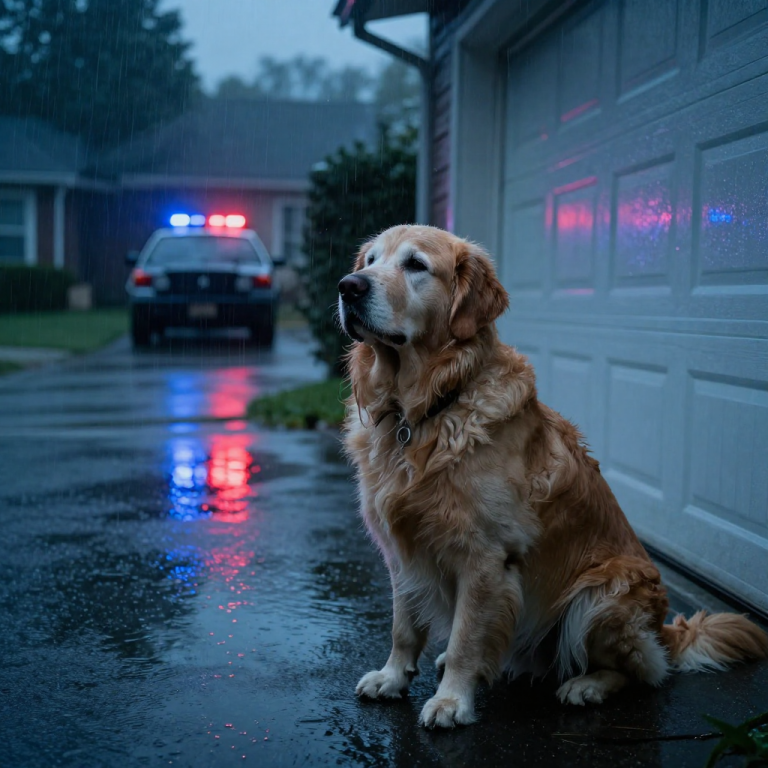
I liked the silence. After twenty years as a criminal defense attorney in Chicago, defending the absolute dregs of humanity—murderers who smiled at victims’ families, corporate ghouls who poisoned water supplies—I had retired to this overpriced fortress of solitude. I wanted to drink my single-malt scotch, walk my Golden Retriever, Buster, and forget that the human race existed.
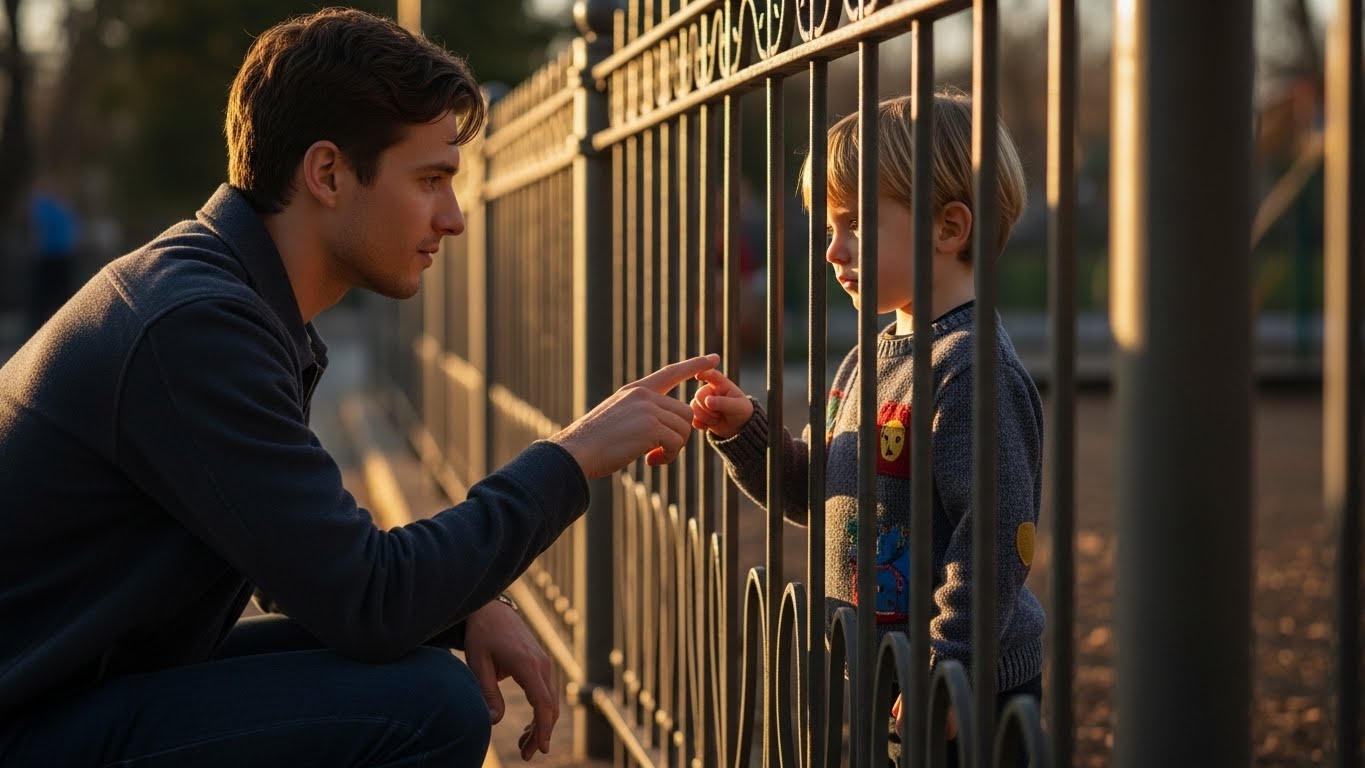
It was 6:00 AM. The sun was just bleeding through the heavy oaks that lined the perimeter of my property. I was walking Buster along the eastern fence—a six-foot wrought iron barrier that separated my unkempt, wild backyard from the manicured, sterile grounds of St. Jude’s Home for Boys.
I usually ignored St. Jude’s. It was a fortress of red brick and secrets, housing the “unlucky” children of the state. But today, the silence that I paid so much for was broken.
“Sir?”
I stopped. Buster’s ears perked up, his tail giving a low, uncertain wag.
“Sir, please… don’t keep walking.”
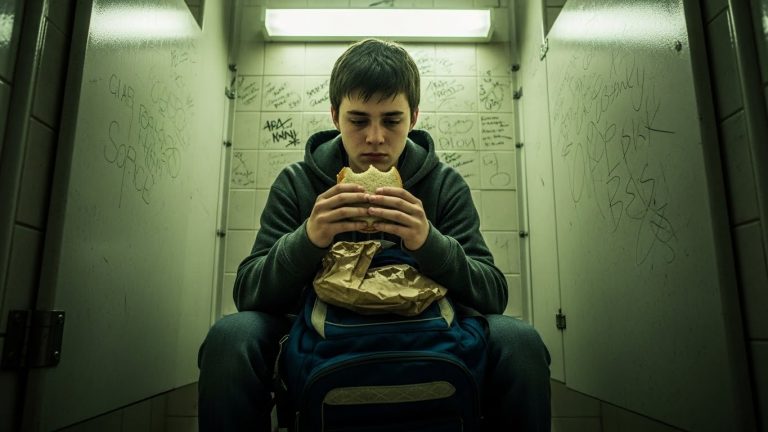
The voice was a harsh whisper, originating from the dense rhododendron bushes on the other side of the fence. I squinted through the morning gloom. A face appeared in the gap between the fence and the mulch—a kid, maybe ten years old, lying flat on his stomach in the dirt. His face was smeared with mud, his eyes wide with a terror that looked far too old for his age.
“You shouldn’t be out here, kid,” I said, my voice raspy from sleep and too many cigarettes the night before. “Bed check isn’t until seven. You want to get thrown in solitary?”
“I know,” the boy said. He scrambled up, gripping the chain links. His fingers were white at the knuckles, trembling. “Sir, can you pretend to be my father? Just for one day? Please.”
I laughed. It was a dry, humorless sound that felt like sandpaper in my throat. “What is this? Career day? You want to bring a washed-up, cynical lawyer to show and tell to scare the other kids?”
“No,” he said. He wasn’t laughing. He was vibrating with adrenaline. “Today is The Visitation. The Platinum Donors are coming.”
“So? Get adopted. Get out of here. Get a rich mommy and daddy. That’s the dream, right?”
“Not with them.” He turned his head, checking the windows of the main building like a hunted animal. “The Millers. They’re back. They took Toby last month. Toby said he was going to a farm in Wisconsin with horses. I saw the file on Mrs. Gable’s desk yesterday when I was cleaning. There is no farm. It’s a… it’s a facility.”
“A facility?” I stepped closer, the wet grass soaking my sneakers. The lawyer in me—the part I thought I’d drowned in scotch—woke up. “What kind of facility?”
“Please,” he begged, ignoring the question. Tears were cutting clean tracks through the dirt on his cheeks. “Mrs. Gable is taking cash under the table. I heard her. If I don’t have a relative claim me today, she signs me over to the Millers by noon. Just walk in. Say you’re my dad. Say you’ve been away working on an oil rig. Please.”
I looked at him. I mean, I really looked at him. Under the oversized, gray t-shirt that hung off his frame, I saw his collarbone protruding too sharply. And on his left wrist, exposed as he gripped the cold iron of the fence, was a bruise.
It wasn’t a playground bruise. It was the distinct, purple-black shape of a hand. A large, adult hand.
“Who did that?” I pointed to the wrist.
He pulled his hand back instantly, hiding it in his sleeve. “If you don’t help me, I’m dead. They don’t take us to raise us, Mister. They take us to use us.”
I sighed, looking down at Buster. The dog looked back at me, panting happily. He was a terrible judge of character; he loved everyone. But I didn’t. I hated everyone. I hated the system, I hated the lies, and I mostly hated getting involved.
But I couldn’t walk away from a bruise like that.
“What’s your name?” I asked, my voice softening just a fraction.
“Leo.”
“Okay, Leo. I’m Julian. Open the maintenance gate.”
THE PERFORMANCE
The lock on the maintenance gate was rusty, but Leo knew exactly how to jiggle it to make the tumbler click. Smart kid. Street smart.
I tied Buster to an oak tree on my side of the fence. “Guard,” I told him. He laid down and sighed, resting his chin on his paws.
I stepped through the gate into St. Jude’s. The air felt different here—heavier, smelling of industrial bleach, pine cleaner, and quiet desperation.
“Rules,” Leo whispered fast, walking a step behind me as if trying to use my shadow for cover. “You’re a roughneck. Oil rigs in Alaska. That explains the long absence. You sent checks, but the administration stole them. Be angry. Be loud. Mrs. Gable is terrified of lawsuits.”
“You’ve got a criminal mind, Leo,” I muttered, adjusting my hoodie.
“I have a survival mind,” he corrected sharply.
We rounded the corner of the monolithic main building and walked into a surreal scene. The front lawn, usually empty, was set up like a Hamptons gala. White tents, caterers serving sparkling cider in crystal flutes, and well-dressed couples wandering around examining the children like they were shopping for a new Tesla or a designer handbag.
The boys were lined up by age group, wearing matching navy blazers that didn’t fit, forced smiles plastered on their faces. It was a meat market.
“Leo!”
The shriek came from the porch. A woman descended the stairs. She was tall, thin, and moved with the predatory grace of a praying mantis. Mrs. Gable. I knew the type. Bureaucratic evil.
“Get in line immediately! The Millers have been asking—” She stopped dead when she saw me.
I stood six-foot-two. I hadn’t shaved in three days. I was wearing a hoodie that cost more than her car but looked like I found it in a dumpster. I projected ‘threat’ with every ounce of my being.
“Who is this?” she demanded, her eyes darting between me and Leo.
“This is my dad,” Leo said, his voice trembling just enough to sound authentic.
I stepped forward, putting a heavy hand on Leo’s shoulder. “Julian Vance,” I lied smoothly. “And I want to know why my son looks like he hasn’t eaten a decent meal in six months.”
Mrs. Gable flinched. “Mr… Vance? Leo’s father is deceased. We have the death certificate on file.”
“Paperwork error,” I barked, channeling every angry defendant I’d ever represented. “I was in a coma in Anchorage. Rig explosion. Just woke up two months ago. Been tracking him down since. Now, explain to me why I hear you’re trying to sell my boy to some people named Miller?”
“Sell?” She gasped, clutching her pearls. “We are a non-profit! The Millers are generous benefactors looking to expand their family.”
“Right,” I said, looking around the lawn with a sneer. “And where are these Millers?”
“They are in the Private Parlor,” she said, her eyes narrowing suspiciously. “Waiting for Leo.”
“Good,” I said. “Take me to them.”
Mrs. Gable hesitated. She looked at her phone, then at the private security guard by the gate, then back at me. “Fine. If you really are his father, you can sign the release forms. But I will be running a background check immediately.”
“Run it,” I challenged, bluffing with a pair of twos. “But until then, he stays with me.”
As we walked toward the building, the hair on the back of my neck stood up. I scanned the crowd. Near the fountain, a man in a dark suit was watching us. He wasn’t drinking cider. He wasn’t looking at the kids. He was speaking into a wrist microphone.
Leo squeezed my hand. His palm was sweaty. “Julian,” he whispered. “That’s not security. That’s the driver.”
THE VIP ROOM
The “Private Parlor” was an office that smelled of stale cigars and lemon polish. Mrs. Gable ushered us in and closed the heavy oak door, leaving us alone with the Millers.
I expected a nice, suburban couple. Maybe a little too eager, a little too plastic.
What I got was… emptiness.
Mr. Miller was sitting in a high-backed leather chair. He was perfectly groomed, his skin too smooth, his eyes dead flat like a shark’s. Mrs. Miller stood by the window, staring out at the children on the lawn with the expression of a butcher eyeing a hanging carcass.
“So,” Mr. Miller said, not standing up. “The prodigal father returns.”
“Who are you?” I asked, not bothering with pleasantries. I pushed Leo into a chair and stood in front of him, making myself a wall.
“We are the people offering Leo a future,” Mrs. Miller said, turning around. Her smile didn’t reach her eyes. It was painted on. “A very specialized future. He tests remarkably high in spatial reasoning and pain tolerance.”
Pain tolerance?
My blood ran cold. “He’s a child, not a lab rat.”
“Children are the most malleable resource we have,” Mr. Miller said calmly. He opened a folder on the desk. “Julian Vance. Interesting. There is no Julian Vance listed in the Alaska rig registries for the last decade. In fact, the only Julian matching your description is Julian Thorne, the disgraced defense attorney who got the ‘Butcher of Southside’ off on a technicality three years ago.”
He looked up, a smirk playing on his lips. “You’re not a father, Mr. Thorne. You’re a lonely drunk living next door who interferes in business that doesn’t concern him.”
Leo gasped. He looked up at me, betrayal flashing in his eyes. “Julian?”
“It doesn’t matter who I am,” I said, my voice dropping to a dangerous growl. “I’m his legal counsel now. And I’m revoking his consent for this adoption.”
“Consent is a formality for the poor,” Mr. Miller said. He tapped the desk. “Mrs. Gable has already processed the transfer. We paid a premium for expedited handling. Leo belongs to the institute now.”
“What institute?” I demanded.
“The Gemini Project,” Mrs. Miller whispered, as if it were a holy word.
Suddenly, the door opened. Two men in dark suits walked in. They were huge. Necks like tree trunks. Military cuts.
“Escort Mr. Thorne off the property,” Mr. Miller said, waving his hand dismissively. “And secure the boy for transport.”
One of the goons reached for me.
I didn’t think. I reacted.
I grabbed a heavy brass lamp from the side table and swung it with everything I had. It connected with the first goon’s temple with a sickening crunch. He went down instantly.
“Run, Leo!” I roared.
The second goon lunged. I side-stepped, drove my knee into his gut, and shoved him backward into Mr. Miller’s lap.
I grabbed Leo by the back of his shirt and we bolted into the hallway.
“The fire alarm!” I yelled. “Pull it!”
Leo didn’t hesitate. He slammed the red handle down.
WAAAAA-WAAAAA-WAAAAA.
The building erupted in chaos. Sprinklers hissed to life, drenching the expensive suits and the terrified orphans.
“To the gate!” I shouted, slipping on the wet tile.
“They locked it!” Leo screamed, pointing. The electronic gate at the front was sealing shut.
“The maintenance gate,” I gasped. “My side.”
We sprinted through the kitchen, scattering cooks, out the back door, and tore across the wet grass. My lungs were burning. I wasn’t young anymore.
“Stop them!” Mrs. Gable’s voice screeched over the siren.
I looked back. The man from the fountain—the driver—was running after us. And he had a gun.
PART 2: THE SIEGE OF OAK CREEK
“Don’t look back!” I grabbed Leo’s arm, practically dragging him through the mud.
We hit the dirt near the rhododendrons. The maintenance gate was still ajar, Buster barking frantically on the other side.
BAM!
A bullet kicked up dirt six inches from my left foot.
“Go! Go!” I shoved Leo through the gap.
I squeezed through after him just as another shot pinged off the metal post. I slammed the gate and jammed the lock shut, though I knew it wouldn’t hold them for long.
“Up to the house! Now!”
We scrambled up the hill, Buster running alongside us. I fumbled for my keys, unlocked the back door of my colonial house, and we fell inside onto the kitchen floor.
I slammed the deadbolt home. I ran to the wall panel and punched in a code. The security shutters—steel panels I’d installed during my ‘paranoid phase’ after the Southside trial—began to descend.
The house went dark as the steel slid over the windows.
I collapsed against the kitchen island, gasping for air. Leo was curled up in a ball near the fridge, shivering violently.
“Are… are we safe?” he stuttered.
“No,” I said, pulling my burner phone from a hidden drawer. “They know where I live. They know who I am.”
I looked at the boy. He was soaked, muddy, and looked smaller than ever.
“Leo,” I said, crawling over to him. “What is the Gemini Project?”
He looked up, his eyes hollow. “They don’t adopt us to be kids, Julian. They adopt us to be parts. Spare parts. For their own sick children. I saw the pictures in the file. Kids… connected to machines.”
I felt like I was going to vomit. Organ harvesting. It was an urban legend. A QAnon myth. Until now.
THUD. THUD. THUD.
Heavy fists pounded on my front door.
“Mr. Thorne,” Mr. Miller’s voice came through the wood, calm and terrifying. “You have something that belongs to us. Send the boy out, and you can go back to your whiskey and your misery. Keep him, and we burn this house down with you inside.”
I looked at Leo. He didn’t cry. He just reached out and took my hand again.
“You pretended to be my dad,” he whispered. “You did a good job.”
Something inside me broke. The cynic died. The lawyer died.
The father was born.
I stood up. I walked to the gun safe in the pantry and spun the dial.
“I’m not pretending anymore,” I said, pulling out my Remington 870 shotgun.
I racked the slide. CH-CHUCK.
“Leo, go to the basement. Lock the door. Don’t come out until I say the code word.”
“What’s the code word?”
I looked at the door as the wood began to splinter from a kick.
“Family.”
FIRE AND BLOOD
The front door didn’t just open; it exploded inward.
Splinters of oak and twisted metal sprayed across the foyer like shrapnel. I was already positioned at the top of the stairs, the stock of the Remington pressed tight against my shoulder. My hands weren’t shaking. It was strange—when I was a lawyer, my hands shook every time I waited for a verdict. Now, with death walking through my door, I was steady as a rock.
“Clear left! Clear right!”
The voices were professional. Crisp. These weren’t thugs hired from a dive bar; these were operators. The Miller family didn’t just have money; they had a private army.
A canister clattered across the hardwood floor below. It hissed, spinning like a top.
“Gas!” I muttered, pulling the neck of my hoodie up over my nose.
Smoke billowed up the staircase, thick and acrid. They wanted Leo alive, and they probably wanted me alive long enough to torture me into silence.
I didn’t wait for them to climb. I aimed for the chandelier hanging above the foyer—a heavy, iron monstrosity I’d always hated.
BOOM.
The shotgun blast severed the chain. The fixture fell with a chaotic crash of glass and metal, crushing the tactical table beneath it and pinning one of the men. He screamed—a guttural, human sound.
“Man down! Target on the second floor!”
Bullets chewed up the banister inches from my face. I scrambled backward, staying low, crawling toward the master bedroom.
I rolled into the bedroom and kicked the heavy door shut, locking it. It wouldn’t hold them for more than ten seconds. I moved the heavy dresser in front of the door, my muscles screaming in protest.
“Leo,” I whispered into the floor vent that connected to the basement. “Leo, can you hear me?”
A tiny, terrified voice echoed back. “I hear the guns, Julian. Are you okay?”
“I’m fine,” I lied. “Listen to me carefully. There is a window in the basement, behind the old water heater. It’s painted shut. You need to find a brick or a hammer. Break it. But don’t climb out yet. Wait for my signal.”
“What’s the signal?”
“When the fire starts,” I said grimly.
I grabbed a bottle of high-proof rubbing alcohol from my bathroom cabinet and a lighter. I had no intention of letting them take this house. If I was going down, I was taking the Gemini Project’s secrets to hell with me.
The bedroom door shuddered. A boot kicked against the wood.
“Mr. Thorne,” Miller’s voice floated up, smooth and unbothered by the violence. “My daughter is dying, Mr. Thorne. Leo is the cure. One life for one life. It’s a fair trade. He is O-negative with a specific genetic mutation. He was bred for this.”
“It’s not a trade if you steal it!” I yelled back.
I poured the alcohol onto the carpet in front of the door and lit the match.
The fire caught instantly, a wall of heat flaring up between me and the door. I grabbed the fire escape ladder I kept under the bed—paranoid Julian strikes again—and threw it out the window.
But I didn’t climb down. That’s what they would expect.
Instead, I climbed up.
I hauled myself onto the window ledge and reached for the gutter, pulling myself onto the roof. From the chimney, I had a vantage point of the backyard. Three men were guarding the basement exit, night-vision goggles glowing green.
If Leo broke that window now, he was dead.
I aimed the shotgun into the air and fired once. BOOM.
Then I yelled at the top of my lungs toward my neighbor’s house. “CALL 911! ARMED INTRUDERS! CALL THE POLICE!”
The lights in the neighbor’s house instantly went out. Good. They were hiding and dialing.
The men in the backyard looked up, startled. “Locate the shooter!”
I slid down the far side of the roof, dropping onto the balcony of my back porch. My knee popped with a sickening sound upon impact, but I didn’t have time for pain. I crashed through the back door into the kitchen. The smoke from upstairs was filling the house.
I needed to get to the basement door from the inside. I encountered a mercenary in the hallway, coughing in the smoke. I swung the shotgun stock into his jaw. He went down. I grabbed his AR-15.
“Now the odds are better,” I growled.
I kicked open the basement door. “Leo! Up here! The window is a trap!”
Leo ran up the stairs, Buster barking at his heels. “The fire!” Leo screamed, looking at the ceiling where flames were licking the drywall.
“We have to go out the front. Through the fire. They won’t expect it.”
I took a wet rag from the sink and tied it around Leo’s face. “Hold onto my belt.”
We crawled through the burning living room. The front door—the one they had blown open—was a gaping maw of swirling gray smoke.
We stepped out onto the porch. The cool air hit us, but so did the lights. The headlights of the Miller’s black Escalade were trained right on the door.
“Drop the weapon!” Miller screamed from behind the car door.
“Get in the car, Leo!” I pointed to my vintage 1969 Mustang in the driveway. It wasn’t finished, but the engine ran.
“Julian, no!”
“GO!” I shoved him toward the driveway.
I opened fire on the Escalade with the stolen AR-15, shattering the headlights and forcing Miller to duck. Glass sprayed everywhere.
I dove into the driver’s seat of the Mustang. I hot-wired it—old habits die hard—and the engine roared to life. A glorious, American V8 thunder.
Bullets pinged off the rear bumper. I slammed it into reverse, spun the wheel, and threw it into first. The tires screamed.
We shot out of the driveway, fishtailing onto the main road just as the sirens began to wail in the distance.
“We made it,” Leo gasped.
I looked in the rearview mirror. The black Escalade was peeling out behind us, battered but functional.
“Not yet,” I said, shifting gears. “Hold on tight, kid.”
THE VERDICT
The chase ended on the I-94 bridge. Miller tried to ram us, desperate to silence us before we reached the FBI field office. But he was driving a plastic SUV, and I was driving Detroit steel.
I slammed the Mustang into his side, sending the Escalade flipping into the concrete divider just as the State Police barricade came into view.
Miller survived the crash, only to be dragged out in handcuffs, screaming about his money. Mrs. Gable turned state’s evidence before the sun went down.
Six months later.
The courtroom was bright. Judge Harris looked over the paperwork.
“Mr. Thorne,” the Judge said. “I’ve reviewed the background checks. Despite your colorful past… and the incident with the Mustang…” He looked down at Leo. “Leo, is this what you want?”
Leo stood up. He looked at me. He didn’t look like a victim anymore.
“Yes, Your Honor,” Leo said clearly. “He’s my dad.”
The gavel banged. Smack.
“Petition granted.”
We walked out of the courthouse into the autumn sunshine.
“So,” Leo said, climbing into the new SUV I’d bought (safer than the Mustang). “Can we get ice cream?”
“Don’t push your luck, kid,” I grumbled, putting on my sunglasses to hide the mist in my eyes.
“Please, Dad?”
I paused. The word hit me in the chest, warmer than any scotch I’d ever drank.
“Yeah,” I said, starting the engine. “Yeah, we can get ice cream.”
As we drove away, I looked in the mirror. I didn’t see a cynical lawyer or a scared orphan. I just saw two people who had saved each other.