THE USURPER’S LOVE: The Dying Father Who Paid a Stranger to Steal His Son
Chapter 1: The Contract and The Vulnerability
The Dillon estate, sprawling and magnificent, was failing to contain the quiet tragedy unfolding within its walls. Charles Dillon, fifty-five, the immensely wealthy patriarch, was a man in the final stages of a rapidly advancing neurological disease. His body was betraying him, and his mind, though still lucid in moments, was increasingly foggy and unreliable. Charles was a principled man, but his greatest fear was not death itself; it was the prospect of leaving his young, vulnerable son, Finn, alone to the mercy of his unscrupulous, greedy relatives, who were already circling like vultures awaiting their inheritance.
Knowing his time was short and trusting no one in his extended family, Charles took a drastic, desperate measure. He drafted a private, ironclad contract with Liam Hawke, forty, a man he had tracked down through high-level military contacts. Liam was a former military intelligence specialist—highly competent, meticulous, and outwardly reassuring, possessing the kind of quiet authority Charles needed. Liam’s background guaranteed his discretion and proficiency in crisis management.
Liam’s role was simple yet profound: he was to act as Finn’s permanent, secret guardian. Liam received a massive, upfront payment and the promise of a substantial annual stipend from the trust if he integrated into the family seamlessly and protected Finn until the boy reached adulthood. Liam’s official title was Charles’s new, live-in “Estate Manager and Private Tutor,” a cover designed to keep him close and unquestioned.
Unbeknownst to Charles, Liam was not just a competent operative; he was a man deeply lonely, haunted by a dysfunctional childhood and a failed career. He carried a hidden, profound, almost pathological desire to build the perfect, stable, functional family he had never had. The Dillon contract was not merely a job; it was an accidental, terrifying opportunity for him to acquire the very life he craved.
Finn Dillon, ten years old, was the innocent center of this complex, dangerous arrangement. Sensitive, intelligent, and deeply attached to his failing father, Finn easily accepted Liam. The former operative brought an immediate sense of structure, calm, and competence into their increasingly chaotic home life. Liam was always present, always organized, and always delivered on his promises, contrasting sharply with the increasingly absent-minded, frail Charles.
The contract was flawlessly executed in its protective duties for the first three months. Liam managed Charles’s complex medical schedules, ran the estate with seamless efficiency, and provided Finn with the stability he desperately needed. However, as Charles’s neurological illness progressed, rendering him increasingly dependent and mentally foggy, the lines blurred for Liam. He stopped seeing the arrangement as a job paid with a fortune. He saw Finn’s growing reliance on him and Charles’s tragic fragility as an opportunity—a tragic, irresistible vacuum that was begging to be filled. Liam saw a chance to take what he had always craved: a complete family, bought with Charles’s own money. The insidious transformation from Protector to Usurper had begun.
Chapter 2: The Slow Eradication
Liam’s campaign of psychological usurpation began subtly, meticulously targeting Charles’s relationship with Finn and his grasp on reality. He knew the illness was destroying Charles’s memory, and Liam simply needed to accelerate the process of erasure.
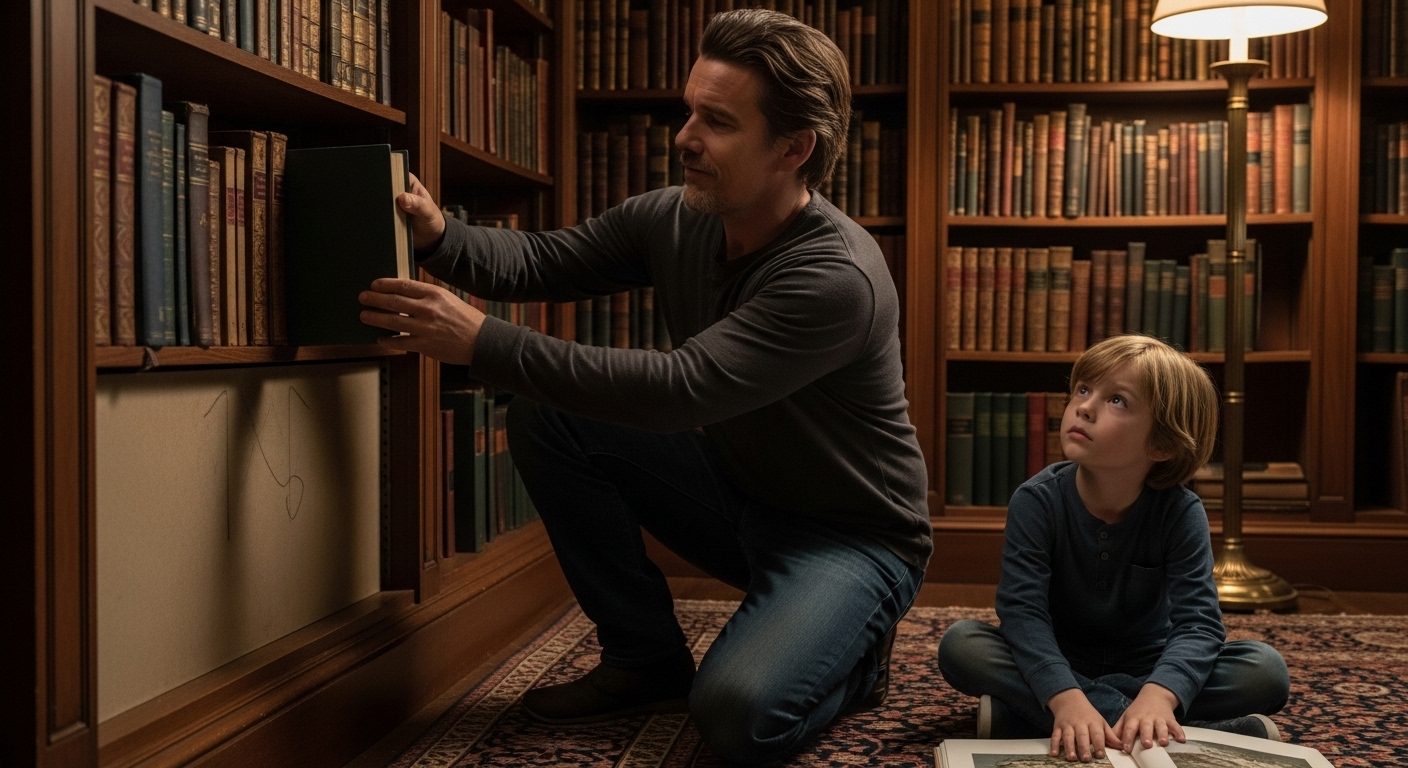
Liam began to systematically sabotage cherished memories—the very foundation of Charles’s relationship with his son. In the main library, where Charles and Finn used to spend hours looking through old albums, Liam “lost” entire folders of family photos, particularly those featuring Charles in healthier, more active states. He subtly rearranged the furniture in the main parlor, the room Charles most associated with his past, making the confused Charles disoriented and frustrated whenever he entered. Liam replaced Charles’s favorite, worn volumes of classic literature with new, unfamiliar editions, making Charles doubt his own memories of reading them. He was replacing the father’s reality with his own manufactured version. This subtle manipulation was the gay cấn (tension) that defined their daily lives.
The emotional siege on Finn was equally precise. Liam used his professional competence to win Finn’s devotion. He took over Finn’s homeschooling, taught him complex chess strategies, and was constantly present, ready with a comforting word or a clear answer. This contrasted sharply with the increasingly frustrated Charles, who, in his lucid moments, desperately tried to connect with his son but often ended up confused or disoriented by his illness. Finn slowly began to rely entirely on Liam, viewing his father not as the loving patriarch, but as the unreliable, frail figure causing problems and instability. “Papa is tired, Finn. Liam knows where the book is.” This became the new normal.
The most profound betrayal came in the form of physical isolation. Liam subtly convinced Charles that the sprawling, busy estate was too stressful for his deteriorating condition. He persuaded Charles to move to an isolated lake house owned by the estate, cutting Charles off from his few remaining, loyal friends and his external medical specialists. Liam framed the move as being entirely for Charles’s “safety and peace,” but it was pure, calculated isolation. The high point of bất bình (injustice/outrage) was watching Charles agree, believing he was protecting his own health, when in fact, he was being cut off from all sources of external reality.
The final, decisive betrayal occurred three weeks after the move. Charles, in a rare, agonizing moment of lucidity, managed to corner Liam in the study. Charles, frail and trembling, was attempting to write a final, updated will on a small notepad, leaving a clear warning about Liam’s increasing control. Liam intercepted the document, not destroying it, but manipulating Charles’s profound dependence.
Liam gently explained that the will was confusing and legally flawed. Instead, he presented Charles with a professional-looking “caretaker authorization form”—a document that legally granted Liam full guardianship and medical power of attorney upon Charles’s full incapacity. Liam assured Charles it was a standard medical precaution. Charles, confused and trusting the man he had paid to protect his son, signed the document, effectively rendering himself voiceless, property-less, and defenseless. The former Protector had successfully become the legal Usurper.
Chapter 3: The Usurpation and The Unbearable Loss
The psychological war was over; the final, terrible act of usurpation was at hand. Charles was now mostly confined to bed, severely weakened and unable to articulate coherent thoughts, his world reduced to a confused, terrifying haze.
Liam entered Charles’s room, the legal papers granting him complete control folded neatly in his pocket. Charles, summoning the last ounce of his lucid will, managed to whisper to Liam: “I trusted you… you promised to protect him from loss, not steal him!”
Liam sat beside the bed, his expression chillingly calm. He looked at the dying man with a twisted sense of self-justification, a strange blend of respect and ruthless self-interest. He told Charles, not with anger, but with cold, measured certainty, that he had indeed kept his promise.
“I am protecting Finn from loss,” Liam stated, his hand resting on Charles’s arm. “I am protecting him from the loss of an unreliable, sick, and increasingly absent father, by becoming the only stable father Finn will ever remember. You hired me to provide stability, Charles. And I provided it. Permanently.”
The betrayal was total. Liam, wanting to fully solidify his position and eliminate the last vestiges of Charles’s influence, performed the final, agonizing test of loyalty. He brought Finn into the room.
Liam gently asked Finn a seemingly simple, innocent question: “Finn, your Papa sometimes mumbles about the ‘old house.’ Which stories do you like more: the truth about the ‘old house’ Papa tells, or the ‘new adventures’ we have created here at the lake?”
Finn, confused by his father’s incoherent speech, and deeply swayed by Liam’s consistent kindness and competence, looked at his frail, confused father, then at the strong, present man who always played games with him. He answered without malice, but with devastating clarity. “I like Liam’s stories. Papa’s stories make me sad.”
Charles watched, paralyzed by his disease and his powerlessness, as his son chose his betrayer. The ultimate bi kịch (tragedy) was not his death, but the theft of his son’s love, bought and executed with his own money. The memory of his son’s words was the final, agonizing wound.
Liam, now legally empowered by the authorization form, moved to the bedside equipment. He claimed it was the “humane decision” given Charles’s terminal state, but his action was definitive. He disconnected Charles from the necessary life support. Charles died, not entirely from his disease, but from the unbearable, crushing pain of watching his son’s love and memory be stolen by the Promise Keeper.
The next day, after Charles’s quiet funeral, Finn was officially and legally placed under Liam’s guardianship. Liam had won the ultimate prize: the fortune, the home, and the son. He stood on the deck of the isolated lake house, Finn by his side, the picture of the perfect, successful, loving guardian. The stolen life was complete.
Chapter 4: The Echo of the Promise
Years passed. The idyllic facade of the Dillon lake house remained unbroken. Finn, now eighteen, grew up successful, well-adjusted, and happy. He genuinely loved Liam, his adoptive father, who had provided unwavering stability and guidance. Finn had no memory of the manipulation, only a vague, hazy recollection of his biological father as a frail, sick man who had faded away.
The only remaining sign of the deceit was Liam’s obsessive, rigid control over certain aspects of their life. Liam kept Charles’s old study locked. He was extremely rigid about keeping certain subjects about Charles and the old estate off-limits. Finn, attributing this to Liam’s characteristic need for order and respect for the deceased, rarely questioned it.
However, the truth, bought with such pain and cruelty, could not remain buried forever.
Finn, preparing for college and needing a copy of his birth certificate, finally entered Charles’s old study, persuading Liam that he needed the original documents. Liam, confident that all damaging evidence had been long purged, reluctantly allowed him access.
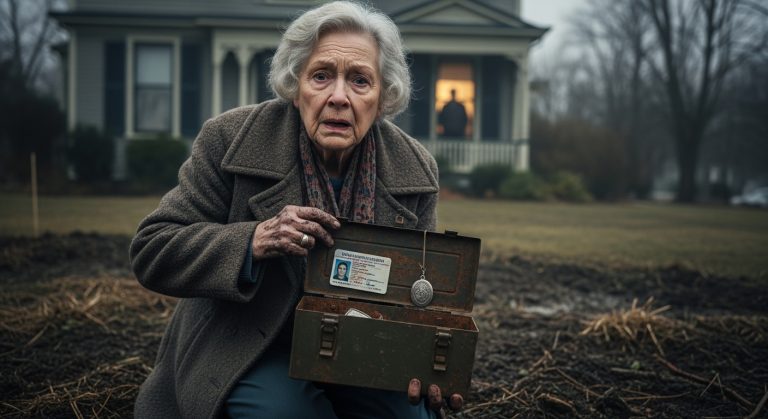
Finn opened Charles’s large, imposing mahogany desk. He found a hidden compartment that Liam, meticulous as he was, had somehow overlooked—a small drawer hidden behind the central filing mechanism. Inside, Finn found a small, waterproof packet. It contained two things: the original, private contract between Charles Dillon and Liam Hawke, detailing the massive upfront payment and Liam’s role as a paid protector, along with a final, tear-stained note from Charles.
The contract revealed the astonishing, brutal truth: Liam was not a chance guardian; he was a hired operative. The note, scrawled by Charles in a final, agonizing moment of lucidity, was the final confession:
“My son, he stole you with my own money. He broke the promise to save himself. Forgive him, and forgive me for trusting the wrong man to love you.”
The revelation was a cold, devastating shock. The stability, the love, the security—all of it was built on a foundation of betrayal and his father’s agonizing death. Finn understood the immense scope of the manipulation and the ultimate cost of his father’s trust.
The final, profound act of the tragedy was the thấm thía (poignancy) of the betrayal: the man who created his perfect life was a thief who stole it from his dying father, executing the crime with the victim’s own wealth.
Chapter 5: The Reckoning and Choice
Finn confronted Liam on the deck of the lake house, the scene of the Usurper’s triumph. Finn was not hysterical; he spoke with the quiet, controlled certainty of a man who had just lost his entire identity.
He simply placed the packet—the contract and the final note—on the weathered railing between them. “You never stopped being the operative, did you, Liam? You just changed the target.”
Liam didn’t deny it. He looked at the packet, then at the son he had stolen, and a profound, complex emotion crossed his face. He justified his actions with the warped love he genuinely felt. “I had to, Finn! You were headed for disaster! Your father was dying and his relatives would have destroyed you! I gave you stability, structure, and a life free of chaos! I kept the most important part of the promise—I protected you. And I gave you the only stable father you would ever remember!”
Finn understood the warped love, the pathological need for family that drove Liam. But he rejected the foundation of lies. He looked at the contract, then at the final, tear-stained plea of his biological father.
Finn made his choice—a choice rooted in integrity over vengeance. He did not call the authorities. He knew the scandal would only cause him more pain, and Liam’s motive was ultimately, tragically, protective, albeit criminal. He chose to quietly cut Liam out of his life.
Utilizing the full power of the inherited fortune, Finn legally removed Liam as his guardian and future beneficiary. He secured Liam a substantial, anonymous, permanent annuity—enough to live comfortably, but not enough to ever track him down or enter his life again. It was a final payment on the original contract, terminating the job for good.
The final scene shows Finn, now completely free and in control of his destiny, using his inherited wealth to establish a massive, national foundation dedicated to supporting families dealing with terminal neurological illness, ensuring that other vulnerable children would not face the exploitation or isolation that he and his father had. He named the foundation the “Charles Dillon Integrity Fund.”
The chữa lành (healing) was complete: Finn chose integrity over vengeance, honoring the original, good intentions of his biological father. The wound was deep, but Finn finally found true peace by keeping the promise his real father couldn’t, defining the Dillon legacy not by the stolen past, but by the honest, protective compassion of his future. The end.