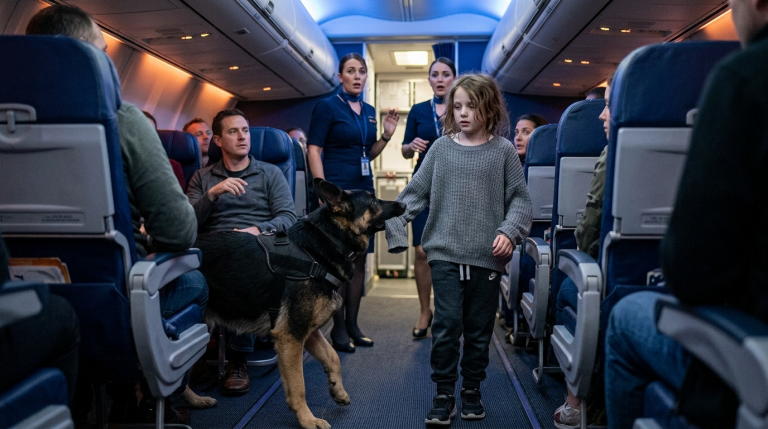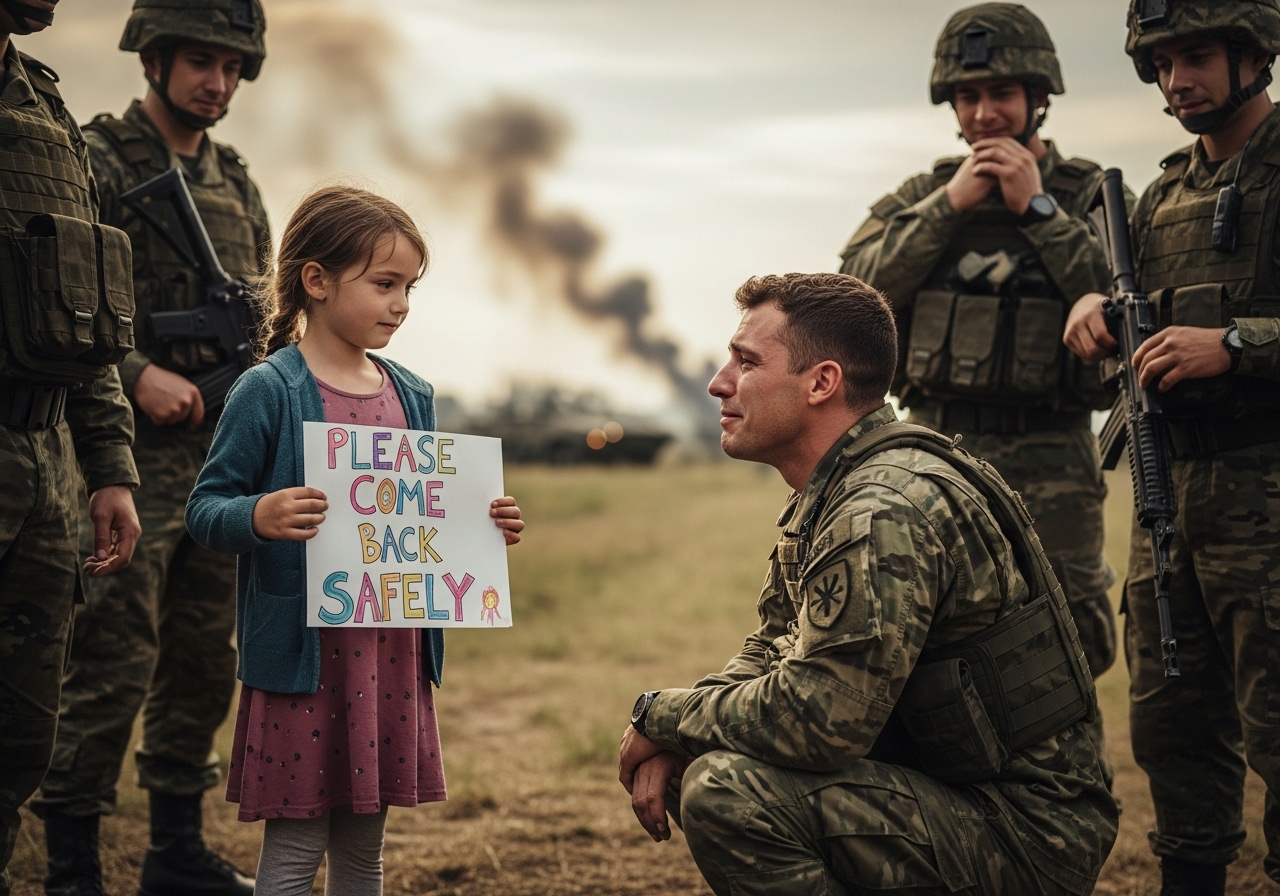
I’ve kicked down a thousand doors, but the note this 5-year-old hostage handed me stopped the bullets and broke my heart.
CHAPTER 1: THE FATAL FUNNEL
The rain in Seattle doesn’t wash things clean; it just makes the grime stick harder. It was 0300 hours. The kind of dark that feels heavy, like a wet wool blanket draped over the city.
My boots crunched on the gravel driveway of 412 Oak Street. Behind me, five other guys from the tactical entry team were stacked up, breathing in synchronized rhythm. We were the ghosts the city called when the talking stopped.

“Neo, hold,” Cap’s voice crackled in my earpiece. “Thermal shows movement in the rear bedroom. One adult. Two smaller heat signatures. Hostages secure, but he’s pacing.”
I gripped the foregrip of my carbine tighter. The suspect was James Miller. An ex-Army Ranger who’d brought too much of the war home with him. He’d barricaded himself in with his wife and five-year-old daughter, swearing he wasn’t going to jail. He swore he wasn’t coming out alive.
My job was Point Man. I was the first one through the door. The first one to see the threat. The first one to take a bullet if things went south. We call the doorway the “Fatal Funnel.” It’s where you die. You get in, you get out, or you get dropped.
“Breach on my count,” I whispered, my voice barely audible over the drumming rain. “Three. Two. One.”
CRASH.
The battering ram hit the door like a freight train. The wood splintered and shrieked. I surged forward, weapon raised, scanning the fatal funnel.
“POLICE! SEARCH WARRANT! GET ON THE GROUND!”
The living room was a wreck. Overturned furniture. Shattered glass. The smell of stale beer and high-grade fear. It was empty. We moved like water, flowing from room to room. Clear. Clear. Clear.
Then we hit the hallway. The only door closed was at the end. The master bedroom.
We stacked up again. My heart was hammering against my ribs, a frantic drum solo. I could hear sobbing from inside. A low, guttural sound that makes the hair on your arms stand up.
“Miller! This is Officer Neo!” I shouted, keeping my voice steady, authoritative. “Come out with your hands up. We don’t want anyone hurt.”
“Go to hell!” Miller screamed back. The crack of a gunshot tore through the door, sending splinters flying into my helmet. My team flinched, but we didn’t break.
“Shots fired! Shots fired!” I yelled into the comms.
We were authorized to use deadly force. The rules of engagement just shifted. If I opened that door, I was shooting to kill. I reached for the handle, ready to end it.
But then, the handle turned from the inside.
CHAPTER 2: THE SHIELD OF PAPER
The door didn’t fly open. It creaked.
I expected a muzzle flash. I expected to feel the burn of a hollow point tearing through my Kevlar. Instead, I saw pink. A tiny pair of pink pajamas.
Miller’s daughter. She couldn’t have been more than five. Her hair was messy, her face streaked with dried tears and snot. She walked right out into the hallway, right into the line of fire of six heavily armed SWAT officers.
“HOLD! HOLD FIRE!” I roared, throwing my hand up to signal the team behind me.
The hallway went deadly silent. The only sound was the rain and the girl’s bare feet on the hardwood floor. She didn’t look scared. She looked… determined.
She walked straight up to me. I’m six-foot-two, decked out in black tactical gear, looking like a monster from a nightmare. But she didn’t flinch. She looked up at me with eyes that were too old for her face.
“Are you the boss?” she whispered.
I lowered my weapon, letting it hang on the sling. I knelt down on one knee so I was eye-level with her. I needed to get her out of the Fatal Funnel. Miller was still in that room with a gun.
“I’m Neo, sweetie,” I said, my voice softening. “I need you to run to the officers behind me, okay? We need to get you safe.”
She shook her head. “Daddy is sick. He’s crying.”
“I know,” I said. “We want to help him.”
“He said the bad men are coming to take him away,” she said, her lower lip trembling.
“No bad men,” I lied. “Just us.”
She reached into the pocket of her pajama top. My muscles tensed. I’d seen kids used as traps before. I’d seen grenades hidden in toys. But she pulled out a piece of paper. It was folded crookedly, the way kids fold things.
“I drew this for you,” she said, pressing it into my gloved hand. “Daddy said you were coming to kill him. But I told him you wouldn’t if I gave you this.”
I took the paper. I didn’t want to look at it. I wanted to grab her and sprint for the exit. But something in her eyes made me freeze. I unfolded it.
It was a drawing done in crayon.
There was a stick figure of a man in blue—me. He was holding a gun. But the gun was pointing at the ground. And next to the man was a stick figure of a little girl holding his hand.
But it was the words scrawled in jagged, red crayon at the bottom that hit me harder than the bullet that nearly took my head off in Fallujah.
“Please Mr. Police. Don’t die. And don’t make Daddy die.”
I stared at the drawing. Then I looked at the girl.
“Why…” I choked out, my throat suddenly tight. “Why did you write ‘don’t die’ for me?”
She touched my tactical vest, right over my heart. “Because Daddy said if you come in, he has to shoot you,” she whispered. “And I don’t want you to be an angel yet. My mommy says angels are lonely.”
I felt a tear—hot and unauthorized—leak out of my eye and slide down my cheek behind my ballistic glasses.
Behind me, I heard Jackson, my breacher, let out a shaky breath. “Jesus,” he muttered.
I looked at the bedroom door. It was still open a crack. I could hear Miller weeping inside. He had heard every word.
This wasn’t a raid anymore. It was a tragedy waiting for a trigger pull. And this little girl had just stepped between the hammer and the firing pin.
I looked at the drawing again. Don’t die.
“Hey, Miller!” I called out, but my voice wasn’t the ‘Point Man’ voice anymore. It was just a man’s voice. “Your daughter… she just gave me something. You need to see this.”
Silence.
“Miller, I’m putting my gun down,” I said, slowly unclipping my carbine and setting it on the floor. “I’m coming to the door. Just me. No gun. I just want to show you what she drew.”
“Neo, negative! Do not disarm!” Cap screamed in my ear.
I reached up and pulled my earpiece out. I stood up, holding nothing but a piece of paper with a crayon drawing.
“I’m coming in, James,” I said, using his first name.
I pushed the door open.
CHAPTER 3: THE LONGEST WALK
The distance from the hallway threshold to the center of the master bedroom was maybe ten feet. But in that moment, it felt like ten miles across a minefield.
I stepped inside. The room was suffocatingly hot, the air thick with the metallic tang of adrenaline and the sulfur smell of the gunshot Miller had fired earlier. My hands were empty. My chest was exposed. I had left my rifle on the hallway floor, a cardinal sin in tactical training, but the only prayer I had in this specific hell.
James Miller was crouched behind the bed, using the heavy oak frame as cover. He looked like a cornered animal. His eyes were wild, bloodshot, darting between me and the window. In his shaking hand was a 1911 pistol—a heavy .45 caliber hand cannon. The hammer was cocked. The barrel was pointed directly at the center of my chest.
Behind him, his wife, Sarah, was huddled in the corner of the closet, her hands over her mouth, tears streaming silently down her face. She looked at me, terrified that my presence meant her husband was about to die.
“Get out!” Miller screamed, his voice cracking. He pressed the gun forward. “I told you! I’m not going back! I won’t let you put me in a cage!”
I stopped moving. I stood perfectly still, my hands raised to shoulder height, palms open. In my right hand, the crumpled piece of paper fluttered slightly from the trembling of my own fingers.
“I’m not here to put you in a cage, James,” I said. My voice was low, calm. The ‘Command Voice’ I used for suspects was gone. This was the voice I used when I talked to my own brother. “I’m just here to deliver a message.”
“Don’t play games with me, Neo!” Miller shouted. “I know the drill! You distract me, and the guys in the hallway rush in. I see your shadows! I know your tactics!”
“No rush, James. No games. Look at me,” I said, locking eyes with him. “I took my comms out. They’re screaming at me to shoot you right now. But I’m not listening to them. I’m listening to your daughter.”
At the mention of his daughter, Miller flinched. The gun barrel dipped for a fraction of a second, then snapped back up.
“Don’t you talk about her,” he hissed. “You don’t get to say her name.”
“She’s safe, James. She’s right outside,” I said, taking a slow, deliberate step forward.
“STOP!” he roared. The skin on his knuckles was white as he gripped the trigger.
I froze. “Okay. I’m stopping. But I need you to see this. I need you to read what she wrote.”
I slowly lowered my hand and placed the drawing on the foot of the bed, right between us. Then I backed up two steps, giving him space.
“She walked through a SWAT team to give me that,” I said. “Do you know how brave that is? She saw six guys with rifles, and she walked right up to the biggest one because she was scared for you.”
Miller breathed heavily, his chest heaving. He looked at the paper. Then he looked at me. He didn’t want to look at it. He knew that looking at it would break the resolve he had built up—the resolve to end it all right here.
“Pick it up, James,” I urged softly. “Just read it.”
He hesitated. His eyes darted to the door, checking for a breach team. Seeing none, he reached out with his left hand—keeping the gun trained on me with his right—and grabbed the paper.
He unfolded it.
Time seemed to stop. Outside, the rain battered against the windowpane, a relentless rhythm against the silence of the room. I watched his eyes scan the crayon drawing. I watched them stop at the red words at the bottom.
“Please Mr. Police. Don’t die. And don’t make Daddy die.”
Miller’s face crumpled. It wasn’t a gradual change; it was an instant collapse. The hard, angry mask of the soldier fell away, leaving behind the raw, exposed face of a broken father.
“She… she thinks I’m going to kill you,” he whispered, his voice trembling.
“She thinks we’re both going to die tonight,” I corrected him. “She thinks angels are lonely. That’s what she told me. She doesn’t want her daddy to be lonely.”
Miller let out a sob that sounded like something tearing inside his chest. “I just… I just wanted to protect them. The world is so messed up. I can’t… I can’t turn it off, man. I can’t turn the noise off.”
“I know,” I said. And I did. I knew the noise. I knew the ghosts that stood at the foot of the bed at 3 AM. “The noise is loud, James. But listen to her. Her voice is louder.”
I took another step. “She drew me without a gun, James. Look at the picture. She drew me holding your hand. She decided how this ends. Not the DA. Not the Captain. Not the Army. She decided.”
Miller looked at the drawing again. His hand holding the gun began to lower. The barrel pointed at the floor.
“I almost shot you,” he choked out. “I had the slack out of the trigger.”
“But you didn’t,” I said firmly. “You didn’t.”
CHAPTER 4: THE SURRENDER
The tension in the room shifted. It went from sharp and jagged to heavy and sad. The threat of violence was evaporating, replaced by the crushing weight of reality.
Miller sat back on his heels, the gun dangling loosely in his fingers. He looked exhausted. He looked like a man who had been running for a thousand miles and just realized he was running in circles.
“If I give this up…” he whispered, looking at the weapon. “I can’t go to prison, Neo. I can’t be locked up. I’ll die in there.”
“We’ll cross that bridge,” I said, stepping closer. I was within reach of him now. “But right now, your little girl is standing in a hallway surrounded by men in masks, waiting to see if her daddy comes out. Don’t make her wait any longer.”
I slowly extended my hand. palm up. “Give me the gun, James. Let’s go see her.”
Miller looked at the gun. It was his safety blanket. His power. His final exit strategy. Giving it up meant surrendering control. It meant facing the consequences.
He looked at his wife in the corner. Sarah nodded frantically, her eyes pleading. Give it to him. Please.
Miller took a deep, shuddering breath. He closed his eyes.
And then, he placed the cold steel of the 1911 into my palm.
I didn’t snatch it. I didn’t celebrate. I simply closed my fingers around the slide, thumbed the safety on, and ejected the magazine. I racked the slide back, catching the live round that spun out of the chamber.
The metallic clack-clack of the slide locking back was the loudest sound in the world. It signaled the end of the war.
“Code 4,” I said loudly, not into a radio, but for the team in the hallway to hear. “Suspect is secure. Weapon is secure. We are coming out.”
I clipped the gun to my belt and reached down, grabbing Miller’s hand. I pulled him up. He was shaking so hard he could barely stand. I didn’t handcuff him immediately. It was a breach of protocol, but I needed him to walk out of there with some dignity for his daughter’s sake.
“Sarah,” I said to his wife. “Come on. Let’s go.”
She scrambled up and threw her arms around Miller. They held each other for a second, a desperate embrace of two people who had just looked over the edge of a cliff.
“Okay,” I said gently. “Let’s move.”
I led them out of the bedroom.
In the hallway, the rest of my team was still stacked up, weapons at the low ready. Jackson, my breacher, looked at me with wide eyes. He saw me holding Miller by the arm, no cuffs, walking him down the hall. He saw the gun on my belt. He saw that I was alive.
I gave Jackson a nod. Stand down.
We turned the corner into the living room. The front door was open, rain blowing in.
And there she was.
The little girl in pink pajamas was sitting on a tactical medic’s knee near the entrance. She was holding a juice box, her legs swinging. When she saw us, she dropped the juice.
“Daddy!”
She didn’t run to me. She didn’t care about the police. She ran straight for Miller.
Miller fell to his knees just as she collided with him. He buried his face in her neck, sobbing openly now. The sound of a grown man crying is never easy to hear, but this was the sound of a soul being stitched back together.
“I got you, baby,” he wept. “Daddy’s here. Daddy’s sorry.”
She patted his back with her tiny hand, looking over his shoulder at me.
“See?” she said to me, a small smile breaking through her tear-stained face. “I told you.”
I stood there, the adrenaline crash finally hitting me. My knees felt weak. I looked at the drawing, which I had shoved into my vest pocket.
She had saved his life. She had saved my life.
Cap walked in through the front door, rain dripping from his helmet. He looked at Miller on the floor, then at me. He saw the lack of handcuffs. He saw the weapon on my belt. He saw the unauthorized resolution.
He walked up to me, his face stern. I expected a reprimand. I expected to be chewed out for disobeying a direct order, for endangering the team, for going off-script.
Instead, Cap put a heavy hand on my shoulder. He squeezed it tight.
“Good work, Neo,” he whispered. “Good work.”
Then he signaled the other officers. “Let’s give them a minute. Then we transport. Standard procedure, but… gentle. Treat him gentle.”
I watched the family. Miller was wiping his eyes, trying to be strong for his girl. He looked at me one last time, mouthing the words, Thank you.
I didn’t say anything. I just tapped my chest, right over the heart where the drawing had been.
But the story didn’t end there. That night was just the beginning. Because that drawing didn’t just stop a bullet; it started a movement that none of us saw coming. And the fallout from what happened next would challenge everything I thought I knew about justice.
CHAPTER 5: THE MACHINE
The adrenaline crash after a raid is like falling off a building. One minute you’re vibrating at a frequency only dogs can hear, and the next, you’re sitting on a wooden bench in the locker room, staring at your boots, unable to muster the energy to untie them.
It was 0500. The precinct was quiet, humming with the low buzz of fluorescent lights. I had processed James Miller. I had watched them take his fingerprints, his mugshot, and his shoelaces. He didn’t fight. He moved like a ghost, his eyes hollow, stripping down to the orange jumpsuit without a word.
I sat in front of my locker, holding the drawing. The edges were crumpled from being shoved in my vest. The red crayon was still vibrant. “Don’t make Daddy die.”
“You gonna frame that or book it into evidence?”
I looked up. It was Detective Sterling. He was an old-school cop, the kind who measured justice in years served and convictions won. He was leaning against the lockers, chewing on a toothpick.
“It’s evidence,” I said, my voice raspy. “Technically.”
“D.A. is already frothing at the mouth,” Sterling said, shaking his head. “Assault on a police officer with a deadly weapon. Kidnapping. Reckless endangerment. They’re gonna bury this guy, Neo. Twenty-five years, minimum. They want to make an example. ‘Zero tolerance for gun violence,’ even if the guy is a vet with a scrambled brain.”
I felt a cold knot tighten in my stomach. I had talked Miller off the ledge. I had promised him safety. I had told him we weren’t there to put him in a cage.
“He didn’t fire at me,” I said. “He surrendered.”
“He fired through the door, Neo. He pointed a .45 at your chest. That’s attempted murder in the eyes of the statute,” Sterling shrugged. “You did your job. You got him out alive. Now let the system do its job. Don’t get attached to the perp.”
Sterling walked away, his footsteps echoing on the tile.
I looked at the drawing again. If Miller went away for twenty-five years, his daughter—the girl in the pink pajamas—would be thirty years old when he got out. She would grow up without a father. The “bad men” really did come to take him away. And I was the one who led them.
I couldn’t let the narrative just be “Crazy Gunman Arrested.” It wasn’t the whole truth.
I pulled out my phone. I placed the drawing on the bench. I snapped a picture of it. No names. No case numbers. Just the stick figures and the plea in red crayon.
I logged into a private, verified social media group for First Responders. It was a place where we vented, shared war stories, and tried to stay sane. I uploaded the photo with a simple caption:
“Tonight, I almost killed a man. He almost killed me. This piece of paper, handed to me by his 5-year-old daughter in the middle of the breach, is the only reason we’re both alive. The system wants to bury him as a monster. He’s just a broken father. We need to do better for our vets.”
I hit post. I tossed the phone in my locker and went to the showers to scrub the smell of Miller’s house off my skin.
By the time I got out of the shower twenty minutes later, my phone was buzzing so hard it was vibrating off the metal shelf.
The post hadn’t stayed private. Someone had screenshotted it.
It was on Twitter. It was on Facebook. It was on Instagram.
The hashtag #TheAngelNote was trending #1 in the United States.
CHAPTER 6: THE COURT OF PUBLIC OPINION
Three days later, the city was on fire—not with riots, but with a debate that tore the community in half.
My anonymous post had been traced back to me within hours. I wasn’t fired, but I was pulled off active duty and placed on “administrative leave pending investigation.” They said it was protocol. I knew it was punishment for controlling the narrative before the Chief could.
But they couldn’t stop the wildfire.
The photo of the drawing was everywhere. It was on the nightly news. It was plastered on billboards. People were printing it on t-shirts.
The public reaction was a tidal wave. On one side, the “Law and Order” crowd demanded Miller be locked up. He fired a gun. He endangered a child. He was a threat.
On the other side, veterans’ groups, mental health advocates, and millions of parents were rallying for Miller. They saw the drawing for what it was: a cry for help from a family drowning in a system that didn’t know how to swim.
I was sitting in my living room, watching the news, when my phone rang. It was the District Attorney, Marcus Thorne. Thorne was a shark in a suit—ambitious, polished, and running for Mayor next year. A conviction of a “violent domestic terrorist” (as he called Miller) would look great on his campaign flyer.
“Officer Neo,” Thorne’s voice was smooth like oil. “We need to prepare for your testimony at the grand jury tomorrow.”
“I’m ready to tell the truth,” I said, leaning forward on my couch.
“Good,” Thorne said. “The truth is simple. You entered the room. Miller pointed a loaded weapon at your center mass. You feared for your life. He only surrendered because he was outmaneuvered. That establishes intent for Attempted Murder.”
“That’s not what happened,” I said, cutting him off. “He surrendered because of the girl. He surrendered because he woke up. He didn’t want to kill me.”
“Intent is judged by actions, Neo, not feelings,” Thorne snapped, his tone hardening. “He pulled a gun. He cocked the hammer. That is intent. If you go up there and paint this guy as a saint, you are undermining every officer who risks their life. You are telling the public that pointing a gun at a cop is forgivable if you have a sad story.”
“I’m telling the public that he needs a hospital, not a cage!” I shouted.
“He is getting a cage!” Thorne roared back. “And you are going to help me put him in it. Because if you don’t—if you get on that stand and soften the facts to help your new viral friend—I will have you up on perjury charges. I will strip your badge, Neo. I will take your pension. And I will make sure you never work security at a mall, let alone in law enforcement.”
The line went dead.
I sat there in silence. The threat was real. Thorne could ruin me. He could destroy the career I had built for fifteen years. Everything I was.
The next morning, the courthouse was a zoo. News vans lined the streets. Protesters held signs. Some read: JUSTICE FOR MILLER. Others read: BLUE LIVES MATTER – LOCK HIM UP.
I had to walk through the crowd to get to the entrance. Cameras flashed in my face. Microphones were shoved at me.
“Officer Neo! Is it true you think he should walk free?” “Officer! Did he try to kill you?” “Neo! What did the girl say to you?”
I kept my head down, my sunglasses on, and pushed through.
I walked into the courtroom. It was packed. Miller was at the defense table. He looked cleaner, shaved, but smaller. He was wearing a suit that didn’t fit him. When I walked in, he looked up. Our eyes met.
He looked terrified. He knew that my words today would decide if he ever hugged his daughter as a free man again.
Sarah, his wife, was in the front row. She was holding the little girl. The girl was coloring in a book, oblivious to the fact that the room was deciding her fate.
I took the stand. I swore on the Bible.
Thorne stood up, buttoning his expensive jacket. He walked toward me like a predator circling prey. He wanted a quick kill.
“Officer Neo,” Thorne began, his voice booming for the jury. “Let’s cut to the chase. On the night of November 14th, did James Miller point a loaded .45 caliber pistol at your chest?”
The room went silent. Even the air conditioning seemed to stop.
I looked at Thorne. I looked at Miller. I looked at the little girl in the front row.
If I said “Yes” without context, the law required a mandatory minimum sentence. Miller was gone. If I said “No,” I was lying under oath. I was a criminal.
My palms were sweating. I leaned into the microphone.
“It’s not a simple yes or no question,” I said.
“It is a factual question, Officer!” Thorne hammered the podium. “Did the barrel of the gun point at you? Yes. Or. No.”
I looked Thorne dead in the eye.
“The gun was pointed at me,” I said slowly.
Thorne smiled. He had it.
“…But,” I continued, my voice rising over his interruption. “The man holding it wasn’t James Miller.”
Thorne froze. “Objection! The witness is speaking in riddles.”
“Overruled,” the Judge said, leaning forward. “Let him speak.”
I turned to the jury. I ignored the lawyers. I spoke to the twelve normal people sitting in the box.
“The man holding that gun was a soldier who was still fighting a war that ended five years ago,” I said. “The gun was pointed at me, yes. But when I showed him the note from his daughter… the soldier left the room. And the father came back. The father never wanted to hurt anyone. The father surrendered.”
“Move to strike!” Thorne yelled. “Emotional speculation!”
“I am the Point Man!” I shouted back, standing up in the witness box. “I am the expert on that threat! I was the one in the room! And I am telling you, that man was not trying to kill me. He was trying to get someone to stop the noise in his head! And if we send him to prison for that, we are finishing the job the enemy started overseas!”
The courtroom erupted. The judge was banging his gavel. Thorne was screaming objections.
But I wasn’t looking at them. I was looking at the little girl. She had stopped coloring. She was looking at me.
And for the first time since that night, she smiled.
But the system doesn’t crumble just because of one speech. Thorne wasn’t done. And he had a piece of evidence that I didn’t know about. A piece of evidence that would turn the entire room against Miller.
“You talk about the ‘father,’ Officer,” Thorne said, his voice turning icy calm as the room quieted down. “But you forgot to mention what we found in his search history the night before the incident.”
Thorne picked up a piece of paper.
“He wasn’t just planning a standoff, Officer. He was looking up the response times for your specific SWAT unit. He was researching body armor penetration.”
Thorne walked up to me and slammed the paper on the stand.
“He wasn’t a confused victim. He was hunting you.”
Here is Part 4, the final conclusion of the story.
—————-FULL STORY (PART 4)—————-
CHAPTER 7: THE LOGIC OF MADNESS
Thorne’s accusation hung in the air like smoke. The jury looked at Miller with new eyes—not as a broken father, but as a calculating cop killer. The “Search History” document on the stand felt like a nail in the coffin.
I looked at the paper. I saw the timestamps. 02:00 AM. 02:15 AM. The searches were frantic. “SWAT 5.56 penetration dry wall.” “Level 4 body armor stopping power.”
My gut twisted. It looked bad. It looked like planning an ambush.
Miller stood up. His lawyer tried to pull him down, but Miller shook him off.
“I wasn’t hunting you!” Miller’s voice cracked, raw and desperate. “I was terrified!”
“Sit down, Mr. Miller!” The Judge barked.
“No!” Miller shouted, tears streaming down his face. “He thinks I wanted to shoot them? I was checking to see if their bullets would go through the walls! I was checking if my wife would be safe in the closet if you guys opened up with the rifles!”
The courtroom went dead silent.
I looked at Thorne. He sneered. “A likely story. You were looking up armor penetration to find a weak spot.”
“No,” I said. The realization hit me like a physical blow. My mind flashed back to the raid. To the bedroom. To the details I had cataloged but hadn’t processed because of the adrenaline.
I leaned into the microphone, cutting Thorne off.
“He’s telling the truth,” I said firmly.
Thorne spun around. “Excuse me?”
“I cleared that bedroom,” I said, looking directly at the jury. “When we process a scene, we look for fortification. We usually find sandbags or furniture piled up at the door to stop us from getting in.”
I pointed at Miller.
“But in Miller’s room… the mattress wasn’t against the door. It was against the closet. Where his wife and daughter were hiding.”
I grabbed the search history paper from the stand.
“He looked up ‘penetration’ because he knows we use high-velocity rounds. He looked up ‘response time’ not to ambush us, but to know how long he had to fortify that closet before we breached. He wasn’t building a kill zone, Mr. Thorne. He was building a bunker. To protect them from us.”
Thorne’s mouth opened, but no sound came out. The narrative of the “Cop Hunter” shattered instantly.
“He’s paranoid,” I continued, my voice quiet but filling the room. “He’s sick. He thought we were the enemy. But even in his sickness, his only instinct was to protect his family. That’s not malice, counselor. That’s love twisted by trauma.”
I looked at the jury. I saw a woman in the back row wipe a tear. I saw the foreman nod slowly.
Thorne snatched the paper back, his face red. “No further questions,” he muttered, retreating to his table.
I stepped down from the stand. As I walked past the defense table, Miller didn’t look up. He was burying his face in his hands, weeping silently.
But the little girl—Lily—she watched me. She held up her coloring book. She had drawn a star. A messy, yellow star. And she pointed at me.
CHAPTER 8: THE NEW DRAWING
The jury deliberated for four hours.
When they came back, the tension in the room was thick enough to choke on.
“We find the defendant, James Miller…” the foreman began.
“On the charge of Attempted Murder of a Police Officer: Not Guilty.“
A gasp went through the room. Sarah Miller collapsed into her lawyer’s arms.
“On the charge of Aggravated Assault: Not Guilty.“
“On the charge of Reckless Endangerment: Guilty.“
It was the right call. He had fired a gun. He had broken the law. But the system worked. The Judge sentenced him to time served and three years of mandatory inpatient psychiatric care at a specialized Veterans facility, followed by five years of probation.
He wasn’t going to prison. He was going to get help.
ONE YEAR LATER
The Seattle rain was still falling, but it felt different this time. Cleaner.
I was sitting in a coffee shop downtown, nursing a black coffee. I wasn’t on the tactical team anymore. After the trial, I transferred to the Crisis Intervention Unit. I traded the battering ram for a notepad. I spent my days talking people down, not taking them down.
The bell above the door chimed.
I looked up and saw a man walk in. He looked healthy. He had gained weight—muscle, not fat. His eyes were clear. The haunted, thousand-yard stare was gone, replaced by a quiet calm.
It was James Miller.
Holding his hand was Lily. She was six now, taller, missing a front tooth. She was wearing a bright yellow raincoat.
They walked over to my table. I stood up.
“Officer Neo,” James said. He extended his hand. His grip was firm. No shaking.
“It’s just Neo, James,” I said, shaking it. “You look good.”
“I feel good,” he said. “The therapy… it’s hard work. But the noise is gone. It’s quiet now.”
“I’m glad to hear that.”
James looked down at his daughter. “Go ahead, baby.”
Lily stepped forward. She reached into her raincoat pocket. For a split second, my old muscle memory twitched—a flashback to the night in the hallway. But I smiled.
She pulled out a piece of paper.
“I made you another one,” she said.
I took it. It was better than the last one. She had learned to color inside the lines.
It showed a house. inside the house was a family—a dad, a mom, and a girl. And standing outside the house was the man in blue. But this time, he wasn’t holding a gun. He had big white wings drawn on his back.
At the bottom, she had written in green crayon:
“Thank you for saving my Daddy.”
I felt that familiar lump in my throat. I looked at James.
“You saved yourself, James,” I said. “You did the work.”
“Maybe,” James smiled. “But you were the one who listened. You were the one who stopped.”
He picked up Lily. “We have to go. Sarah is waiting in the car. We’re going to the park.”
“Enjoy it,” I said.
I watched them walk out into the rain. They didn’t run. They walked slowly, jumping over puddles, laughing.
I looked down at the drawing.
I’ve kicked down a thousand doors. I’ve arrested hundreds of bad guys. I’ve got medals in a drawer that I never look at.
But this piece of paper? This crumpled drawing with the green crayon words?
This is the only trophy that matters.
Because sometimes, being a hero isn’t about how fast you can pull the trigger. It’s about having the strength to put the gun down.