MY MOTHER HAD BEEN IN A VEGETATIVE STATE FOR THREE LONG YEARS. THE DOCTORS CALLED HER A “LOST CAUSE” AND PRESSURED ME TO SIGN THE PAPERS TO FINALLY LET HER GO.
Chapter 1: The Ghost in Room 402
The smell of St. Jude’s Long-Term Care facility is something that clings to your skin like a second, unwanted layer. It’s a cocktail of industrial-grade bleach, lukewarm cafeteria Salisbury steak, and the sharp, metallic tang of despair. For one thousand and ninety-five days, that smell has been my primary environment.
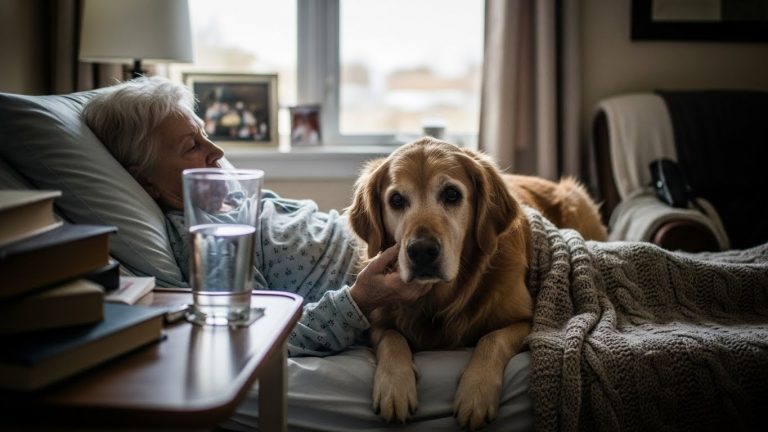
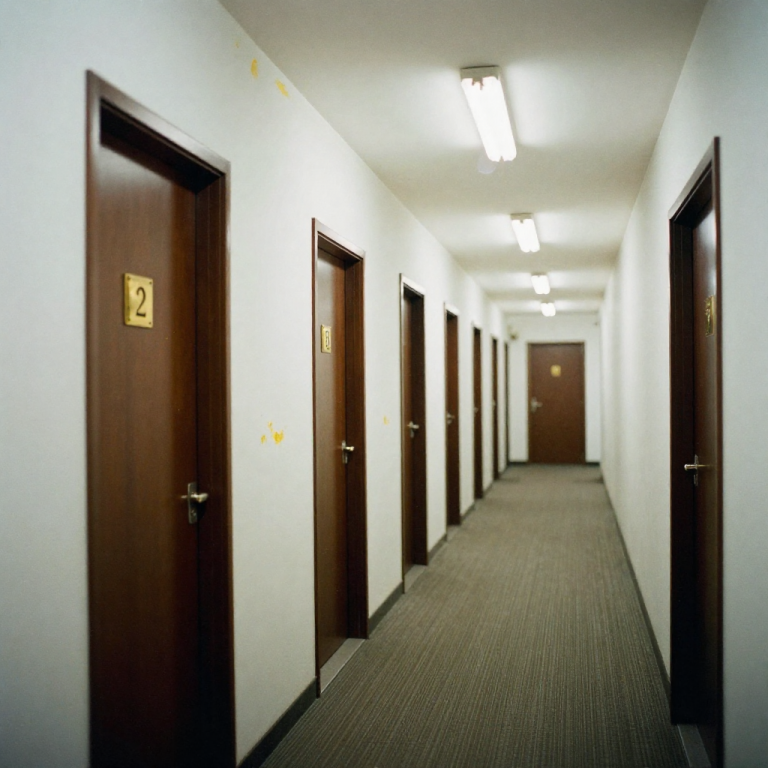
I sat in the plastic molded chair next to Bed 2, watching the rhythmic rise and fall of my mother’s chest. Elena Vance. A woman who used to hike the Appalachian Trail solo, who once chased off a black bear with nothing but a cast-iron skillet and a string of curse words that would make a sailor blush. Now, she was a collection of tubes and stiff linen. A biological machine kept running by the steady hiss-click of a ventilator and the slow drip of a PEG tube.
“Caleb?”
I didn’t turn around. I knew the voice. It was Sarah, the night shift nurse who had seen me age ten years in the last three. She was the only one who didn’t look at me like I was a grieving ghost haunting my own life.
“The board meeting is tomorrow, Caleb,” she said softly, her rubber clogs squeaking on the linoleum as she approached. “Dr. Thorne is going to bring up the ‘quality of life’ assessment again. You know he’s pushing for the transition to palliative-only care.”
I finally looked up. My eyes felt like they were full of broken glass. Dr. Elias Thorne was a man who viewed patients as data points on a spreadsheet. To him, my mother was a line item that had stopped yielding a return on investment three years ago.
“He wants me to pull the plug, Sarah. Just say it.”
“He wants you to find peace,” she countered gently, laying a hand on the railing of my mother’s bed. “Your mother… she hasn’t had a purposeful movement in thirty-six months. The cortical atrophy is—it’s significant, Caleb. You’re spending your entire inheritance, your savings, your marriage… for a body that isn’t inhabited anymore.”
She wasn’t wrong about the marriage part. My wife, Maya, had stopped coming to the hospital six months ago. Our last fight had been a screaming match in our kitchen over the $4,000 monthly “excess” costs that insurance wouldn’t cover—specialized physical therapy and neuro-stimulation that everyone but me thought was a waste of time.
“She’s still in there,” I whispered, a mantra I’d repeated so often it felt like a prayer to a god who had stopped listening. “I felt her hand twitch last Christmas.”
Sarah gave me that look—the one full of professional pity. “Reflexes, Caleb. The brain stem is a powerful thing, but it’s not the person.”
I looked back at Mom. Her face was smooth, eerily unlined for a woman of sixty-two. Since the accident—a freak black-ice patch on the I-90 that sent her Subaru tumbling into a ravine—she had become a living statue. Her eyes were usually half-mast, clouded and unfocused, staring at a point three inches in front of her nose that only she could see.
“I’m bringing Buster in tomorrow,” I said suddenly.
Sarah stiffened. “Caleb, you know the rules. No pets. This isn’t a hospice ward yet. It’s a high-sterility environment.”
“He’s dying too, Sarah,” I snapped, my voice cracking. “He’s fourteen. He hasn’t eaten right since she went under. He just sits by the front door of her house, waiting for a car that’s never coming. If this is it—if Thorne is going to force my hand tomorrow—then Buster deserves to say goodbye. And she deserves to smell him. She rescued him from a gutter in Philly. He’s the only thing she loved as much as me.”
Sarah looked toward the hallway, then back at me. She sighed, the sound of a woman who was tired of following rules that didn’t heal anyone. “Shift change is at 6:00 AM. The security guard, Mike, usually takes his smoke break at 6:15 near the loading dock. If a dog happened to be in a ventilated gym bag… I might be busy in the supply closet for ten minutes.”
Chapter 2: The Smallest Miracle
The gym bag felt heavier than it should have. Buster, a scruffy, wire-haired terrier mix with one floppy ear and a permanent case of “grumpy face,” didn’t make a sound. It was as if he knew. He’d been unusually still since I pulled the bag out of the closet, sitting patiently as I tucked a familiar old fleece blanket around him—the one Mom used to wrap him in during thunderstorms.
The morning air in Seattle was thick with a grey, soul-crushing mist. I bypassed the main entrance, circling around to the loading dock. True to Sarah’s word, Mike was nowhere to be seen. I slipped inside, the bag swinging gently against my hip. My pulse was a drumbeat in my ears.
I slipped into Room 402 and locked the door behind me.
“Okay, buddy,” I whispered, unzipping the bag. “Make it quick.”
Buster scrambled out, his old joints clicking. He hit the floor and immediately froze. He didn’t bark. He didn’t even whine at first. He just trotted to the side of the bed, his tail tucked low, his entire body trembling. He looked up at me, his milky, cataract-filmed eyes asking for permission.
“Go on,” I said, lifting him up. I placed him on the foot of the bed.
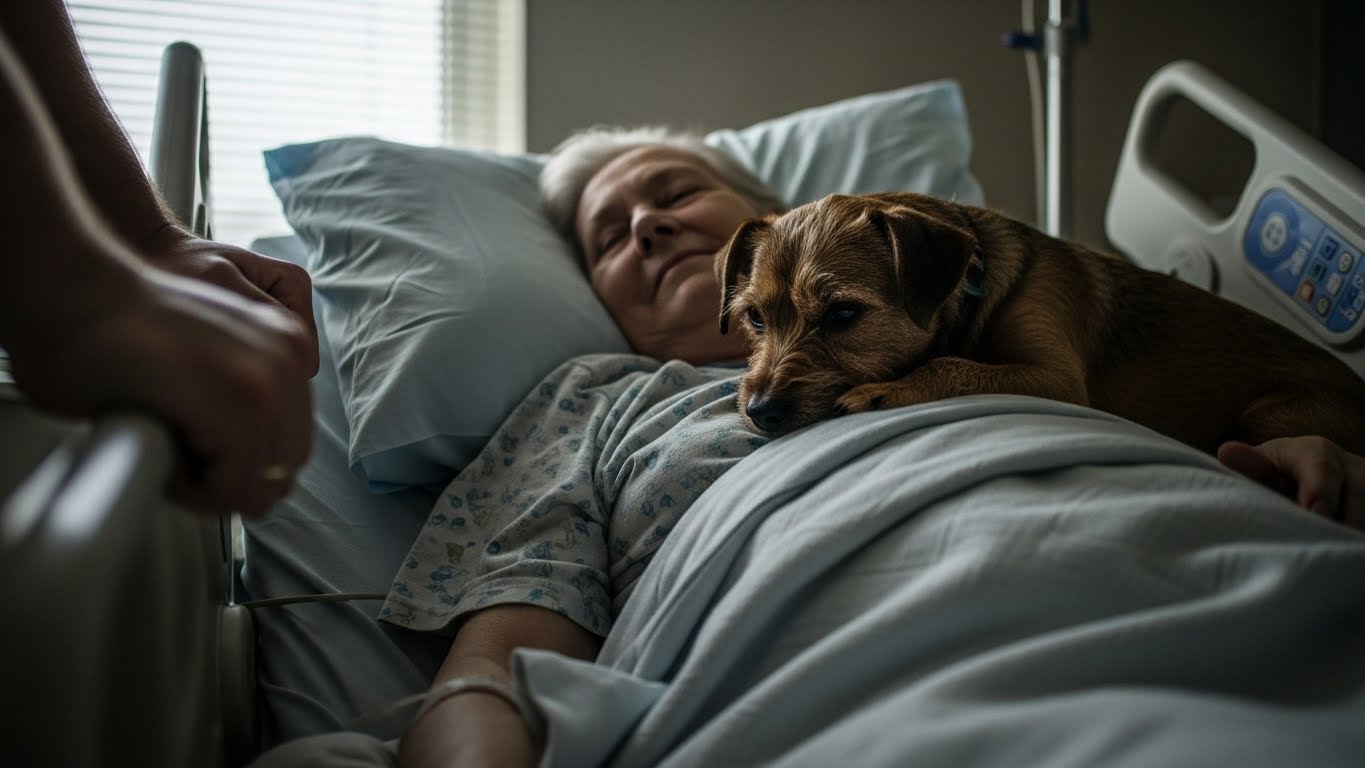
Buster didn’t stay at the feet. He crawled up the mattress, his tiny paws treading carefully over the hospital gown, until he was right next to her shoulder. He tucked his snout into the crook of her neck, letting out a long, shattering sigh.
For ten minutes, nothing happened. Then, Buster did something he hadn’t done in years. It was a habit from her old life. Every morning at 7:00 AM sharp, he would sit on her chest and give a specific, high-pitched whimper—not a cry of pain, but a demand for breakfast.
Whhhh-nanh.
The sound was small, piercing the silence. He did it again, louder, nudging her chin with his cold, wet nose. Whhhh-nanh!
I held my breath. “Buster, stop, you’re going to set off—”
I stopped. The cardiac monitor jumped. 68… 72… 85.
The fingers on her right hand, the ones that had been curled like dried talons for three years, slowly began to unfurl. They brushed against Buster’s coarse fur.
“Mom?” I choked out.
Slowly, her eyes opened. They weren’t cloudy. For the first split second in three years, they were clear, focused, and swimming with a sudden, overwhelming recognition. Buster whimpered a third time, licking the corner of her mouth.
And then, the corner of her lips began to tremble. They pulled upward, defying the paralysis, defying the atrophy. My mother smiled. It was a small, tired smile, but it was directed entirely at the dog.
“Caleb…”
The word was a rasp, a ghost of a sound, but I heard it. I fell to my knees, clutching the bedrail, the sob I’d been holding back for three years finally tearing out of my chest.
Chapter 3: The Skeptic in the Lab Coat
The peace didn’t last long. The moment the monitor hit 110 beats per minute, an alarm triggered at the nurse’s station. I had just enough time to shove Buster back into the gym bag and zip it halfway shut before the door burst open.
It wasn’t Sarah. It was Dr. Thorne, followed by two residents. He looked at the monitor, then at my mother, whose eyes were still open, darting around the room with a terrifying intensity.
“What happened?” Thorne demanded, his voice sharp. He moved to the bed, shining a penlight into Mom’s eyes. “She’s reactive. Pupils are pinpoint but responsive. Caleb, what did you do?”
“She spoke,” I said, my voice shaking. “She smiled at… she just opened her eyes and said my name.”
Thorne paused, his brow furrowed. He checked the EEG readings on the wall tablet. “Spontaneous arousal isn’t unheard of in persistent vegetative states, Caleb. It’s often a neurological ‘glitch’—the dying embers of a fire catching a brief breeze. It doesn’t mean the person is ‘back’.”
“She smiled, Thorne! She looked at me!”
“Emotional facial expressions can be autonomic responses,” he said, his tone dripping with the cold authority of a man who didn’t believe in miracles. He looked down and noticed the gym bag on the floor. It was wiggling.
Before I could stop him, Thorne stepped forward and nudged the bag with the toe of his expensive leather shoe. Buster, never one for personal space violations, let out a sharp, indignant bark from inside the mesh.
The room went silent. The residents looked at each other, then at Thorne.
“A dog?” Thorne’s face turned a deep, mottled purple. “You brought a filthy, unsanitized animal into a long-term care wing? Do you have any idea the liability? The risk of infection? This is grounds for immediate removal from the facility, Caleb. I could have you barred from the premises.”
“He woke her up!” I shouted, standing my ground. “Three years of your ‘expert’ care did nothing! Ten minutes with her dog and she’s looking at me! Look at her!”
We both turned to the bed. Mom’s eyes were locked on the gym bag. Her hand was moving again—not a twitch, but a reaching motion. Her fingers were clawing at the air, trying to find the source of the bark.
“B… Bus… ter,” she croaked. It was thicker this time. Wet. Real.
Thorne froze. His medical certainty was visibly cracking, like a dam under too much pressure. He looked at the EEG. The brain wave activity was spiking in the parietal and frontal lobes—areas that had been dark for thirty-six months.
“This is… anomalous,” Thorne whispered, more to himself than us.
“No,” I said, picking up the bag and letting Buster’s head pop out. “It’s a mother wanting to see her family. And if you try to take him out of here now, you’re going to have to go through me.”
Thorne looked at the residents, then back at the woman who was supposed to be a “lost cause.” He knew the board meeting was in four hours. He knew he had a recommendation for termination of care sitting on his desk.
“Keep the animal out of sight,” Thorne snapped, though his voice lacked its usual bite. “If the administration finds out, I’ll say I didn’t see it. But Caleb? Don’t get your hopes up. This could be ‘Terminal Lucidity.’ Sometimes the brain gives one last surge of energy before the systems completely fail. She might be saying hello, but she could also be saying goodbye.”
The weight of his words hit me like a physical blow. Was this the beginning of the end, or the start of a new life? I looked at Mom, who was now watching me with a look of pure, agonizing love, and I knew one thing: I wasn’t letting her go without a fight.
Chapter 4: The Price of Hope
The fluorescent lights of the hospital corridor flickered with a hum that felt like it was drilling into my skull. I stood by the vending machine, staring at a bag of stale pretzels, my hand trembling as I held my phone. I had to call Maya.
I’d spent three years dragging her through this purgatory. We had been married for five when the accident happened. We were supposed to be looking at nurseries, not nursing homes. Instead of picking out cribs, we were debating the cost of semi-private rooms and whether a “Level 3 Coma” was a death sentence or a waiting room.
The phone rang four times. Then, her voice—tired, cautious, stripped of the warmth that used to define us.
“Caleb? It’s 8:30 AM. Is something wrong? Did the hospital call?”
“Maya, she’s awake,” I blurted out. The words felt too big for my mouth. “She opened her eyes. She smiled at Buster. She said my name, Maya. She’s there.”
Silence. Not the happy silence of someone receiving a miracle, but the heavy, suffocating silence of someone who has heard a lie too many times to believe it again.
“Caleb,” she said, her voice cracking. “We talked about this. Dr. Thorne said the sensory stimulations can cause involuntary—”
“This wasn’t a reflex!” I shouted, startling a passing janitor. I lowered my voice, my chest heaving. “She looked at me. She saw the dog. She recognized us. Maya, please, you have to come down here. You have to see it.”
“I can’t,” she whispered. “I’m at work. I have a presentation in twenty minutes, and… I can’t do this again, Caleb. I can’t let you pull me back into the hope just to watch it shatter next week. Do you know what it does to me? Seeing you sit in that room while our life—our actual, real life—just rots away?”
“Our life isn’t rotting, it’s just on hold!”
“It’s been three years!” she screamed, the sound sharp through the speaker. “Three years of ‘maybe next month.’ Three years of you spending every dime we saved for a down payment on physical therapy for a woman who hasn’t blinked on her own since 2022. I love Elena, Caleb. I do. But she wouldn’t want this. She wouldn’t want you to be a ghost.”
“She’s not a ghost anymore,” I said, my voice cold. “She’s a person. And she’s my mother. If you won’t come, fine. But don’t tell me what she would want.”
I hung up before she could respond. The anger felt good. It was better than the hollow ache I’d been carrying. But as I looked at my reflection in the dark glass of the vending machine, I saw a man who looked sixty instead of thirty-five. My hair was thinning, my skin was the color of hospital gruel, and I was losing the woman I loved because I couldn’t let go of the woman who made me.
I headed back to the room, but someone was standing outside the door. A man in a sharp charcoal suit, holding a leather briefcase that cost more than my car.
Uncle Arthur.
My mother’s older brother. A man who dealt in commercial real estate and saw the world in square footage and profit margins. We hadn’t spoken since the two-year anniversary of the accident, when he’d suggested it was “mathematically irresponsible” to keep her on life support.
“Caleb,” he said, nodding stiffly. “I heard the news. Thorne called me.”
“He called you? Why?”
“Because I’m still a designated secondary on her medical proxy, and unlike you, I answer my emails,” Arthur said, his eyes scanning the room through the small window. “He told me about the… incident. The dog. The ‘vocalization.’ He also told me you’re planning to fight the board’s recommendation today.”
“I’m not planning to fight it, Arthur. I’m going to end it. She’s waking up. The recommendation is moot.”
Arthur stepped closer, the smell of expensive cologne clashing with the bleach. “Caleb, look at the reality. Even if she ‘wakes up,’ what is left? She has massive brain damage. Her muscles are wasted. She’ll need twenty-four-hour care for the rest of her life. Her insurance has capped out. The house in West Seattle? The one she worked thirty years to pay off? It’s already been leveraged for her care. There is nothing left, son. You are fighting for a victory that will bankrupt you until the day you die.”
“I don’t care about the money,” I spat.
“Of course you don’t. You’re young and sentimental,” Arthur said, his voice dropping to a low, predatory tone. “But I have a responsibility to her dignity. And to the family. Letting her linger like this… it’s not love. It’s a hostage situation. I’m going to the board meeting, Caleb. And I’m going to support Dr. Thorne.”
He patted my shoulder—a gesture that felt more like a threat—and walked toward the administrative wing. I watched him go, feeling the walls of the hospital closing in. It wasn’t just a medical battle anymore. It was a war.
Chapter 5: The Board of Shadows
The boardroom was located in the basement of the hospital, a windowless bunker filled with mahogany tables and the heavy air of bureaucracy. Seven people sat around the table. Dr. Thorne, two other physicians I didn’t recognize, a legal counsel for the hospital, a social worker named Mrs. Gable, and Uncle Arthur.
I sat at the foot of the table, the gym bag hidden under my chair. Buster was miraculously silent, as if he knew that one bark would get us both thrown out.
“This meeting of the Ethics and Care Committee is now in session,” the legal counsel began, her voice monotone. “The matter at hand is the continued long-term care of Elena Vance. Clinical data suggests a persistent vegetative state with zero percent chance of meaningful recovery. Dr. Thorne?”
Thorne cleared his throat, looking everywhere but at me. “Up until 07:00 this morning, my assessment remained unchanged. However, there was a… spontaneous event. The patient exhibited purposeful eye tracking and a brief vocalization. Mr. Vance claims she recognized him.”
“Claims?” I interrupted, leaning forward. “I recorded it.”
I pulled out my phone. My hands were shaking so hard I almost dropped it. I hit play.
The video was shaky, vertical, and poorly lit. You could see the dog’s tail wagging. You could hear the whimper. And then, you saw it—Mom’s eyes shifting, focusing, and the slow, agonizing pull of her lips into a smile. Then, the rasp: “Caleb…”
The room went silent. Mrs. Gable, the social worker, covered her mouth with her hand.
“It’s terminal lucidity,” Arthur said, breaking the spell. “We’ve seen this. My own father did the same thing two days before he passed. It’s a surge of adrenaline, a final spark before the engine dies. It doesn’t change the fact that her brain is eighty percent scar tissue.”
“It’s not a spark,” I said, my voice vibrating with a desperate strength. “It’s a start. She’s been in there for three years, locked in a dark room, and today she found the door. You’re telling me that now that she’s finally knocking, you’re going to board it up?”
“Mr. Vance,” the lawyer said, “the cost of continued care in this facility is twenty-two thousand dollars a month. Without insurance coverage, and with your mother’s assets depleted, the hospital cannot continue to carry the debt. If we do not transition to palliative care—which involves removing the ventilator and nutrition—we will have to transfer her to a state-run facility.”
“A state-run facility?” I whispered. I knew what those were. “The Warehouses.” Places where they kept people like Mom in rows of beds, changing their diapers twice a day and letting them rot in silence until they developed a fatal infection. It was a death sentence, just a slower, crueler one.
“I’ll pay,” I said.
“With what?” Arthur asked. “Your wife has already contacted me, Caleb. She’s worried about you. She’s looking for a divorce attorney. She wants to protect what’s left of her own future. You have no assets. You have no collateral.”
The room felt like it was spinning. Maya had called Arthur? My own wife was conspiring with the man who wanted to let my mother die? The betrayal cut deeper than any doctor’s diagnosis.
“I have the house,” I said, my voice barely audible.
“The house is gone, Caleb,” Arthur said. “I’ve already begun the paperwork to settle the outstanding medical liens. There’s a developer interested in the lot. It’s the only way to clear the family’s name of this debt.”
“You’re selling her home? While she’s still in it?” I stood up, my chair screeching against the floor. “She rescued me when I was six years old from a foster home that treated me like garbage! She worked three jobs to put me through school! She is the only person in this world who never gave up on me, and you think I’m going to let you sell her life for a parking lot?”
“Sit down, Mr. Vance,” the lawyer commanded.
“No,” I said, picking up the gym bag. Buster let out a low growl, sensing my distress. “I don’t care about your board. I don’t care about your liens. My mother is awake. And if you won’t help her, I’ll find someone who will. But you are not turning off those machines. Not today. Not ever.”
I stormed out of the room, my heart hammering. I didn’t have a plan. I didn’t have money. I didn’t have a wife. All I had was a dog in a bag and a mother who had finally looked me in the eye.
Chapter 6: The Secret in the Silence
I didn’t go back to the room immediately. I needed air. I sat on a bench in the hospital’s small, pathetic courtyard—a patch of dying grass surrounded by concrete walls.
I took Buster out of the bag and let him sit on my lap. He licked my hand, his rough tongue a small comfort in the wreckage of my life.
“What do we do, buddy?” I whispered. “Everyone’s against us.”
My phone buzzed. A text from Maya: Caleb, Arthur told me what happened. I’m sorry. I didn’t call him to hurt you. I called him because I was scared. We’re drowning. Please, come home tonight. Let’s just talk.
I didn’t reply. I couldn’t.
I went back up to Room 402. The sun was setting, casting long, bruised shadows across Mom’s bed. Sarah was there, checking the IV drip. She looked up, her expression a mix of awe and anxiety.
“She’s been trying to talk again,” Sarah whispered. “I didn’t put it in the chart yet. I wanted to tell you first.”
I ran to the bedside. Mom’s eyes were open. She looked exhausted, her breathing heavy even with the machine’s help, but she was conscious.
“Mom?” I took her hand. It was warm. Truly warm for the first time in years. “I’m here. It’s Caleb.”
Her eyes drifted to me. She tried to swallow, her throat clicking. I held a cup of water with a straw to her lips, letting her take a tiny, trembling sip.
“Caleb…” she rasped. Her voice sounded like dry leaves skittering across pavement.
“I’m here, Mom. You’re okay. You’re in the hospital. There was an accident.”
She shook her head—a tiny, fractional movement, but it was deliberate. Her brow furrowed, a look of intense concentration crossing her face. She was fighting through the fog of three years of darkness.
“Not… accident,” she whispered.
I froze. “What? Mom, the car… you hit the ice on the I-90. You went over the rail.”
“No… ice,” she said, her voice growing slightly stronger with the effort of her frustration. She gripped my hand, her fingernails digging into my skin. “The truck… Arthur…”
My heart stopped. “Arthur? Uncle Arthur? What are you talking about?”
“He… followed me,” she gasped, her eyes wide and filled with a sudden, sharp terror. “The papers… Caleb… the house… he pushed…”
The monitors began to beep as her heart rate spiked. Sarah stepped forward, looking worried. “Caleb, you’re upsetting her. Her vitals are climbing.”
“Mom, stay with me,” I urged, ignoring Sarah. “What papers? What did Arthur do?”
“The trust…” Mom’s voice was fading, the effort of speaking more than a dozen words draining her. “Under… the floor… the kitchen… don’t let him…”
Her eyes rolled back, and her grip on my hand went slack. The monitor let out a long, high-pitched scream.
“Code Blue!” Sarah shouted, slamming the emergency button. “Caleb, get out! Now!”
Doctors and nurses swarmed into the room, pushing me aside. I was shoved out into the hallway, the gym bag in one hand, my mother’s terrified face burned into my retinas.
Not an accident.
The words echoed in my head. Uncle Arthur hadn’t just been waiting for her to die. He’d been the one who put her here. And now, I was the only thing standing between him and the secrets buried under the kitchen floor of a house he was trying to tear down.
I didn’t wait for the doctors to stabilize her. I knew what I had to do. I ran for the elevator. I had to get to that house before the developers did. I had to find out what my mother was trying to tell me before Arthur finished what he started three years ago.
As the elevator doors closed, I looked at Buster.
“Hold on, buddy,” I whispered. “We’re going home.”
Chapter 7: The Truth Under the Floorboards
The old Victorian in West Seattle looked like a carcass picked clean by scavengers. A “NOTICE OF DEMOLITION” was taped to the front door, the bright orange paper flapping in the rain like a warning flag. Arthur hadn’t wasted any time.
I didn’t have a key—Arthur had changed the locks months ago—so I did what the old Caleb, the one before the grief and the hospital waiting rooms, would never have done. I wrapped my jacket around my fist and smashed the small window pane in the back door.
The house smelled of mothballs and stagnant air. It was a tomb for a life that was still technically breathing five miles away. Buster hit the floor, his nails clicking on the hardwood. He didn’t hesitate; he ran straight for the kitchen.
“Mom said under the floor, Buster. Find it,” I whispered, my voice echoing in the empty space.
I grabbed a crowbar from the garage and started near the pantry. I was manic, sweating despite the chill. I ripped up the linoleum, the sound of tearing adhesive like a scream. Nothing. Just subflooring and dust.
I moved toward the center island. Buster began to paw at a specific spot near the base of the cabinets, letting out a low, urgent whine. I shoved the crowbar into the seam and heaved. The wood groaned and splintered.
Underneath a false joist sat a metal lockbox, rusted but intact.
I didn’t have time to pick the lock. I smashed it open with the back of the crowbar. Inside were stacks of ledgers, a thick manila envelope, and a dashcam memory card. I pulled out the papers. It wasn’t just a trust. It was a paper trail.
Arthur hadn’t just been “managing” my mother’s estate; he’d been siphoning it for years to cover his own failing real estate gambles. He’d stolen nearly half a million dollars. And the date on the last ledger was the day of the accident.
I felt a shadow fall over the kitchen.
“You always were a persistent kid, Caleb. Just like your mother.”
I spun around. Arthur stood in the doorway, his silhouette framed by the rainy streetlights. He wasn’t wearing his suit jacket anymore. He looked smaller, meaner. In his hand, he wasn’t holding a briefcase. He was holding a heavy industrial flashlight, gripped like a club.
“You ran her off the road,” I said, the realization settling in my gut like lead. “She found out you were stealing, she was coming to tell me, and you followed her.”
“The ice did the work, Caleb,” Arthur said, his voice devoid of any familial warmth. “I just gave her a little nudge. I didn’t mean for her to live. That was the mistake. She should have gone quickly. But you—you kept her in that bed. You kept the witness alive.”
He stepped into the kitchen, the flashlight swinging slightly. “Give me the box, Caleb. We can still walk away. I’ll pay for the state facility. I’ll make sure she’s comfortable until the end. But those papers stay here.”
“You’re a monster,” I whispered.
“I’m a businessman who got in over his head!” Arthur shouted, his face contorting. “And I’m not going to prison for a woman who is already a vegetable!”
He lunged.
I was younger, but he was desperate. We hit the floor in a tangle of limbs. The crowbar skittered across the linoleum. Arthur’s weight pressed down on me, the heavy flashlight swinging toward my temple.
Suddenly, a streak of brown and white fur launched itself at Arthur’s face. Buster didn’t growl; he snarled, a primal, guttural sound as he latched his teeth into Arthur’s ear.
“Gah! Get it off! Get this damn rat off me!” Arthur screamed, clutching at his head.
I used the opening to shove him off. I grabbed the crowbar and stood up, breathing hard, my heart hammering against my ribs. Arthur was on his knees, blood dripping from his ear onto the floor he wanted to sell.
“The police are on their way, Arthur,” I lied, my voice steady for the first time in years. “And I have the dashcam footage. It’s over.”
Arthur looked at the box, then at me, and finally at the scruffy little dog standing guard in front of me, teeth bared. He saw the truth in my eyes: there was no deal left to make. He slumped against the cabinets, the fight leaving him all at once.
Chapter 8: The Final Morning
I made it back to the hospital just as the sun was beginning to touch the horizon. The hallway was quiet. The “Code Blue” from earlier had been replaced by the heavy, reverent silence that precedes a permanent departure.
Sarah met me at the door. Her eyes were red.
“She’s stable, Caleb,” she whispered, her hand on my arm. “But the surge… it was too much for her heart. The doctors call it the ‘last rally.’ She’s holding on. I think she’s waiting for you.”
I walked into the room. The ventilator was gone. They had switched her to a simple oxygen mask. The harsh, rhythmic clicking was replaced by the soft, natural sound of her own shallow breaths.
I sat on the edge of the bed and pulled the papers from my pocket. I leaned close to her ear.
“I found it, Mom,” I whispered. “The house is safe. Arthur can’t hurt us anymore. I know the truth. You did it. You saved me again.”
Mom’s eyes opened. They were dimming, the light behind them fading like a sunset, but they were focused. She looked at the papers, then at me. A single tear tracked through the wrinkles at the corner of her eye.
I lifted Buster up and placed him on her chest. The old dog didn’t whimper this time. He just laid his head down over her heart and closed his eyes.
Mom moved her hand. It was a slow, heavy movement, but she found the top of Buster’s head. She stroked his fur once. Twice.
Then, she looked at me. Her lips moved, and though no sound came out, I saw the shape of the words.
My brave boy.
The tension that had held her body together for three years finally dissolved. Her hand stayed resting on Buster’s head. Her eyes didn’t close, but the focus shifted to something far beyond the walls of Room 402. The monitor gave a single, soft beep, followed by a long, flat tone.
She was gone.
But for the first time since the accident, the weight on my chest wasn’t grief. It was peace. She hadn’t spent those three years in the dark; she had been fighting to get back long enough to make sure I was okay.
I stayed there for a long time, the man and the dog, holding onto the woman who had taught us both how to love.
The next morning, I walked out of St. Jude’s for the last time. The air was cold, but the sky was a clear, brilliant blue. I looked down at Buster, who was trotting beside me, his head held a little higher than before.
We didn’t have a house yet. We didn’t have a plan. But we had the truth. And as I turned toward the parking lot, I realized that some miracles don’t end in a recovery—they end in the strength to finally let go.
If you were in Caleb’s shoes, would you have given up on your mother after the first year, or would you have fought until the very end like he did?
Read More Stories I Wrote With This Link : https://storyteller.bryzaads.com/hcm1