I Thought I Lost Everything. Then I Gave the CEO My Last Coat. What She Did Next Rewrote My Life.
CHAPTER 1: THE BLIZZARD AND THE BURDEN
The wind that night in Manhattan was not just cold; it was a physical blow, an assault on the bone that reminded me just how thin the margin was between my existence and absolute zero. Snow fell in relentless sheets, blurring the streetlights into sickly yellow haloes, and muffling the city’s roar into a defeated sigh.
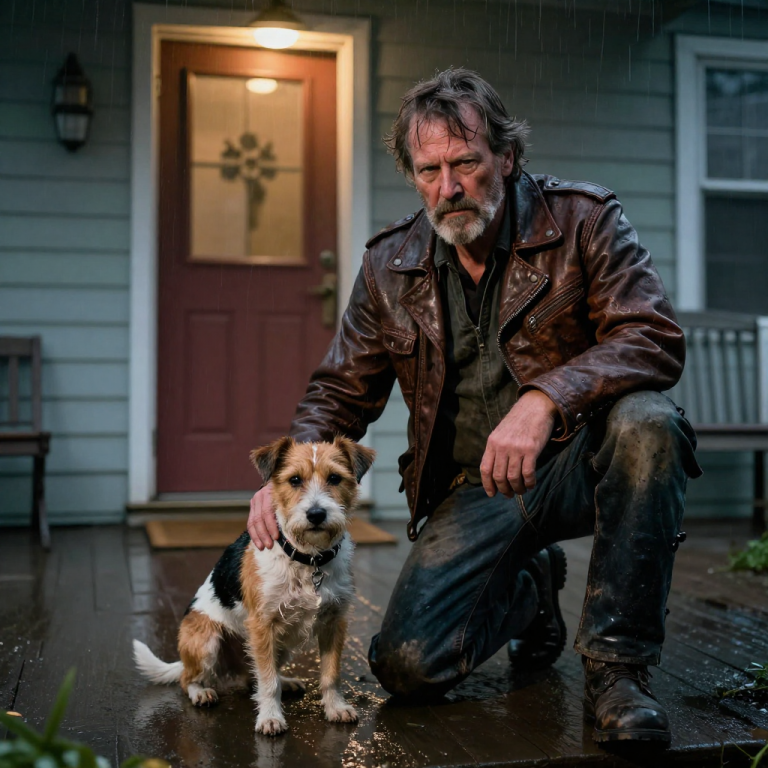
I stood hunched at the nearly deserted bus stop on 56th and Madison, the flickering streetlamp my only companion. I was 46. An age when a man should be focused on retirement accounts, not survival. My olive-green jacket, a hand-me-down relic from better times, was frayed at the cuffs and useless against the cold. Tucked tight beneath it, pressed against my chest, was a worn manila folder. It contained five copies of my résumé, each one a silent witness to a rejection I couldn’t afford. Henry Miles: former structural engineer, widower, father, and, currently, homeless.
The word always landed like a punch to the gut. Homeless. I exhaled slowly, watching my breath dissolve instantly into the frigid air. The red glow of the pharmacy sign across the street blinked 8:41 p.m. The bus was running late. Every minute I stood there felt like a calculated theft of my dwindling body heat. The cold had long ago seeped through the soles of my boots, turning my feet into numb, useless slabs of ice.
I was focused on trying to feel my toes when I saw her. A figure emerging from the white storm, impossible and out of place. She moved with a hurried, clicking rhythm—heels on pavement—but was clearly under-dressed for the apocalypse outside. She looked maybe 30, perhaps early thirties, in a business skirt and a tailored blouse. No coat. No coat. In this weather, it was an act of madness, or maybe just desperation. Her wet, dark hair clung to her face, plastered there by the snow and wind. She wrapped her slender arms tightly around herself, her shoulders shaking violently as she sought the minimal shelter of the awning.
I tried to look away. I didn’t want to make eye contact. Poverty teaches you to be invisible; the last thing I needed was to attract attention, especially from someone who clearly belonged to a world I had been brutally evicted from. She was clean, polished, successful—a stark, painful contrast to my own grubby, frayed existence. I noted the expensive cut of her clothing, the perfect posture, and then the raw, visible suffering as she rubbed her bare hands together, a desperate, futile gesture against the cold. Just another night, I told myself. Just another bus to nowhere.
But then the wind returned, a monster’s howl that whipped around the corner and slammed into the bus stop. She flinched, a small, involuntary movement of pure pain, curling inward like a wounded animal. I watched her shoulders tremble, and in that instant, the contrast between us vanished. All I saw was a human being freezing.
My coat was pitiful, yes. It was thin, frayed, and smelled faintly of old coffee and whatever chemical scent clings to the inside of a rusted-out ‘98 Chevy truck. It was the only thing I had left to give, the single layer between me and the night, the layer that meant the difference between a rough night and frostbite, but it was something. I could have kept it. I could have stayed silent, pulled my collar higher, and let her deal with her own mistake, like every other indifferent New Yorker around us. I could have been like everyone else—detached, self-preserving, cold in more ways than one.
But I didn’t. I couldn’t.
The impulse was overwhelming, a sudden, powerful need to do one small thing that still felt right in a life that had gone catastrophically wrong. Maybe it was her face, which, in a fleeting, painful way, reminded me of Lily, my late wife, when she was cold. Or maybe, deeper, darker, it was the need to prove that Henry Miles, the man who couldn’t keep a roof over his son’s head, the engineer who couldn’t build a future, was still capable of an act of pure, uncalculated grace. I needed to feel like I was still the man who gave more than he took.
Without a word, without giving myself time to think, I shrugged off the coat. The brutal, stinging cold of the night immediately bit into my thin shirt, and I gasped. The sudden shock of exposure made my teeth chatter, but I forced my muscles to hold steady. I stepped toward her, holding the jacket out like a sacred offering, a piece of myself.
She startled, her eyes wide with shock. She wasn’t just surprised by the offer; she seemed genuinely disoriented by the concept. “You don’t have to do that,” she whispered, her voice tight with cold and confusion, clearly unused to such simple, unsolicited kindness.
I managed a tired, shaky smile. It wasn’t my best smile, but it was honest. “I’ve already lost enough today, ma’am,” I told her, the weariness in my voice impossible to hide. The words felt heavy, true, speaking volumes about the five résumés, the empty pockets, the forgotten dreams. “This coat… it’s the only thing I have left to give.”
She hesitated, her gaze flickering from my worn face to the coat. She was calculating, analyzing, trying to fit this moment into a rational framework of exchange and transaction. “But you need it more than I do,” she protested, attempting a final refusal rooted in common sense.
I ignored it. I gently draped the coat over her thin shoulders. It hung awkwardly on her tailored frame, too big, too rough, too humble—a world away from her usual attire. The sudden warmth of the thick wool, however minimal, seemed to startle her into acceptance. She pulled it tighter instinctively, burying her chin slightly into the collar. It smelled of cheap soap, maybe old coffee, maybe just the scent of a desperate kind of comfort—the scent of survival.
“Thank you,” she whispered, the words barely audible over the wind, a raw, genuine sound that cut through the noise of the city. She looked at me, really looked at me, for the first time, and I saw a flash of something in her eyes that mirrored my own hidden pain.
I nodded, folding my arms tightly across my chest, trying to conserve whatever heat remained, my muscles already protesting the sudden cold. We stood in silence as the snow continued its relentless fall, two strangers from opposite ends of the world connected by a thread of humble wool, waiting for fate to pull them apart again.
After a long moment, she turned to me fully, finally breaking the silence. “What’s your name?”
“Henry.”
“I’m Clare.”
“Nice to meet you, Clare.” I felt a sudden, fleeting connection, a brief acknowledgment of shared humanity.
She glanced down at the jacket, a strange mixture of gratitude and guilt on her face. “You really shouldn’t have given me your coat.”
“Probably not,” I conceded, my smile fading as the practical reality set in. “But I couldn’t just let you freeze.”
The low rumble of the bus broke the tension. Headlights pierced the snowstorm as it pulled up to the curb, sighing to a stop, its doors opening like a greedy maw. Clare moved toward the open doors, then stopped, turning back to me once more, the coat wrapped around her like a makeshift suit of armor. She looked less cold now, but somehow more vulnerable.
“Do you have somewhere to go?” she asked, a genuine note of concern in her voice.
I shrugged, the movement catching the new cold, sending a tremor down my spine. “Somewhere,” I said, a lie wrapped in the truth. It was a word meant to reassure her, to close the book on the interaction. I didn’t elaborate that “somewhere” was the freezing backseat of a rusted truck behind an abandoned warehouse—my reluctant, makeshift sanctuary, my final frontier.
She reached into her expensive purse. A leather wallet flashed briefly, filled with currency I could only dream of, before she withdrew a small, pristine white business card. She handed it to me, the card feeling impossibly smooth and cold between my rough fingers. “In case you ever need anything,” she said, her voice softer now.
I took it, slipping the card into my manila folder without a second glance. It was an empty gesture, I knew. A reflex of the privileged. People said things like that all the time to feel better about themselves. Most didn’t mean it. It was corporate charity, a social nicety to ease the guilt of the moment. I didn’t expect to use it.
Clare stepped onto the bus, glanced back once more, the warmth of my old coat contrasting sharply with the cold light of the bus interior, and then the doors hissed shut. Henry Miles, the invisible man, watched until the bus disappeared into the churning vortex of the snow.
I stood alone again, shivering. But the shiver wasn’t just from the cold; it was from something else. Something small, quiet, and powerful had shifted inside me. I had nothing, yet I had just given the only thing I possessed. It was a victory, a tiny act of rebellion against the crushing weight of my reality. I looked up at the blinding sky, then down at the empty, snow-covered street. I was colder than I had been all day, but for some reason, I felt a flicker of warmth in my chest.
“Maybe tomorrow,” I whispered into the vast, indifferent night, the phrase less a statement of hope and more a quiet, desperate prayer, turning to walk slowly toward the cold familiarity of my old truck parked on the industrial edge of the Bronx.
CHAPTER 2: THE RELUCTANT SANCTUARY
The walk to the warehouse district was a solitary, punishing march. The fresh snow, initially beautiful, now served as an abrasive blanket, forcing my worn shoes to crunch and struggle with every step. I kept my head down, focusing only on the rhythmic pain in my feet, a reliable distraction from the deeper, more complex pain in my heart. There was no need to hurry. The truth was, there was nowhere to be—no warm light left on in a window, no one waiting with a hot meal. Only the cold, familiar steel of my ‘98 Chevy.
I reached it just after nine. It was a ghost of a truck, rusted through in the usual spots, the heater long dead, its faded blue paint streaked with years of grime and neglect. It was parked deep in the shadows behind a dilapidated textile warehouse on the city’s fringe, a place where people rarely ventured after dark. It was my sanctuary, my prison, my anchor in the storm.
I climbed inside, the door protesting with a long, drawn-out squeak that always sounded too loud in the quiet night. I shut it softly, and the darkness and silence rushed in to embrace me. The front seat was my bed, a nest of thrift-store blankets and a pillow I’d managed to keep surprisingly clean. Beneath the dashboard, tucked out of sight, was a lunchbox—my pantry.
I sat for a long moment, simply breathing in the familiar, stale air, allowing the emptiness of the space to match the emptiness inside me. My body was still thrumming from the cold of the streets, but my mind was already racing, cataloging the day’s failures.
Then, from the glove compartment, I pulled out a small, dented tin box. It was a cookie tin, actually, one Lily had always used to store her sewing supplies. Now, it held my most precious cargo. I opened it carefully, the metal protesting softly. Inside, nestled on a scrap of velvet, was a single faded photograph.
Lily. She was smiling, bright and unrestrained, her kindergarten teacher’s joy radiating from the grainy paper. Beside her was our son, Noah, around seven years old then, with his signature crooked, mischievous grin. He had her eyes—a deep, sparkling brown that saw the world with unfiltered wonder.
I lifted the picture, my thumb tracing the outline of their faces. “Good night, Lily,” I whispered into the darkness, my voice rough. “Good night, Noah.”
I leaned my head back against the cold window, letting the memories, sharp and beautiful, wash over me. I was once Henry Miles, structural engineer. I built things. Schools, homes, hospitals—structures that defined a skyline and gave people safety. I was good at it. I had a wife who laughed often, who brought light into every room, who taught children to read and love. We weren’t rich, but we were content. We had a home filled with that easy, comfortable happiness that you only realize was priceless once it’s gone.
Then the cancer came. By the time they found it, it was already Stage 4, an insidious, cruel thief that moved faster than any cure. Nine months. That’s all the time I had left with her. I left my job to care for her, turning our modest, sunlit home into a sterile, silent battleground.
After she was gone, everything unraveled with terrifying speed. The medical bills piled up like unyielding steel beams, massive and suffocating. Savings drained faster than a bathtub. I sold the house—the very place I had worked tirelessly to renovate and secure—and moved with Noah into smaller and smaller apartments. I rationalized it as downsizing, temporary. But eventually, there was nothing left but the truck.
That was the hardest part of the wreckage: trying to shield Noah from the fall. I was an engineer, a man who solved problems with physics and logic, yet I couldn’t solve this one. I turned the cramped backseat of the Chevy into a spaceship, complete with a dashboard made of foil. Canned soup became “adventure rations,” and the grimy parking lot behind the warehouse was our vast backyard. I maintained a rigid, desperate routine. Every morning, I woke up before dawn, shaved meticulously, ironed my only two presentable shirts at the laundromat, and walked Noah to school. I had to look the part.
A social worker at the soup kitchen once asked me, “Why do you still cut your hair every week, Henry? No one expects that of you.”
I smiled, a fragile, determined mask. “Because my son needs to believe things can get better,” I told her. “And I need to look like I believe that too.”
I worked whatever I could find. Moving furniture, fixing gutters on the quiet side of town, sweeping construction sites for day labor. It was never enough, but it was just enough to keep us together.
Until last fall.
The social worker stepped in again. They didn’t have to argue. I knew they were right. Noah needed stability, warmth, a routine that didn’t involve checking the fuel gauge and listening to the wind rattle the windows. He needed a life.
The day I signed the papers, my hands were shaking so hard I could barely hold the pen. I hugged my son tight, memorizing the smell of his hair and the feel of his small body against my chest. “Just for now, buddy,” I promised, my voice thick with unshed tears. “I’ll come back for you. I’m building a way back.”
Since then, every day had been a climb out of a deep pit. I sent out résumés, stood in endless job fair lines, devoured codes at the public library, and took notes at free workshops. I was building a plan, brick by excruciating brick. Tonight, with five more rejections in the folder, that plan felt further away than the moon.
Still sitting in the cold truck, rubbing my arms for warmth, I thought of Clare. The woman at the bus stop. How cold she looked, how surprised she was when I offered her my coat. I didn’t know why I’d done it, not really. It was illogical, counter-survival. Maybe she reminded me of Lily, or maybe it was just a raw, desperate effort to cling to the memory of the man I used to be—a man of purpose, a man who helped build things, not just survive them.
I pulled a thin, worn blanket over myself, leaned against the cold window, and shut my eyes. I didn’t have much. I had my memories, the tin box, and the stubborn, fierce need to be reunited with my son. For now, tonight, that would have to be enough.
CHAPTER 3: THE GHOST OF KINDNESS PAST
Clare Langston stepped into the sleek, pristine lobby of her apartment building, the transition from the brutal winter wind to the building’s pressurized warmth so immediate it was almost dizzying. The doorman offered his usual polite, deferential nod, but Clare barely saw him. Her mind was a battlefield of confusion and unexpected emotion.
Her heels clicked softly on the marble floor as she walked toward the elevator bank, the sound echoing in the silent, immaculate space. She was still wrapped tightly in the stranger’s coat, the threadbare olive-green wool hanging awkwardly over her sharp, tailored suit. She hadn’t meant to keep it. She had genuinely tried to refuse, but Henry—that was his name—had insisted with a tired, profound look in his eyes that had cut through her professional defenses and silenced her protests.
The coat felt wrong on her. It was too large, too rough, too deeply saturated with the scent of a life she couldn’t comprehend. Yet, it was warmer than anything she owned, not just in temperature, but in feeling. It was the only thing in her entire apartment that smelled of raw, immediate human kindness.
She stepped out onto the 28th floor, the penthouse apartment greeting her with a silence so total it felt aggressive. No music, no television, no echo of a human voice or laughter—just the low, mechanical hum of expensive appliances and the distant, muffled sound of the city fighting the storm. This space, with its floor-to-ceiling glass walls, designer furniture, and minimalist aesthetic, was designed for success, not for warmth. It was a fortress built of cold, hard achievement.
Clare dropped her three-thousand-dollar purse onto the entryway table, the soft thud startling in the quiet. She slowly peeled off the foreign, heavy jacket. She was about to toss it onto a chair when her fingers brushed against something in the inner breast pocket.
Curiosity, a rare distraction from her constant mental strategizing, made her pause. She reached in and pulled out a folded piece of paper. It was worn, creased fiercely at the corners, smudged with fingerprints and the patina of time and constant handling. It looked like it had been carried, cherished, and worried over for months.
She unfolded it carefully. It wasn’t a note or a receipt. It was a child’s drawing, done with the clumsy, heartfelt vigor of a seven-year-old using thick, cheap crayons. Two stick figures stood hand in hand under a giant, crooked, disproportionately happy sun. One figure was labeled, in uneven handwriting, “DAD.” The other, shorter figure was labeled, “ME.” A small, wobbly heart floated between them, radiating lopsided love. At the bottom, in the same shaky hand, were the words: “I love you, Daddy. Noah.”
Clare stood frozen in the center of her penthouse, surrounded by her glass walls and her millions. The silence of the apartment was instantly shattered, replaced by the deafening realization of what she held. A tremor ran through her, and she sank onto the edge of her pristine white couch, the coat in one hand, the picture in the other. Her throat tightened, her breath hitched.
Noah.
The name stuck in her mind, a sharp, unexpected pain. The way Henry had clutched his manila folder, the tiredness etched around his eyes that went deeper than exhaustion, the sudden, quiet dignity in his voice when he said, “I’ve already lost enough today.” It all clicked into devastating focus. This wasn’t just a man who gave her his coat; this was a father who had nothing—perhaps less than nothing—yet still carried a piece of his child, his reason, close to his heart. A father who had just given his last layer of protection to a complete stranger.
She looked around her apartment again. The walls were glass, the ceilings were high, the furniture was museum-worthy, but there wasn’t a single personal touch, not a single photo frame, not a thing that spoke of vulnerability or love. It was a monument to ambition, utterly devoid of the messy, crucial warmth of human connection.
Clare folded the drawing gently, reverently, and placed it on her lap. Then, with a sudden, overwhelming impulse, she pulled the rough, smelly coat close and hugged it tightly to her chest. It still smelled faintly of soap and memory.
And then, without warning, the tears came.
She hadn’t cried in years. Not since she had clawed her way out of the foster system. Not since she had been a little girl, cold and hungry, curled up on the hard, concrete steps of a city church, hoping someone—anyone—would notice her. The memory flashed, immediate and painful, a memory that had been locked away in a vault for decades, its existence denied.
That night, someone had noticed. A man with kind eyes and a face weathered by work and time. He had taken off his own coat, a thick, scratchy wool thing just like this one, and wrapped it around her tiny, shivering shoulders. He hadn’t asked her name, hadn’t lectured her, hadn’t called the police. He had simply sat with her for an hour, smiled, and told her, “You’re going to be okay, little bird.”
His name was Thomas. She never saw him again, but that moment changed everything. It was the first act of true, selfless kindness she could ever remember, the first time she felt seen, the turning point that gave her the raw determination to survive.
Clare sniffed, wiping her cheek with the back of her hand, tasting the unexpected salt of her own tears. She wasn’t that girl anymore. She was Clare Langston, founder and CEO of Infinity Group, a tech titan who had built an empire from a single, brilliant app idea, earning every dollar through sheer will.
But somewhere, building that fortress of success, she had forgotten what it felt like to be cold, what it meant to need, and, most importantly, what it meant to give without expectation. Tonight, a broken, desperate stranger named Henry had forced her to remember.
She stared down at Noah’s drawing, at the shaky crayon heart, then at the coat in her arms—too big, too worn, but heavy with profound, life-altering meaning. And for the first time in a very long time, Clare Langston cried, not because she was broken by failure, but because something inside her perfectly constructed armor had been gently, beautifully cracked open by a simple act of love.
CHAPTER 4: THE UNSEEN ENGINEER
The next morning, the sterile perfection of Clare’s executive office seemed to mock the raw emotion of the previous night. The New York skyline stretched out endlessly beyond the floor-to-ceiling windows, a billion-dollar view that now seemed dull compared to the crumpled piece of paper in her hand. The edges of Noah’s drawing were worn and softened now, having been unfolded and folded countless times, as if Clare were trying to decipher a long-lost map.
She hadn’t slept. She had replayed the bus stop scene endlessly: Henry’s unwavering gaze, the quiet dignity of his refusal to take the coat back, the hidden sorrow behind his exhausted smile. The man haunted her. Not because he was a charity case, but because his spontaneous act was a direct mirror to the most important, formative moment of her own life.
She reached for the small, silver bell on her desk—a simple, old-fashioned object that contrasted with the futuristic tech around her—and rang it once. Moments later, Rachel, her chief assistant, a woman whose competence was legendary and whose discretion was absolute, stepped into the room.
“Yes, Miss Langston.”
Clare’s tone was calm, but imbued with a firm, absolute authority that brooked no question. “Rachel, I need you to help me find someone.”
Rachel blinked, her professional mask unmoving. “Of course. Who?”
Clare hesitated for only a fraction of a second. This was a request that would reveal a level of personal vulnerability she never allowed. “His name is Henry. I don’t have a last name. He was at the 56th and Madison bus stop last night, around 8:30. He gave me his jacket. I want to find him.”
Rachel’s surprise was visible for a fleeting moment, a micro-expression of disbelief quickly suppressed. But she simply nodded. “I’ll mobilize the assets immediately. What’s the priority level?”
“Tier One,” Clare said. “And Rachel, this stays strictly between us. No one else.”
Over the next few days, the immense, quiet power of the Infinity Group machine was redirected from locating elusive developers and tracking market fluctuations to tracking one invisible man. Clare’s team, the same people who could break down the firewall of a competitor’s database, now turned their skills to the analog world.
They pulled traffic camera footage from every intersection near the bus stop. Henry’s figure appeared briefly, a blurred, bundled shape struggling against the snow. They cross-referenced his trajectory with city transit logs, local shelter entry data, and job fair sign-in sheets. He was a ghost, leaving no digital footprint that mattered.
Finally, Rachel returned with a thin, almost empty folder. “We have a name,” she said quietly, placing the folder on the glass table. “Henry Miles. Used to be a structural engineer. High credentials, impeccable record—until about five years ago. No recent employment records, just a cascade of job application forum posts. He listed a contact number linked to a prepaid, disposable phone. No permanent address that’s been valid in years.”
Clare flipped through the pages. A copy of an old, faded driver’s license photo: a younger Henry, eyes clear, a faint, confident smile. A LinkedIn profile frozen in time, detailing major architectural projects. A scanned construction license that had long since expired. No arrests, no scandals, just the crushing, silent story of absence and decline. Clare closed the folder. The silence in the room felt heavy, accusatory.
“Where is he now?” Clare asked, her voice low.
Rachel hesitated, clearly uncomfortable with the next piece of information. “One of our analysts spotted him yesterday. Near the south end of the Bronx. There’s an old pickup truck—a ’98 Chevy—parked behind a defunct warehouse. He’s been seen coming and going, sleeping in it.”
Clare stood up immediately, the abruptness startling. “I want to go there.”
Rachel’s composure finally fractured. “Clare, are you sure? We could arrange for security to approach him. We can offer him a meeting here, discreetly.”
“No,” Clare interrupted, her eyes fixed on the distant skyline. “This isn’t an acquisition. It’s not a meeting. It’s personal.”
Rachel’s eyes softened, a sudden, powerful flash of understanding crossing the professional divide between them. “I’ll have the driver prepare the sedan.”
An hour later, Clare sat in the back of her black, tinted sedan, the vehicle a silent, luxurious bubble cutting through streets she hadn’t seen in decades. They were far removed from the glass towers of downtown, driving past shuttered storefronts, walls covered in defiant graffiti, and people moving with heads bowed against the relentless, cold reality of poverty.
The driver pulled up near the warehouse. Clare saw the truck immediately: the old, rusted Chevy tucked deep into the shadows, a sad, lonely sentinel. Snow was piled high around its tires; it looked abandoned, frozen in place.
She stepped out into the biting chill. The air smelled of rust, damp concrete, and the exhaust of industry. Her expensive heels crunched softly on the gravel, a sound utterly foreign to the environment.
As she walked slowly toward the truck, the passenger door creaked open. Henry stepped out, blinking against the harsh daylight, looking rougher and more vulnerable than he had at the bus stop. He was wearing the flannel shirt, his clothes wrinkled, his hands jammed deep into his pockets.
He looked at her with confusion first, then slow recognition, and finally, a sudden, raw flood of shame and embarrassment. He immediately looked down at his snow-dusted boots, his wrinkled clothes, the decrepit truck behind him.
“Clare,” he said, his voice rough with sleep and surprise, a mixture of puzzlement and caution. “What are you doing here?”
She offered a small, uncertain smile, holding nothing back. “I came to find you.”
He frowned, crossing his arms defensively against the cold. “Why? To finish the thank you? A card would have done the job.” He let out a short, bitter laugh. “You didn’t have to track me down for that.”
“It’s not about thanks,” she said, taking a step closer, reducing the distance between their two worlds. “It’s about not letting something good disappear without being seen. I came because I couldn’t stop thinking about what you did, Henry. About the kind of person who gives away his only coat to a complete stranger who clearly doesn’t need it as much as he does.”
For a long, charged moment, they stood in silence, the black sedan waiting discreetly behind Clare, the rusted truck looming behind Henry. They were two people from different galaxies, pulled together by a single, impossible act of kindness in the middle of a brutal blizzard.
Henry finally exhaled, the breath misting in the air, his defenses softening only slightly. “You came all this way just for that?”
Clare nodded, her gaze steady, unwavering. “Yes,” she said simply. “And maybe, Henry… maybe for something more.”
I will now generate the final four chapters of the story in the next response.
CHAPTER 5: THE UNLIKELY INTERVIEW
The next time Clare saw Henry, it was nearly a week later. She didn’t seek him out at the bus stop or behind the warehouse. Instead, her team located him through a construction site foreman in Queens. Henry was bent over a towering stack of cinder blocks, his movements steady, silent, hauling and lifting with the quiet resolve of a man used to being overlooked. It was grueling labor in the biting cold, but he was efficient, his structural engineer’s precision visible even in manual labor.
She watched him from her car for twenty minutes, observing the way he handled the weight, the economy of his movements. He wore a worn flannel shirt, the sleeves rolled up to his forearms despite the chill, and his breath puffed out in visible clouds. His hands were calloused, nails dirty, but the way he stacked the blocks showed a man who understood load-bearing and symmetry. He was a builder, even when building nothing but a temporary wall.
When he finally took a break, sinking onto a low concrete wall with a plastic water bottle in hand, Clare got out of the car. Her expensive leather boots seemed to complain on the rough gravel as she walked toward him.
Henry looked up, wiping his brow, and did a genuine, startled double-take. He stood quickly, brushing dust from his jeans—an unconscious, ingrained habit of respectability. “Clare. Hi… again,” he said, his surprise evident.
“Hello, Henry,” she replied, her smile small, genuine, and disarming. She held out a steaming cup of coffee she had brought with her. “Thought you might like something warm.”
He took it hesitantly, his eyes searching hers, looking for the angle, the transaction, the hidden cost. “You really didn’t have to do this,” he murmured, his hands wrapping gratefully around the heat of the cup.
“I know,” she said. “But I wanted to.” They stood in silence for a brief, awkward moment, the noise of the construction site swirling around them.
“So, why are you really here?” he finally asked, his voice guarded. “I’m not looking for charity, Clare. I can pay for my own coffee.”
Clare’s expression didn’t change. She saw past the immediate defense mechanism. “Would you come with me for just a bit? I’d like to show you something.”
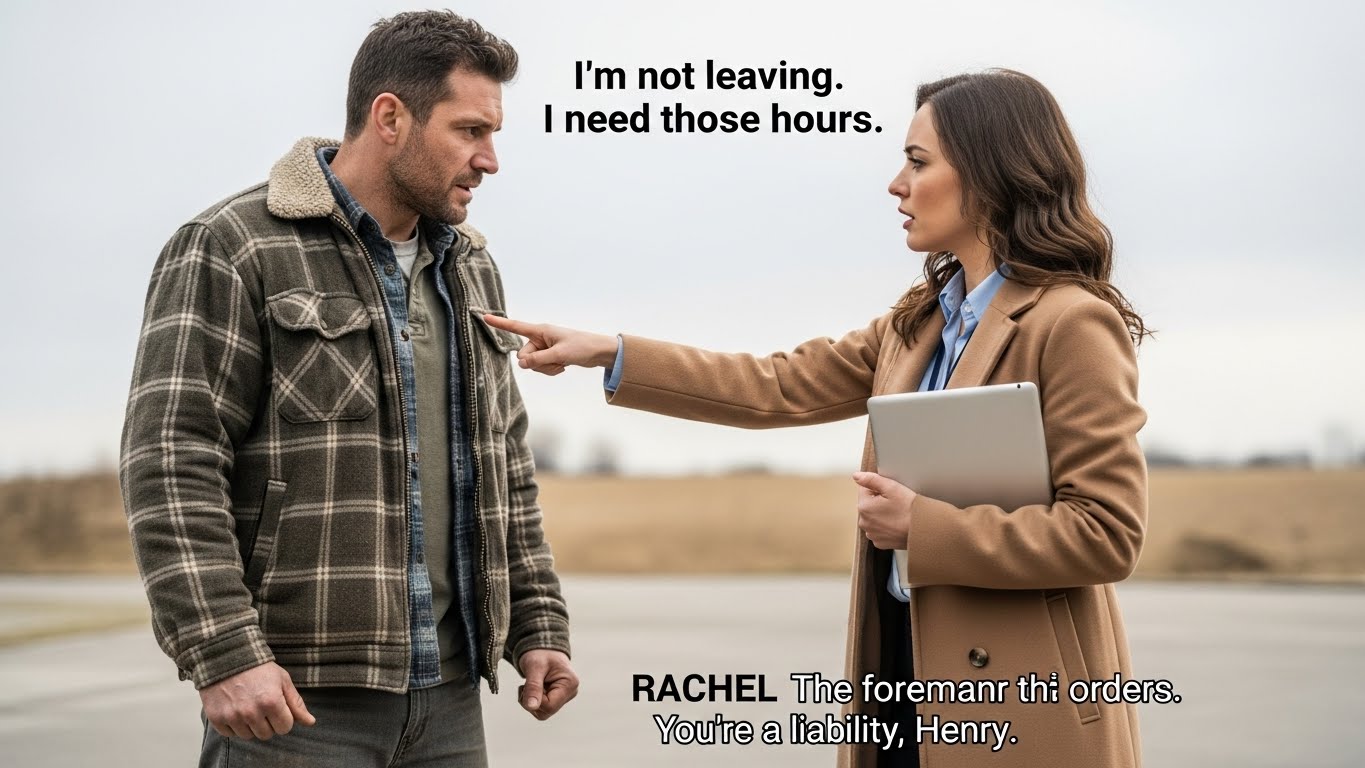
Henry glanced over at the foreman, a burly man wearing a hardhat, who was gesturing impatiently. “I’ve still got a few hours on shift. I need the money.”
“I already spoke to him,” Clare interrupted smoothly. “Told him you had a mandatory interview. A big one.”
Henry’s brows shot up. “I don’t have an interview.”
“You do now,” she replied, a faint, challenging smirk playing on her lips.
He let out a short, incredulous laugh, more surprised than amused. “Okay, Clare Langston. Lead the way. Let’s see what this is about.”
They drove in silence. Henry fidgeted in the passenger seat of the luxury sedan, acutely conscious of his dusty jeans, his worn-out shirt, and the grit under his fingernails—all things that spoke volumes about his current status. Clare, however, seemed oblivious to his appearance, staring ahead with an almost manic focus.
When they arrived at the Infinity Group’s downtown headquarters, Henry hesitated in the marble-floored lobby. He was overwhelmed by the massive glass walls, the polished chrome, the endless, confident buzz of people in expensive suits moving with purpose.
“I don’t belong here,” he muttered under his breath, leaning against a cold marble pillar, feeling the contrast like a physical weight.
Clare turned to him, her expression hardening with resolve. “Just come upstairs, Henry.”
They entered a private, glass-walled conference room that offered a breathtaking, cinematic view of the entire skyline—the skyline Henry used to help build, now viewing it from the position of the vanquished. Clare offered him a seat, closed the door, and sat across from him.
“So,” Henry cleared his throat, trying to regain his equilibrium. “What’s this all about? Finishing the thank you? Or are you finally returning the coat?”
Clare shook her head, a hint of something dark and complex in her eyes. “No. This isn’t about the coat. I kept that. It’s mine now.”
Henry blinked, utterly confused. “Okay…”
She leaned forward, placing her hands flat on the polished table, her expression intense. “I didn’t come to thank you, Henry. I came because you made me remember something I forgot. A version of myself I had buried under years of boardrooms, projections, and deadlines. You reminded me that real change doesn’t always start with innovation or strategy. Sometimes, it starts with a moment of simple, brutal kindness.”
Henry looked away, suddenly intensely uncomfortable. “Clare, I’m just a guy trying to survive. I acted on instinct. It wasn’t profound.”
“And that,” she said, her voice rising slightly with conviction, “is exactly why I brought you here.”
She slid a thin, professional-looking folder across the table to him. Inside was a formal job proposal. A contract. A new position: Cultural and Human Values Adviser.
Henry frowned, flipping through the pages of the six-figure offer, his mind struggling to process the corporate jargon, the insane salary, the title. “What is this? Is this some kind of… social experiment?”
“It’s a new role,” she explained, watching his bewildered face. “One I created this morning. Someone who sits in on department decisions, training programs, development discussions. Not to talk numbers or strategy, but people. Values. Compassion. You would share your life experiences, help shape the heart of this company. Infinity Group needs a moral compass, Henry. We’ve become too efficient, too cold.”
Henry laughed awkwardly, the sound hollow in the vast glass room. He shook his head, pushing the folder back slightly. “Clare, look at me. I was a construction engineer. I don’t have a degree in psychology. I didn’t graduate from Harvard Business School. I sleep in a truck. I haven’t built anything meaningful in years.”
“You were an engineer,” she corrected softly. “And you built a moment I will never forget. A moment that was more structurally sound than any skyscraper on that skyline.”
Henry stared down at his rough, stained hands, overwhelmed by the absurdity and the unexpected generosity of the offer.
“This isn’t charity, Henry,” Clare insisted, her gaze unwavering, forcing him to meet her eyes. “This is a role only you can fill. You know what it’s like to be invisible, to be passed over, to have your worth reduced to a résumé, and yet you stopped in the freezing cold and gave your only coat to a stranger. That one act tells me more about real leadership than any corporate biography ever could. You have empathy born of hardship.”
“I’m not qualified,” he whispered, the protest automatic, rooted in years of defeat.
Clare leaned forward, closing the final emotional distance between them. “You don’t need credentials to teach people how to care, Henry,” she said, her voice dropping to a near whisper. “Because you live it every single day. And that, I promise you, is more powerful than anything you will ever put on paper.”
Henry’s throat tightened. He stared at the proposal, then back at the determined fire in Clare’s eyes. For the first time in years, he felt something flicker deep inside him. Not the familiar fear, not the crippling shame, but hope. Raw, unfamiliar, terrifying, and absolutely irresistible. The hope that he could be useful again, that his life hadn’t been a total loss, that he could finally build a bridge back to his son.
CHAPTER 6: THE RED BRICK REMINDER
Henry sat alone on a sleek bench outside the soaring office building, the job proposal resting unread in his lap. The paper felt heavy, like a loaded weapon. His fingers ran along the embossed edges of the folder, but his eyes stared off into the busy street, unfocused.
He couldn’t do it.
It wasn’t that he didn’t want to. Every fiber of his being screamed for the stability, the means to get Noah back, the purpose. But the fear was a tight, familiar vise around his chest, whispering cruel things in the back of his mind: She’s just being nice. This isn’t real. You’ll mess it up. You always do. You don’t belong. The offer felt like a trap wrapped in excessive kindness. Henry, who had spent years learning to distrust anything that seemed too good to be true, couldn’t shake the weight of doubt. He was a survivor, and survivors never walked into comfortable, predictable traps.
He didn’t notice Clare step out of the revolving doors and walk toward him until she sat quietly beside him on the bench.
“You haven’t opened it,” she observed softly, stating the obvious with a lack of judgment.
Henry gave a dry, humorless chuckle. “Didn’t think I needed to. I already know how this ends.”
Clare tilted her head slightly. “How?”
“Someone like me doesn’t end up in a place like this,” he said, waving a hand vaguely toward the towering glass structure. “You don’t build a company like Infinity by hiring people who sleep in trucks and operate on ‘instinct.’ You think I made you an offer out of pity?”
“I think I don’t belong in your world,” he countered simply, truthfully.
Clare looked ahead for a long moment, watching the flow of the city traffic, then stood decisively. “Come with me, Henry. Just for an hour. No suits, no meetings, no pressure. Just trust me.”
Against every shred of his practical instinct, he stood and followed her.
They drove in silence for over thirty minutes, moving away from the polished, relentless heart of the financial district and into a quieter, older part of town where the buildings were modest and the streets felt lived-in. Finally, they pulled up in front of a modest, two-story building made of faded red brick. A chipped, green awning sheltered the entrance, and a hand-painted sign, slightly weathered, read: “Thomas’s Place: A Safe Space for Every Child.”
Henry followed her inside.
The contrast with the Infinity offices was immediate and jarring. The walls were painted bright, cheerful colors, covered in handprints, crude painted animals, and quotes about kindness. The air smelled faintly of crayons, old books, and warm, freshly baked bread. Laughter echoed down the hall—high, joyous, unfiltered children’s laughter.
Clare led him past a busy community kitchen, a small reading room, and into a wide, sunlit playroom filled with secondhand toys and handmade posters that looked like Noah’s drawings writ large. Kids of every age, race, and background were sprawled across the floor, building puzzles, reading aloud, or playing a loud game of tag. It felt warm, real, chaotic, and utterly alive.
“This place,” Clare said quietly, her voice softening to an unexpected timbre, “was named after the man who saved me.”
Henry turned to her, puzzled. “What do you mean?”
“I grew up in foster homes, Henry,” she explained, her voice steady but low, revealing a secret she had protected fiercely for decades. “I bounced around. Some placements were kind, some weren’t. When I was twelve, I decided I couldn’t take it anymore. I ran away. It was freezing, even colder than the night we met. I curled up outside a church, just waiting for morning, thinking I was going to freeze to death.”
She paused, taking a slow, shaky breath. “He found me. An old man named Thomas. He was a caretaker, maybe a volunteer. He didn’t ask questions. He gave me his coat, a heavy, scratchy wool thing, and he sat with me all night. Didn’t call anyone, just stayed until the sun came up.”
Henry stood motionless, his heart pounding a slow, deliberate rhythm, connecting the story to the coat he had just given away.
“I never saw him again,” Clare continued, her eyes wet with memory. “But that moment… it was everything. It was like someone reached into the darkness and said, ‘You matter. You’re seen.’ I built this place, Henry, because of him. It’s my true north.”
She turned to face him fully, her eyes shining with unshed tears. “And last week, Henry, someone else gave me a coat. Didn’t know who I was. Didn’t ask for anything. Just gave.”
“You remind me of him,” she said simply, the greatest compliment she could ever give. “Not because of what you gave me, but because of who you are. I don’t need you to fit into a boardroom, Henry. I need you to remind people of this,” she gestured around the room at the innocent, laughing children. “I need you to remind Infinity Group—and me—of what it means to care.”
Henry didn’t respond with words. The ability had left him. His eyes wandered across the room at the chaos of life: a volunteer tying a little girl’s shoelace, a young boy proudly reading a picture book aloud. It was a world of messy, necessary connection.
His eyes were wet now, and he didn’t try to hide it. He looked down, then blinked, letting the tears fall—quiet, unguarded tears of profound relief. He was still needed. He was still useful. He was still human.
And then, he simply nodded. Not for the job, not for the salary, or the title, but because for the first time since Lily died, he felt a purpose that transcended his own survival. He would build the bridge back to his son, not out of steel and concrete, but out of empathy and truth.
CHAPTER 7: THE REBUILDING OF HENRY MILES
Henry’s first day as the Cultural and Human Values Adviser at Infinity Group was not marked by fanfare. There was no press release or welcome party, just a quiet meeting in a small glass-walled room on the fifth floor with a handful of skeptical department heads and a stack of colorful sticky notes.
Clare had introduced him simply: “This is Henry Miles. He’s here to help us build something more meaningful than just profit.” The looks he received were polite but uncertain, the corporate world’s natural reaction to anything that couldn’t be quantified on a spreadsheet.
But Henry didn’t flinch. He began by sharing his story, not the sob version, but honest pieces: what it truly felt like to lose everything, to wake up in a freezing truck, to be utterly invisible in a city of millions, and yet still choose kindness when it was inconvenient.
At first, they listened with cautious curiosity, leaning back in their ergonomic chairs. By the end of that first week, they were leaning forward.
Henry had a way of speaking that didn’t preach or perform. He didn’t use jargon. He just asked questions that made people pause and look inward: “When was the last time you really looked someone in the eye and saw them, not their job title?” “Do you know the name of the janitor who cleans this floor every night?” “What would you do if you saw a colleague crying in the breakroom?”
He didn’t come in with charts or data. He came in with empathy—a currency they didn’t know they were running out of.
Slowly, subtly, a shift began. Employees, exhausted by the relentless, hyper-efficient corporate culture, started seeking him out. First, it was the nervous interns, then junior developers struggling with burnout, and then, surprisingly, the department heads themselves. Some came to talk about stress, others about the paralyzing fear of failure. A few just came to sit quietly in his presence during lunch.
Henry listened. And when he spoke, he didn’t offer complex solutions. He offered perspective.
“You’re not broken,” he once told a young programmer who confessed he hadn’t slept in three days. “You’re just tired. Being tired doesn’t mean you’re weak or defective. It means you’ve cared too long without someone caring back.” That single line—simple, powerful, and utterly true—ended up taped to office doors, printed on inspirational mugs, and quoted in company-wide internal emails. The culture was beginning to thaw.
Clare watched it all unfold from her corner office. She saw the breakroom chatter change from aggressive metrics to genuine connection. Laughter returned. Productivity rose, not because of more pressure, but because people felt seen and valued beyond their output.
It wasn’t long before Henry had an official space of his own: small, cozy, filled with plants, secondhand books, and a coffee pot that never seemed to empty—a true sanctuary in the heart of the tower.
Outside of work, Henry’s life began to rebuild in quiet, monumental ways. With Clare’s help and a modest housing stipend from the company—structured carefully to feel like a loan, protecting his pride—Henry was able to put a down payment on a modest one-bedroom house on the edge of Brooklyn. It wasn’t much, but it had a small porch, a patch of dirt for a garden, and, crucially, walls that didn’t rattle in the wind.
More importantly, it had room for Noah.
Now in his first year at a local university, Noah moved back in with his father. Their first dinner in the new house was simple: cheap spaghetti and store-bought garlic bread. But Henry would remember the sound of his son’s unrestrained laughter, echoing off his own walls, for the rest of his life.
“You kept your promise, Dad,” Noah had said that night, tearing up as he looked around the small, simple living room.
Henry hadn’t answered with words. He couldn’t. But the look in his eyes—full of relief, love, and redemption—said everything.
As for Clare and Henry, they saw each other nearly every day. At first, it was about work—meetings, collaboration, reviewing training strategies. But then, without effort or design, it became more. They started eating lunch together, then walking to the subway together, then weekend coffees turned into evenings spent watching old movies, talking about everything and nothing.
It wasn’t dramatic. It wasn’t fast. It was two people who had spent years building impregnable armor around themselves, only to find profound comfort in the quiet, steady company of someone who didn’t ask for perfection, only presence. Their connection was built on shared pain, mutual respect, and the fundamental, undeniable truth that one small act of kindness could rewrite an entire destiny.
One late afternoon, as they stood on the rooftop of the Infinity tower, watching the sunset paint the Manhattan skyline gold, Clare leaned slightly toward him.
“You’ve changed this place, Henry,” she said softly, watching the city he once built now glow beneath them.
He chuckled, the sound far more confident than it used to be. “No, I just reminded them what they already knew. You hired me to be a mirror, Clare.”
She looked at him, her eyes bright with emotion. “And you reminded me, too.”
CHAPTER 8: THE IMMORTAL GESTURE
Henry had just finished a resilience workshop—a quiet, powerful session where he had talked about the difference between being broken and being bent—when a young man lingered after everyone else had left. The man looked no older than 22, skinny, pale, his eyes ringed with exhaustion and sleeplessness.
“I just wanted to say something,” the young man said, his voice shaking. “Last month, I was going to quit. Not just the job—everything. I was done. But then I heard you speak, Mr. Miles. You said something about how people don’t need to be fixed, they just need to be heard.”
Henry stood still, his heart thumping heavily in his chest.
“No one had ever said that to me before,” the young man continued, swallowing hard. “It felt like… like someone finally saw me. If it weren’t for you, sir, I don’t think I’d be here.”
Henry stepped forward slowly and placed a gentle, steady hand on the young man’s shoulder. “I’m really glad you are,” he said, the words thick with genuine emotion.
After the young man left, Henry sat down in his chair, the room suddenly quiet, the words echoing powerfully in his mind. He had once wondered if he would ever matter again, if his life would forever be defined by failure and loss. Now, he had his answer, delivered not by a corporation or a contract, but by a human being who had simply needed to be seen.
A few months later, the atrium of Infinity Group had never looked like this. Gone were the sleek banners of quarterly achievements. In their place hung soft white drapes, strings of warm, delicate lights, and a massive sign that read in elegant, humble lettering: “One Kindness Day.”
Employees stood shoulder-to-shoulder, dressed in their best, not for business, but for something far more meaningful.
On the center stage, Clare Langston stepped up to the podium, her eyes sweeping across the quieted room.
“This day isn’t about metrics,” she began, her voice clear and strong. “It’s about moments. A year ago, I was standing at a bus stop in the freezing cold, alone, tired, and more lost than I realized. And then, a man whom I had never met did something no one else had the courage to do that night. He gave me his coat.”
A low murmur of recognition stirred through the crowd. Many knew the story, but few knew the full reality of it.
Clare smiled softly, looking directly at Henry, who stood quietly near the side of the stage. “It was old, worn, but it was everything. It reminded me that kindness, real kindness, doesn’t wait until it’s convenient. It shows up when the world least expects it.”
She turned to the easel beside the podium and removed the cloth draped over it. There, behind a protective glass frame, was the very same coat. It was frayed at the sleeves, faded from years of hard use, but preserved and displayed like a priceless relic. Beneath it, engraved on a bronze plaque, read the words: “One small act of kindness can rewrite a life.”
Clare’s voice wavered slightly as she turned back to the crowd. “That act didn’t just change my night; it changed the course of my life, the heart of this company, and everything I thought I knew about success.”
She turned toward Henry. “Henry, will you come up here?”
Henry walked through the standing applause, his face still lined with the history of hardship, but now carrying something lighter, something peaceful. He stepped up beside her.
Clare reached into her pocket and pulled out a small, official-looking envelope. “This belongs to you,” she said, her voice full of pride.
Henry opened it slowly. Inside was the titled deed to his new house, stamped and official, now fully paid for. Gasps echoed through the audience. Clare leaned in with a warm smile. “No more sleeping in trucks, Henry. This is for all the walls you’ve helped us build.”
The room erupted in applause once again, but Henry held up a hand, silencing the crowd.
“I actually have something, too,” he said, his voice surprisingly steady. He reached into his jacket pocket—a new, well-fitting suit jacket—and pulled out a small, worn box, simple and clearly held onto for a long time.
He looked directly at Clare, his eyes shining. “You said this coat changed your life, Clare. But you changed mine. You gave me back my name, my son, a roof, and hope. I kept this in my pocket, he said, opening the box. Inside was a simple silver ring, not flashy, but shining quietly under the bright lights. “Because if there’s anything more valuable than that coat, Clare, it’s you.”
“Clare Langston, will you marry me?”
A beat of absolute stillness, then Clare laughed—a soft, beautiful, choked sound—and nodded through her sudden tears. “Yes! Of course, yes.”
The crowd rose in a standing ovation, cheers and clapping bouncing off the high glass ceiling.
One month later, they were married. The wedding wasn’t held in a grand ballroom or a five-star resort. It took place at Thomas’s Place, the little red brick community center that meant the world to them both. Children made the paper flowers. The chairs didn’t match. The cake was baked by one of the interns from Henry’s mentorship program.
Clare wore a simple white dress; Henry, his same borrowed suit. Noah stood proudly at his side as the best man. The guests were a beautiful mix: volunteers, co-workers, people from shelters, and dozens of young employees who had found their purpose in Henry’s small, cozy office.
During the vows, Clare held Henry’s hands and looked into his eyes, her voice clear and sure. “Once, you gave me a coat,” she said, her voice resonating with deep emotion. “Tonight, Henry, I give you my whole life.”
Her words fell over the room like sunlight through a stained-glass window: soft, radiant, and utterly unforgettable. Henry couldn’t speak. He just nodded, tears slipping down his cheeks, as the crowd around them dabbed at their eyes.
Laughter and music followed. The reception spilled out into the courtyard where strings of fairy lights danced in the twilight. Someone snapped a photo. Henry and Clare stood beneath the faded sign of Thomas’s Place, side-by-side, her head on his shoulder, his arm around her, and beside them on a small easel, stood the old olive coat—silent, worn, and now immortalized.
That image—the CEO and the former homeless engineer, united by an old, patched coat in a humble community center—would go on to circulate online, shared, reposted, and talked about across the world. A symbol not just of second chances, but of how something as small and simple as kindness, given freely without expectation, can reach into the coldest darkness and rewrite everything. Henry gave the only thing he had, and in return, he found love, purpose, and the ultimate redemption. Their story reminds us that kindness doesn’t require perfection, just presence, just heart.